PC reports and market data
Documents
One Frame in 'Halo Infinite'
The transition from the rigid, fixed-interval architecture of the Halo 5 engine to the flexible, job-based system in Halo Infinite represents a fundamental shift toward multi-platform scalability.
- 343 Industries transitioned from Halo 5's specialized thread architecture to a generic 'real-time worker thread' pool in Halo Infinite, allowing for more flexible execution across available CPU cores.
- To handle variable frame rates while maintaining physical simulation accuracy, the engine uses a 'twinning' interpolation system that projects character poses between the two most recent fixed-update game ticks.
- The engine employs a job-based graph system that dynamically constructs and submits fixed-update job graphs based on the current frame rate, allowing the game to perform multiple ticks per frame when necessary.
Remaking Assassin's Creed Level W/ NO MODELING SKILLS
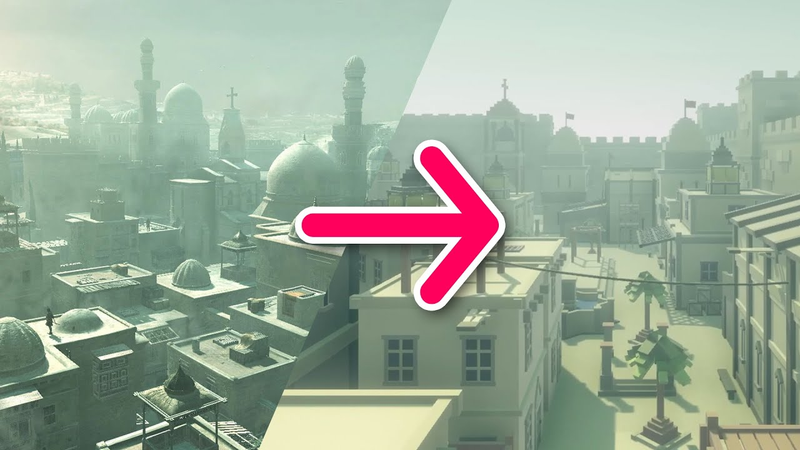
The process of recreating game environments without advanced modeling skills relies on three fundamental pillars: geometric simplification, color palette management, and strategic asset repetition.
- Environmental design can be achieved without advanced modeling by deconstructing complex architecture into basic geometric primitives like cubes and triangles.
- Strategic asset repetition allows for the efficient scaling of large game worlds by categorizing objects into layers, ranging from background props to high-visibility landmarks.
- Color palettes are essential for environmental storytelling and navigation, as demonstrated by the use of warm oranges for Damascus and teal tints for Acre in Assassin’s Creed.

'Rocket League': Scaling for Free to Play
The transition of Rocket League to a free-to-play model necessitated a comprehensive architectural overhaul to accommodate a projected fivefold increase in player traffic.
- Psyonix successfully managed a 5x increase in concurrent player traffic for Rocket League's transition to free-to-play by utilizing accurate load projections and extensive iterative load testing.
- The team utilized Locust, a Python-based load testing framework running on Kubernetes, to simulate client traffic, though they noted that the framework required significant custom orchestration to ensure test accuracy.
- To address database bottlenecks, the team migrated from Google App Engine to Google Kubernetes Engine (GKE) and implemented ProxySQL to manage MySQL read-traffic scaling and dynamic query routing.

I PLAYED YOUR GAMES! | Game Design Feedback
Indie game development relies heavily on the intersection of intuitive mechanics and polished user experience.
- Commercial viability in indie games is frequently undermined by technical inconsistencies and poor visual communication, even when core gameplay loops are compelling.
- Effective user experience requires prioritizing silhouette-based design and icon clarity to prevent the information overload and poor readability observed in titles like Intergalactic Taxi and Swing It.
- Environmental logic, including lighting and collision detection, must be precise to maintain player immersion, as seen in the failure of Unknown Escape to sustain suspension of disbelief.
Make a RED DEAD REDEMPTION level w/ NO MODELING SKILLS
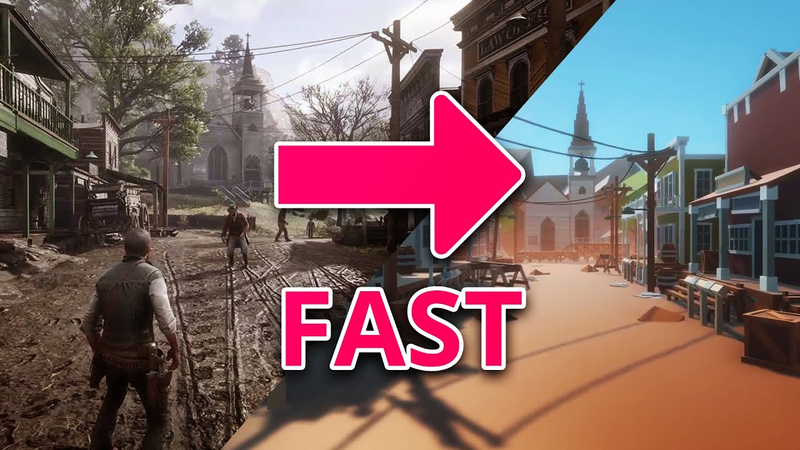
Environment design can be effectively executed using only basic geometric primitives, such as cubes, to test spatial understanding and shape composition.
- Environment design can be effectively executed using only basic geometric primitives like cubes to test spatial understanding and shape composition.
- Complex architectural styles should be deconstructed into modular, reusable components to create recognizable game worlds without requiring advanced modeling skills.
- Visual storytelling relies on the strategic use of silhouettes and distinct architectural features, such as varied roof angles or signage, to differentiate building functions.

5 MISTAKES I Made When I Started Making Games
Independent game development requires a strategic shift from purely creative impulses to structured business management.
- Create a comprehensive game design document to serve as a project roadmap, which prevents scope creep and keeps development timelines on track.
- Diversify revenue streams by securing funding through Kickstarter, Patreon, sponsorships, and publisher advances rather than relying solely on post-launch sales.
- Treat community building as essential infrastructure by using devlogs and consistent social media engagement to drive Steam wishlists and secure a loyal audience.
How To Land A Deal With A Game Publisher!
Securing a publishing deal in the independent game industry requires a strategic focus on marketability and a deep, nuanced understanding of a specific target audience.
- Publishers prioritize projects that identify and serve a specific, underserved niche rather than attempting to replicate major studio flagship products.
- Developers must demonstrate proven market demand by targeting communities centered around specific gameplay styles, such as speedrunning or niche RPG combat.
- A successful pitch requires a game design document that explicitly balances honoring established genre inspirations with unique mechanical twists that differentiate the project.

LIVE | Making Weapons for Back 4 Blood with Brad Boyles
Weapon design in modern first-person shooters requires a rigorous synthesis of technical efficiency and mechanical authenticity.
- Weapon design in high-fidelity shooters like Back 4 Blood relies on a synthesis of simulation software and physical references to ensure mechanical accuracy in reload animations and functional movement.
- The production pipeline has shifted from manual, Photoshop-based workflows to procedural texturing tools like Substance Painter, significantly increasing output efficiency for small teams.
- Artists utilize height maps and high-poly baking to simulate complex surface details, while maintaining traditional hard-surface modeling methodologies.
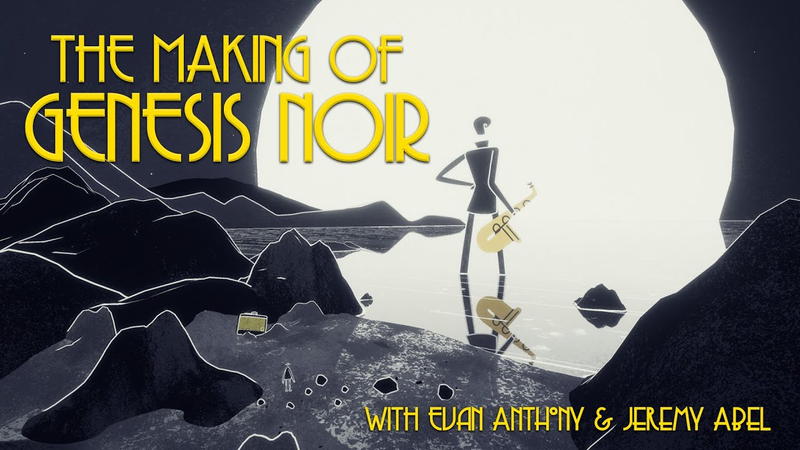
The Making of Genesis Noir with Evan Anthony and Jeremy Abel | 303
The development of Genesis Noir serves as a case study in transitioning from motion graphics and web design into the independent game industry.
- Marketing and promotional efforts should be integrated directly into the game engine workflow, as these activities can consume up to 50% of the total development cycle.
- Securing professional publishing partnerships is essential for managing the logistical complexities of console certification, localization, and multi-platform deployment.
- Independent developers can successfully transition from motion graphics to game development by leveraging vertical slices and detailed pitch decks to secure both crowdfunding and external funding.

My #1 Secret To Building An Indie Game Studio
Building a sustainable indie game studio relies heavily on cultivating a direct, mutually beneficial relationship with a community through consistent social media engagement and content creation.
- Building a sustainable indie studio depends on cultivating a direct, mutually beneficial relationship with a community to secure financial independence and creative autonomy.
- Platforms like TikTok and YouTube function as essential tools for gathering real-time feedback on specific game design elements, such as enemy mechanics and environmental details.
- Consistent content creation, specifically through weekly devlogs, serves as the foundation for building a loyal audience prior to launching a crowdfunding campaign.
Your Indie Game WILL SUFFER Without It
Effective game development requires a transition from intuitive, solo-based workflows to structured project management.
- Formalizing development through Game Design Documents (GDDs) and milestone-based scheduling is essential to prevent bloated budgets, excessive costs, and creative drift.
- A GDD functions as a foundational roadmap that prevents scope creep by clearly defining project boundaries and discouraging the addition of non-essential mechanics.
- Implementing strict, self-imposed monthly milestones allows developers to identify necessary content cuts early, ensuring projects remain on track for completion.
He Started A Game Studio In HIS DORM (Conversation with Conrad Grindheim)
Independent game development requires a transition from solo creation to disciplined studio management, where success is predicated on financial diversification and rigorous project planning.
- Achieve financial stability by diversifying revenue through secondary streams like freelancing, asset sales, and educational content to supplement primary game development.
- Prevent scope creep and project bloat by utilizing comprehensive game design documents and strictly enforced, time-bound milestones.
- Use crowdfunding platforms like Kickstarter to secure initial capital while simultaneously validating market interest before full-scale production.