PC reports and market data
Documents
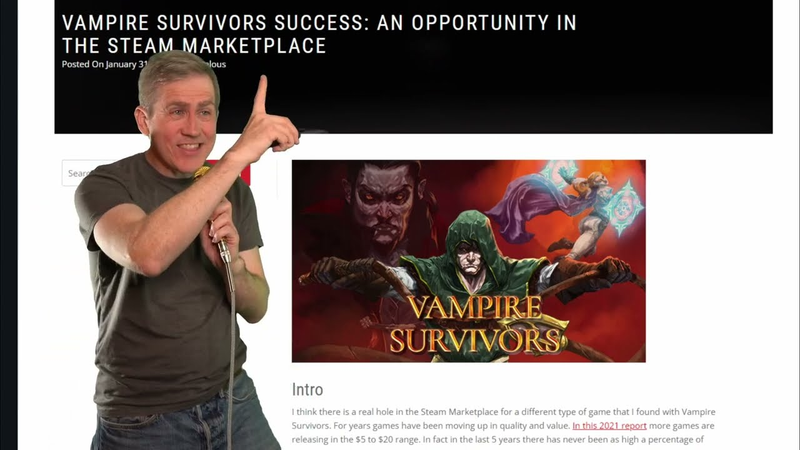
2022 Year In Review Promo
The analysis of the 2022 Steam marketplace focuses on identifying successful development trends and actionable strategies for independent game creators.
- A consistent cohort of approximately 550 to 570 titles, including 473 independent games, surpassed the $300,000 revenue threshold in 2022.
- Reaching the $300,000 revenue milestone is a critical tipping point that triggers increased visibility through Steam’s discovery queues, featured banners, and promotional opportunities.
- Despite the rising volume of total game releases on Steam since 2016, the number of titles achieving high-revenue status has remained remarkably stable.

We Carefully Deleted Our Indie Game
The process of deconstructing a completed indie game serves as a conceptual exercise in reverse development, illustrating the complexities involved in dismantling a project from its final state back to its initial inception.
- The project 'Goba Day,' originally developed for the Ludum Dare 52 game jam, served as the subject for a systematic reverse-development exercise.
- The dismantling process involved a methodical, layer-by-layer removal of assets, starting with marketing materials and online presence before progressing to technical architecture.
- Technical deconstruction required the systematic uncoding of core gameplay mechanics, including turn-based logic and drag-and-drop functionality, to ensure the project was emptied without triggering system errors.

World's EASIEST 2D Character Art Tutorial (Anyone Can Do It!)
The primary objective is to demonstrate an efficient, accessible workflow for creating stylized 2D character art suitable for game development.
- Achieve professional-looking 2D character art by constructing figures from basic geometric shapes rather than relying on complex illustration skills.
- Establish accurate human proportions by tracing T-pose references before building body, clothing, and facial features with the polygon lasso tool.
- Optimize the workflow for game rigging by mirroring symmetrical elements and merging layers to simplify the final asset structure.

2D Game Art Tutorial (Stylized Landscape In 15 Minutes)
This tutorial outlines a streamlined, iterative workflow for creating stylized 2D game landscapes, emphasizing efficiency and the importance of color theory.
- Establish a strong color palette early in the workflow, ideally by sampling colors from existing professional illustrations to ensure aesthetic cohesion.
- Prioritize the creation of abstract geometric shapes before adding fine details to ensure the foundational composition is sound.
- Maintain separate layers for distinct landscape elements to facilitate the implementation of parallax, which is necessary for creating depth in 2D environments.

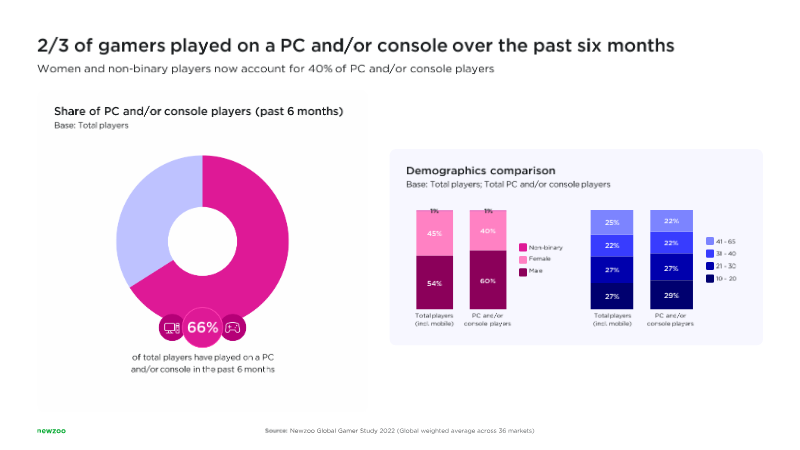
PC & Console Gaming: 2023
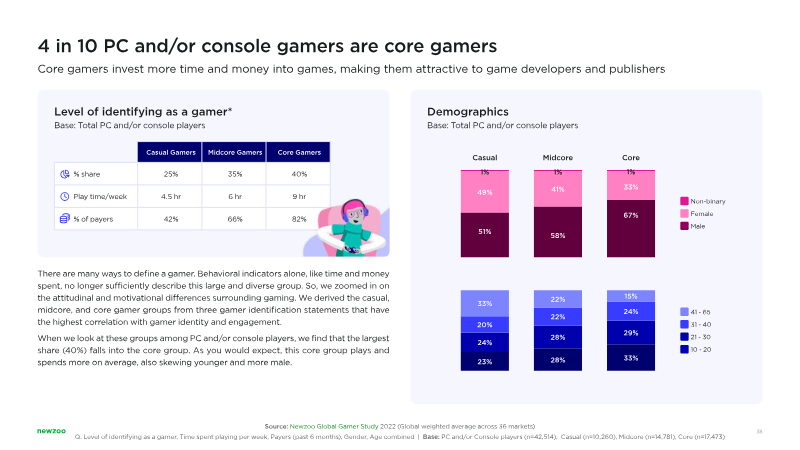
The global PC and console gaming market in 2023 is navigating a period of post-pandemic stabilization, marked by a contraction in total playtime as the industry adjusts from the unprecedented surges observed between 2020 and 2022.
- Following a pandemic-era surge, the PC and console market experienced a corrective year in 2022, with console gaming maintaining a 7.8% CAGR from 2015–2022 compared to 3.6% for PC gaming.
- Shooter and Battle Royale titles dominate player engagement, accounting for 37% of all playtime, while Adventure games hold the highest player share at 83%.
- Long-standing franchises dominate monetization, with titles like Fortnite, NBA 2K22, and Apex Legends leading in-game revenue, while Call of Duty: Modern Warfare II/Warzone 2.0 topped premium revenue charts in 2022.
PC & Console Gaming Report 2023
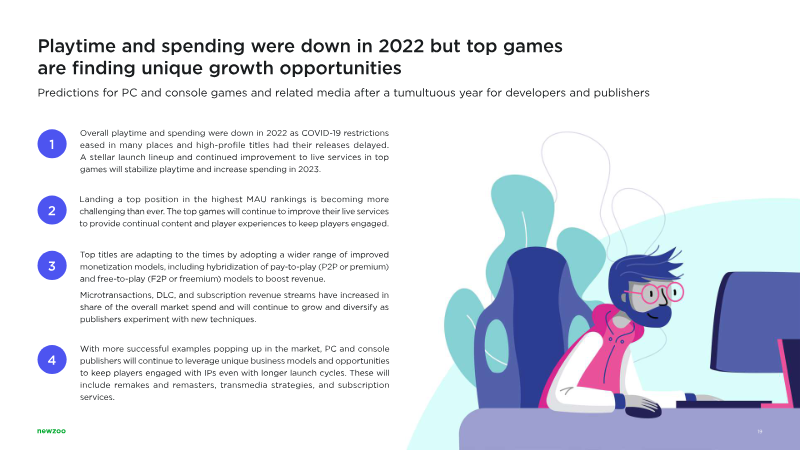
The PC and console gaming market entered a corrective phase in 2022, generating $92.3 billion in revenue despite a 2.2% year-on-year decline and a 15% drop in playtime.
- The PC and console market generated $92.3 billion in 2022, representing a 2.2% year-on-year decline that signals a stabilization toward pre-pandemic levels rather than a long-term downturn.
- Microtransactions and downloadable content now account for nearly 50% of total consumer spending, reflecting a fundamental industry shift from product-based sales to a service-oriented model.
- Engagement metrics saw a significant contraction in 2022, with total playtime dropping 15% and hardcore player activity falling by 37%.

2D Game Art Tutorial (Stylized Landscape in 20 Minutes!)
This tutorial outlines a professional workflow for creating stylized 2D game landscapes using Adobe Photoshop.
- Achieve depth in 2D landscapes by layering geometric shapes created with the polygon lasso tool to simulate distance.
- Maintain visual cohesion by utilizing a limited color palette derived from reference imagery across all environmental layers.
- Improve production efficiency by creating custom brush presets for repetitive assets like pine trees.
Unity vs Unreal (I'm Seriously Considering Switching To Unreal)
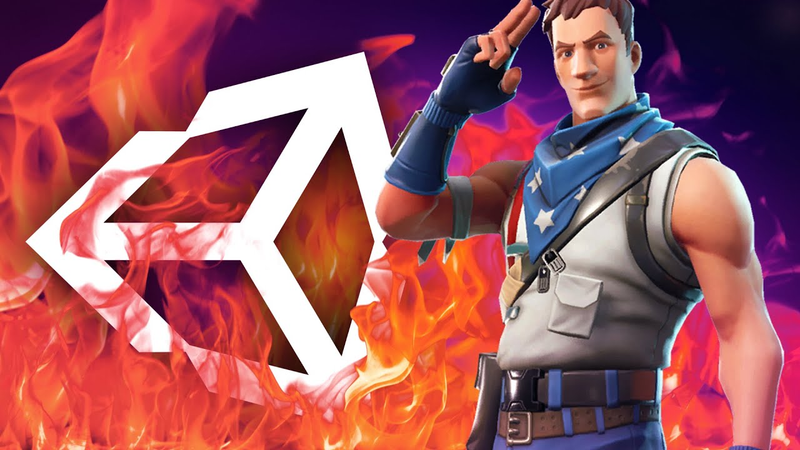
The choice between Unity and Unreal Engine represents a significant strategic decision for independent game developers, particularly as they transition from 2D projects to complex 3D environments.
- Unity holds a 43% market share compared to Unreal Engine’s 13%, making it the dominant choice for independent developers.
- Unreal Engine 5’s advanced features like Nanite and Lumen are optimized for high-end hardware, which can create significant performance overhead for mobile and Nintendo Switch development.
- The decision to switch engines is often hindered by the high cost of migrating established workflows and the potential loss of cross-platform versatility.
Gamifying Creativity in 'Chicory: A Colorful Tale'
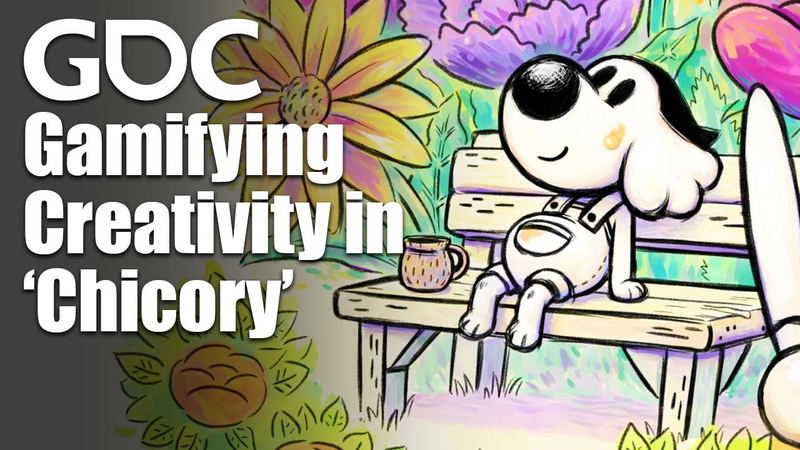
Integrating creativity into game design requires a deliberate separation between mandatory, goal-oriented progression and optional, free-form expression.
- Separate creative tasks from game progression and logical problem-solving to prevent extrinsic rewards from diminishing intrinsic motivation.
- Use storytelling, character interactions, and role-playing prompts to motivate creative expression rather than relying on scoring systems.
- Avoid evaluating or scoring player art, as algorithmic feedback encourages players to optimize for superficial metrics rather than genuine expression.
My Elephant in the Room: An 'Old World' Postmortem
The 4X strategy genre has long been defined by repetitive late-game micromanagement and predictable mechanics, issues that necessitate a fundamental shift in design philosophy.
- Replace traditional unit-based movement systems with a constrained orders-based economy to force meaningful trade-offs between military expansion and economic development.
- Integrate a character-driven dynastic model and state-aware event systems to replace predictable AI behavior with emergent, narrative-heavy gameplay.
- Limit infrastructure and city sprawl by using fixed city sites and resource-intensive development requirements to prevent inefficient, unchecked expansion.
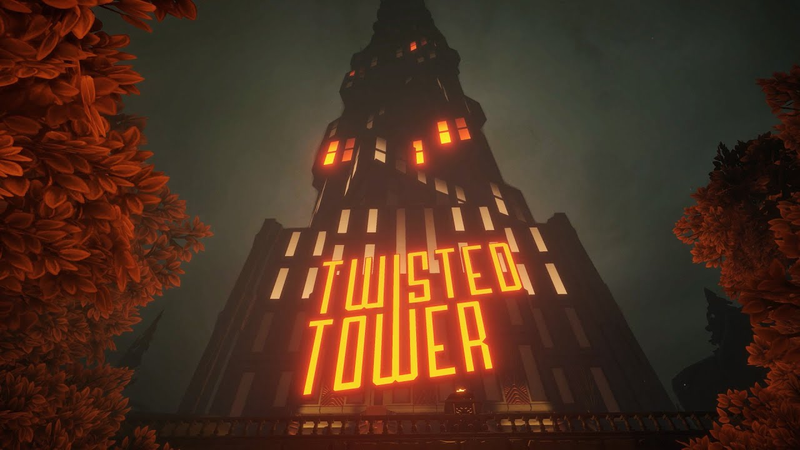
I Didn't Expect My FPS To Morph Into This!
The development of the indie first-person shooter Twisted Tower illustrates the iterative nature of game design, where a project’s core identity evolves significantly through experimentation and external feedback.
- Twisted Tower transitioned from an abstract Garden of Eden narrative to a horror-themed, procedurally generated experience to improve marketability and replayability.
- The core design relies on high-stakes, permanent player decisions, such as interactive levers and path-blocking, to ensure each playthrough is unique.
- The game’s mechanics were specifically optimized for content creators and streamers by blending horror and puzzle elements to enhance watchability.
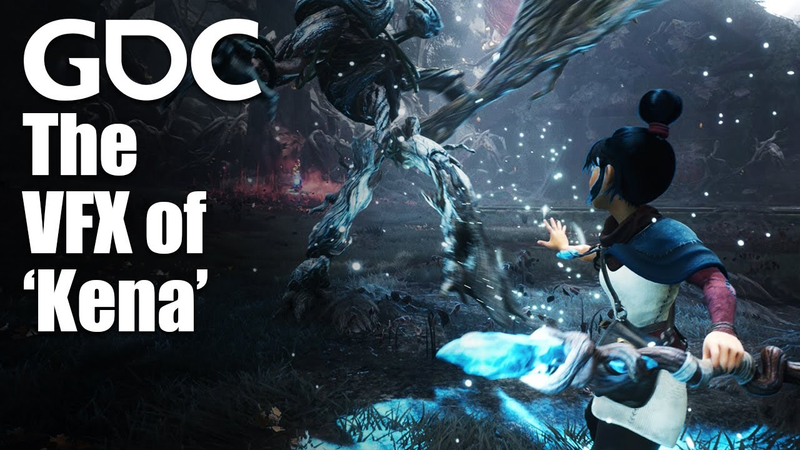
Restoring the Forest: Capturing the Themes of 'Kena' Through VFX
The development of visual effects for the action-adventure game Kena: Bridge of Spirits focused on creating a cohesive, real-time feedback system that mirrors the game’s core themes of environmental restoration and the cycle of life.
- Ember Lab implemented a top-down render target centered on the player to encode 'clean' states, allowing the game to dynamically transition landscape materials from corrupted 'Deadzone' textures to restored environments.
- To optimize performance, the team moved away from Dynamic Material Instances, which break instancing, and instead used indexed float arrays within shaders to update parameters, enabling the engine to batch draw calls for Deadzone meshes.
- The VFX pipeline uses three distinct channels in a render target: the red channel triggers the primary cleaning effect, the blue channel handles delayed plant growth to create visual variety, and the green channel provides a temporary 'overgrowth' animation boost.