Monetization reports and market data
Documents

LTV Prediction for Mobile Apps with Hybrid Monetization: Tenjin’s pLTV
Predictive Lifetime Value (pLTV) serves as a critical tool for mobile applications utilizing hybrid monetization models, which combine in-app advertising (IAA) and in-app purchases (IAP).
- Tenjin’s pLTV model uses artificial neural networks to predict user lifetime value for hybrid monetization apps, allowing UA managers to optimize campaigns without waiting for long-term IAP revenue maturity.
- The system achieves an average prediction accuracy of 90% across app, campaign, and country-level reporting.
- The model processes approximately 100 features, including granular ad impression data, and updates predictions every two hours to account for real-time shifts in campaign performance.

Minigames Gold Rush: The $7B Opportunity western devs missed by Lemon Choi
The Chinese mini-game market has matured into a $7 billion industry, fundamentally altering the landscape of mobile gaming through frictionless, app-free access.
- The Chinese mini-game market has reached a $7 billion valuation, supported by an ecosystem of 400,000 developer teams and over 500 million monthly active users.
- Growth is shifting away from simple casual titles toward midcore and hardcore genres, such as 4X strategy, tower defense, and idle RPGs, which offer superior payer retention.
- Success in this market is driven by data-centric user acquisition, with day-one paying user retention serving as the critical KPI for determining the viability of soft launches.

From Offerwall to Always-On: Xsolla’s Take on Player Engagement
The evolution of game commerce is shifting toward integrated, "always-on" ecosystems that prioritize player engagement through a combination of brandformance, gamification, and unified monetization tools.
- Xsolla is consolidating game commerce tools—including webshops, offerwalls, and social quests—into a single integration to reduce resource overhead and eliminate fragmented data for publishers.
- Brands are shifting toward 'brandformance' marketing, which moves beyond passive awareness to trackable, measurable return on ad spend (ROAS) within gaming environments.
- Offerwalls are evolving from simple reward mechanisms into sophisticated engagement platforms where users earn virtual currency by interacting with brands, such as subscribing to services like Paramount+.

UA Financing Reshapes Mobile Publishing with Tilting Point
The mobile gaming industry is undergoing a fundamental transformation, shifting away from traditional third-party publishing models toward flexible, data-centric financing and strategic studio integration.
- Tilting Point launched a $150M user acquisition (UA) fund to provide non-dilutive, risk-sharing capital to mobile developers, allowing studios to scale live titles without sacrificing equity.
- UA financing functions as a predictable, capped-fee model where the publisher funds future cohorts and takes a small, fixed percentage of revenue, leaving the remaining upside to the developer.
- Tilting Point has shifted its business model from third-party publishing to a dual-pillar strategy focused on UA financing and first-party acquisitions of independent studios.
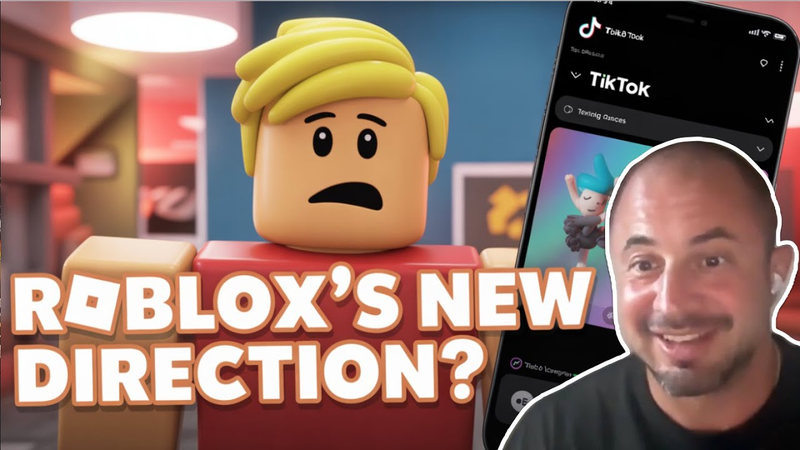
Is Roblox Turning Into TikTok?
Roblox’s recent developer conference (RDC) signaled a strategic shift toward aggressive platform expansion, characterized by an 8.5% increase in the developer exchange (DevX) rate and the introduction of new monetization and engagement tools.
- Roblox is shifting from a game engine to a vertically integrated social and advertising ecosystem, aiming to maximize platform GDP through increased user attention and ad revenue.
- The platform increased its developer exchange (DevX) rate by 8.5% to incentivize creators to retain capital and reinvest within the Roblox ecosystem.
- Economic disparity remains significant, as only 29,000 of the 3.1 million total developers—less than 1%—successfully cash out earnings annually.

Game Review Radar #9: The Curse of the podcast strikes again. Or maybe not!
The mobile gaming landscape is currently defined by unexpected resilience and aggressive scaling, defying earlier market skepticism that predicted rapid declines for established titles.
- Last War continues to dominate as a revenue leader, generating approximately $6.6 million per day with a consistent upward trajectory.
- Short-form drama applications have become a massive market force, with DramaBox and ReelShort generating monthly revenues of $32 million and $36 million, respectively.
- King Shot has emerged as a top-performing title, reaching a peak of $3 million in daily revenue and maintaining a stable, long-term growth profile.

TWIG #348 Roblox’s Big Bet, Blizzard's Mobile Chaos & Destiny Rising’s Flop
The global gaming industry is currently navigating a period of significant structural transition, characterized by the failure of high-fidelity mobile ports and the evolution of platform-based monetization.
- The global gaming industry is projected to grow by 3.4% to $188.8 billion in 2025, with console gaming serving as the primary growth driver at 5.5%.
- High-fidelity mobile ports of core franchises, such as Destiny Rising and Warframe Mobile, are failing due to prohibitive user acquisition costs and poor audience alignment, signaling that outsourcing mobile development is no longer a reliable growth strategy.
- Roblox is aggressively increasing developer payouts and introducing social features like Roblox Moments to boost platform GDP, though only 1% of creators on the platform currently achieve successful monetization.

Developers are holding back game features due to online safety laws
Global online safety legislation, including the UK’s Online Safety Act and the EU’s Digital Services Act, is fundamentally reshaping the video game industry by imposing rigorous compliance requirements on user-generated content, chat functionality, and monetization.
- New online safety regulations like the UK’s Online Safety Act and the EU’s Digital Services Act are forcing developers to omit or delay social and community features to avoid the high administrative burden of mandatory risk assessments.
- Console user growth has stagnated at approximately 2.5 percent, while revenue has increased by 5.5 percent, indicating that higher price points are driving short-term gains at the expense of long-term player acquisition.
- Private payment processors are increasingly acting as de facto regulators by enforcing their own content standards, adding a layer of complexity to official government compliance requirements.

🌾 Little Farm Story: SayGames’ New #1 Title. The Ad Simulator Farming.
Little Farm Story has emerged as the primary revenue driver for SayGames, currently generating between $67,000 and $70,000 in daily global revenue.
- Little Farm Story is currently SayGames' primary revenue driver, generating between $67,000 and $70,000 in daily global revenue.
- The game utilizes a balanced monetization model that splits income almost evenly between rewarded ads, interstitial advertisements, and in-app purchases.
- The core progression strategy relies on aggressive, annoyance-based ad gating to funnel players into a one-time purchase for ad removal.

The 4 Generations of Rewarded Ads: Personalization + LiveOps = The Future of Offerwalls
The evolution of rewarded advertising has transitioned through four distinct stages, moving from rudimentary rank-boosting installs and simple level-based rewards to the sophisticated, playtime-centric models popularized by platforms like Mistplay.
- Rewarded monetization has evolved into a fourth generation characterized by hyper-personalization, data-driven targeting, and LiveOps-powered engagement.
- Offerwalls can contribute between 5% and 30% of a game's total revenue, serving as a critical alternative monetization channel for non-payers and 'dolphins'.
- Modern offerwall solutions must integrate media source data from platforms like AppLovin, Unity, and Google to dynamically match game offers to specific user acquisition sources and behaviors.

Inside RDC 2025: How Roblox Is Courting Pro Developer
Roblox is undergoing a strategic transformation to transition from a hobbyist-driven ecosystem into a professional-grade gaming platform capable of competing with major industry incumbents.
- Roblox is shifting its strategic focus toward professional-grade content to compete with industry incumbents, supported by 112 million daily active users and 48 million concurrent users.
- The platform is incentivizing the creation of high-fidelity, mature content by increasing the developer exchange rate by 8.5 percent.
- New monetization tools include a mobile-style ad technology suite featuring rewarded video ads developed in partnership with Google.

The Founder’s Dilemma: Equity vs. User Acquisition Financing
User acquisition financing has emerged as a vital strategic alternative to traditional equity and debt, enabling gaming and digital app companies to scale growth without diluting ownership.
- Founders should adopt a bifurcated capital structure, using equity for high-risk product development and revenue-based financing for predictable user acquisition to avoid ownership dilution.
- Treating customer acquisition costs as capital expenditures rather than operating expenses allows companies to accurately assess profitability and leverage non-dilutive financing to increase enterprise value.
- Firms like General Catalyst and PVX Partners provide capital that aligns repayment directly with the lifetime value of specific user cohorts, decoupling growth spending from balance sheet constraints.