Transcript
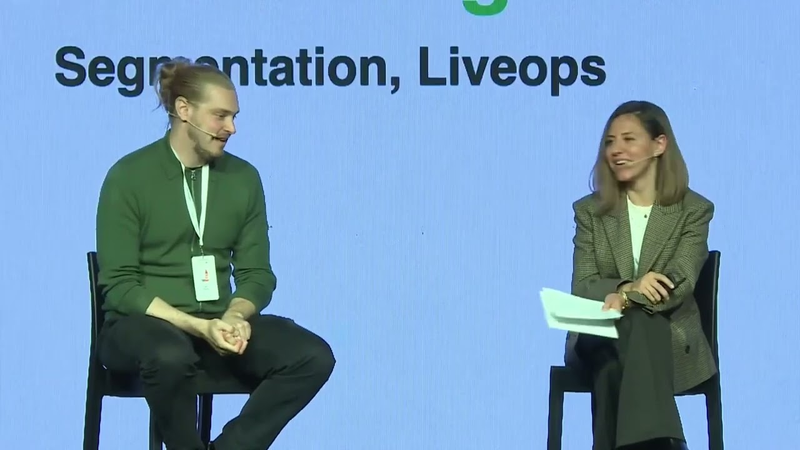
Dave Mikasen, senior director of revenue. 20 years in the games industry going from anywhere from PC, mobile, console, handheld, Roblox. I want to start with the uh with the big question and that is of course a good game monetizes itself. Is this a myth or truth?
There's no substitute for a great game, but you need to think about how you're going to sell it and monetize it. You should not start implementing ad SDKs when you're prototyping, but it's about knowing okay, what kind of monetization do you want for this? Purely ads or purely in a purchase? What about subscriptions? How does all these things work together in a hybrid monetization? Is it more like these are the things that we believe will be the conversion purchases in the game, these will be the repeatable purchases in the game, this is what players will be buying early on, this is what they'll be buying late on. or is it more just a model or monetization is enough?
What you're saying is is uh spot on. You should also think about your target audience and know again a lot of people start with the game. They don't think about the players and who's eventually going to play it. But I think um to make yourself more likely to be successful everything from kids to senior citizens, growing audience for a lot of games
could also be depending on geos, the type of games, the genres you're making. That's all plays into what kind of strategy you need to set.
Why is monetization so important?
Monetization is important because you need that to run the operations of your company to make sure you have a profitable game. But actually monetization, which most people don't think about, can be a positive factor to the players as well because they get to spend on things they like. They like to get the items that they want in the game. And actually a good monetization will increase your retention on the spenders. People are more likely to stay in a game that they're already paid in than they are to stay in a game they have not paid in.
Think about happy monetization. Don't make it like paying a utility bill. Think about a kid that just got V-Bucks to buy the latest skin in Fortnite. They are excited. That's the feeling you want to go for.
Okay. And is there a bad monetization that you would consider?
Bad monetization that's not profitable. I would say that's that's the bad monetization.
Not profitable in the long term. So you scam people to making a purchase and then they leave.
Yeah. I think the shortsighted monetization, borderline scamming people is obviously going to lead to bad results. It's not going to be create a sustainable business for you which you need today to run these live ops type games which are the the big and successful games today.
So there's good monetization, there's bad monetization, but what are the monetization metrics that actually matter? Traditionally, people look at average revenue per daily X views are up now. They look at conversion rate and LTV. But I think if we dig a little bit deeper, some of the things that I recommend people look at, for example, spending spread across your spenders in
the game. Instead of just being binary with people who don't spend and people who spend, then look at the people who spend. See who are your smaller spenders, so-called minnows, and who are your whales, and how does that scale up between them? How is the spread between? Do you in your spenders only have whales or do you only have minnows? There's no right or wrong answer for how the spread should be, but obviously the more even the the spread, the less fragile
your monetization is.
So when you talk about whales and minnows,
yeah,
essentially what you're describing is how much a segment of your players has spent over their lifetime. And then people move from let's say if you're minnow meaning the smallest one the threshold could be like €10 and then you're whale the threshold is €1,000 and people can move up to those ladders like are they universal numbers for whales and minnows and dolphins and sharks whatever you call them in between or is it game based? I think it's uh game
based. Basically, a minnow is someone who just spends any money and a whale is those who spend the most amount of money. Depending on game could be 50 or hundreds of um of euros on it.
I think the most important is that the game should never have a cap of spending.
Mhm.
So your whale should always be able to invest into the game.
Why? So a number of years ago, Watan, the former CEO of Square, said that players should be able to spend according to the satisfaction. If someone is happy with your game, why limit their spending? I don't see Wizards of the Coast limiting how many booster packs for Magic the Gathering you can buy
because you enjoy it. You there's no maximum of golf clubs you can buy for any other hobby. So I don't see why we should limit that. Another metric that I recommend people looking at is the repeat spending rate. So that means of
those who spend the first time, how many spent the second time and the third time, etc., etc. Of course, you're going to have a decline for each repeated purchase. It's never going to be 100%. But it's not so much about whether it's 80% or 60%. It's what can you do to change that number. If you have a very low second purchase rate, that means that either you've given away too much so there's no reason to buy or you've given away too little so that people are disappointed with the purchase. So you can't necessarily say that a low rate is because this or that. You have to go in and say what is it and then you change it and you can improve your continuous spending.
Yeah. And I know sometimes people would say wait a minute no spending caps. Wait a minute there's repeat purchases. But if if I would say we have a TV streaming service that would charge you every month for a certain amount of time and it will be on as long as you want that's uncapped spending with repeat purchases every month.
Same applies to games but we actually have to do something fun to keep them
around.
Yes. Yes. Agree.
To earn that repurchase every time.
So how do those monetization metrics shift when your game is monetizing through both enough purchases and ads which we're seeing more and more now? So when you are adding ads to a game that has a purchase or not, you are essentially increasing or raising the flow of your revenue because now you're monetizing instead of the 5% maybe on in a purchase, you are monetizing 100% of your players. So your your revenue flow will be raised. The other way around, if you're adding in a purchase to a game, you are not raising the floor, but you are raising the ceiling. the maximum of what you can make.
I think that should be no ceiling for in the game because you be able to pay according to your satisfaction.
Adding in a purchase to a game can also increase your retention because people are more likely to return to a game
where they already paid. Adding ads can lead to decrease retention very often because people get annoyed with the ads. But there's a middle ground here actually we see where rewarded video ads can weirdly enough lead to higher retention because people who normally can't or won't pay for the game watch ads and get access to some of the benefits that the paying players get and actually now start enjoying the game more. And for some players smaller group can lead to actually becoming paying players because now they got a it's almost like a free trial of in a purchase a rewarded video ad.
Yeah. And what would be the smart way to balance the two? The two meaning inapp purchases and inapp ads. For example, you said everybody it raises the floor. So everybody sees ads. Is it that everybody sees ads or do you still like do you for example continue showing the ads to those who are monetizing through enough purchases.
Traditionally you would not show ads to those who have spent in the game. But what we actually see is that you should
consider still having rewarded video ads as an option for payers because even though you paid for a something in a game, getting something for free is great,
but you don't want to lose that player if they see an ad of another game.
I think that becomes a general question of whether you can keep your players or you can avoid them from seeing that there other games around. During my time in the games industry, I've spoken to super rich people who play games. Uh, billionaires who play games. And you know what they do? They watch rewarded video ads.
They do.
They are rich enough to buy the studio because you cannot compete with free. Seriously though, if you're a paying player and you get offered a rewarded video ad, as long as it's player initiated and voluntary, they're still going to want to watch it to get the free stuff that they're getting. I've also seen games that got bad reviews because they're taking out rewarded video ads. So, the developers are taking it out thinking it's going to improve it, but actually people commented and
saw the reviews on the app store saying,
"You took away my free stuff. This was my way of getting coins. This was my way of getting whatever content." The data shows this and people be surprised to know that when a player, even a spender, runs out of lives at a level, get five more lives by watching an ad, they're going to watch an ad. They're not going to say, "No, no, no,
let me go and buy it instead." They're not going to do that.
When it comes to ad monetization, is it true that the value of an admonetized user decreases over time? Over time that they're seeing the ads.
That's true. Yeah. I think that becomes the problem of how much you can show the ads and it also touches on your in-game economy because of course the more you earn uh you have to watch that balance. So how much the player earns from watching the ad compared to how much they make. We see a diminishing return.
I think that's a problem because especially for payers, you actually want
to reward them more for each ad they see. If you have an in-game subscription, it's the same thing because your incentive is opposite. It can be hard to give more when you are so yourself getting less for each ad. So that's definitely true.
So a good monetization strategy for most games would still rely on inapp purchases.
I think it rely on a mix. Hybrid casual games typically have 90 95% ads and to inner purchase. You see the let's call the casual the very big broad genre would be anything 5050 60 40 40 60 in that range and then of course you have the midcore to hardcore games typically around 90% in a purchase and 10% ads. That's not because they sell a lot more than the casual games. It's because people who play hardcore midcore games are less forgiving of ads. The reason why the mix is 9010 is not because they are spending more money than a casual game. The casual players spend more money.
Yes.
The hardcore midcore gamers just see less ads because they're less acceptance to ads. That's what I wanted to say.
So, let's talk about segmentation then next.
Yes.
Can you give an example of a segmentation strategy that has worked as well? An example of a segmentation strategy that didn't work.
Yeah. Actually, starting with the one that didn't work. I've seen several companies actually where typically you'd seen a talk at a conference or you seen a cool video about how some of the big publishers did segmentation and went back and wanted to replicate that in a small studio and was set up too big and was unmanageable. That I think is the biggest risk that people simply set up something that they can't manage, they can't react on. on a more positive uh where I've seen the player segmentation is running promotions and discounts where we saw the price elasticity differentiate between segments both player types but also geos what we saw
there we we ran promotions um in a game on our inapp purchases and for some segments and in some geos we lost money because the purchases didn't go up
and in some we gain more because the purchase went up a lot. That taught us the difference in uh in price and the price differentiation and we adapted to that. We actually raised the price in those country. We could see we had too low price because we were just losing money on it.
So segmentation based on geography has worked
because of different purchase behavior and and
yeah one croner or one euro is different in different countries depending on you know the earning capacity. And then the other one was that if you go out and copy the Scoplies of the world, you better have the same type of organization that those companies have. Otherwise, it's just a playbook that you can't follow.
And I think when we talk about how many segments can you
Yeah.
typically handle the big publishing in
Scopia others, they they can run I've heard of companies that run several thousand like thousands of segments, but they have big teams just doing that. I think if you're a small team, 20 people, five, 10 max, it's really not about the number, it's about what kind of complexity can you manage internally. One thing is looking at the data and doing the segments. Another thing is actually reacting on it in the game. Whether you are changing the offer, changing monetizations around the marketing, the communication, do you have the capacity to handle that kind of complexity? And I say five, maximum 10 for a small team. Um if you have a dedicated live ops team of a certain size then you can go higher maybe 25 50 again it's not an exact number but just to understand it's about how much complexity can you manage as a team and how much can you react on
I 100% concur to that we've seen studios that went from hundreds of segments top
grossing studios
to tens
and significantly improved their live ops capability just because they were able to manage it better than the hundreds they had before.
Let's talk about balance and long-term health. How do you reach monetization equilibrium if that's even possible? Like a work life balance, but for monetization
monetization, of course, that's what we're working towards uh all the time. That's the daily job of the monetization uh team.
I think where you can see that you've reached it is that when you start changing one thing and it impacts another thing. So that's where you see, okay, we've reached some sort of balance. An example of that is that you can add more ads and retention doesn't drop. Okay, then you've not reached the equilibrium because there's still room to change. Once the retention starts dropping to a point where you are now overall less profitable in your game, that's where you've reached the balance.
It could also be um about price points.
If you're increasing the price points without hurting conversion, again, you've not reached the equilibrium. As long as you can move one thing without changing another thing, that's an indicator of having not reached that equilibrium yet.
And where you're searching for this equilibrium, do you need to kind of break it a little bit to understand that this is the point where it starts turning?
Yeah, exactly. You need to go one step too far and then reel it back to see, okay, now we did that. And again, it's not about a final equilibrium. It's about constantly tuning and balancing as things change to optimize towards the the equilibrium of monetization.
Well, talking about breaking the equilibrium and breaking the monization, are there certain metrics that would basically ring a red alarm that you're breaking the monetization of your game? [clears throat]
Retention dropping is is a big one. I think retention is such a key metric. Some might say it's overused, but I think you can overuse retention. I think it's such a key number. I think the
conversion rate as well is really important. If you see that dropping, then you have broken it. Um, again, you could see your conversion rate go up if you add more ads. So, you might think, okay, that's great because people are paying to get rid of the ads, but you might be hurting your either longer term retention or your engagement overall in the game by doing this.
There's other data points that we don't talk about, and that's the data point is the gut feeling of the team
and what your community is saying. how much those should discourage you or encourage you as you're making these decisions.
It's always the challenge when you're working on a game for a long time. But I would say I would always go for the external comment first because in the end of the day we're making games for the players. I think in terms of community uh communities tend to um be made up of those that are most engaged.
Loud.
Yes. Um and also your to some extent in some cases your biggest spenders as well. But I will say don't think that all your biggest spenders are necessarily
engaged in the community. It's uh looking at the data more than listening to individuals
but still talking to individuals not to take that individual conversation and extrapolate it to everyone but to have the deeper conversations but I definitely think look at the the large data sets and react on those. I think it's more than just the gut feeling of the team.
Yeah. Another problem that we see often is thinking that those who spend a lot are typically also playing a lot. I think that's not necessarily true. Think about an unemployed person who has no money but can play all day and then have someone who has a busy job who just plays on the weekends but doesn't mind spending 50 60 $70 on a Saturday night playing this game. So their engagement will be super low when you look at the data but their spending is going to be incredibly high. So, let's not say that high engagement equals high monetization. Of course,
when you look at your ad monetization, the more you play, the more you make on the ads, but it doesn't work for the whales necessarily.
So, essentially, if your product manager is saying, "Let's go for that mega bundle in the web shop." And if your backend engineer is threatening to quit the company because you've gone greedy, if your forums are screaming that you're you have horns, those are only signals. In the end, the data in the platform is the one that's going to show you whether those signals are actually factual or outliers.
Yeah. And in the end, people vote with their wallets. Yeah.
So,
so Tase, what do you think about sales? Are they a tool to change spending habits or a tool to increase the overall revenue?
Both. I think they can be used to test out price points. I think they can definitely be used to generate more revenue. they can be uh misused if not thought of correctly. You have to think about the timing of the sale and the
kind of promotion you're doing. Let's say you do a sale around Black Friday. That's typically based on huge discounts on items. For example, 10% discount Black Friday, not working. It's almost going to work against you. Two for one offers typically don't work on Black Fridays because people are used to potential discounts. But two for ones could work around another seasonal holiday. I think that again you should do sales um based on geos to fit with the regional holidays like the es and flows of vacations in that country.
So I'm against like doing global sales. I understand it's easier for communication and marketing to just do it the campaign once and I think you also need to adapt your offers and your your sales
to the different segments that you're doing. Not everyone needs to get the same offer at the same time.
Mhm. I agree. Sales is easy to implement. Uh but the results are questionable. It's very easy to get the sales in and then you will notice that
the following days the sales are just lower and on the longer term you're making equal amount of money whether you're running sales or not.
I think I agree. I think you can often see that you're just moving around purchases. But again I think goes back to the overlooked concept of price elasticity. How much can you actually discount an inner purchase before you're making less revenue on it or how much you're just moving around purchases? Thinking about what you're actually offering,
what kind of packs that you are making the discounts on. Yes. I think makes um it really makes or breaks the idea of just let's just do a across the board 20% sale and everything. I I think that's bound to uh to not generate the results you could have given. or if you're running too many sales all the time.
Yeah.
Nobody's going to buy when there's no sales going on. You wouldn't go to a store that has sales every week, some kind of a sales, and buy when they're not having cuz you know in few days there will be another sale. And that's a change of behavior. Okay. Final reflection. What do you think is the
thing that most studios misunderstand about monetization?
People don't want to pay for games. People love paying for games. They love making happy purchases, getting things that they love. Um, it's not a negative thing at all. Give them something that they enjoy buying. Don't make it like paying a utility bill. Should be a happy purchase.
Well, on that note, thank you so much, T.
Thank you. [music]
Auto-generated captions from YouTube — names and numbers may be misheard.



















Comments