VideoPocketGamer.biz
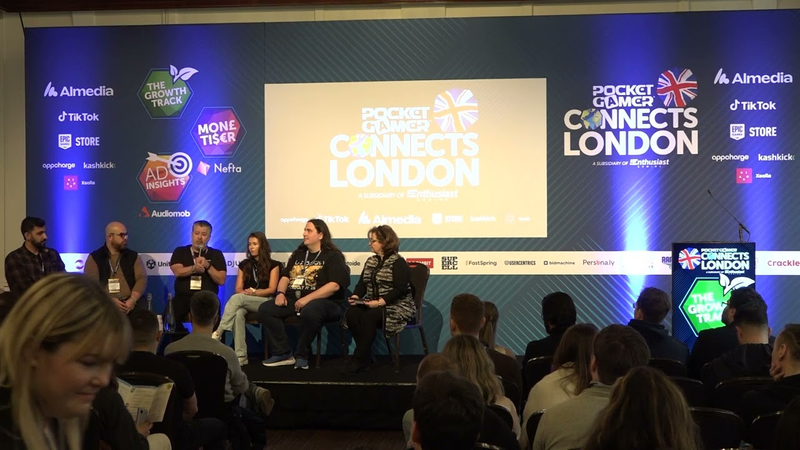
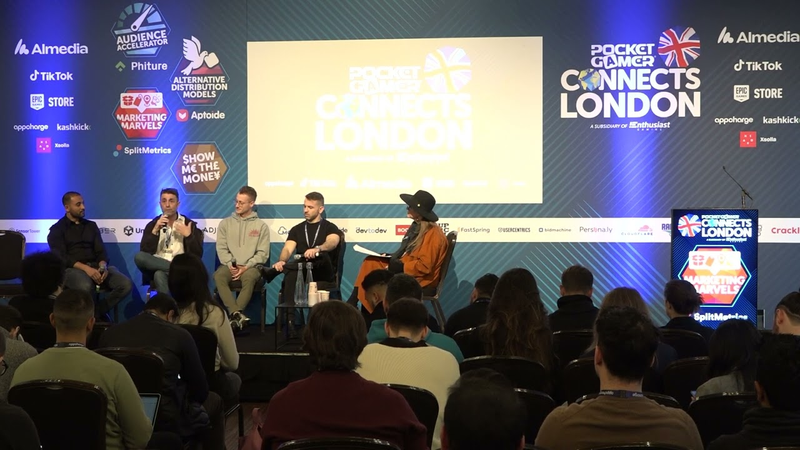
Panel: Press Continue: How To Hit The Mark With Ads In Your Games.
20 Nov 202548 min video
Transcript
[music] I would like to invite uh Mr. Dave Bradley to the stage and his wonderful panelists and they're going to be talking about how to hit the mark with integrating ads into their game. So give a round of applause for Dave and his wonderful panelists. Just to introduce things. So my name is Dave Bradley. I'm the COO of Steel Media. Uh basically I uh oversee the Pocket Gamer teams. And uh what we're going to be talking about here is advertising. Right now you got to remember the games industry is after all a business and we're all in the
business of making money. whether that's through monetizing our games by selling ads in them or promoting our own games and the ads um process involved in that. So we're going to explore in this session how developers can make advertising work for them right as a source of revenue and also as part of the player experience as well. We've got some insights from um uh from Audio Mob who are our track sponsors and from Tomatum who are a sponsor here as well at the show. um and we're we're going to look at what's driving ad performance in 2025 and and look at the role of um things like audio and uh ad formats that you might not have considered. So, we're going to talk about that and talk about various models here and also I really hope we're going to talk about some practical examples of advertising in the games industry and hopefully you'll come away from this session knowing a little bit more about how it all works. Okay. So, what we'll do is I've got a bunch of questions to take us through uh the next 40 minutes. I I'd love it if anyone here uh has questions for the uh for the experts here on the stage. If you put your hands up, I'll try and get to you, but I've got plenty to keep us going. What I'll do first of all is we'll start
here and I'll ask my guests to introduce their businesses to us because that's the best way to understand. So, so let's just set the scene. Do you want to go first and tell us a little bit about yourself and your company and let everyone know what you're about? Oh, Mike. Technically, she's
Hold on.
Don't worry, we'll get there.
We'll get there.
We'll get there. [snorts]
Hello. Hello. There we go.
There we go. Got it.
So, uh, hey guys. Thank you for joining this talk today. Uh, my name is Suma Amres. I'm the senior developer relations uh, engineer here at Audio Mob. Prior to Audio Mob, I used to work at Unity. Uh my job at Unity essentially quick quick story was to use Unity like a user to build games and dog food it to try and break unreleased versions of Unity. That led me to a lot of extensive experience in game development and well-rounded knowledge with Unity. Most of our customers use the Unity plug-in
for audio mob and audio ads is this thing that I was seeing for a while and when I transitioned into it I learned more about adtech and how the ad tech industry works. Um, audio mob. The way it works essentially is we put audio ads inside mobile games but also applications. Some of our customers of course include Tomatum, Jawaka, Madhuk, but also Gameloft, Voodoo, Zingga, Social Point, and even social media apps like Tumblr. We have audio ads that run in Tumblr. The main benefit of audio ads is that when you're playing your game or you're on your application, it doesn't take you away from it. you can listen to the audio ad and you can continue doing whatever it is that you want to do on the application. So, it's an extra source of revenue for developers and um feel free feel free to ask any questions as well and let introduce himself too.
Yeah, go for it. So, uh so okay, I'm look over user acquisition and advertisation at Tomatum. You've heard
from Tomatum a couple of times, but just in case, we're the leading mobile games publisher in the in the Mina region. We've published and developed over 60 games, over 400 downloads on them. So, I lead uh paid ads, user acquisition, and also advertisation. And yeah, I'm happy to be with you guys.
Perfect. That's great. Now, I know we will return to the subject of you folks working together because I know that Audio Mob and Tomatum have have done some great collaboration, but first of all, let's let's set the scene generally like what does the in-game advertising landscape look like right now um across the world, not just in this region, but generally um do you want to start us off there? What you've been working at adtech for a while, you've got Unity background as well. I'll chant to you and then we'll come to you next.
Tell us a little bit about what do we need to know about ads right now? What does the landscape look like in 2025?
Yeah, sure thing. So for mobile games at the moment most of the ads are video ads and you have a few major names such as Unity ads uh applovening as well and a
lot of the ads are either just video ads prompting you to install another game or application or even playable ads. So I'm sure you guys might have seen as well that you can play some of the ads to get a small taste of what the game is like before you then begin to install it. And this is how a lot of mobile gaming studios uh through a process called user acquisition, how they try and get you to install their game or application by paying these networks such as Apploving, Unity ads to show that in front of new users essentially.
Yeah, that's a that's a great insight to it because user acquisition is such a huge topic if you work behind the scene in in games. Um Haman, do you want to tell us a little bit from your perspective what sort of what's your view on the current ad landscape and how does what does Tommatum use primarily to in your business? Uh maybe I can zero in more on Mina. Um I would say it's a similar story to the global landscape. Maybe one of the most um talked about trend over the last couple of years is the move into hybrid monetization in terms of being instead of being fully
reliant on ads. And as far as I can see it, Mina has been ahead in this because it's always been very difficult to monetize solely based on ads. Um, so this is going I think one of the very interesting things that we're seeing is the increase in the share of voice from non-gaming apps advertising and games monetizing with non from non-gaming apps. Um, like before I came in here, I looked at our revenue and impression last 30 days and five out of the top 10 apps that are advertising are non- gaming.
Interesting.
Which is something we've never seen like last year or the year before. Um, so yeah, I think that playables are a big uh big big trend right now. It seems that from a user acquisition perspective, if you're not using playables on SDK networks, it's almost meaningless to advertise. So that's a big thing for sure. Um, and the the last thing I could mention is the it seems that there's a much bigger focus on
rewarded ads in general instead of forced interstitial or banner ads, which is a a healthy sign in my opinion. It seems that people are taking the user experience more and more into perspective when designing their games.
That's perfect. We'll definitely talk about that because you're absolutely right. The way that ads interrupt or otherwise the the the gaming experience is important. Um it's fascinating what you were saying actually about um the non-gaming apps being part of the ecosystem. Now, we're finding that more and more as well. So, in fact, at our very next event after this one, we're going to be including more non-gaming apps actually in our panels because it's it's important. We're going to have a whole uh apps business summit actually alongside the event because it's it's so part of the ecosystem
and we'll also be talking about a hybrid in a moment. But look, let's give some practical examples.
Not the example of your own business working together because I want to come to that in detail in a minute. But can you give us some other examples and perhaps some you can go first of great ad campaigns that have exemplified everything we've just spoken about.
Of course. So for example uh with Mad Hook as well. Uh they're the guys over
there. Say hi. Give us a wave. Uh with Mad Hook, for example, with Highway Drifter, um a racing game, we have uh ads in Egypt from Tiger Chips, for example. So, brands from all around the world want to engage with games that are popular to the region. So, cars is a huge thing in the Mina region, of course. Um we have other examples, too. Like, for example, Joer with Jawaker. I mean, it's a household name in in the in the Middle East. A lot of people know about it. Everyone grew up playing card games as well before digital games was even a thing. So for it to transition so seamlessly uh into card games too as well, that's a huge thing.
Brands, most of our campaigns,
our ads are not ads that say, "Hey, we want you to install another game." It's mainly branding ads. So companies like Kensacola, Sunil, STC, uh you name it, they they want to advertise with audio ads as well with us.
That's great. And that's a really interesting distinction because the the
ads ecosystem is has serves various purposes. One of which is the user acquisition of people to play games. But of course absolutely brands want to be inside games as well. Games is you know a huge media. Do you want to give us some examples perhaps of real?
Yeah sure. Um so from a publishing perspective one of the things we've been always trying to do is to get um not just non-gaming apps but also brands that are not apps u to advertise. Yeah. And one of the ways we've been doing it for a few years now is direct reach out like direct deals with um in terms of advertising but also in terms of like sponsoring live ops events and stuff like that. Right.
One of the things we did this year that was uh major for us is last Ramadan we partnered with Jahis which is one of the leading food delivery apps in Saudi Arabia. And what we did is that they sponsored some tournaments, some live events. But the the extra thing that we bundled with that partnerships that we've never done before is we gave them exclusivity on multiple uh ad placements
within VIP balloon, which is our card game. And that was uh that was a big plus for them because they get like they did it in Ramadan. So they get like prime uh traffic. But also for us from a user perspective and the feedback we got from the users is that they like that they get relevant advertising to them instead of getting rand a random app every other session. They just get like vouchers to use jah things that are relevant to Ramadanar stuff like that. Um so that was a very exciting collaboration we did in Ramadan.
That's great and you're absolutely right. people don't mind advertising if it's relevant, if it, you know, if it delivers something that they're interested in. However, on that note, let's talk about the experience you folks have had of working together. So, you got your two companies have collaborated on I want to say fashion queen, right? So, tell us about talk us through that. What were the results of what you what did you do together and what were the results of that?
Would you like to go first?
Sure. So, fashion queen malik mode as
people who maybe some people play it. Um, it was a perfect opportunity to integrate audio ads because the game is very narrative based. It's very story based. So the the premise behind it is you forge your way to be a Hollywood star. So it's it's a stories that build up uh on top of each other. So integrating audio ads was uh like a no-brainer for that game in specific because it can fit easily into the the flow. We've designed it in a way where characters would talk to you, so it looked even more natural. Um, in terms of uh results, it was a very good incremental revenue addition to the game. Uh, we saw zero effect on user retention or engagement. So, that was good. Uh, and the good thing is that it was introduced both interstitials and rewarded and both did well. So, that was that's usually you don't usually get that. So, yeah, maybe you can. Yeah. And you can think about a game like Fashion Queen. Uh you can argue that most of
primarily the audience is like female as well as women. And you can imagine what how much Sun Silk would want to be in a game like that cuz it's relevant.
So um yeah, like brands like to be placed in relevant contextual moments inside a video game too as well.
That's interesting. Anna, um as you say, your uh the audio mob experience is audio so people can play the game and it doesn't interrupt the the experience, right? That's that's how that works. Exactly. Yeah. on while we're on that then let's talk a little bit about our ad types generally like we've mentioned a few things playables we've spoken about audio of course is important um we've mentioned you mentioned interstitials in passing that kind of thing like what type of ads currently perform best for players in your the way you understand it but also talk us a little bit through the process how do you decide what's best right yeah so
yeah yeah so um at audio mob we have three types of ads we have standard ads which can be muted Uh, and the banner will it's a small
little square banner on the top right corner of the screen or the top left wherever the use the developer wants to place it so that it doesn't conflict with uh with the UI of the game. Um, however, we also have rewarded audio ads. So, let's say for example, I want to accept a free loot box to get some skin or some coins. The user actively presses on claim the free gifts and then the audio ad triggers. And the reason why brands love this is because they want to be associated with a positive moment in the game. They don't want to, for example, show an ad when you lose the game, etc. They want they like to be placed with uh within moments of the game where there's a positive experience.
We do have background audio ads too as well, but that's more more used, I would argue, in podcast apps.
I was going to say that sounds like very much like a radio experience.
Exactly. Yeah. So, for games mainly, it's rewarded and standard ads uh that are very popular for us.
Interesting. How Of course, as a as a game developer and publisher, a game maker, how do you decide what's right for a particular game or the audience?
Um, like there's no universally correct
uh answer. If we look at our our portfolio is a bit diverse. So, in terms of monetization, we've got like inapp inner purchase only games with no ads. We've got rewarded only, we've got interstial and rewarded banners, audio ads, and some. So, it's it's a mixed bag. Generally the process or the way we try to think about it is that in almost every case adding ads is a net positive. In general there is always a way to add ads to add incremental revenue without hurting any health metric for the product. In fact ads if implemented correctly is usually a good feature of the app instead of like a a negative thing for the users. Um rewarded are usually the go-to when you try to design a new game because it's the one you can be the most aggressive with. is the one that uh you can easily fit into the flow of the um of the product.
U interstitials will usually be your main driver of revenue uh because more users will will watch it. Uh but then
like there's no as I said there's no one size fits all. It depends on the game. It depends on how you monetize it. It depends on how users retain and engage with the game. Um but generally the way you start because you asked about the process is you start thinking about the big ones like rewarded and interstitials and then you start to think how can I fit in banners or audio ads or brand ads uh into the game as well.
Yeah it's interesting and in fact you touched on it there and we'll just dive into this a little bit deeper. Player immersion. So players are playing the game. We've all had an experience perhaps of a of a game that maybe takes us out of that moment because it's you know there's an interstitial ad or something like this. How do how do you avoid doing that? How do you for those who may be thinking about it for the first time or you know I'm not a game maker either. How do you place ads? Like what's the science or the art of placing ads? Yeah.
Let me give you an example from a studio that's uh Gameloft. You guys might have heard of Game Loft. Gameloft made a game called Gangster Vegas which is like GTA for the mobile phone, right?
Uh when you steal a car [laughter]
uh you get inside the car and the radio plays an audio. Perfect. So it it's kind of it blends into the world. Let's say you have a game like FIFA for the mobile phone. Um the the the ads and the the banners of a of a football stadium,
right?
You can play an audio ad while it shows the banner banner ad, for example.
Doing it in a way that blends with the game's world makes it more believable and more authentic. And that's what we try and do whenever we have the chance to do so.
I love that kind of ambient, right? They're part of the environment. Yeah,
exactly.
That's great. Fantastic. I don't know whether you wanted to put a spin on that or
Yeah, I I fully agree. I think another thing you should think about is to vary or diversify your ads because if users get the same experience with ads over and over again, even if it's not intrusion into the gameplay flow, it still gets a bit boring and a bit like I don't want to do that again. But if you get like if you get a video ad and then an audio ad and then you get a static image and if you get different types of advertiser in advertisers in like brands and apps and games, it also keeps it a
bit fresh. Uh I personally enjoy watching ads in games. So that's my experience. If I see the same ad over and over again, I dislike the game itself instead of the ads. So
yeah,
that's great. Can I ask you a technical question which I
obviously with a with an ad, the advertiser wants to know that their ad has been seen or or heard. Maybe the player isn't listening, right? They've got the sound volume down. How do you track audio ads?
Of course. So we have uh some patented tech for volume detection where we can detect what the volume vice uh device level is of said game as well.
If the user's volume is at zero
rewarded ads essentially um if the user presses accept on a free loot box for example to get to listen to the rewarded audio ad.
Yeah.
If they say hey it will say hey turn up the volume press yes to turn it up. They press yes and it automatically turns up the volume for them. So uh that's a patented tech that we have. We also have uh um audio passback feature too as well where if the user is listening to
Spotify or YouTube music
and they're playing the game at the same time,
we can automatically pause the music, play the ad, and then resume the music without them having to leave the app. So, it's seamless and
all cons all consensual as well. So, we don't do this without their permission, of course.
So, it's all with consent.
That's great. That answers that question. Magnificent. Thank you. So, um let's go into my next question. I want to talk about kind of some um some companies that you've already mentioned. Let's talk about the kind of local brands and resellers. Um obviously Game Loft International and um Tomatum also sell their games everywhere, but but also here in the region. Maybe we've got some developers from from the region here. How do regional partners shape the the ad ecosystem? I mean, what kind of local brands are engaging with players in in this region? I think you mentioned a few at the start, but do you want to dive in there and tell us a little bit more about that?
Yeah, sure. Um so our experience is that there's a big surge in non-gaming apps advertising as I mentioned like last 30 days I like as I mentioned I looked this morning last 30 days our top app that is
advertising in tomatic portfolio is kita which is a food food delivery app
okay
uh in Saudi so there's a massive surge in this so this looks very healthy I think the if you look at brands that are non-gaming this is where the bottleneck seems to appear because it's still very minimal And I think the main bottleneck there is the tech itself. The ad network ecosystem has been built around UA for mobile games. So you need MMPs and you need most of them are not self self-managed and you need a lengthy signup process and media buyers on the branding side are not used to that. So it's a bit intimidating. Uh I think this is one of the good things that audio mob are doing is making it easier for those brand to break into uh break into the ecosystem. But in general, I think the and also it's telling that Applovin when they wanted to break into e-commerce, they had to rebrand totally and launch a new platform. Uh it's it's obviously like was built for a specific niche. Um
so yeah, in terms of apps, non- gaming, it's it's becoming significantly higher share of voice for us in Mina. Uh still brands that are not tech that are not apps are we're yet to get there. Yeah.
Interesting. That is interesting. And and like I said, we're seeing a globally I think we're seeing a lots of lots of not non- gaming apps being and actually a lot of non-gaming apps are behaving like games like people think Geolingo is basically a game, right? That just happens to teach you languages. Tell us a little bit about that. What's what's your lo your experience of kind of local local brands and and resellers in the space?
Uh yeah, in terms of local brands, we partner with Chueri Group. uh and Cheri group, they do a a really good job of bringing and talking to these brands for us because in countries there's so many countries in the Middle Eastern region that we can't personally be there always all the time. So, we have to partner with agencies and resellers. Um and we're in some conversations as well to find some stronger agencies in Jordan too as well that maybe want to bring in brands for us, improve the fill rate,
improve eCPMs. That's our goal at the end of the day. We want to s turbocharge this Mina region and bring in more brands, more revenue and the more revenue there is in the in the local economy, the more mobile game studios you'll see popping up. So, it's quite circular really. So, um improving these metrics is of is of paramount importance to us as well.
Perfect. And I should say people here if you'd like to catch up with audio or or tomatum after this remember we you all have access to the meet to match platform where you can find you guys and I imagine you were on there right? Um, so let's talk a little bit about ads themselves, right? The the creative side of side of things. What makes a great in-game ad creative, whether it's audio or or visual or whatever else? And and it's a two-part question. Firstly, what generally is makes a great ad,
but secondly, are there any rules in this region particularly that people need to know about? I don't know. Do you want to take us away on that question? Yeah, I mean in this region it's not I mean the rules are not specific to Mina, but you need you want to be as relevant as possible. So that extends to the
language of course to the dialect but also to the way you portray your message, the way you um you get the message across to users. I think in terms of inapp advertising, the the biggest thing that makes some ads not great is that they still treat inapp advertising like social. So you make a an ad for Tik Tok and then you use it inapp advertising, which is it's a totally different format. It's a totally different user behavior and mindset. Um, so I see a lot of ads like you get rewarded ads. So you're the user is forced to watch 60 seconds but you utilize the first 10 because you're used to doing that on Instagram or Tik Tok or whatever. Um so I would say that the first thing is that use this advantage like understand what the advantage of inapp advertising is which is you get a longer uh user focus on the app. You get a mindset that is already in a gaming mindset. they're already playing and uh you get the ability to have a much higher frequency of ad delivery than on
social. Um and the the first thing that I mentioned is which you want to be as relevant as possible to the user. So the more the more personalized you can be the the better it is.
Interesting. And what's your take on that? Yeah. The uh what makes it what makes a good audio ad?
Uh a good audio ad is definitely something that's creative. So, for example, uh with Tiger Chips, this uh chips company um in Egypt, they want they made a song for their for their chips, a very catchy one as well. I'm sure you guys have seen like um every brand has its little gimmick and audio like
the Sonic logo or whatever.
Yeah, exactly. Yeah. So, these things are what stand out, but if you make your ad monotone and it's just, "Hey there, please buy my whatever." It's not no one's going to listen to that. you have to stand out through creativity and the fact that it's so constrained or an audio ad to 30 seconds um allows you to be think outside of the box. How can I how can I stand out within this 30 secondond ad slot as well if that makes
sense.
No, absolutely it does. And I think that's one of the things that that people need to remember as well is that ads themselves can be kind of an art form, right? Like there's there there's genuinely, you know, some memorable ads that that stay with people. For example, something that I think a lot of maybe people my age uh uh in in PlayStation one, they made a game called Pepsi Man.
Yeah.
Pepsi Man with a theme song. It's just memorable. Everybody remembers it. Um so
it's it's it's trying to be creative like that through as well with Middle Eastern brands as well. They're they're learning and they're also infusing their own local culture too with their brands too. So that's how you can make a really really good um uh uh audio ad in my opinion.
Yeah, absolutely. And of course also we we've seen um companies, global companies spend a lot of money on on video advertising, playable ads and things like this and and some of the you know Hollywood actors sometimes find themselves in ads for for mobile games, right? Which I mean not only shows the power of creative but also shows the importance of mobile games. I think now
now as well
it also shows the important of standing out. Yeah. Because mobile gaming has become a bit if if a concept works for one advertiser, everyone copies it, which you should you should always like find what's working. But utilizing like celebrities or it's a way to stand up because that's like
probably the main challenge with uh advertising right now, especially with the introduction of AI where everyone can make whatever ad they want basically.
Right. Absolutely. And we'll come back to the role of AI in a moment because I do want to talk about that. But also you've touched on another point there which is one of the biggest challenges for games right now is just how many of them there are right and discoverability is a huge thing and ads play a big role in that right. [snorts] Um, so actually one I want to come back to a topic that you mentioned earlier on which I think is important. Um, and if you've been in the industry for a while it'll be no surprise but perhaps if you're making your first game it's something to think about which is hybrid monetization right how you make money from your games as is one way to do it
but there are other ways too inapp purchase and so on. Um, do you want to talk tell us a little bit about that?
like firstly kind of how do you talk us through what are your options if you're trying to make money from your game and also how do you find a balance because it can be a bit overwhelming where you want to cram everything into your game and try and make as much money as possible. Do you want to start us off there? I mean what's what does hybrid monetization mean and what are your options?
Definitely. So for hybrid monetization um what you want to look into is what what makes sense for your users right there. There can be a situation and you have to be this is a very fine line and an art form to walk it as well. There can be situations where you overmonetize every single aspect and it does not feel authentic anymore. It feels like you're being squeezed essentially, right?
So for audio ads, it's about finding the right balance. For example, one every level or one every other level. You commit AB tests with different SDKs such as uh uh Apploven, uh Unity Ads, Google AdMob, um different different platforms and different venues. And there's a lot of creative forms of making incremental
revenue as well. And there's a lot of SDKs. I'm sure if you go to the conferences, you'll find them. The studios, the ad tech studios that are there with new innovative decisions and and products really that can monetize in really unique ways.
Yeah. Do you want to?
Yeah, I totally agree. I think like the reality is that uh like the balance starts with gauging your potential in terms of inner purchases because that's where everyone want to be. in a purchase is a bit more consistent and a bit reli less reliant on advertising to drive a new user to buy a new user to get like a 20% incremental value over their CPI. Um so um you need to decide where how much can you monetize with enough purchases and then think how much can I supplement it with ads. Um and usually the answer is inapp purchases are not enough inapp ads are not enough. So let's find the balance between the two. I think the other flip side of it because you mentioned that discovery is almost entirely paid right now. Um so how you
evaluate this is based on your CPIs as well. So you need to also start with UA needs to be one of the first things you think about of how much it's going to cost me to acquire users and then how am I going to make up that cost because that's how that's how you calculate.
It's the the big calculation that you have to do when you start thinking of your game as a business and and what you want to do. I'm definitely going to come back to user acquisition in a minute, but I I before I go on to my next question, can I ask another technical question? Go ahead. Right. So, uh putting SDKs in your game for the ad.
How uh does that affect the um the footprint of your game, the download and and and how do you balance that? Is is there a technical challenge there?
Of course. Um so, with audio ads, the footprint is surprisingly light because it's not it's not that heavy. Um but what a lot of studios do is they do profile their games. for example, C for example, um how much of a size it does to the build size, how much memory it takes as well in real time. And there's a lot of great profiling tools if you're using something like Unity for example, but there's external tools as well where
you can uh static analysis tools uh and all kinds of tools where you can gauge these type of metrics. Definitely AB test every single different adtech SDK and see if it if it increases the amount of crashing in your game, right? If it actually improves retention, if it does does not damage retention with thankfully for us, our engineering team is quite strong and our ad our SDK is quite lightweight and the we don't notice any ANRS and any complaints from that from our users as well. So, it's been we've been quite fortunate and um blessed with that.
Um I'd let Ham talk because he's got probably more experience with different ad techch providers as well. Yeah, I think the size and is not it's a minor issue in general because if it works, if it brings you money, you just okay, let's let's add a bit of size over it. But the the biggest cost you pay for integrating uh ATC SDKs is one with the development time it takes because there's a lot of SDKs that takes a lot of time and even more with maintaining
it crashes and stuff like that and like SDK attic SDKs are notorious for like crashing your apps. So this is probably the biggest issue you have. If these are good then the size is more of a minor issue.
Yeah.
Great. That's interesting. Thank you. Um, so we've spoken about about hybrid monetization. What I want to talk about now a little bit is measurement and what kind of KPIs you can see. So what are the what are the successes? What what are people what does success look like in advertising today for game developers? Do you want to take us away there? What are
people? So for um for audio ads, it's something we got a metric called the listen rate. So the user like how long do they listen to an ad before they mute it or before they decide they want to completely exit the application. Our listen rate surprisingly for standard ads not rewarded is 88%.
Now you can imagine something like a YouTube video ad it's probably like 5%. Honestly you use it as soon as the skip button appears they press the skip button immediately. But with audio ads because it's there in the background
it's all you can almost argue it's subconscious marketing.
They don't really bother to press the button. Uh they just leave it and let it do its thing. Um, with rewarded audio ads, it's more like 98% listen through rate because the user consents to listen to the full 30 seconds for that audio ad to gain some type of reward, whether that be um, uh, skins, coins, you name it.
Um, Ham, would you like to go next as well?
Yeah. Um, so in terms of measuring success from admonetization perspective, [laughter] it's usually a mix of two categories of metrics. One that has to do with user engagement. So it's usually either some sort [clears throat] of retention based on like users uh usual journey also something that has to do with sessions so session time session frequency per day. This is the first thing we we'd like to look at and then the second thing is obviously monetization and it's um CPMs and like topline revenue are good but usually the most important one is the LTV and the LTV progression over time because you don't want to make a buck a day you want
to make like 10 cents for 30 days or whatever. Um, so yeah, it it depends on the game, depends on the users's retention curve and LTV curve, but it's usually a mix of like engagement, retention, and LTV.
Gotcha. Excellent. And so LTV, that that's lifetime value. So that's how much you spend and how much then once you've acquired a user, how much that they're going to stay with you. Um, let's talk about that then actually. So user acquisition, we mentioned it a couple of times. Um, advertising has a role in that. and retention like the my understanding of the backbend is that the cost of acquiring new players is rising. It's expensive. So how can smart ad design help you keep player existing players in in the in the first of all? I don't know is that is that something you you can talk to?
Yeah, definitely. So if your ads do not burn and churn those users that you you spent so much trying to acquire um then that's a win, right? Like because retention is very important, LTV is very important. You want to maximize the amount of value that each user gives you
whilst also it's like a
how how can I explain it? It's it's a win-win situation. That's what we're always trying to aim towards like a win-win situation.
Um when it comes to actually acquiring new users, we've seen users that do UA campaigns in geos where it's cheaper per dollar to acquire users. Let's say they want to increase their inapp purchases in uh in Jordan for example. uh in user acquisition you're always competing and most people tend to focus on the US because within the US each user has a higher purchasing power right
right
however we have seen a lot of studios have great successes by acquiring users like in the in this region so is a great example of this jaw mad hook
and there are brands that want to advertise here too as well so
definitely a hybrid way of acquiring users is important um so having a bit in the US, a bit in the UK and Germany, having some in Jordan, some in Saudi Arabia, some in the UAE, Australia, you name it. Um, that's that's currently
where it's at.
That's interesting. Yeah. What's your take on that?
Yeah, maybe I can talk a bit from a advertiser perspective. Um, the the main theme that you've seen with advertising in mobile gaming over the last few years is that you have less control, less and less control over targeting, less and less control over where you spend and how you spend it. the number one lever that you have is your creative is your messaging right [snorts]
and the the cliche thing it kind of become a cliche because you hear it every time but what meta popularized as creative is the new targeting it's very very true um so I would say the the most important things to keep in mind is it starts not with what creative you create it start with the infrastructure of can you actually if you create a creative and it does well or an ad that does well can you actually hypothesize why it did well can you you have actually have a way to uh build on that, iterate on it. Um, and this is where a lot of advertisers uh lack is they're very they
get they produce creators, some do well, some don't do well and then you don't have that process to iterate over over it to build on it. Um, so I would say like you should invest less time in obsessing over a single creative and more time over obsessing of the process of how you got there and what you're going to do next.
Interesting. Very interesting process. So we we've got about 10 minutes left. I've got a bunch more questions. So um we know you know some of the ones that are coming. Do I have any questions from the audience? Is any does anyone want to ask a question for our from our ad experts before I move on? I want to make time in case anyone has any any questions. Oh, we got a one over here. Sorry, Charlie's posted. Can if you can grab a mic. So, what we'll do is um we'll um we'll get you a mic. And I should say because we're recording the session, so we know we can't you can't be everywhere at the same time. Some people are in the other room. You'll be able to watch these back later. But that means if you have a question, please do take the mic because then we record the voice as well. Right.
Oh,
is the mic working?
Yep.
Hello.
Oh, there we go.
Okay. Hi guys. Thank you so much for the interesting discussion. I had a question about ads uh because I work more in monetization so I wanted to go there. Uh when it comes to ad driven monetization there's often a fine line between maximizing short-term revenue and maintaining player engagement. So how do you find that sweet spot where ads add value rather than reduce um retention and drive churn?
Who wants to take that one?
Yeah, sure. Um so so I think there isn't like if you think about retention because that's the metric you've used but there are you can like ask the same question about multiple help metrics within mobile gaming but if you think about retention there isn't a good or bad retention really like you can't say that 40% is good and 35% day one is bad. It's all relative to the context and
it's usually relative to the context of how you uh a how you monetize and b how you uh acquire users. So the balance doesn't happen. You don't look at it reduced retention so it's bad so I shouldn't do it. You need it's more of a balance between that's the negative you get and you'll get negatives from a lot of ad monetization improvements and then you need to be able to weigh out the positives which is usually uh they monetize more so I can pay more I get more revenue I can pay more on marketing I can build up the user base. Um so um I I would say it starts with figuring out not just what are the positives, what are the negatives and how can I weigh both against each other because not everything that reduces retention or user engagement is necessarily bad.
Yeah, just to add to that as well, something that we do at Audio Mob is we're very datadriven. Every single day we're looking at metrics like the listen rate, the render rate, uh the
addressibility rate as well of of each user. And we're also looking we're working with our studios to do a bunch of AB tests. So for example, let's say we have a new developer that integrated audio mob for the first time. They expose us to 20% of their users and then they increase for for that 20% of the users, they'll have an ad every single level. And for the other 20% of users, they'll have a an ad every second level and the other 20% every third level. And then you see out of these three user groups which one has the right balanced frequency before it really annoys the user and then you lose that user. Right? So being data driven every single day and looking at what what your users are doing is how you can get that fine line and that fine balance between monetization and uh user like um satisfaction I would argue.
Thank you guys.
That's great. Thank you for the question and that's a really important point isn't it about the amount of data that's at everyone at everyone's disposal advertisers developers publishers I remember back in the old days of uh media before mobile gaming people used
to say that half of all advertising was wasted but no one knew which half the fact is that actually we we do know now right what what works and what doesn't
um does we have any other questions before I um before I I move on
that's good well we'll make some time for some other questions so if you have any thoughts do do put them to us I want to talk about something actually with regards to to numbers. You mentioned it very briefly there. Let's talk about AI.
Sure. Let's talk about AI and automation. So AI is a super hot topic. We got a whole, you know, whole program for about it tomorrow. Are AI tools changing how advertising works? I'm not there's two sides here. I mean there's people use AI to generate creative. Don't know how you feel about that. But also the amount of analysis that can be automated these days is is incredible. Right. So tell us a little bit about how AI works in the advertising space. Do you want to take us away there?
Sure. So we have AI in um two different aspects of our product. One in the in the bidders. So we have a real-time bidding system that where every single brand can outbid each other say no I
want to be in this users ad slot at that moment in time. And our ML bidders they understand how much each advertiser and brand want to pay and they set the price accordingly. So it's constantly trying to learn from their from the behavior of the brands and the advertisers essentially. However, we also have an AI creative product. So let's say you're a small company like um that that that just started like you want to sell for example coffee beans in the Middle East and you want to reach users in each different country. So Jordan, uh Egypt, Saudi Arabia, the UAE, but you want your ad to feel authentic. Our AI creative can actually make the audio ad with the accent of a specific city, with the accent of the specific country, so it feels more natural, like it was made there. Imagine if you had to do that yourself and hire some agency to do like 20 different audio ads. It's going to cost a lot, right? So, we have this and it's a free product as well for our brands as well. And the good thing about
it is that it can create for each campaign and each creative 100 different variations. You decide how many different variations and you can decide which one's the perfect one for you as well.
So that's really interesting. So so as well as its role in analysis, you've also got this creative tool that's that that can do it at that level of detail. So that's amazing. I mean do you use AI in your work?
Um I mean on the advertising side for creatives yeah for sure. On advertisation I wouldn't say we we use a lot of AI. I think like AI in the LLM like chat GBT sense is not used that much and there isn't that use case. But the second part with which is automation is a big one. Uh right now um we like we basically do nothing manually from advertisation. No optimization, nothing with creating waterfalls, nothing with creating AB tests. Uh also with analyzing results, we have like automations that break it down for us. Uh so this has been a massive u
timesaver for us. Um I think there's a lot of exciting new ad tech companies coming up trying to figure out how we can um still influence our admonetization even though everything is betting basically right now. So this is where we're at right now where we we don't have a lot of control and we I think it's very early stage but I think with time there will be some use cases with AI that can help you um maybe bid on a more user level. I know like on the network side there is that betting that happens but on a developer or publisher side you don't see that. So maybe the next stage is that with AI you can you can bet on a more impression level for yourself and you can say hey I want to serve that network in instead of that network or that impression instead of that even if the mediation or whatever the ad network wants to serve something else. Uh but yeah right now there isn't a lot of uses for AI. I would say for
mobile publishers uh there are a lot of uses for automation. If you're still doing a lot of things manually, you're way behind because you can never be as efficient as the people you're competing with.
I have a question for you, Ham. So, do you know for playable creatives, do you use AI to make those playable creatives like an ad? Okay. So, there is geni genai.
Oh, yeah. On the advertising side, for sure.
Okay. Interesting.
Yeah.
Okay.
Yeah. Fascinating. Well, do come back tomorrow because we've got panel. We got a panel about AI AI tomorrow. Well, we've only got a couple of minutes left. I mean, I don't know if anyone has a question. Otherwise, I'll go to my my last question if if we do. Is that a question at the back? I
think so.
It looks like it. Can someone get a mic up there?
No.
Are we just making this guy have some exercise? Is that what it is?
Thank you. So, we'll get a mic to to the guy and then we'll then we're just a few minutes from the end, Charlie. So, we'll take that question and then we'll we'll see how it is.
We get a mic up there.
Nope.
I think you might have
I think there was a maybe maybe a false alarm. In which case, my final question then before we we go on,
let's just talk about looking ahead then. U we've spoken a lot about the landscape right now, the state of things as we are. We spoke a little bit about AI there which is very hot at the moment but like what excites you most about the the adte tech and the advertising scene over the next few months like looking forward in this region or globally what what are you excited about what's coming up
100%. So um I would say what's exciting is the growth that we see in different countries for example as well like let's say right now some may argue oh for Audio Mob there's not of not a lot of uh audio ads like in Jordan specifically but because we're relatively a new network I would argue Audio Mob was founded in 2020 so during the co era
and in five years we grew to have like
this many customers like we do right But as we mature more as a company, we'll be working more with resellers that are based and directly from Jordan. They'll bring in more ads. They'll bring in higher eCPMs for developers. More revenue for developers means that they can hire more more internships. Uh and maybe with more internships and more developers, the talent pool increases as well. And then you find that these studios, they might they might split off to make their own found their own company as well, for example. And that just improves the entire ecosystem in general. So that's currently what I would say is what really really excites me about about the space at the moment.
That's great. Thank you. And do you want to
Yeah, I think there's honestly a lot I I see a lot of very very positive trends especially for Mina. There is a significantly higher focus on gaming in general and I think everyone feels that and this is cascading more and more into inapp advertising. I think the state of the inapp advertising landscape as well is very healthy. I see significantly
less concentration on a few big players that can that you can get ads from and if you don't then you're screwed. Uh so this is good. I think a lot of the alternative advertising companies audio mop were one of the forefronts on on that but I think a lot of the alternative advertising companies are looking more and more into Mina. uh like maybe four or five years ago, this was our number one thing where we can't work with like 95% of alternative advertising companies because they don't have demand here. It seems to be significantly better. Um and also I I I love the trend of not just having gaming advertising. I think this is very needed and I think this will bring a lot of uh potential not only to like to to monetize but then to grow the games even further and further.
No, absolutely. Perfect. Well, look, that's great. And of course, hopefully we'll be back here
uh inshallah next year having the same conversation and let's see how we do then, right? In the meantime, round of applause, please, for my experts here, Suma from Audio Mob from Tomat. Thank
you very much and uh thank you for your question. And if you want to find out more about uh advertising in your game, which is very important, look these guys up around the conference this weekend. Thank you.
Auto-generated captions from YouTube — names and numbers may be misheard.
Key insights
7 takeaways · ~3 min read- 01Rewarded video ads are the preferred monetization strategy for new game designs because they integrate seamlessly into user flow and allow for higher engagement without negatively impacting retention.
- 02In-game advertising should be treated as a distinct format rather than repurposed social media content; developers must account for longer user focus times and higher ad frequency capabilities unique to the gaming environment.
- 03Hybrid monetization models—combining in-app purchases, rewarded ads, and interstitials—consistently provide incremental revenue growth without harming core product health metrics when implemented correctly.
- 04Non-gaming apps are increasingly becoming major advertisers within the mobile gaming ecosystem, with some non-gaming entities currently ranking as top spenders in regional markets.
- 05AI-driven tools now enable cost-effective localization of ad creatives, such as generating audio ads with specific regional accents, which significantly improves authenticity and engagement compared to manual production.
- 06When selecting adtech SDKs, developers must prioritize lightweight integration to avoid performance issues like app crashes or increased latency, while utilizing AB testing to measure the impact on user retention.
- 07User acquisition strategies should diversify across global geographies beyond the US to capitalize on varying purchasing power and lower acquisition costs in regions like the Middle East.
Ask AI about this video
Cite this video
Citation
Generating citation…














Comments