Monetization reports and market data
Documents

Monetizer: Konami's Slot Revolution
The analysis of Slot Revolution, a mobile title developed by Kung Fu Factory and published by Konami, examines the user experience and monetization strategies employed during the initial ten minutes of gameplay.
- Konami’s 'Slot Revolution,' developed by Kung Fu Factory, prioritizes immediate monetization conversion over long-term user retention through aggressive early-game friction.
- The game utilizes a high-friction onboarding process that mandates asset downloads, persistent push notification requests, and forced social media integration.
- RPG elements like character classes and boss battles are used to gamify slot mechanics, though the reel-stopping feature provides an illusory sense of player skill.

Monetizer: Berzerk Studio's The Peacekeeper
The Peacekeeper, a tower defense-style title developed by Berzerk Studio and published by A10.com for the iPad, utilizes a straightforward arcade-based gameplay loop that prioritizes immediate action over aggressive monetization.
- Berzerk Studio’s The Peacekeeper prioritizes an arcade-centric gameplay loop over aggressive monetization, keeping paid content secondary to the core combat experience.
- The game features a non-intrusive monetization model that relies on in-app purchase tiers ranging from 99p to £30.99, primarily focused on coin multipliers to accelerate resource acquisition.
- Progression is gated by the completion of specific waves rather than microtransactions, ensuring players engage with the upgrade system through gameplay rather than immediate spending.

Mobile games industry news round up for w/e 12 July 2013
The mobile gaming landscape as of mid-July 2013 reflects a pivotal shift in monetization strategies and platform performance.
- Tablet users monetize at a rate three times higher than smartphone users, indicating that device form factor and usage context are primary drivers of player spending.
- Initial monetization is critical, as Amazon data shows 16 percent of a player's total lifetime value is generated within the first 24 hours of a game download.
- The barrier to entry for spending is significant; once a player makes an initial in-app purchase, 50 percent complete a second transaction within one hour.

100% Indie explains why you should release for Samsung Apps
The 100% Indie initiative, a collaborative effort between Samsung and Chillingo, serves as a strategic program designed to incentivize independent mobile developers to publish their titles on the Samsung Apps platform.
- The 100% Indie program, a partnership between Samsung and Chillingo, allows independent developers to retain 100 percent of their generated revenue for a six-month period.
- Samsung provides participating developers with personalized business development support, promotional tools, and guidance to increase game visibility on Samsung hardware.
- The platform enforces a rigorous quality assurance process that requires games to be optimized for specific devices, such as the Galaxy S4, to ensure high performance and reliability.

Designing free-to-play games requires more thought, says Will Luton
The free-to-play business model represents a fundamental shift in the gaming industry, driven by the unique economic characteristics of digital goods.
- Free-to-play is an essential evolution of the digital marketplace that requires a more rigorous approach to game design than traditional paid models.
- Because players can exit a free-to-play game without financial loss, developers must prioritize high-quality, engaging experiences to ensure long-term retention.
- The free-to-play model is platform-agnostic, successfully applied across diverse genres ranging from social games like FarmVille and arcade titles like Jewel Blitz to complex MMOs like Dungeons & Dragons Online.

Doodle Jump creator talks about becoming a brand company
The evolution of Lima Sky from a mobile game development studio into a dedicated brand management company represents a strategic shift in the digital entertainment landscape.
- Lima Sky has transitioned from a game development studio into a brand-focused production company centered entirely on the Doodle Jump intellectual property.
- The company’s strategy involves extending the 'Doodler' character beyond gaming by developing its personality, backstory, and visual identity for various seasonal and situational contexts.
- Igor Pusenjak emphasizes that the company's success was a combination of hard work and being in the right place at the right time during the early years of the App Store.

The industry is still learning about F2P says PlayHaven's Ville Heijari
The free-to-play business model represents a significant evolution in game accessibility, shifting the industry toward a framework that prioritizes user engagement and lifetime value maximization.
- The free-to-play model functions by segmenting users into non-paying players and high-value spenders, allowing developers to sustain operations through tiered engagement strategies like ad-supported gameplay or optional purchases.
- While industry leaders such as Supercell, Gung-Ho, and King have achieved significant commercial success, the broader development community is still in a formative learning phase regarding sustainable monetization.
- The primary challenge for developers is moving beyond simple revenue extraction to creating high-quality game experiences where monetization is integrated naturally into the gameplay.

Chillingo's Ed Rumley tells us why publishers still matter
The mobile gaming landscape has evolved significantly from the early days of simple, low-cost titles to a highly competitive, diverse ecosystem.
- Publishers remain critical for navigating a saturated mobile market where approximately 400 new games are launched daily.
- Publishers provide essential support in monetization, production, and industry relationship management to ensure commercial viability for developers.
- The mobile industry has shifted toward a platform-agnostic strategy, with Android now maintaining parity with iOS in release roadmaps.
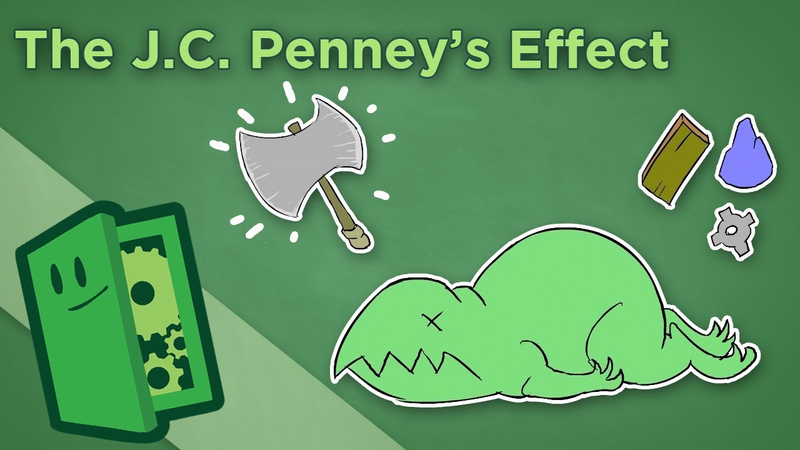
The J.C. Penney's Effect - Designing "Fair" vs "Feels Good" Systems - Extra Credits
The core thesis of this analysis is that in game design, as in retail, objective fairness and efficiency are often secondary to the psychological perception of value.
- Player engagement is driven more by the psychological perception of value and immediate feedback loops than by the objective fairness or efficiency of a game system.
- The J.C. Penney 'Fair and Square' pricing initiative demonstrates that removing deceptive marketing practices like artificial sales can cause catastrophic consumer loss because users prioritize the emotional satisfaction of a 'deal' over honest pricing.
- In the MMO Firefall, replacing traditional rare loot drops with universal crafting components creates a more equitable system but risks failing to trigger the dopamine response associated with receiving a tangible, pre-made item.

Gifting tech company co-founder Trevor Blum explains Mesh
Mesh functions as an integrated gifting service designed to facilitate the purchase of in-game subscriptions and virtual goods within web and browser-based gaming environments.
- Mesh is an integrated gifting platform that enables users to purchase in-game subscriptions and virtual goods directly for others, replacing physical gift cards with automated digital delivery.
- The platform allows players to curate and share wish lists, specifically targeting non-gaming gift-givers to facilitate easier transactions within the gaming ecosystem.
- The company is prioritizing browser-based and PC gaming platforms for its initial rollout to avoid the restrictive platform policies currently present in the mobile market.

Press Start CEO Luis Ernesto Parra on its YetiZen learnings
Press Start Studios, a mobile game developer with operations in both Colombia and San Francisco, focuses on bridging the gap between hardcore gaming experiences and the accessibility of free-to-play mobile titles.
- Press Start Studios utilizes a dual-location model, combining Colombian talent and government support with a San Francisco presence to maintain 24-hour development cycles.
- The studio’s 2013 participation in the three-month YetiZen incubator program served as a primary catalyst for refining their investment strategies, corporate scalability, and product design.
- The company’s core business strategy focuses on bridging the gap between hardcore action-adventure gaming and the high-retention, free-to-play mobile market.

Applicasa's Tzvi Kopetz discusses mobile monetisation
Applicasa functions as a specialized platform designed to enhance mobile game monetization by enabling developers to perform real-time user segmentation and deploy targeted in-game promotions.
- Applicasa’s platform optimizes mobile game monetization by enabling real-time user segmentation and targeted in-game promotions based on geographic location and individual spending habits.
- The core business strategy focuses on increasing conversion rates and player lifetime value by tailoring value propositions to heterogeneous user profiles.
- Founded in July 2011, the company transitioned from a backend-as-a-service provider to a dedicated monetization platform in late 2012.