1 free read left. Create a free account for unlimited reading + AI research.
Create free account
Speed Panel: Monetisation With In-app Bidding
Key insights
6 takeaways- 01Transitioning from traditional waterfall-based mediation to hybrid bidding significantly reduces the operational burden of managing thousands of manual line items.
- 02Despite the automation benefits of bidding, developers must maintain active monitoring of floor price adjustments and ensure close integration between user acquisition and monetization teams.
- 03Modern mediation platforms now facilitate easier A/B testing, enabling developers to make data-driven decisions regarding network performance and waterfall optimization.
- 04Inconsistent reporting transparency across different ad networks remains a primary operational challenge for developers implementing real-time bidding.
- 05Adopting a hybrid in-app bidding model typically yields a 5% to 25% increase in revenue by improving fill rates and reducing latency.
- 06To mitigate potential revenue losses following the iOS 14 IDFA deprecation, developers should prepare to create specific waterfalls for users who opt out of tracking.
Ask AI about this video
Transcript
got a speed panel for you um focusing on monetization with in-app bidding which is being moderated by eric of hyper mx who i think is just joining now uh have we got you there eric got it hooray uh and we just wait for some more people to join in um as before if you've got any questions for the for the panel um do drop them into the q a uh i will jump in and ask them towards the end of the the discussion um again it's only about 20 minutes just a quick panel um but i'm sure it will be very interesting and i will leave you to it take it away eric all right thank you very much i am live from new york city uh i want to thank everyone for joining
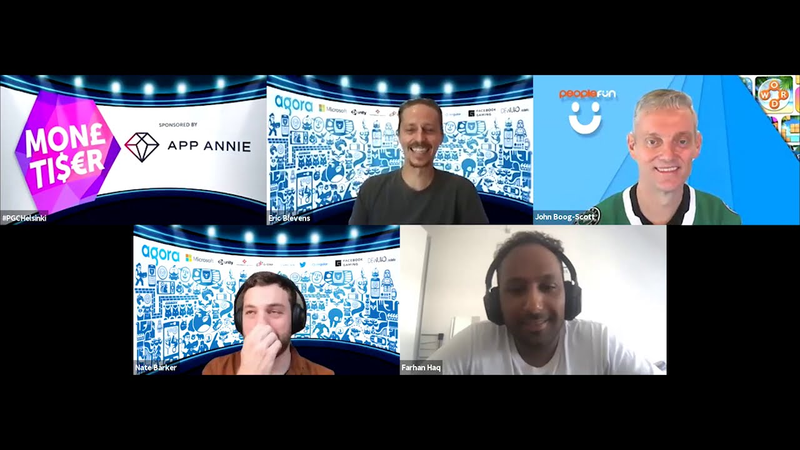
us digitally in helsinki for pocket gamer connects uh today we've got a speed panel focused on the ins and outs of in-app bidding i have a fantastic panel lined up so i'm going to do a quick introduction uh we're joined by nate barker from calibre games giveaway nate we've got john book scott from peoplefun hey john hello and we've got farhan hawk from cybo games what's up faran it's all very i'm the only one without the background didn't didn't didn't work out for me that's all right we've all got to stand up skewing my face well let's kick this off with you far on so we're here to talk about in-app bidding um you know i want you to sort of set the stage if we were to go back a year or two it would be a very different place so can you kind of give us some insight into what are some of the expectations or like the preconceived notions that you and a lot of developers probably have about in-app bidding
in our building's been around for a while at least the conception of it um and as more of the networks coming in to to kind of move there like from facebook and uh iron source ad colony um you kind of expect that with this kind of bidding model you would get a basically higher ecpms and less work without having to put it place in multiple instances um there's a kind of more true view of what the developers out there would pay for your traffic and a kind of better form of competition of course it's taken longer than we expected and we seem to be getting there slowly um of course many of the networks are not there yet with it with it but um running and out bidding against multiple instances with all the networks seems to be like kind of the hybrid model that people are going with until now right right and nate would you would you say sort of the same expectations higher ecpms i mean from a general standpoint if everyone's having a chance to bid on every impression that should give us some better competition
yeah i think in general i think the other thing that um we were expecting um is definitely more variety in the types of advertisers um that we might see um so i think one challenge that a lot of developers face particularly in monetization early on is that they're looking at all these options for partners that they can work with um and generally decide like okay i've heard this name i'm going to integrate this partner and then you just get those particular ads whoever running with that ad network and so one of our expectations is that with um in-app bidding because it necessitates a competition that we just get a little bit more um diversity there from different networks and different uh partners advertising right okay and i mean you fast forward now like you said not every you know network is bidding into a system but we are it's a reality now people are using it at bidding we're using hybrid setups um what does that process look like from
the beginning nate like from from starting the setup uh sure so um we had a um a waterfall set up uh in our game in an idle minor tycoon um and the process was i think a little bit um a little clunky in the very beginning because you have to go to a lot of the partners you already have uh make sure that they understand that you're switching over to in-app bidding um from there um we set up um in some cases like separate um like sort of like separate publisher apps in each system so that they could differentiate between which one was um then inaudib constructed a hybrid so with some partners we began to immediately run a bidder the bittersat on top of the waterfall that we might have already had um and then with the other partners um uh we slowly migrated over from um from the waterfall to the bitter
um so at the end currently now we have both um we have this hybrid so we we have the um the waterfall we have the bitter um and we're working to kind of move more people over to the bidding side um and it took a little bit of experimentation to figure out with the new setup um how all of our floors would change um so we had maybe something like uh 40 or so floors um in our original waterfall as well as some that were moving that were kind of like at the bottom of our waterfall that were automated and then we had to do a lot of experimentation to figure out what the actual optimal setup was and find whatever blind spots we may have had before okay yeah so i mean it sounds like simply from switching to in-app bidding you have some of these benefits that aren't necessarily performance related you mentioned maybe you aren't you know managing as many line items now so john i want to bring you in to kind of get your take on you know what are some of these ways that simply switching
from solely a traditional waterfall to in-app bidding can help your team out not necessarily from from revenue or performance but in general yeah two big things come to mind one is that simplicity of operation we had over you know 2500 line items across our apps and we've cut that in half you know with the move to bidding and expect more to go as well uh it makes it really easy to test new networks that are bidding you know we can easily plug them in and see what kind of impact there is and i guess i guess lastly it really simplifies the conversation with the ad networks uh you know we just we test things you know we'll we'll try things in our waterfall uh you know and part of that is just having a good set up with the networks where everything is either bidding or fixed line item you know it's all about testing there's no more of this negotiating over first fill and and those type of things it's let's just see what you do
right yeah i guess going from 2500 line items down to 12.50 is a significant uh significant decrease there yes nate farhan would would you say you you've seen similar benefits in terms of just optimizing your your process for managing all this stuff yeah i think for for um the fact that the technology's been coming in you also have to test it up against multiple line items see if it works well as a solution because sometimes um the tape not being where it should be means that you kind of need to see if the real-time bidders is kind of a better solution to having multiple line items but generally what we've seen it it does tend to work well it depends on the situation and kind of geo and all that but um in general the management uh is way uh a lot easier you don't have to negotiate kind of where to put those um those instances those floors and kind of uh you can rely more on the bidder and get positive results with less management right and i imagine i mean you know you guys know me i'm from
hypermx for an ad network you love talking to me all the time i'm sure but a little bit less communication with each ad network especially when you're running multiple demand sources is definitely a good thing um so i want to take it take it here next um you know there are a lot of solutions right we've got app 11 max we've got iron source level play which i know you guys are using um do any of you have sort of a favorite feature or capability of the particular system you're using yeah just to jump in uh the a b testing was a game changer for us you know we always use that in our product side of the business you know a b testing every future we do pretty much uh but that was really lacking in the network side you know it was a bit of a maybe not a total guessing game but it was hard to know what the impact of adding in a network actually did to your waterfall you know you could measure the top line but that's hard uh sequentially uh so now it makes it really easy to put a new network in on one side a b test
and just see what which one actually has better arc down or to change up the waterfall on one side et cetera it really really makes that a lot easier to make data-driven decisions yeah i think for us too a b testing was super big um i think a big part of it is it's not just having a b testing but i think it's important that um the a b testing is relatively easy to use um so that um it's it's not difficult to add those networks to or to duplicate line items uh which it can be in some cases um so having that and then knowing kind of what to look for um in our analytics once we rav testing um was was also super helpful um so having access to to see you know the number of impressions uh per user and things like this um line up directly in the analytics that we're getting from the the a b testing made it so that we could act a little bit faster okay yeah that was sort of my next question was you know what
what is the the data transparency like what sort of information are you getting and is it more or less than you know compared to traditional mediation anybody can jump in on that one for us it's pretty similar i mean the you know we the bidding we mostly let it run we occasionally check and audit but uh that that seems to work well you know i think i assume all the systems have really good reporting i know max makes it really easy to see you know where we have issues in the waterfall you know both a b testing and also if maybe a uh a line item isn't delivering what it says it should be et cetera and all that's become a lot easier i know i know the networks love it because they get these loss reports you know so if if they're processing that they know exactly what our waterfall looks like and you know what what it takes to win so i don't once again get all those questions about you know what our waterfall looks like
we're looking for some of this information for you to provide go ahead yeah similarly i don't think there's much difference in reporting in fact you don't have unused line items which could cause potential latency or other issues and also fill rate kind of should be better in fact than having instances because you know the kind of bitter works things out so i don't see any much uh huge differences in reporting and uh basically agreeing with what the other two said that's that's a good good point that i actually hadn't thought of like in terms of fill rate is that something john nate that you've seen as well i mean fill rate is is fairly decent when you're using the the in-app bidding portion of your waterfalls uh yeah the fill rate has improved um i i think another reason for that is that just the lower latency um so because we're not um you know we don't have to run through 100 different line items um and something will get filled relatively quickly we're able to serve more ads on average per user which is a big part of what's
successful for us um if i can just add you know in terms of transparency i think there are probably still some things out there that would be nice to have um for instance it's the same sort of data that i think would be nice to have also just for the waterfalls um a good example of this would be things related to the installs more on like the attribution side um so you know if we are testing um specific networks and we want to make sure that they're say playing by the rules um it would be helpful to have more data um that we we're exposed to about you know um who is who's claiming clicks who's claiming installs so that we could potentially um identify if there's you know any sort of issues um or discrepancies between networks and that you also want to see if you're um if your mediator is biased which always does seem to be the case with all
mediators where you where you use whoever you're using seems like an unnaturally high amount of uh impression count compared to the other networks so that kind of stuff it's hard to get full validity in in the reporting um so and even in to the terms of targeted and non-targeted advertising it can be pretty difficult and some networks have a big discrepancy in the ecpm so you can't really see who your data sources are that well and you know you factor you factor the data that you're getting in obviously the more data the more transparency the better to make those decisions and it kind of combines it brings the ua teams and the monetization teams together so you've got ua and monetization perhaps working more closely you've got more time freed up because you're managing less line items um john you know at people fun do you find that your different departments like user acquisition and monetization are having to talk more or less now that you've you've started using an app binning maybe more but more so it's just uh you
know we have them very integrated uh you know they each knows exactly what's going on on the other side you know and some of that's maybe not so much in-app bidding but now that we have ad revenue at the user level you know that's a huge for us but since all of our apps the majority of the revenue comes from ad revenue you know so that's really critical to be able to effectively measure roads and we definitely want to know you know when there's changes you know when we do something on the monetization side that we think can either do it you know lead to a big change or when we see we do see where drops occur for various reasons uh on the monetization side and all that can impact ua so yeah we pretty much have them kind of live together and you know that leads me sort of to i think a question that is everyone's wonder it is one of those preconceived notions so this is open to all of you guys um have you seen revenue lift or you know increasing arp doubts since you've been
adding in-app bidding yeah i mean overall yes um we would see it really varies by country and platform so there are definitely some instances or cases um where it's dipped but also some cases in the majority of which it's increased by anywhere from five um to twenty percent 20 is more rare five percent is more likely um uh and i think a big part of that has been um because we can uh show more ads um per user um when they're making requests um our our ads are um only um opt-in it's the only rewarded video um so we want to show them as many ads as they'd like to to ask for um so that's been a big part of it also i think um you know we've been able to get as i mentioned from from the beginning a little bit [Music] um networks um uh and been able to kind
of close the gaps between where we previously had um floors that you know maybe actually didn't make any sense yeah for us it might be hard to separate you know we we moved to max a while back and we did see like a 10 to 25 percent left there but uh that included both go into more bidding uh but we also just saw an overall increase in impressions per dau you know so for us it was like a 10 to 25 percent jump but it may have been a combination of factors there okay yeah and just to confirms that like it's the the competition is one of the major elements so just having a better running character for one network and leaving everything else on on default isn't going to work out too well so like combining the bidder with multiple instances for other networks um tends to be what works well and obviously the higher ecpms and the higher fill rate uh kind of increases our thousand uh so that's kind of i think why it works but i still think the tech's getting there and
we should see hopefully better results unless uh ios14 comes with damages at all which i think is your next question right eric great segway far on man it's as if you knew what the questions were that's the way it's exactly right i mean you know the elephant in the room ios 14 obviously i think there's been a bit of a sigh of relief in some some instances because the the impact to idfa is going to be a bit delayed but inevitably ios 14 will be rolling out um and i would love to just get kind of the round panel take on what do we think is going to happen i know you know there are a million things that could it's sort of a guessing game but particularly what do we think is going to happen with in-app bidding as it rolls out uh i talked to you a bit about it before a couple weeks ago but um yeah i mean the ios 14 or the deprecation of idfa uh being delayed till the start of next year has obviously given the industry some more time and a lot of us are looking into like how new
flows could could uh kind of uh get users to at least opt-in to be getting targeted advertising um so that's what a lot of the developers are kind of testing to see what impacts will be very hard at this moment still to predict what the kind of drops would be there but there definitely will be some perceived impact on the industry whether it's a long term or not it's kind of hard to tell but you should expect them from early next year some some impact on your ios ad revenue and you know that it's going to make it hard for many businesses which are kind of relying on on our revenue for their for their titles um but then yeah and the ua side is obviously going to be impacted through that as well but um yeah it remains to be seen i guess what uh happens at exactly what date the the rs-14 push actually happens on right and uh john did you have anything to add there yeah i think that covered a lot of it there's certain there's definite uncertainty you know we're all going to figure this out uh we'll certainly do things to in you know maximize consent you know
user opt-in but that's really uh an industry-wide uh issue you know for that to work everybody needs to get consent on a reasonable level uh for us one specific thing we're looking at with max is you know we'll be testing lit only waterfalls you know so for those users who do uh go the lat route you know we'll put them probably in their own waterfall and just you know have it set up and optimized for that you know or at least we'll be testing that and nate uh you're going last so i assume you've got everything figured out and you're gonna just get silver bullets oh yeah i i i've looked into my crystal ball um and i can say that we have uncertainty in our future um uh i think the um lat specific um waterfalls are gonna be a part of our strategy too and i think actually just going back to the waterfalls we're going to have to spend a little bit more time then once the new features released in ios 14
and rolled out to all users we're going to spend significantly a significant amount of time going back and looking at the waterfall to ensure that if there are massive changes that we're prepared for them so a good example of this just more concretely would be if we've kind of abandoned all of the lower positions in our waterfall because we don't really need them anymore right now and the bidders are taking care of things there and we're getting you know for the few networks that are still on the waterfall more um hits at a higher position um we could see a big problem uh if we don't adjust that and um users or advertisers start bidding at um lower rates right when this change happens with ios 14. um so this could be huge and we could suddenly be missing out on large chunks of revenue because we haven't optimized that you know bottoms right waterfall we'll be keeping a close eye on it
makes sense yeah so it's not it's not all doom and gloom i think um we all have the benefit of being in in one of the industries where there are many many many extremely smart people um things will be figured out um i i want to thank everyone for for joining me today and i want to maybe throw it to rick to see if we have any questions from from the audience we have a lot of questions thank you very much to the panel um so yeah we've got quite a few uh we've got some time for the next panel so let's dig into some of these um one that really caught my eye uh is this from an anonymous attendee indies have low ua budgets we get only one shot at getting positive roi or else we need to do a job um i assume that means get a different job what are your minimum number of impressions needed to test administration metrics like up dial fill rates etcetera i'll open that to anybody who wants to jump in anybody anybody even you eric you can go
in i i don't think i'm gonna have the the expertise needed for that one it's actually a good question i i'd say um i don't know if the top of my head but like generally i'd say a few thousand dau is what you tend to be wanting to look at right so within these ua budget can be tough and you can get into a few thousand um kind of dou you might have to spend tens or even hundreds of thousands of dollars but yeah you need statistically significant data um for that um and ideally a few thousand diu would kind of present that for you um but yeah like if you have a couple hundred dius can be really tough to kind of work out if your op dao is on par with what it should be um and i'd also add to confound that problem even more is that a lot of networks are gonna have um they're gonna have minimums for whether or not they even show ads at a certain uh dau level or impression rate and sometimes mediators will have these minimums
um which will will make it more difficult and there's also like a learning period when you first launch your game so you might see that um you know within the first couple days and you're getting really good cpms and then like a month later it like levels out and that's not necessarily like your fault or the data's fault it's just the algorithms are adjusting advertisers might be adjusting to your traffic suddenly you have this great breakout hit and they're like oh these users you know maybe they don't think the users are great in the beginning and then they realize they are incredible you know they might turn up their bids to try and get more traffic there yeah so nate what you're saying right is that you cannot easily do uh you profitable ua or work out where your heart now is on ad revenue based games right it's easier to focus on kind of ltv titles unless you've um yeah you want to acquire a significant amount of users right so it's uh it's a tough one for the indies to focus on ad revenue yeah especially in the beginning
cool i've got another question which looks interesting um from somebody who's asking what advice would you give to developers who haven't started testing in outbidding yet so i guess like you know if you're just getting into it um what would be the starting point how would you get in how did you get started with all mine would be just just do it you know if you were putting out a new app now i don't know why you wouldn't use all the in-app bidding in it that you that was available it's just easier you know simpler to set up i think you know it's going to be at least as good from what we've seen uh and just lower maintenance cool any other thoughts yeah i mean just that makes sense to me and you know in the form that the more tools we have the better and ev i mean we hear this all the time from our partners every game is different every platform and every game uh i think in that bidding
working in a particular manner in one title doesn't necessarily mean it's going to be your go-to for another but like john said if you can have all these tools in your toolbox and have the ability to to a b test and to get the right balance um obviously i think that's going to be the optimal setup uh farhan you saying something or is that answered what you were going to say no i was just saying i agree i agree with john you know the industry is moving there it's gonna it's gonna get you better results overall but like yeah if you're a smaller app you may just you may not even have time to look at that you may just run on um you know default but yeah uh getting the top level solution in the market it's obviously the way you should you should go with it as soon as you can so if the industry is moving there better to get on on the track cool uh we've got a question from psy who's asking is it possible to get impression level data in in-app bidding you may have already said this um but uh it's a lot for me to take in
so i will throw it out there as well uh it varies my network you know facebook has to date not allowed that uh though they are working on a solution you know that we're kind of baiting with doing a beta with uh where a approximate value per user can be set up that will be good enough for ua so it depends for us we've seen it depends on the network cool i've got one here from an anonymous attendee who's asking as you need to push the bidders it's a hybrid system what are the indications you look for to understand when you're not pushing the bidders enough does that make sense to everybody the only thing i can say is if well if you're not pushing individuals enough is it's a tough one but if for example you could have you could be pushing too much and having uh some instances that are not uh doing
anything so it's kind of like um you have to have a good with the flaws you have you have to have some gap there and each each one of the floors needs to be showing a lot of impressions for you uh otherwise you could go further and also if you if you have a floor eight dollars and actually the the real ecbn is higher it also is an indication you could be changing it um but nate and john probably have more advice on that as well yeah definitely as you you know it's one of those things you get more impressions get more of those ea you you want to spend more time on your waterfall setup you know you want in your hybrid you want multiple line items per network for those that aren't doing bidding and you know you might even want to test bidding against waterfalls for han mentioned for for some networks but for us you know we we're always testing uh and with new apps as well you know testing the waterfall is just a daily activity you know and for us it's a it's a big effort but even for for smaller startups you can make a huge
difference in tuning that waterfall and making sure it's set up in a in a good way cool great uh we're pushing up against time now so i'm gonna just um call it there so we can get started with the next panel thank you everybody for joining us it was really interesting discussion and um yeah thank you very much for everybody for asking questions and stuff like that so a small round of applause from me you
Summary
This panel discussion from the September 2020 Pocket Gamer Connects Helsinki Digital event explores the transition from traditional waterfall-based ad mediation to hybrid in-app bidding models. Industry experts from PeopleFun, SYBO, and Kolibri Games discuss the operational shifts, performance impacts, and strategic considerations for mobile game developers adopting real-time bidding technology.
The primary thesis is that while in-app bidding is still maturing, it offers significant advantages in operational efficiency and competition. Developers report that moving to a hybrid model—which combines real-time bidding with traditional waterfall instances—reduces the burden of managing thousands of manual line items. Key findings indicate that this transition typically yields a 5% to 25% increase in revenue, driven by improved fill rates, lower latency, and the ability to serve more ads per user. Furthermore, the panel highlights that modern mediation platforms have made A/B testing more accessible, allowing developers to make data-driven decisions regarding network performance and waterfall optimization.
The discussion also addresses the challenges of the transition, noting that reporting transparency remains inconsistent across different ad networks. The panelists emphasize that while bidding simplifies management, it does not eliminate the need for active monitoring, particularly regarding floor price adjustments and the integration of user acquisition (UA) and monetization teams. Looking ahead, the participants express uncertainty regarding the impact of the iOS 14 update and the deprecation of the IDFA. They suggest that future strategies will likely involve creating specific waterfalls for users who opt out of tracking to mitigate potential revenue losses. The panel concludes that for developers of all sizes, adopting in-app bidding is an essential step toward future-proofing monetization strategies in an increasingly automated industry.
























Comments