1 free read left. Create a free account for unlimited reading + AI research.
Create free account
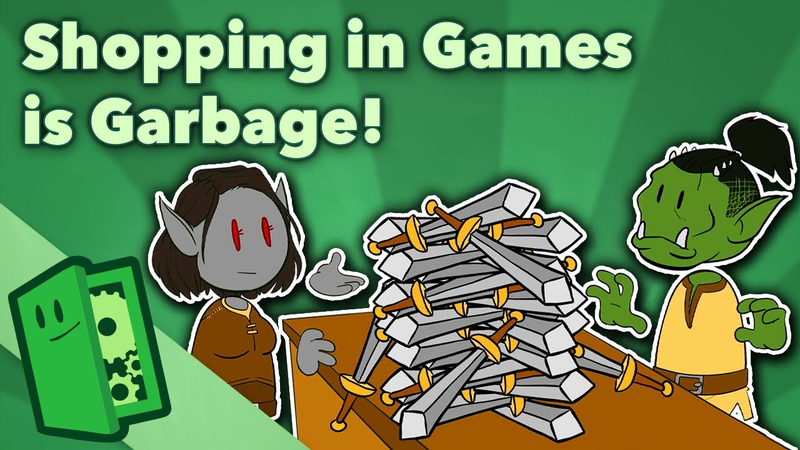
Shopping in Games is Garbage but it doesn't have to be! - Video Game Design - Extra Credits
Key insights
6 takeaways- 01Games such as Recettear, Potion Craft, and Moonlighter serve as examples of current industry standards that often prioritize the end reward over the negotiation process itself.
- 02Current game haggling mechanics are largely underdeveloped, functioning as superficial, zero-sum systems that prioritize simple price adjustments over meaningful player agency.
- 03Developers should shift from hard positional bargaining to soft or principled negotiation models to transform store interactions into puzzle-like experiences.
- 04Titles like Potionomics demonstrate that integrating negotiation cards and social systems creates a multi-dimensional experience where NPC relationship history directly influences transaction outcomes.
- 05Moving away from pure profit maximization toward relationship management and mutual satisfaction allows for more immersive world-building and strategic depth.
- 06Designers should treat haggling as a core design pillar rather than an afterthought to incorporate moral dilemmas and long-term consequences into the player's experience.
Ask AI about this video
Transcript
Over here, stranger. Excuse me, I had something in my throat. Seems like you're in the market for some game design mechanics. Well, you've come to the right place. I'd be willing to part with some deck building, city management, and puzzle solving for a mere 200 peseta, 3,000 gil, and 12 rupees respectively. That is unless you'd like to make me a different offer. Perhaps one that includes a discussion on the very game mechanic we're engaging in right now and how it's one of the last bits of game design to truly come into its own as an engaging and rewarding activity. A wise choice, mate. Thanks so much to HelloFresh for helping us figure out what's for dinner. Real quick up top, please give a warm easy welcome to the designer of Move or Die and the host of the YouTube channel Mental Checkpoint, Nicolae Berbece, who guest wrote this episode. Thanks so much, Nicolae. Loosely defined, haggling in games tends to focus on player and NPC interactions with the goal of determining the value of an item or a service through back-and-forth
communication. Now, it's a core of a lot of tabletop games as the societal intricacies of trading, negotiating, and bartering your way to victory can be a great way to hang out with friends. But not so much in video games, where haggling often has all of the depth of a volume slider. Adjust your price and get one of two possible outcomes. And don't get me wrong, simple mechanics like these or set prices from NPC merchants work well for many games. But if you're looking to add depth to your world, fleshing up the mechanics of haggling could make a trip to the store feel like figuring out a good puzzle, turning the experience into a memorable, more human interaction. The challenge is to make the process itself satisfying rather than only focusing on the reward of the end goal, which is easier said than done as many games have tried but very few have mastered. Recettear, a small Japanese game from 2007, was one of the first attempts at making haggling a major theme of a single-player game and is still considered by many to be the gold standard. In it, you team up with local heroes and venture into dungeons to collect items for your store. Then these items attract customers with unique personalities and budgets who go
to shop your wares using a simple if not slightly outdated mechanic, which basically translates into a money themed tug-of-war, where you try to see how high you can increase your price before the customer gets fed up and leaves. Other games have tried more novel ways of visualizing this mechanic, like the reaction based mini-game in Potion Craft or the trial-and-error customer reaction system in Moonlighter. But back in real life, the authors of the best-selling book Getting to Yes describe this kind of haggling as hard positional bargaining, and it's often used with groups of people you don't really know or care about, with the goal being to get the best deal for yourself. Hard positional bargaining is zero sum, again kind of like a tug-of-war that you've probably seen a lot of in video games. And of course, we've seen some titles spice this method up a little bit by throwing in time-based patient systems or hiding information from the players, like the other party's stance, in an effort to combat min-maxing. But at the end of the day, most games that use hard positional bargaining don't do a really good job at promoting depth, since at its core it's a superficial interaction with a binary outcome. And if that's poorly executed, it might even be more frustrating than a simple fixed price
no-frills merchant interaction. Alternately, there is soft positional bargaining, and it's all about well, um hm, how do I put this? Oh, not being an hole. It's the kind of negotiation you do with a friend when you value your relationship. And most importantly, it's not about maximizing your position, but instead coming to an agreement that is more satisfactory to both parties. This kind of haggling promotes far more depth, an example of which can be seen in the upcoming game Potionomics. In it, you learn new haggling techniques via a collection of negotiation cards that you acquire by befriending other NPC merchants. This allows you to craft new decks that better match your preferred negotiation style and better sell your wares to curious customers. And by making an active effort to maintain those relationships through gifts and hanging out, your merchant friends reward you with things like additional shop customizations and new story arcs. And this kind of haggling can add a ton of life to the world by shifting the player away from a forgettable series of transactions and encourages focusing on their relationship with other parties. Another good example of this comes from
Recettear as well, cuz remember that local hero we mentioned that helps you out during dungeon crawling? Well, later, they show up as a customer. So now you're faced with decisions like, "Huh, do I upsell him on this sword? Or should I cut him a deal because I'll get more items when he slices through slimes with that thing?" Hmm. Asking the player to make these kind of multi-dimensional decisions can not only make your game more engaging, but it can also sprinkle in a little moral dilemma and empathy into the mix. Soft positional bargaining can open even further variations up when you also reframe each party's position. Maybe, as a merchant, you're faced with buying supplies you'll need to make what you sell or maintain your business. Or perhaps as the value of items in your shop goes up, either the clientele itself or their behavior might also change. Heck, maybe in both of these scenarios, for an additional sense of progression, you now have to look for subtle shifts in a customer's expression when you propose a new price and make an informed decision on your negotiating tactics based on that. Do note that last idea gets tricky pretty quickly. As
we've seen, it can be easily overdone. And this is just the tip of the iceberg. What about designs that account for hostile or altruistic negotiations? Or how about dealing with celebrity customers whose item choices might influence the demand for said items? Or trying to haggle with someone who wants to scam you? And for something with even more nuance, there's also principled bargaining that attempts to find options for mutual gain where possible. And that's something Nikolaia covers in a longer video over on his channel, which you should totally check out right after this one. But despite all these interesting options, the mechanics of haggling are still often underdeveloped in video games. But you know, from a developer's perspective, that's actually very exciting. Given how difficult it is these days to find features of this size that haven't already been extensively explored. Concepts like soft positional and principled bargaining could act as starting points in our journey to create haggling mechanics that go beyond volume sliders with the goal of adding additional depth to our worlds and shaping our players' experiences into more memorable interactions. And if, like Nikolaia, you're a designer who finds all this fascinating, now's a
great time to start figuring out how to turn these zero-sum systems into win-win situations. Then perhaps next time, stranger, we can have a more meaningful and personal interaction about what it is you're buying and why exactly you're selling. Come back anytime. And if you come back anytime wantin' dinner, HelloFresh has got a lot of good meals on sale, stranger. You know, it's great that HelloFresh sponsors our shows because they've been saving my time and keeping me way less hangry for ages now, while also helping me ditch tedious trips to the grocery store and stressful meal planning. I get everything I need to prepare awesome home-cooked meals delivered right to my door and I'm eating in a half hour or less. This week, I couldn't wait to try their Southwest Beef Cavatappi. And not only was it fun to cook, it did not disappoint in the flavor department, either. And since Jeff's New Year's resolution was making more quick and easy dinners for his family, their Moo Shu Pork Bowls really hit the spot at only 15 minutes to prepare. Seriously, it was so fast, Zoe and I barely made it
in time. You sure did, bud. Tastiness and traffic violations aside, another thing that's a big win in our book is HelloFresh's continued work on the sustainability front. Ingredients are pre-portioned, which means less food waste, and the carbon footprint of their service is 25% smaller than that of meals made from store-bought groceries. And now's a great time to try HelloFresh for yourself because all you got to do is go to hellofresh.com and use the code EXTRA CREDIT 16 to get 16 free meals, plus three gifts and free shipping. Oh, you heard me right, hungry people. You can get free food while supporting the content you love, the environment, and most importantly, your grumbly tummy. Again, that's 16 free meals at hellofresh.com using the code EXTRA CREDIT 16. Your time and taste buds will thank you and as always so will we. Thanks so much. A heartfelt thank you to Dominic Valenciana, Oreels1, Casey Musgraves, Kyle Murgatroyd, Alicia Bramble, Joseph Lame, and Ahmet Ziya Turk for their continued support.
Summary
Haggling mechanics in video games are currently underdeveloped, often functioning as superficial, zero-sum systems that resemble simple volume sliders rather than engaging gameplay. While many titles rely on hard positional bargaining—a binary, competitive approach to price negotiation—this method frequently fails to provide depth or meaningful player agency. The primary thesis is that by shifting toward more nuanced negotiation models, such as soft positional or principled bargaining, developers can transform store interactions into rewarding, puzzle-like experiences that foster empathy and world-building.
The analysis highlights that current industry standards, such as those seen in Recettear, Potion Craft, and Moonlighter, often prioritize the end reward over the process itself. To evolve these mechanics, designers should look toward soft positional bargaining, which emphasizes relationship management and mutual satisfaction over pure profit maximization. Examples like Potionomics demonstrate how integrating negotiation cards and social systems can create a more dynamic, multi-dimensional experience where the player’s history with an NPC influences the outcome of a transaction.
Ultimately, the goal is to move away from static, transactional exchanges toward systems that incorporate moral dilemmas, long-term consequences, and strategic depth. By treating haggling as a core design pillar rather than an afterthought, developers can create more immersive worlds where every interaction feels personal and significant. This transition from zero-sum competition to win-win scenarios represents a largely untapped frontier in game design, offering significant potential for innovation in future titles.


















Comments