Key insights
6 slides
The dataset
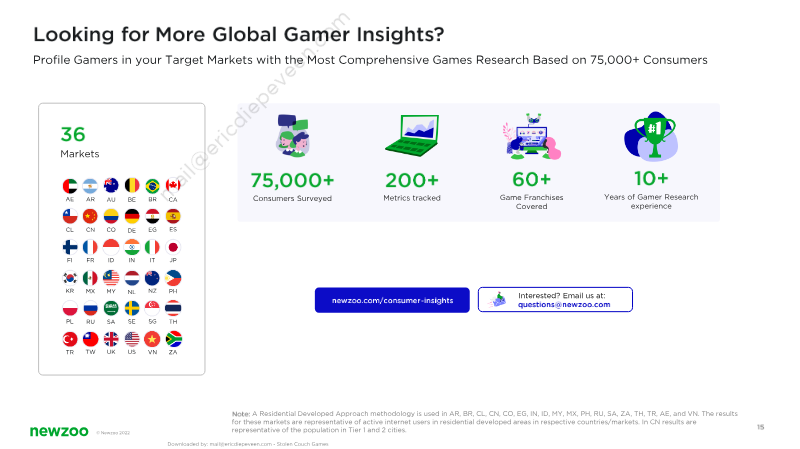
The research surveyed over 75,000 consumers in 36 markets.
The global dataset covers North America, Europe, Latin America, the Middle East, and the Asia-Pacific region. It provides a granular view of player interaction across platforms.
Player segments
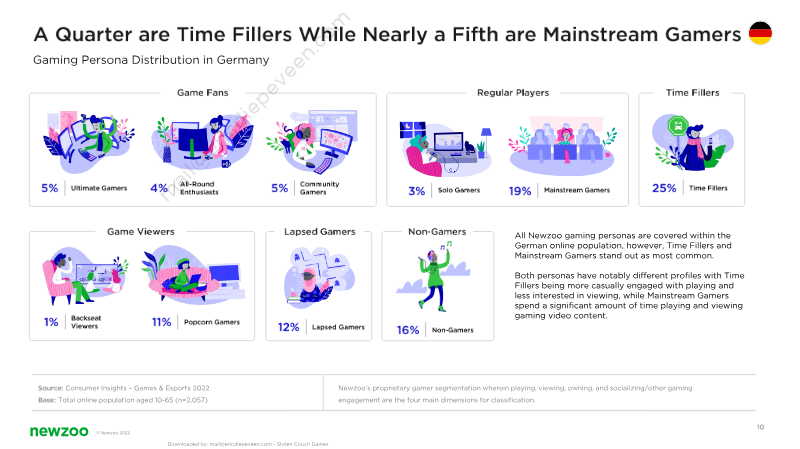
Time Fillers and Mainstream Gamers are the most prevalent segments.
Gaming engagement is categorized into distinct personas.
Beyond gameplay
Gaming video content and esports complement traditional gameplay in Germany.
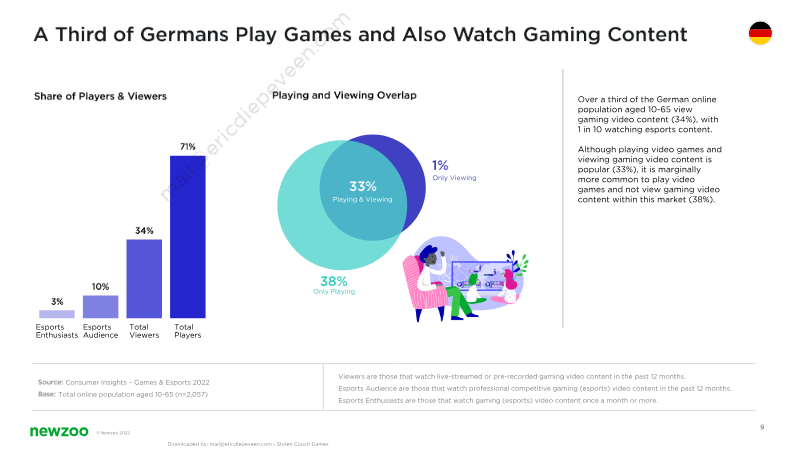
In the German market, playing remains the dominant activity. A significant portion of the population also engages with gaming video content and esports.
Viewing habits. Engagement patterns in markets like Germany demonstrate that gaming video content and esports are significant activities that complement traditional gameplay.
Spending drivers
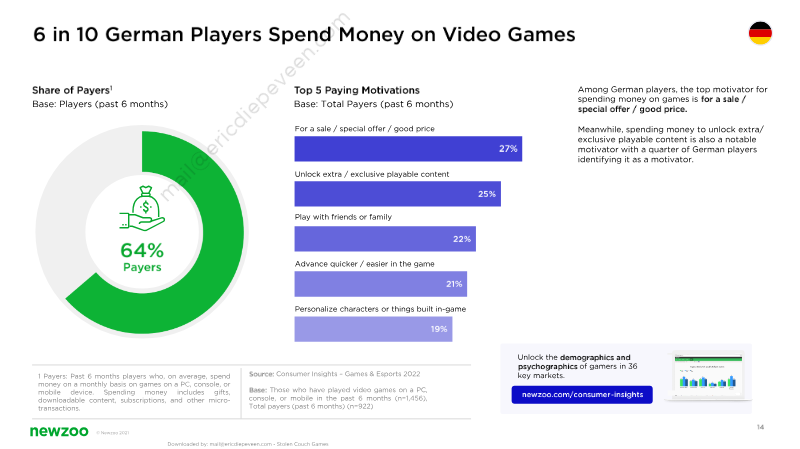
Price sensitivity, exclusive content, and social connectivity drive consumer spending.
Understanding them helps companies navigate the competitive entertainment market.
Spending motivators. Consumer spending is primarily driven by three factors: price sensitivity, the desire for exclusive content, and the need for social connectivity.
Retention strategy
Audience retention requires nuanced segmentation and platform-specific engagement.
Successful retention in the competitive entertainment market focuses on PC, console, and mobile. This approach is essential for reaching and retaining diverse gaming populations.
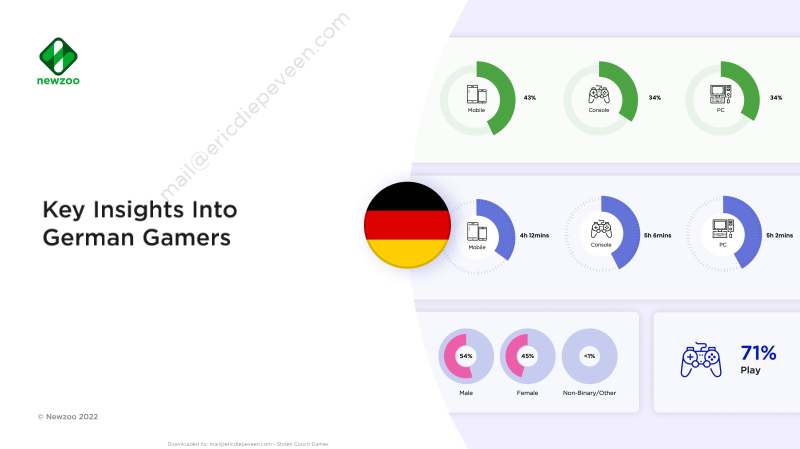
Page 5 of the reportMobile43
Console34
PC34
Key metrics
The analysis utilizes over 100 key performance indicators.
These include monthly active users, daily active users, and lifetime player value. The framework offers a granular view of how players interact with platforms.

1 / 6
Ask AI about this report