Mobile reports and market data
Documents

The Studio Shaping the African Gaming Sector and What To Expect from the Region in 2025
The African gaming sector is undergoing a pivotal transformation, shifting from a passive consumer market toward a robust hub of original content creation.
- The African gaming sector is projected to exceed $1 billion in revenue this year, driven by a young, tech-savvy population and widespread mobile accessibility.
- Local studios are shifting from outsourced work-for-hire models to the development of original intellectual property that emphasizes local folklore and culturally resonant storytelling.
- Nigeria, Kenya, South Africa, and Egypt are currently the primary engines of growth for the regional gaming industry.

GOAT: GUY YOGEV aka Game Design Powerhouse
Guy Yogev, a game designer at SuperSonic and academic lecturer, emphasizes the integration of psychology and behavioral economics into game design to create successful, player-centric experiences.
- Modern mobile game design requires a multidisciplinary approach, blending psychology for user experience with product-oriented thinking to balance creative vision with business KPIs.
- Game design is not purely artistic; it involves rigorous research, wireframing, and behavior mapping, with approximately 70% of the role dedicated to thorough market research and trend analysis.
- In the current hybrid-casual market, success relies on creating games that are easy to pick up while implementing multiple monetization units, such as season passes and subscription models.
This Region Is A Hidden Goldmine for Game Developers
The Middle East and North Africa (MENA) region is emerging as a strategic growth market for mobile game developers, offering a combination of lower cost-per-install (CPI) rates and a rapidly expanding, mobile-first user base.
- The MENA region offers a strategic growth opportunity for mobile developers due to lower cost-per-install (CPI) rates and a mobile-first user base that can reach 60% of the performance metrics of tier-one markets.
- Mobile casual gaming, specifically board, puzzle, and card genres, dominates the regional market and accounts for over 70% of total gaming activity.
- Regional investment strategies have shifted from localized publishing of foreign titles toward the development and acquisition of original intellectual property and proprietary technology, led by Saudi Arabia, the UAE, and Qatar.

Exploring Match Villains: A New Contender for THE Casual Throne
Match Villains, developed by the Turkish studio Good Job Games, represents a strategic attempt to capture market share within the highly competitive mobile match-three puzzle genre.
- Good Job Games' 'Match Villains' is attempting to disrupt the saturated U.S. match-three market by replicating the core mechanics and monetization models of industry leaders like Royal Match.
- Since its April launch, the title has scaled to approximately 50,000 daily installs but currently generates only $50,000 in daily revenue.
- Analysts project the game's long-term daily revenue potential is capped at $150,000 due to the difficulty of competing against entrenched market incumbents.


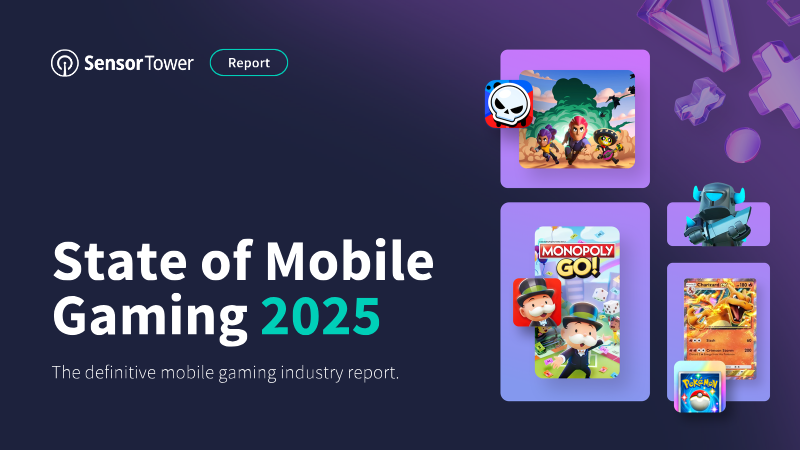
State of Mobile Gaming 2025
Sensor Tower's analysis of the 2024 mobile gaming market describes a mature, consolidated industry in which growth now comes from monetization and engagement rather than new installs.
- Global mobile gaming revenue grew 4% to $82 billion in 2024 despite a 6.6% decline in total downloads, signaling a shift toward high-value player retention.
- The industry has entered a 'live operations' era, with 84% of total revenue now generated by games utilizing continuous updates and seasonal events.
- Publishers have reduced new game releases by 50% since 2020, focusing resources on high-quality core titles rather than volume.

TWIG #322 Farmville, Pokemon Go, and Female Gamers
The mobile gaming landscape is currently defined by high-stakes consolidation and a strategic pivot toward sustainable monetization.
- The mobile gaming industry is shifting away from hypercasual models toward hybrid monetization and in-app purchases, as evidenced by Tripledot’s acquisition of AppLovin’s gaming division.
- Firms transitioning from hypercasual to live-service models face a critical 100-day window to implement effective monetization strategies to mitigate the risks of integrating fragmented portfolios.
- Revenue growth in the mobile sector is increasingly concentrated in the United States and is driven by hybrid monetization rather than pure download volume.

The Art of Scaling Games: When to scale your game?
Successful game scaling functions as an asset-acquisition strategy, transforming individual titles into predictable, long-term revenue annuities.
- A game is ready for scaling only after demonstrating consistent, predictable cohort performance over a period of nine to twelve months.
- Profitability calculations must be granular, accounting for platform fees, creative production costs, and internal team overhead to determine an accurate net return on ad spend.
- Studios should mitigate performance volatility by maintaining a robust pipeline of creative concepts, as scaling initiatives often extend payback periods and tie up significant capital.

Pocket Gamer Reacts: Breaking down Scopely's blockbuster $3.5bn deal for Niantic's games business
Scopely’s acquisition of Niantic’s games business for $3.5 billion represents a major consolidation within the mobile gaming sector, signaling a strategic pivot for both organizations.
- Scopely has acquired Niantic’s games business for $3.5 billion, taking over the development and live-service operations for titles including Pokémon GO, Monster Hunter Now, and Pikmin Bloom.
- Pokémon GO remains the primary financial anchor of the deal, having generated over $8.5 billion in lifetime gross revenue.
- Niantic is pivoting to focus on geospatial AI technology, supported by a $250 million funding round that includes a strategic investment from Scopely.

Skillz CEO Andrew Paradise on the $75M Accelerator and the Future of Skill-Based Gaming
The $75 million Developer Accelerator program aims to catalyze the next generation of high-quality, synchronous, skill-based mobile gaming.
- The Skillz Developer Accelerator program provides $75 million in capital and infrastructure to studios developing high-quality, synchronous, skill-based mobile games.
- To qualify for the accelerator, developers must demonstrate strong performance metrics, specifically a Day 1 retention rate exceeding 45% and a proven capacity for long-term live operations.
- The skill-based gaming market is projected to grow from $31 billion in 2022 to $85 billion by 2030, driven by competitive models that prioritize entry fees and prizes over ad-supported or pay-to-win monetization.

A Beginners Guide to Ad Monetization: The Fundamentals by Felix Braberg
Mobile ad monetization relies on the interplay between effective cost per mille (eCPM) and fill rates to drive sustainable revenue.
- Ad Revenue per Daily Active User (Ad ARPDAU) is the primary metric for evaluating monetization performance, providing a stable baseline independent of user acquisition fluctuations.
- A healthy monetization ecosystem requires a balanced demand distribution where no single ad network accounts for more than 40 percent of total earnings.
- During the soft launch phase, developers should prioritize maximizing ad viewer rates and impressions per DAU rather than focusing exclusively on eCPM.
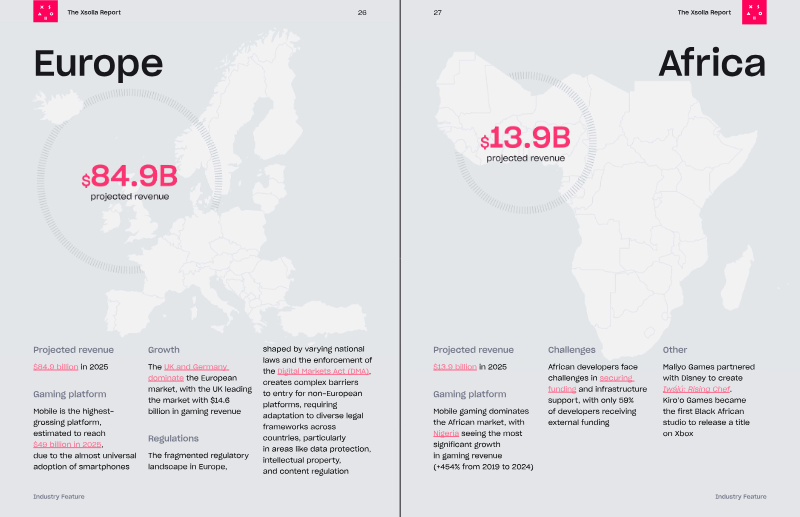
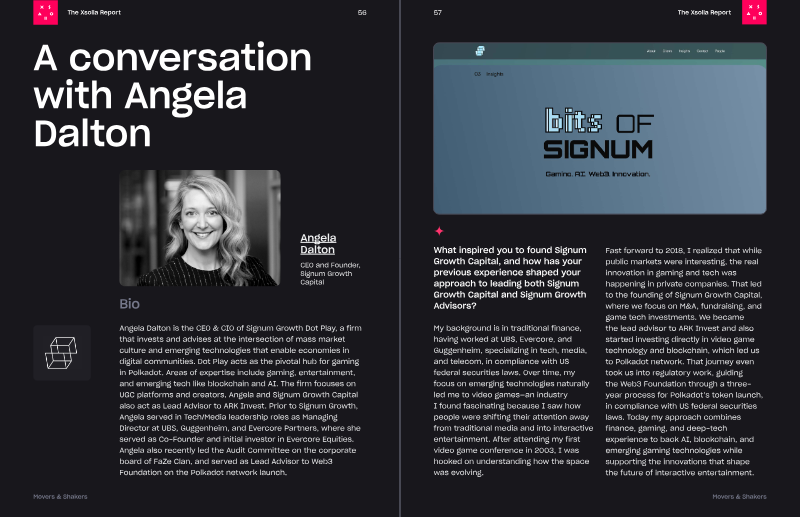

The Xsolla Report: State of Play – Q1 2025
The "State of Play – Q1 2025" report provides a comprehensive analysis of the global gaming industry, forecasting continued robust growth and significant strategic shifts for 2025 and beyond.
- The global gaming industry is projected to reach $522 billion in revenue by 2025, with a forecasted annual growth rate of 7.25% through 2029.
- Developers are increasingly adopting direct-to-consumer strategies and web-based storefronts to bypass traditional platform fees and improve profit margins.
- The industry is shifting from passive consumption to active participation, driven by Gen Z and Gen Alpha’s preference for user-generated content and in-game development tools.

Supercell's New Boat Game - The Experts Weigh In
Supercell’s latest project, currently referred to as Boat Game, represents a significant strategic shift toward ambitious, real-time, and hardcore mobile experiences.
- Supercell is shifting its strategic focus from casual, short-session mobile games to complex, hardcore experiences featuring naval combat, third-person shooting, and deep RPG progression.
- The 'Boat Game' utilizes a hub-and-shard structure with 3D environments, marking a transition away from traditional menu-based mobile interfaces toward persistent, immersive worlds.
- The studio is attempting to accelerate development by reusing assets from previous internal projects like Moco and employing a 'ship early' philosophy to iterate on a high-fidelity engine.