Mobile reports and market data
Documents

Youzu's successful transition from PC to mobile games
Youzu has successfully transitioned from a dominant PC and browser-based publisher to a major force in the mobile gaming sector.
- Youzu successfully pivoted from a $135 million annual PC and browser-based business in 2014 to a mobile-first strategy, anchored by the success of 'Youth of Three Kingdoms'.
- The mobile title 'Youth of Three Kingdoms' achieved 9.5 million total players and generated over $16 million in gross revenue within its first 20 days of launch.
- Youzu’s monetization model demonstrates high efficiency, with per-user revenue reaching $5.30 after 30 days and $11.00 after 60 days.

Rovio on balancing luck and skill in Nibblers
The development of the mobile match-3 title Nibblers represents a strategic shift for Rovio, prioritizing the creation of a new intellectual property over leveraging the established Angry Birds brand.
- Rovio developed Nibblers as a strategic move to establish a new intellectual property outside of the Angry Birds franchise, targeting a female demographic aged 25 and older.
- The core design challenge involved integrating characters as active board participants rather than static UI elements, a process that required the creation of over 20 distinct prototypes.
- The development team prioritized a calibrated balance between luck and skill to ensure the gameplay loop remained fair and engaging for a casual audience.

StartApp on the power of fast-emerging mobile markets like Russia, Brazil and Saudi Arabia
The mobile advertising landscape is undergoing a significant shift as high-value users emerge in regions previously categorized as developing markets.
- High-value user segments are shifting toward emerging markets like Saudi Arabia, Brazil, Turkey, and Russia, which now feature widespread high-end device adoption and strong engagement.
- Effective mobile monetization requires a localized approach that accounts for the distinct cultural preferences and behavioral nuances of each specific territory.
- A one-size-fits-all advertising strategy is ineffective; success depends on tailoring content to specific app genres, such as distinguishing between casual games and hardcore MMORPGs.
How Kabam is looking to crack China
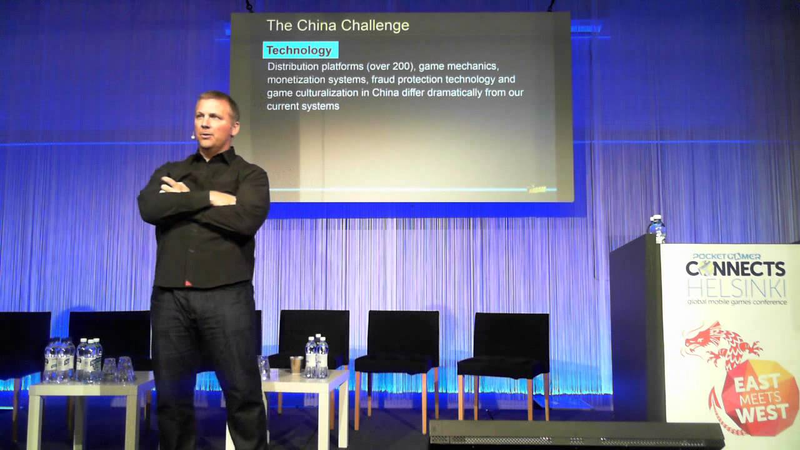
Kabam’s strategy for navigating the global mobile gaming market centers on the necessity of "culturalization"—the deep adaptation of game systems to fit local preferences—rather than simple localization.
- Asian markets including China, Japan, and Korea now account for over 50% of global mobile gaming revenue, yet remain dominated by local developers due to high barriers to entry.
- Kabam’s strategy for market penetration relies on 'culturalization'—deeply adapting game systems like VIP features to local preferences—rather than simple translation.
- To succeed in China, Kabam leverages local partnerships for distribution and regulatory compliance while utilizing its Beijing studio to maintain internal control over code and IP.
Fallout Shelter - How a Casual Game Won Over Hardcore Players - Extra Credits
Fallout Shelter achieved unexpected commercial success, briefly surpassing top-grossing titles like Candy Crush, despite utilizing free-to-play mechanics typically rejected by the hardcore gaming demographic.
- Fallout Shelter achieved commercial success by briefly surpassing top-grossing mobile titles like Candy Crush, demonstrating that hardcore players will engage with free-to-play mechanics if implemented correctly.
- The primary driver of the game's success was the removal of player-versus-player (PvP) competition, which eliminated the pressure to compete and the fear of falling behind other players.
- Hardcore players' traditional resistance to free-to-play elements like timers and gashapon-style monetization is rooted in competitive friction rather than the mechanics themselves.

Unity on the importance of going against the grain
Unity, represented by founder David Helgason and EVP Jussi Laakkonen, emphasizes a mission-driven approach to game development, prioritizing the democratization of technology over traditional licensing models.
- Unity transitioned to a free-tier engine model to democratize technology, shifting its primary revenue streams toward the asset store and integrated advertising services.
- The mobile gaming market is increasingly stratified, with large-scale titles dominating the landscape and creating significant discovery challenges for independent developers.
- Success for small teams in the current market relies on niche-focused strategies and the ability to iterate rapidly with minimal capital investment.
PechaKucha: Eric Seufert's Mobile Ads Marketing 101
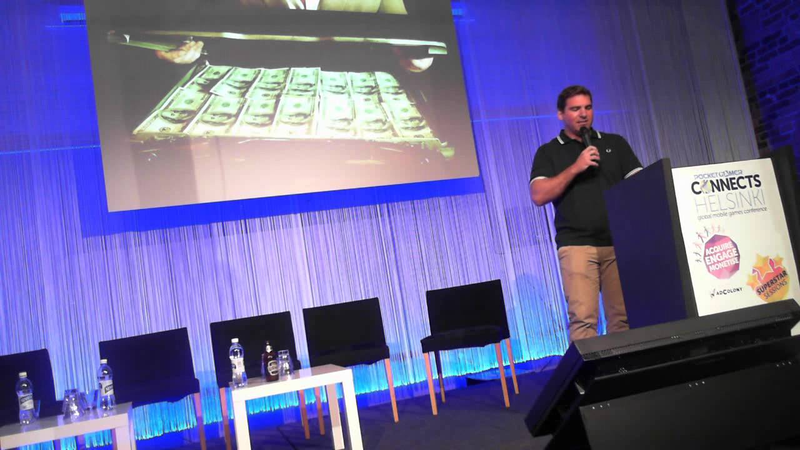
Mobile advertising sales operate as a high-pressure war of attrition rather than a traditional relationship-based business.
- Mobile ad sales are characterized by a high-pressure, confrontational model that prioritizes aggressive outreach and volume over professional relationship-building.
- Sales tactics frequently rely on deceptive practices, such as name-dropping high-profile clients to establish false credibility and using unsolicited communication to secure initial test budgets.
- Operational strategies often prioritize vanity metrics like daily active users over actual return on investment or traffic quality to maintain the appearance of growth.
PechaKucha: Mark Sorrell on LTV BS
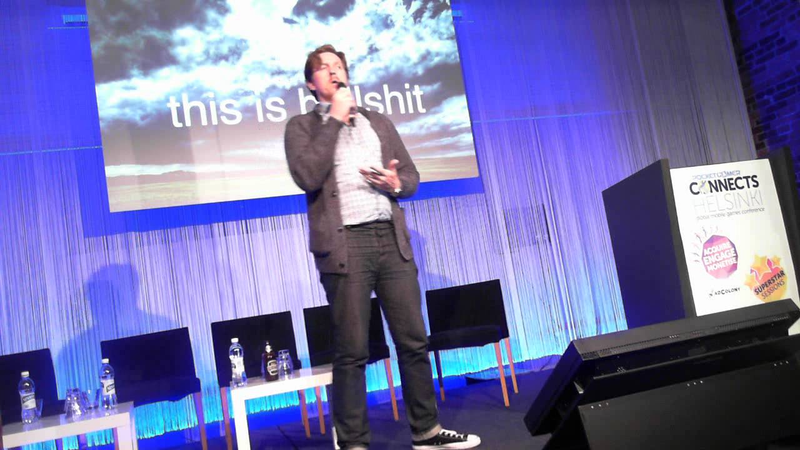
Lifetime Value (LTV) and Lifetime Revenue (LTR) are frequently misused in the mobile gaming industry as definitive data points rather than the predictive assumptions they actually represent.
- Lifetime Value (LTV) and Lifetime Revenue (LTR) are predictive assumptions rather than definitive data points, and relying on them as facts can lead to misleading assessments of game health.
- Prioritizing speculative LTV models often incentivizes short-term revenue extraction and aggressive sales tactics that inflate premium currency supplies without regard for actual player utility.
- The true health of a virtual economy should be measured by the velocity of in-game transactions, specifically the rate at which players spend premium currency rather than how quickly they acquire it.
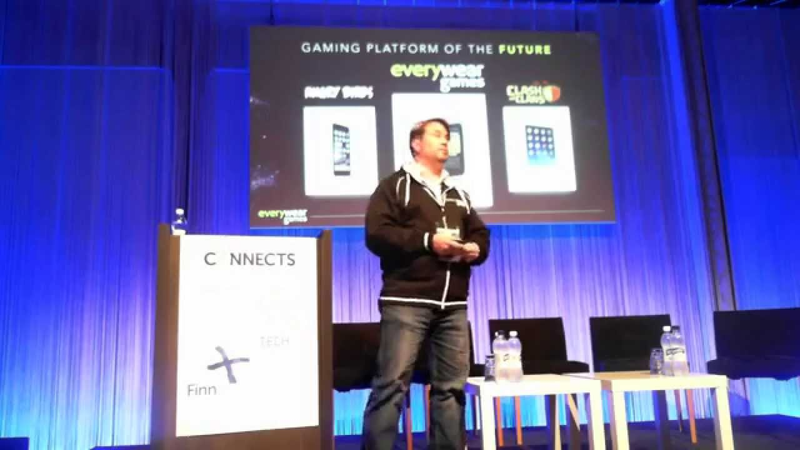
Apple Watch is the most accessible games platform ever created
The Apple Watch represents a paradigm shift in gaming accessibility, characterized by its constant availability and seamless integration into the user's daily life.
- The Apple Watch's constant availability enables high-frequency engagement, with some users accessing games as often as every six minutes.
- Everywear Games successfully utilized a television-series model for their title Runeblade, delivering episodic content to drive long-term player retention.
- Runeblade's development strategy resulted in significant market reach, including multiple Apple features and coverage from over 1,000 media outlets.
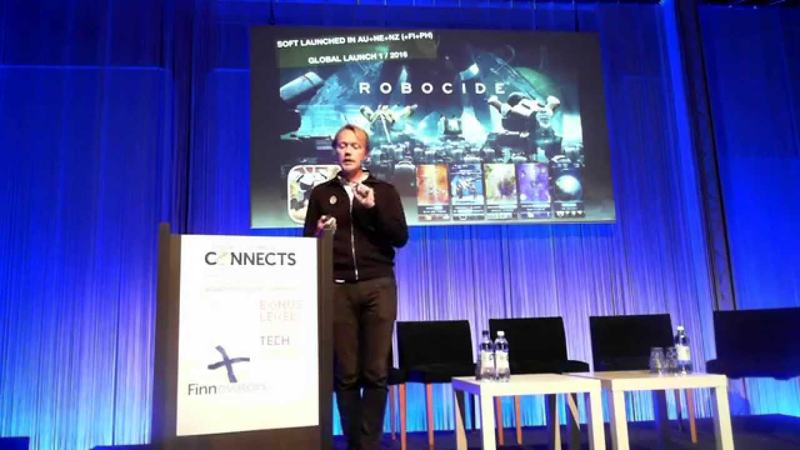
PlayRaven CEO: We don't make clones
PlayRaven’s operational philosophy centers on the rejection of cloning in favor of original, high-risk innovation within the free-to-play mobile gaming market.
- PlayRaven maintains a lean, agile structure with a team of 23 employees to facilitate rapid iteration and cross-pollination of ideas across multiple concurrent development projects.
- The studio rejects the industry trend of cloning, instead focusing on high-risk, original free-to-play mobile titles to differentiate itself in a market saturated with aging games.
- Operational strategy centers on 'burning the boats' by committing exclusively to the free-to-play model and utilizing radical transparency to accelerate the 'time to mistake' through early-stage public testing.

Vlambeer's Rami Ismail on the State of the Mobile Games Industry
The mobile games industry is currently characterized by extreme market saturation, declining growth rates, and a shift toward professionalization that makes entry increasingly difficult for independent developers.
- The mobile games industry has shifted from a low-barrier environment to a saturated market that requires significant marketing investment and high production values for visibility.
- Market success is increasingly concentrated among a few established players, leading to a collapse of the middle market and a bifurcation between high-budget AAA titles and struggling independent projects.
- Developers are engaging in a circular migration between mobile, PC, and console platforms, often failing to account for the unique ecosystem requirements of each market.

Biz Daily: Will Instagram be the next UA goldmine?
The integration of Instagram into Facebook’s advertising ecosystem marks a significant development in mobile user acquisition (UA) for the gaming industry.
- Facebook is integrating its advertising infrastructure with Instagram to open its 300-million-user base to mobile game developers.
- Major mobile game developers currently allocate approximately 30 percent of their revenue toward marketing, driving the demand for new high-scale acquisition channels.
- Mobile measurement partners have been authorized to provide granular analytics for Instagram, enabling developers to track ad performance, user interaction, and geographic reach.