Mergers & Acquisitions reports and market data
Documents
From Space Ape to Duolingo via Supercell with Simon Hade
The evolution of modern mobile gaming studios reveals a critical shift from rapid, decentralized experimentation toward a model defined by genre mastery and operational focus.
- The mobile gaming industry has shifted from decentralized, rapid experimentation to a model of genre mastery and operational focus, as the market now demands blockbuster-level commercial performance.
- High-autonomy, broad-spectrum R&D strategies are increasingly ineffective because studios that diversify across too many genres dilute their expertise and fail to meet modern growth thresholds.
- Integrating gaming expertise into non-gaming sectors like educational technology allows companies to leverage game-like mechanics and engagement loops to drive user retention.
🚨📢 BREAKING NEWS: Netflix heartbroken after WB, Disney AI fun, Meta losing $70B 🤯
This analysis covers major developments in the global entertainment and gaming sectors as of early December, focusing on corporate consolidation, artificial intelligence integration, and shifting market strategies.
- Disney has secured a $1 billion equity agreement with OpenAI, granting the AI firm access to 200 iconic characters for generative content development.
- Meta is pivoting away from its Metaverse division, Reality Labs, after accumulating approximately $70 billion in losses to focus resources on AI.
- Paramount has submitted a $108 billion all-cash offer for Warner Bros., creating significant competition for Netflix, which is also pursuing the acquisition.
TWIG #361 WB Games’ Fate, CoD’s Apology Tour & the UA Financing Trap
The global gaming industry is currently navigating a period of intense structural realignment, characterized by aggressive media consolidation, shifting advertising paradigms, and evolving hardware strategies.
- Large-scale media consolidation, exemplified by potential sales of Warner Bros. Discovery and PIF interest in Electronic Arts, is treating gaming assets as secondary to broader streaming and sports ecosystems, threatening the stability of studios like Avalanche and TT Games.
- The mobile gaming user acquisition landscape is shifting as e-commerce brands increasingly outbid game studios for ad inventory, forcing developers to contend with higher costs and more complex financial leverage.
- Platforms like AppLovin are fundamentally altering mobile monetization by displacing rival game studios in ad space, which paradoxically helps developers by reducing player cannibalization while simultaneously driving up acquisition costs.
Netflix's $83bn Warner deal doesn't value games & why award shows hate mobile | Week in Mobile Games
Netflix’s recent $82.7 billion acquisition of Warner Bros. Discovery highlights a significant strategic ambiguity regarding the role of interactive entertainment in large-scale media mergers.
- Netflix assigned a $0 valuation to the Warner Bros. Games division despite acquiring the company in an $82.7 billion deal, signaling uncertainty regarding the strategic value of interactive entertainment in streaming-focused mergers.
- The acquisition of Warner Bros. Discovery includes major developers like Rocksteady Studios and Avalanche Software, yet their long-term operational autonomy remains in question under Netflix’s current corporate structure.
- Mobile gaming faces a persistent legitimacy gap, evidenced by its continued exclusion from major industry honors like The Game Awards and the BAFTAs, which critics argue favor console-based intellectual property.

What’s next for Warner’s mobile games, why award shows ignore mobile, weird TikTok ads and more
The mobile gaming industry currently faces significant uncertainty regarding the potential acquisition of Warner Bros. Discovery by either Netflix or Paramount.
- Netflix’s potential $72 billion acquisition of Warner Bros. Discovery puts the future of Warner’s mobile game portfolio at risk, as Netflix co-CEO Greg Peters reportedly excluded the gaming division from his valuation of the company.
- Jam City was fined $1.6 million by a California court for violating privacy laws related to its failure to provide opt-out mechanisms for the sale of player information.
- Global consumer spending on mobile games in November reached $6.68 billion, a 2.8% decrease month-on-month, while total downloads fell 4.1% to 3.62 billion.
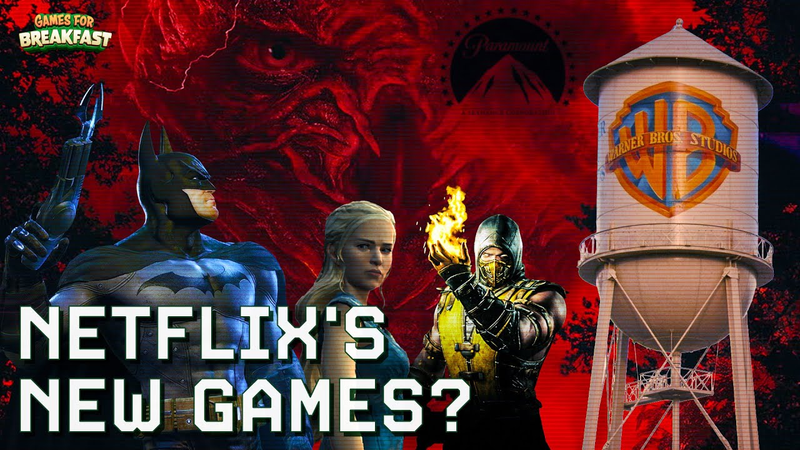
WB Game’s (Possible) Netflix Future, Mario Kart Patch & Game Awards Gossip | Games For Breakfast
The gaming industry is currently navigating a period of intense corporate consolidation and shifting market priorities, exemplified by rumors of a potential $72 billion acquisition of Warner Bros. Discovery by Netflix.
- Rumors of a potential $72 billion acquisition of Warner Bros. Discovery by Netflix highlight a broader industry trend toward massive corporate consolidation.
- Industry consolidation is increasingly associated with negative outcomes for the workforce and consumers, including aggressive monetization, widespread layoffs, and a prioritization of short-term profits over artistic integrity.
- The Game Awards face growing criticism for prioritizing marketing and corporate interests over the recognition of individual creative talent, evidenced by the removal of advocacy programs like the Future Class.
Roblox's car crash interview and Ubisoft's curious Tencent deal | Week in Mobile Games podcast
Ubisoft has finalized a €1.16 billion agreement with Tencent, establishing a new subsidiary, Vantage Studios, to manage core intellectual properties such as Assassin’s Creed and Far Cry.
- Ubisoft has finalized a 1.16 billion euro investment deal with Tencent, resulting in the creation of a new subsidiary, Vantage Studios, in which Tencent holds a 26.32% economic stake.
- Roblox CEO David Baszucki faced significant criticism for a combative and dismissive interview regarding child safety, where he appeared unprepared to address concerns raised by Hindenburg Research and other investigators.
- Dream Games' title Royal Kingdom generated over $300 million in its first year, matching the performance of its predecessor, Royal Match, while maintaining an upward revenue trend that reached $43.6 million in October 2024.
That Unity-Epic deal, Minecraft Blast, Netflix Games 2.0, Duolingo, Ubisoft, Stash, EA and more
The mobile gaming industry is currently defined by strategic alliances, platform pivots, and significant consolidation within the web shop and monetization sectors.
- Unity and Epic Games have entered a strategic partnership allowing Unity-made games to publish directly to Fortnite and integrating Unreal Engine support into Unity’s monetization and web shop tools.
- Netflix has pivoted its gaming strategy toward mainstream, family-oriented, and party games, moving away from the underperforming indie titles that previously populated the service.
- King has entered soft launch for 'Minecraft Blast' in Malaysia, marking a significant effort to bring the Minecraft IP to mobile via a puzzle-based gameplay model.
Epic-Google shenanigans, EA payouts, Squad Busters, Take-Two, Playtika, Rainbow 6, Horizon, more
The mobile gaming industry is currently navigating a period of significant structural and financial shifts, characterized by high-stakes legal developments, major executive compensation disclosures, and evolving platform strategies.
- Take-Two Interactive's mobile segment accounted for 46% of its net revenue in Q3 2025, signaling a shift where mobile performance is outpacing the company's console portfolio.
- Gaming-related digital advertising spend reached $8.7 billion during the first three quarters of 2025, highlighting the growing importance of ad-based revenue streams.
- Legal proceedings indicate that the proposed Epic Games-Google settlement is unlikely to be approved, as critics argue the terms disproportionately favor Epic's business model over broader industry reform.

What will stop the Steam Machine failing again? And how did Helldivers 2's Xbox launch go?
The current landscape of the video game industry is defined by a tension between aggressive corporate consolidation and the necessity for studios to maintain distinct creative identities.
- The video game industry is shifting away from aggressive consolidation toward sustainable growth, evidenced by Square Enix’s divestment from Western studios as firms refocus on core competencies.
- Creative vision remains a viable market strategy, as demonstrated by the success of multiplayer-focused titles like Helldivers 2 despite a crowded and risk-averse landscape.
- High-profile release delays have created a temporary market reprieve, providing a strategic window for smaller developers to capture market share from major publishers.
That Epic-Google deal, Supercell's mo.co revamp, Sandsoft, October's top games, more
The mobile game industry is currently navigating significant shifts in platform regulation, studio stability, and market performance.
- A proposed Epic Games-Google agreement could reshape the Android ecosystem by enabling alternative app stores and introducing a tiered commission structure from March 2026 to June 2032, charging 20% on gameplay-advantage purchases and 9% on non-power content.
- Market volatility persists among top titles, with Honor of Kings leading October revenue at $34 million, Last War holding steady at $125 million, and White Out Survival dropping below the $100 million monthly revenue threshold.
- The squad battler X Clash saw a massive surge to 18.5 million installs in October, a growth spike attributed to aggressive user acquisition strategies involving misleading mini-game advertisements.
Week in Mobile Games E70 - Squad Busters shuts down and Google Play's transformative changes
The mobile games industry is currently navigating significant shifts in development strategy, platform regulation, and corporate restructuring.
- Supercell is shutting down Squad Busters, which launched in May 2024, after the game failed to meet internal performance expectations despite generating over $100 million in lifetime revenue. In-app purchases will be disabled on October 30, 2024, and the game will receive its final update in December.
- Following an injunction in the Epic Games vs. Google case, Google Play in the US is now required to allow alternative payment methods and permit developers to communicate pricing options outside of the Google Play billing system as of October 29, 2024.
- Amazon is cutting approximately 14,000 corporate jobs, with significant layoffs impacting its games division, specifically in the San Diego and Irvine offices, alongside the closure of the game New World.