Match 3 reports and market data
42 game industry reports, presentations and talks about match 3 from writers such as Two & a Half Gamers, Deconstructor of Fun and PocketGamer.biz, newest from 2026. Every document has a summary and key insights with the page they come from, and 1 chart or table is extracted as data.
Documents
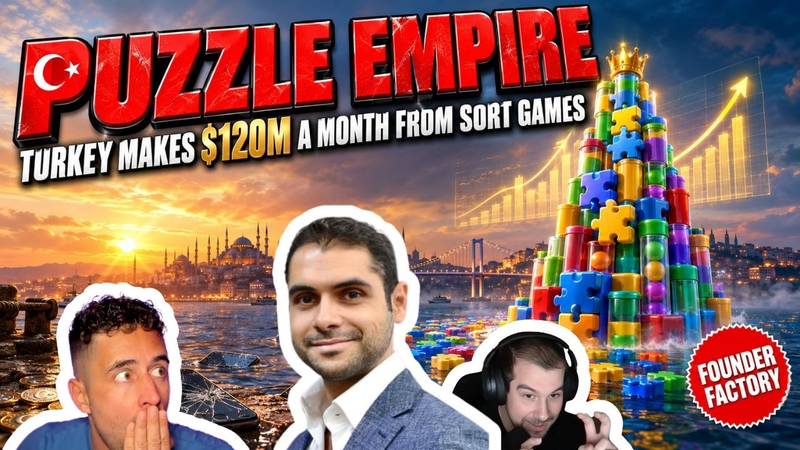
Istanbul Is the University of Puzzles: Dream, Grand, Loom & the Founder Factory
Turkey has emerged as a preeminent global hub for mobile gaming, specifically dominating the puzzle category through a highly efficient founder factory model.
- Turkey has established a dominant mobile puzzle gaming ecosystem driven by a 'founder factory' model, where experienced talent continuously spins off new, investor-backed studios.
- The 'Sort' puzzle category in Turkey scaled from negligible revenue in 2023 to approximately $120 million in combined monthly in-app purchase and advertising revenue.
- The industry’s competitive strategy relies on a 'do it better' philosophy, prioritizing the refinement of existing mechanics and advanced level design over radical innovation.
The 'Impossible' Evolution Of Toy Blast
The evolution of the mobile game Toon Blast serves as a case study in revitalizing aging titles through rapid feature adaptation and aggressive live operations.
- Toon Blast achieved a significant revenue surge in late 2023, successfully decoupling its financial performance from the broader, declining blast subgenre.
- The rapid integration of the 'Super Light Bulb' mechanic—adopted from Royal Match within three months of its industry emergence—was the primary catalyst for growth.
- The Super Light Bulb feature revitalized the game by adding strategic depth to the core loop, allowing players to clear entire colors or double special item effects.
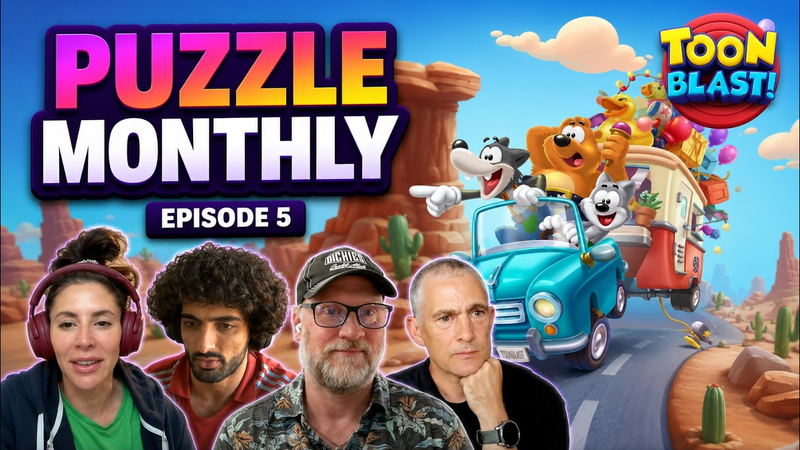
Puzzle Monthly #5: The Secret Behind Toon Blast's Success
Toon Blast maintains its market dominance by fundamentally evolving the clicker sub-genre, moving away from the deterministic, high-friction gameplay that characterized earlier titles like Pet Rescue Saga.
- Toon Blast achieved market dominance by replacing deterministic, high-friction gameplay models found in titles like Pet Rescue Saga with a more accessible, luck-based experience.
- The integration of the 'Super Light Ball' mechanic served as a critical driver for increasing both player retention and revenue by enhancing the core board-clearing loop.
- The game successfully transitioned from short, isolated events to overlapping, long-term engagement structures, effectively revitalizing performance among a mature user base.
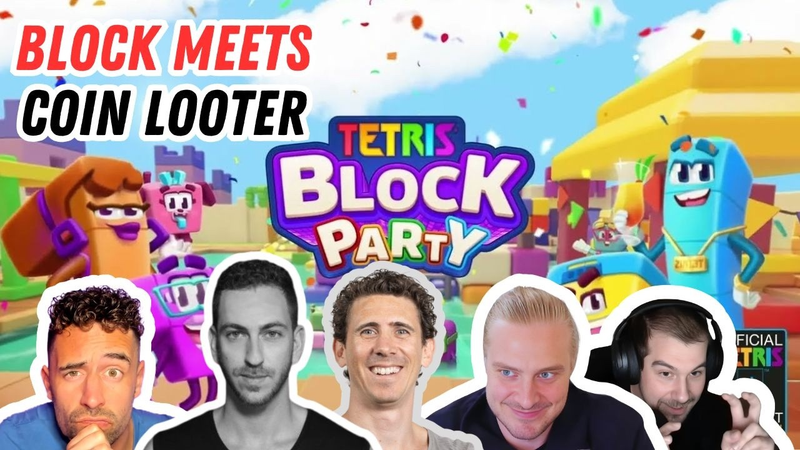
🎮 Live Review Tetris Block Party: Block + Coin Looter into one liveops machine
Tetris Block Party represents a strategic evolution in mobile gaming by merging traditional block-puzzle mechanics with a coin-looter meta.
- Tetris Block Party increases player agency by replacing passive slot-based mechanics with a hybrid model that combines skill-oriented block puzzles with a coin-looter meta.
- The game utilizes template-based event builders that allow monetization managers to deploy complex features like reward wheels and segmented store configurations without requiring engineering support.
- Predictive data models enable automated, proactive interventions, such as granting boosters to players at high risk of churn, which has reduced churn rates by low double-digit percentages.
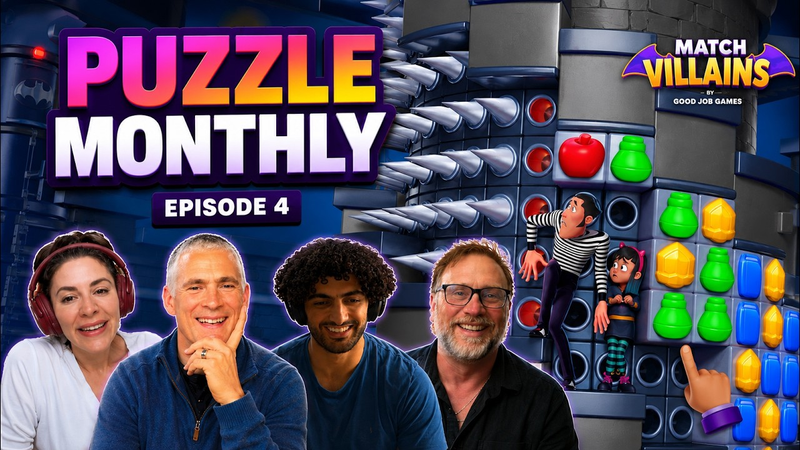
Puzzle Monthly #4: $60M Marketing, $65M Revenue, What Happened to Good Job Games?
Good Job Games represents a cautionary case study in the mobile puzzle market, illustrating the limitations of prioritizing rapid asset exits and visual polish over sustainable, player-centric design.
- Good Job Games' title Match Villains generated $65 million in lifetime revenue but likely operated at a loss, as marketing expenditures for the project reached $83 million.
- The studio's failure to compete with industry leaders like Royal Match stems from a reliance on aggressive, punishing level design that prevents the retention of high-value users.
- Match Villains suffered from flat revenue-per-download metrics and an over-reliance on lower-tier geographic markets, preventing the game from achieving necessary scale.
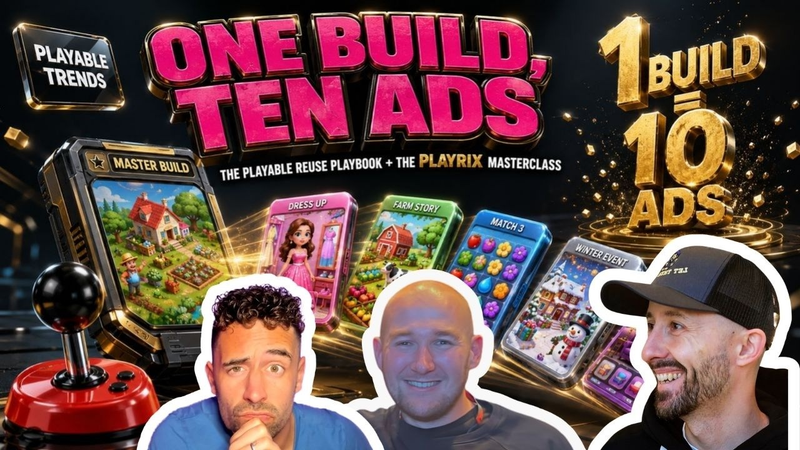
🎮 The 3-Minute playable that pre-qualifies your WHALES!
Mobile game advertising is currently defined by the widespread adoption of templated playable ads, particularly those featuring fashion, dress-up, or narrative-driven mechanics.
- Extended engagement within multi-level playable ads serves as a primary indicator for identifying high-value 'whale' players, making these demos a critical funnel for long-term monetization.
- Relying on templated playable ads that differ from core gameplay lowers cost-per-install metrics but significantly increases user churn due to the disconnect between the advertised experience and the actual product.
- Studios are maximizing ROI by iteratively refining high-performing playable builds through asset swaps, camera angle adjustments, and seasonal thematic updates rather than creating new assets from scratch.
Match Masters' Secret Growth Engine? Influencer Marketing
Influencer marketing has evolved from a peripheral experimental tactic into a core, permanent growth pillar for mobile gaming studios.
- Influencer marketing acts as a core growth engine that can drive up to 30% growth in organic installs by leveraging creator-led trust to attract higher-quality, more engaged users.
- Short-term attribution models significantly undervalue creator partnerships, as influencer-driven installs can continue to accrue for over a year, with some campaigns seeing a 50% increase in attributed installs by day 365.
- Influencer activity creates a positive feedback loop where install spikes improve app store rankings, which subsequently fuels further organic discovery and stabilizes daily active users.
Match Masters' Influencer Marketing Playbook: 8 Years of Always-On Growth
Sustainable growth in the mobile gaming industry requires transitioning influencer marketing from an experimental tactic into a permanent, always-on pillar of the acquisition strategy.
- Transitioning influencer marketing from an experimental tactic to an always-on strategy is critical, as abandoning these programs can accelerate install declines by nearly threefold.
- Deploying a blitz approach, where multiple creators publish content simultaneously, triggers organic uplift and improves App Store rankings while enhancing the efficiency of paid user acquisition.
- Influencer marketing functions as a 'brandformance' tool, attracting higher-intent users who demonstrate superior retention rates compared to those acquired through traditional paid media.
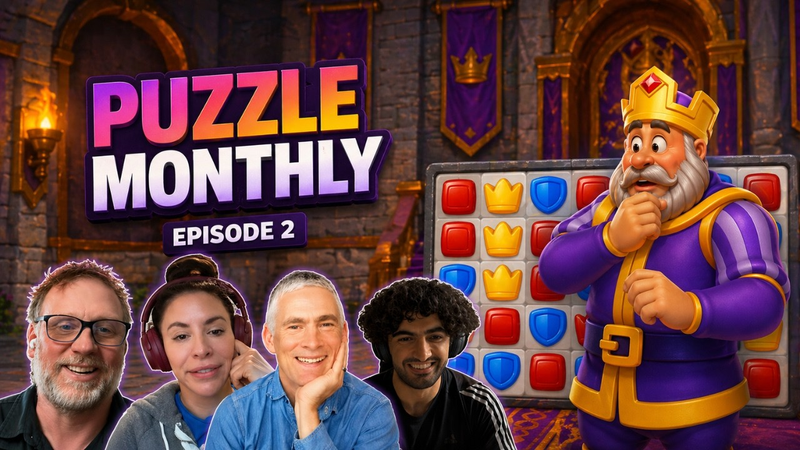
Puzzle Monthly #2: Match-3 Is Broken, Pixel Flow Clones, and Royal Kingdom’s Rise
The mobile puzzle market is currently defined by a stagnation of core mechanical innovation, as developers increasingly prioritize polished execution of proven hybrid-casual models over risky gameplay experiments.
- Royal Kingdom has reached a top-four global position with over $300 million in annual revenue, driven by a high-profile, celebrity-led relaunch.
- The mobile puzzle market is characterized by a lack of mechanical innovation, as high user acquisition costs and incumbent dominance force developers to prioritize refining existing models over risky gameplay experiments.
- Royal Kingdom faces significant long-term viability concerns due to its heavy reliance on paid user acquisition, which contrasts with the organic traffic advantage held by established leaders like Candy Crush.
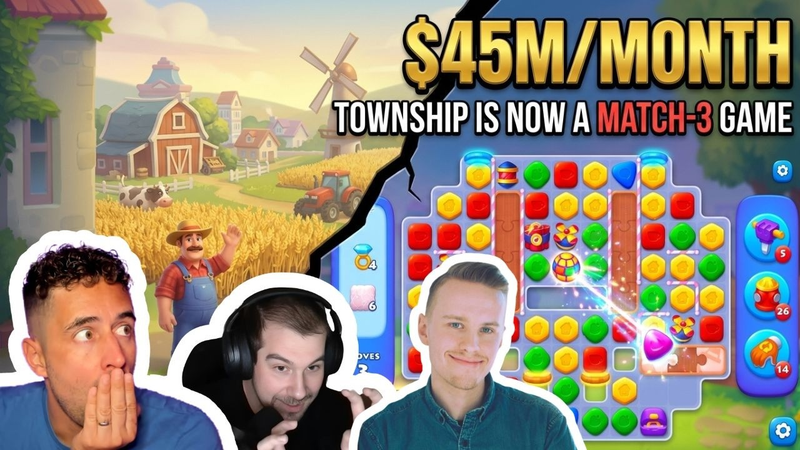
💰🚜 How Playrix turned a 17-Year-Old Tycoon into a $45M/Month UA & Match-3 engine
The longevity and financial success of the mobile title Township demonstrate the effectiveness of evolving legacy tycoon games into sophisticated, multi-core revenue engines.
- Playrix generates $45 million in monthly revenue from Township by evolving the 17-year-old title from a traditional farming simulator into a complex, match-three-driven monetization engine.
- The studio successfully repurposed legacy gameplay loops as onboarding funnels for high-LTV (lifetime value) monetization models, prioritizing energy-driven exploration and merge mechanics over lower-monetizing mini-games.
- To maintain long-term profitability, the studio overhauled the game's economy to tighten currency inflation, ensuring player progression remains strictly tied to the match-three core.

🚨Tactile & Loomit: How Top Games Make Money From Ads
Modern mobile game monetization requires a sophisticated balance between maximizing ad revenue and protecting the integrity of in-app purchase ecosystems.
- Developers should shift from static monetization models to hyper-segmented strategies that use geography, platform, and spending history to ensure ad revenue is incremental rather than cannibalizing in-app purchases.
- To protect long-term retention, studios must curate ad quality by requesting conservative creative formats, monitoring ad duration, and actively swapping formats to prevent aggressive ads from degrading the user experience.
- Studios should prioritize a 'buy-over-build' strategy for ad infrastructure, leveraging specialized external tools to manage complex auction dynamics rather than maintaining internal systems.
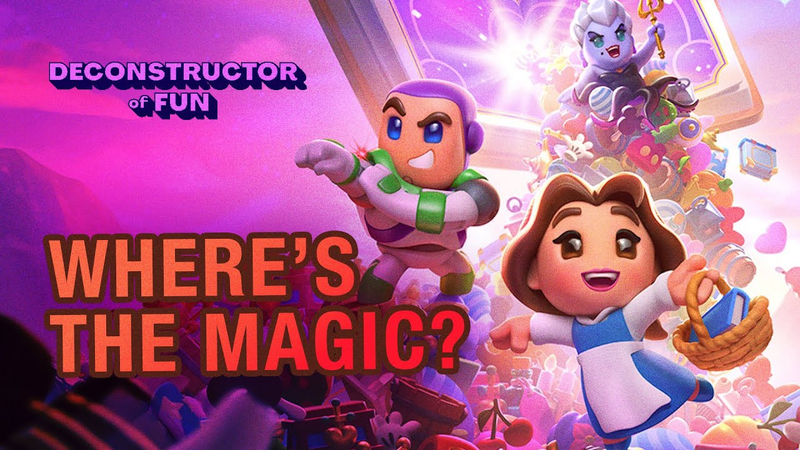
Disney Enters Match 3D — But the Magic’s Missing
Disney’s Magic Match, developed by Jam City, represents a recent entry into the competitive Match 3D mobile gaming subgenre.
- Disney’s Magic Match, developed by Jam City, is struggling to gain traction in the Match 3D subgenre due to its late entry against established leaders like Match Factory, which has dominated the market since late 2023.
- The game fails to implement effective monetization because it lacks early-game difficulty, with playtests showing zero fail states within the first 50 levels.
- Unlike traditional match-three games that use adaptive drop algorithms to drive revenue, Match 3D titles rely on time-based pressure and dexterity, which Magic Match fails to leverage for economic tuning.