Match 3 reports and market data
Documents

King's Tommy Palm on heading east and tapping into the next generation
The mobile gaming industry is increasingly focused on global expansion, with a particular emphasis on Asian markets such as Japan, South Korea, and China.
- Casual games are the most effective vehicle for global expansion because their focus on immediate mechanics transcends the cultural and narrative barriers that often hinder RPGs.
- Successful entry into Asian markets requires abandoning the 'monolithic' view of the region in favor of hiring local experts to manage specific cultural, marketing, and technical nuances.
- Technical localization for Eastern markets necessitates careful management of character sets and font sizes to prevent excessive file bloat and ensure optimal performance.
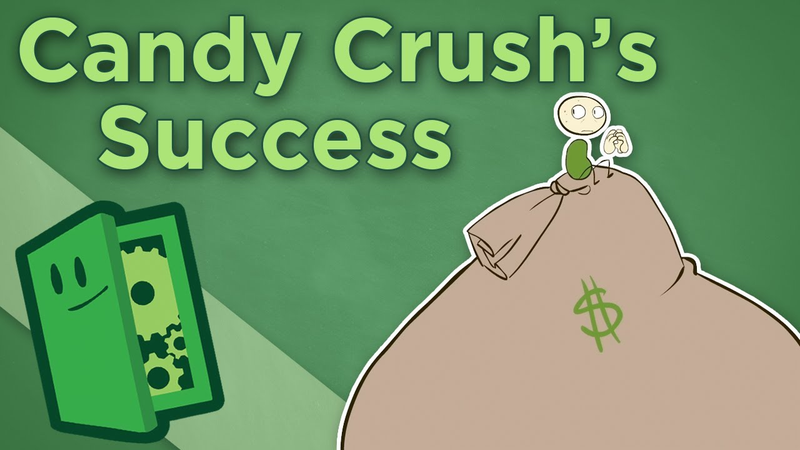
Candy Crush's Success - Why People Can't Get Enough Candy Crush - Extra Credits
Candy Crush Saga’s immense commercial success, characterized by its status as a top-grossing mobile application and a leader in total player engagement, stems from sophisticated game design that transcends the standard match-three genre.
- Candy Crush Saga achieves high engagement by modulating the player's interest curve through hand-crafted, non-rectangular level designs and varied, non-repetitive objectives.
- The game utilizes controlled randomness in its starting boards to ensure every level attempt is a unique challenge, which encourages persistence after failure by preventing the perception of a static logic problem.
- Monetization is driven by shifting the player's focus from abstract score-chasing to tangible, visually obvious goals like clearing specific grid squares or moving items to the bottom of the screen.
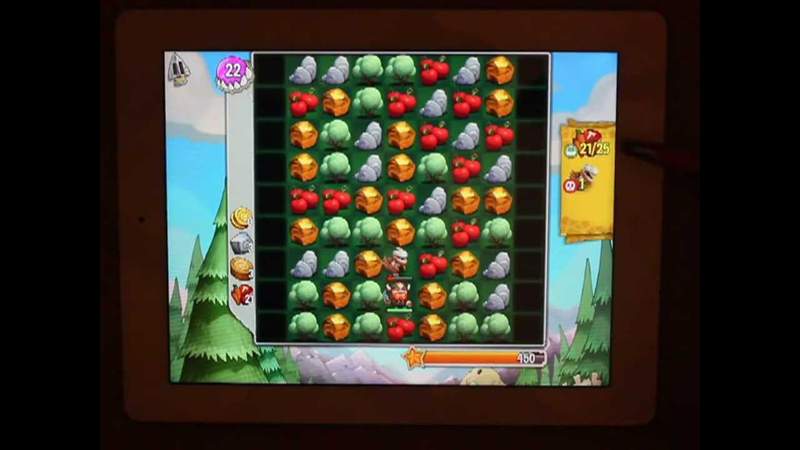
Monetizer: Yodo1's Cavemania
Cavemania, a match-3 title developed by BonusXP and published by Yodo1, represents a strategic fusion of traditional puzzle mechanics and tactical gameplay.
- Cavemania, developed by BonusXP and published by Yodo1, differentiates its match-3 core by integrating tactical character movement and resource management inspired by the Age of Empires franchise.
- The game prioritizes long-term retention over aggressive early-game monetization by avoiding intrusive prompts and delaying requests for push notifications or social connectivity.
- Monetization relies on a dual-track system of permanent character upgrades and consumable utility items, such as bonus turns and gold multipliers, purchased with in-game gold.
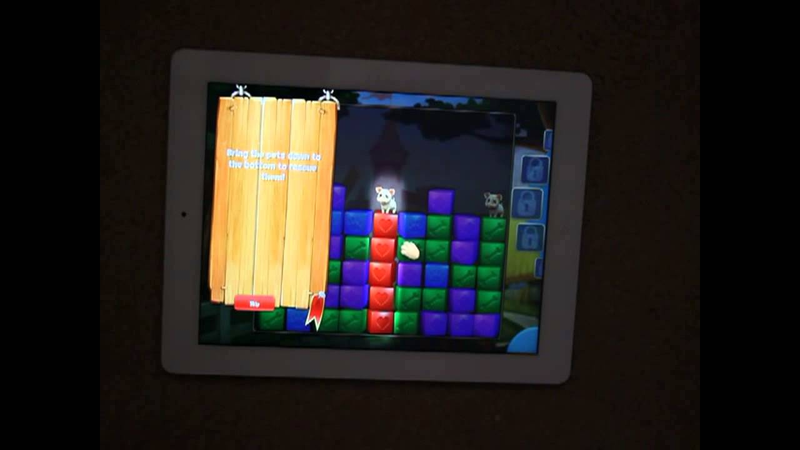
Monetizer: Pet Rescue Saga
Pet Rescue Saga exemplifies a strategic approach to mobile game design that prioritizes long-term user retention over immediate monetization.
- King prioritizes long-term user retention over immediate monetization by deferring revenue generation until players are deeply invested in the game's progression.
- The onboarding process is intentionally gradual, introducing core mechanics like pet-rescue only after several minutes of play to ensure accessibility for a casual audience.
- Monetization is restrained during the early game, avoiding aggressive in-app purchase prompts or hard currency barriers to mitigate early user churn.

King's Tommy Palm talks Pet Rescue Saga on mobile
King is expanding its mobile portfolio with the launch of Pet Rescue Saga, a title previously established on Facebook since October 2012.
- King is expanding its mobile portfolio with Pet Rescue Saga, a title previously established on Facebook since October 2012 that already boasts 5.7 million daily active users.
- The mobile version features a clicker mechanic optimized for one-handed play, allowing users to clear large color-matched areas with a single touch.
- King employs a cross-pollination strategy where players rotate between different titles when they exhaust their lives, effectively increasing total engagement time across the company's library.
Puzzle Games - Analyzing the Design of Bejeweled - Extra Credits
The design of puzzle games requires a rigorous, scientific approach to mechanics, as demonstrated by an analysis of the progression and scoring systems in Bejeweled 2.
- Successful puzzle games rely on invisible mathematical structures that balance player engagement and difficulty through rigorous, iterative design.
- Designers can quantify stage difficulty by calculating the ratio between the exponential point threshold required for level progression and the linear base score awarded for gem matches.
- The core difficulty curve is maintained by balancing the point-to-match ratio against the game's primary lose condition: running out of available moves.