Marketing reports and market data
Documents
AdAttributionKit vs. SKAdNetwork: What's the Difference?
AdAttributionKit represents Apple’s latest evolution in mobile advertising measurement, serving as a successor to the SKAdNetwork framework.
- AdAttributionKit is the successor to SKAdNetwork, introduced at WWDC 2024 to enhance attribution security and user experience across the mobile ecosystem.
- The framework expands beyond the Apple App Store to support multiple app stores, a significant departure from the original SKAdNetwork's store-specific limitation.
- New functional capabilities include native support for re-engagement campaigns and the integration of universal links for seamless deep-linking.

Chrome Valley Customs Live review: How to decrease CPI in Match3 genre? The Success of Xzibit in UA!
Chrome Valley Customs disrupts the traditional match-three landscape by successfully pivoting toward a predominantly male demographic, moving away from the genre’s historically female-centric market.
- Chrome Valley Customs successfully differentiates in the female-dominated match-three genre by targeting a male audience with a car restoration theme, resulting in a US player base that is 41% male.
- The integration of Xzibit from the TV show 'Pimp My Ride' as a brand ambassador was validated through market research and initial Cameo tests, proving highly effective at resonating with the target demographic.
- The development team utilized Facebook static ads and surveys to test marketability and player expectations, which directly informed the game's core concept and appeal.

Discord Live QA for HTMAG Summer Sale
The primary objective for independent game developers is to achieve commercial viability by prioritizing high-quality, focused game design over over-engineered mechanics.
- Prioritize commercial viability by shipping smaller, polished projects in high-demand, manageable genres like horror or idle games rather than over-engineering complex titles like RPGs.
- Steam’s algorithm prioritizes revenue and sales velocity, making the initial launch window the most critical period for long-term success.
- Marketing should focus on tactical, data-driven outreach, specifically targeting hundreds of streamers and participating in festivals to generate genuine interest.

Steam Page Teardowns Part 2
Optimizing a Steam page serves as a critical conversion tool, yet it functions primarily as a destination rather than a traffic generator.
- A Steam page functions as a conversion destination rather than a traffic generator, requiring developers to drive external interest through viral social media and streamer outreach to build a wishlist foundation.
- Marketing materials must sell a specific player fantasy by ensuring every visual and textual element aligns directly with the core gameplay loop.
- Visual strategy should prioritize high-impact imagery that communicates the unique value proposition, avoiding cinematic fluff, cluttered menus, or unfinished assets.

Haunted House Renovator
Haunted House Renovator serves as a practical case study for a development strategy that prioritizes core gameplay loops over high-fidelity production values.
- PlayWay achieves high profitability by prioritizing core gameplay loops over visual polish, often using stock assets and low-resolution images to minimize development time and costs.
- Effective game demos should include direct, integrated feedback mechanisms, such as Google Forms, that ask specific questions about tutorial intuitiveness and player interactions to guide future development.
- Developers should focus resources on functional widgets that drive cross-selling and user engagement rather than expensive, high-fidelity aesthetic elements like title screen backgrounds.
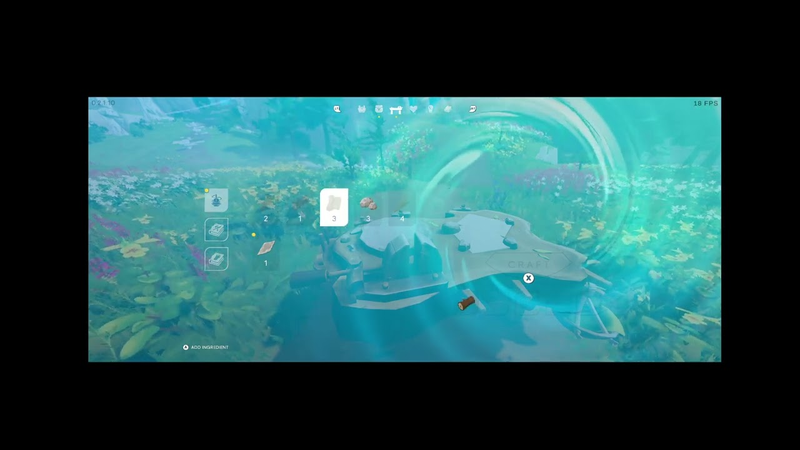
Aloft Best Demo of Steam Next Fest June 2024
Aloft distinguishes itself within the competitive survival-craft genre by pairing a visually striking, floating archipelago setting with a highly effective, non-intrusive onboarding process.
- Aloft utilizes a non-intrusive tutorial system that teaches core survival-craft mechanics without restricting player movement, successfully balancing structured guidance with open-world freedom.
- The game leverages Steam’s platform algorithms by providing substantial demo content designed to increase median playtimes and improve visibility.
- Developers have optimized conversion potential by integrating prominent wishlist prompts directly into high-traffic touchpoints like loading screens and menu interfaces.

Google Ads Best Practices for Mobile Apps with a Limited Budget
Google Ads offers significant opportunities for small businesses and independent mobile app developers to drive user acquisition, provided they adopt a structured, data-driven approach to campaign management.
- Implement rigorous campaign naming conventions including app name, target event, country, and operating system to bypass obscured default reporting and enable granular performance analysis.
- Manually enable 'engaged view' settings to access non-skippable six-second bumper ads, a high-performing format that is hidden by default in Google Ads.
- Prioritize authentic, low-cost user-generated content (UGC) over polished professional assets, as evidence shows UGC frequently achieves superior performance.

Data: exploration vs exploitation | Joseph Iris from Persona.ly
The current landscape of mobile game user acquisition is defined by a strategic tension between exploration—testing new creative variations—and exploitation, which involves optimizing known high-performing assets.
- Mobile game user acquisition is shifting from broad acquisition toward retargeting, driven by a decline in venture capital and fewer new game launches.
- Developers are increasingly using incrementality measurement to ensure retargeting spend re-engages lapsed players rather than subsidizing organic traffic.
- Contextual targeting, powered by natural language processing to create vector representations of app store descriptions, has emerged as the primary alternative to traditional user-level tracking.

The State of Gaming 2024: Trends in Marketing, Gaming, and Apps with Sensor Tower's Lexi Sydow
The global mobile gaming market is currently undergoing a period of stabilization as it moves past the anomalous growth spikes triggered by the COVID-19 pandemic.
- By 2030, non-gaming apps and mobile games are projected to reach revenue parity at approximately $145 billion each, as non-gaming apps increasingly adopt gaming-style monetization tactics like tipping and uncapped spending.
- YouTube remains the dominant social advertising channel for the gaming industry, capturing 50% of total ad spend, while TikTok has emerged as the primary engine for viral discovery.
- While RPG and strategy games maintain dominance in the APAC region, casual titles such as Monopoly GO! and Royal Match have become the primary growth drivers in Western markets.

How has attribution changed since ATT Privacy? | Adam Smart from AppsFlyer
The mobile gaming industry is currently navigating a period of significant structural adjustment, characterized by a cooling of post-pandemic growth and a tightening of privacy-focused data regulations.
- The current mobile gaming industry downturn is a structural correction following pandemic-era overexpansion rather than a systemic collapse.
- Probabilistic modeling remains a viable and effective attribution method for measuring campaign performance despite Apple’s privacy-focused data restrictions.
- Companies are successfully maintaining user engagement by shifting toward transparent, secure data methodologies rather than relying on obsolete tracking practices.

Steam Page Teardowns for HTMAG Summer Sale 2024
Effective Steam page optimization relies on precise genre communication and the strategic alignment of marketing assets with player expectations.
- Prioritize wishlist velocity—the rate of new sign-ups—over total wishlist counts to measure and drive effective Steam page performance.
- Optimize Steam pages by aligning visual assets with specific genre expectations, such as immediate threat visualization for horror or a transition to calm for cozy games.
- Avoid genre blending during development, as it frequently dilutes audience appeal; instead, ship the project and apply lessons learned to future iterations.

How I Made $174,000 With My Game (In A Year)
The transition to full-time independent game development is a multifaceted process that prioritizes market viability and strategic planning over purely technical proficiency.
- Prioritize defining a clear, marketable 'hook' for your game before focusing on technical development or coding, as this is the primary driver for sales and potential funding.
- Chris Stair achieved $174,000 in revenue within approximately one year of working on his game, 'Bō: Path of the Teal Lotus'.
- Securing a mentor or joining a community of like-minded developers can accelerate the learning process and provide necessary guidance for those transitioning into full-time game development.