Marketing reports and market data
Documents
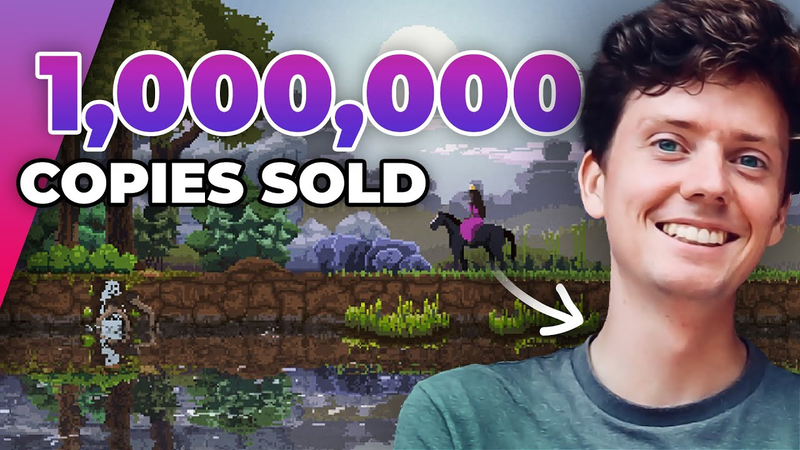
How He Sold 1,000,000+ Copies Of His Game (Thomas Vandenberg) — Full Time Game Dev Podcast Ep. 030
The path to commercial success in independent game development relies on a strategic balance between creative intuition and disciplined project management.
- Publishers provide essential financial stability and de-risking for indie developers, allowing them to focus on development without the mental toll of personal financial insecurity.
- The Kingdom franchise reached a state of 'elegant simplicity' after years of development, leading the creator to sell the IP to Raw Fury to pursue new projects after a decade of work.
- Game development productivity can be optimized by using a prototype-heavy approach, such as creating 20 prototypes in two-week sprints to identify the most viable concept for a six-month production cycle.

Softlaunch Sonar #7: The Evolution of CPI Testing in Gaming
The gaming industry is currently undergoing a fundamental shift in user acquisition strategy, characterized by the widespread adoption of mini-game mechanics as the primary tool for testing marketability.
- The Solitaire genre is currently experiencing significant market saturation, with major developers like Metacore, Superplay, and Voodoo attempting to disrupt the category through new iterations and meta-game integrations.
- 4X strategy games are increasingly focusing their development efforts on 'fun-plus' onboarding mechanics, prioritizing creative mini-game variations over core meta-game innovation to drive user acquisition.
- Metacore has soft-launched a new level-based merge game as of December 11, leveraging their existing expertise and audience data from previous titles like Merge Mansion.

2.5 gamers x Live AM(F)A #7 - Ask Me Anything @ December 19 5:30pm CET
The mobile gaming industry is currently undergoing a structural shift, moving away from traditional store-dependent growth toward web-based platforms and Telegram mini-apps.
- The casual merge game market is currently dominated by Microfun and Moon Active, who have successfully scaled by maintaining high production quality and utilizing intrusive ad strategies that prioritize long-term retention over short-term revenue.
- For soft launches, the United States remains the primary testing ground; if a game fails to perform in the U.S. market, it is unlikely to succeed elsewhere.
- Consent Management Platform (CMP) implementation is critical for compliance, with paid solutions typically achieving 93–95% opt-in rates compared to 80–87% for free Google-based alternatives.

7 Habits of Incredibly Effective Gaming Jedis: Special Edition
Achieving long-term success in the gaming industry requires a strategic shift away from the constant pursuit of new titles toward the cultivation of sustainable growth and long-tail engagement.
- Long-term studio success requires shifting focus from constant new title development toward sustainable growth and long-tail engagement for existing intellectual property.
- Studios should balance creative vision with rigorous, data-driven operations, using data to enhance the player experience rather than dictate design decisions.
- In the 2025 mobile market, developers must implement hyper-segmentation and hybrid monetization models to maximize lifetime value.
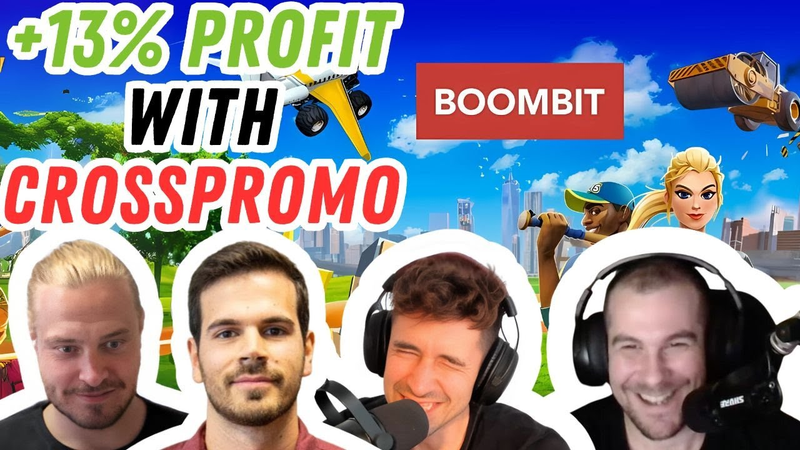
How to increase your profitability with Cross-promotion? A step-by-step guide with Gonçalo @ Boombit
Cross-promotion functions as a critical pillar for mobile game publishers, serving as a primary driver of profitability by mitigating the escalating costs of user acquisition and navigating complex privacy-related market constraints.
- Cross-promotion can account for up to 20 percent of a mobile game publisher's total profitability by recycling existing user bases to mitigate rising user acquisition costs.
- Publishers can capture 13 to 15 percent of total ad revenue by treating internal inventory as a proprietary ad network to fill impressions that third-party networks fail to serve.
- Utilizing internal ad slots allows for high-volume user acquisition at costs as low as one cent per install.

Week in Mobile Games E40 - Games industry trends 2024 review
The mobile gaming industry experienced a notable return to growth in 2024, with Google Play net revenue rising 5.3 percent to $54.6 billion during the first eleven months of the year.
- The top 10 list of new mobile game releases in 2024 was dominated by Asian developers, with no Western companies releasing a new game in the top 15 except for Supercell's Squad Busters at rank 14.
- New game entries into the top 10 mobile charts decreased in 2024 compared to 2023, which saw four major new titles, whereas 2024 saw only one major new entry, Dungeon and Fighter Mobile.
- Cross-platform play is shifting from a niche feature to a necessity, with titles like Infinity Nikki allowing users to transition seamlessly between mobile and console experiences.
Unlocking Attribution with TikTok and AppsFlyer
The mobile marketing landscape is undergoing a fundamental transition as traditional last-click attribution models prove increasingly inadequate for capturing the complexities of modern consumer journeys.
- The industry is moving away from last-click attribution models, which favor intent-based search platforms and fail to accurately measure the impact of interest-based channels like TikTok.
- Advertisers should adopt a holistic measurement framework that integrates incrementality testing and media mix modeling to account for multi-touch interactions and full-funnel ad performance.
- To navigate tightening privacy regulations, companies must transition from deterministic tracking to privacy-safe signal capturing methods, including conversion APIs and data clean rooms.

Let's Review Your Games — Ep. 001
The indie game development landscape relies heavily on the balance between innovative core mechanics and accessible visual presentation.
- Indie game success depends on the synergy between innovative core mechanics and high-quality aesthetic execution, as visual polish is a primary driver of long-term player satisfaction.
- Unique gameplay hooks, such as Morse code interactions or physics-based movement seen in titles like SOS: Forgotten Planet and Chickens Don't Fly, are frequently undermined by poor environmental design and inadequate visual clarity.
- Developers must prioritize visual storytelling and intuitive onboarding to ensure players can navigate systems during unguided play sessions.
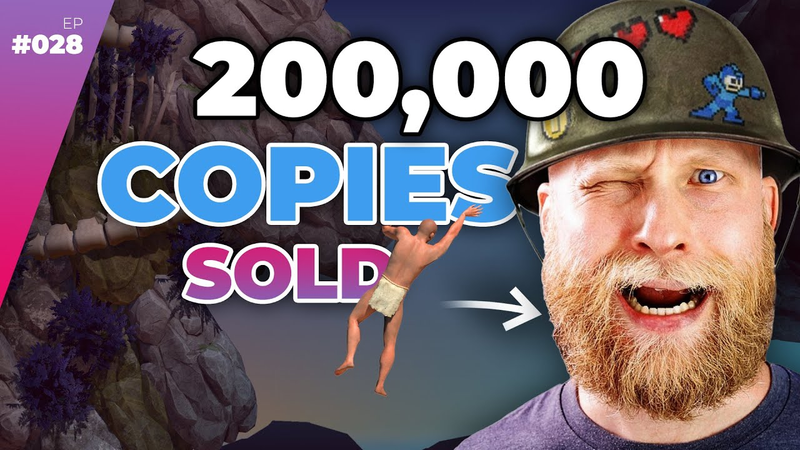
How He Sold Over 200,000 Copies Of His Game w/ PontyPants — Full Time Game Dev Podcast Ep. 028
Achieving commercial success in the independent game industry requires a strategic pivot from technical documentation toward high-impact, curiosity-driven marketing.
- Commercial success is driven by high-impact, curiosity-driven marketing that targets the general gaming public through streamer exposure rather than technical development logs that primarily attract other developers.
- Projects like 'A Difficult Game About Climbing' demonstrate that prioritizing entertainment value and narrative-focused content is essential for driving wishlists and achieving significant market penetration.
- Design should focus on refining a single, core mechanic through iterative prototyping while stripping away extraneous elements like tutorials and dense narratives to foster discovery and speedrunning potential.

Transforming UA Creatives Through AI (with Reforged Labs)
The mobile gaming industry is undergoing a fundamental shift in user acquisition strategy, moving away from manual, labor-intensive creative production toward automated, AI-driven experimentation.
- AI-driven creative engines are replacing manual production by deconstructing high-performing ads to generate large volumes of personalized video assets at scale.
- The integration of AI platforms has reduced the production cost of individual ad units to approximately $50, significantly lowering the barrier to entry for smaller studios.
- Reforged Labs and similar platforms are shifting the marketing professional's role from repetitive asset creation to high-level strategic optimization and data-backed validation.

Indie breakout: Stirling Rank's Rise with Ready or Not
The tactical shooter Ready or Not serves as a case study in independent game development, demonstrating how a commitment to core gameplay loops and a distinct creative vision can overcome the limitations of a small, inexperienced team.
- Void Interactive successfully launched Ready or Not into early access after five years of development by prioritizing a clear vision and community engagement over traditional crowdfunding.
- The studio utilized a supporter program and a high-quality gameplay trailer to generate initial capital and traction, with the supporter edition accounting for a significant portion of early revenue despite representing a smaller percentage of total unit sales.
- Scaling the team proved challenging; the company grew from three founders to 15 employees before compressing back down to five, highlighting the difficulty of managing rapid expansion without structured roles.

Marketing For Indie Games | Land a Hit Game!
Success in the indie game market on Steam is primarily determined by genre selection and product design rather than traditional advertising.
- The Steam algorithm functions as a competitive system that prioritizes games showing early traction; if a game fails to generate sufficient interest during its initial 20,000 impressions, Valve will reduce its visibility in favor of better-performing titles.
- Marketing acts as a 'fuse' to ignite the Steam algorithm, which serves as the primary engine for long-term sales through passive discovery and recommendations.
- Genre selection is a critical factor for success, with data showing that horror games consistently outperform other genres on Steam, while linear platformers often face significant market resistance.