Transcript
Welcome to the Naavik Gaming podcast, where it is our mission to explore the business and future of video games. We bring together the industry's brightest builders, investors, and thinkers to keep a pulse on current events, dissect emerging trends in games, share lessons learned, and have a great time. This podcast is also part of Naavik's growing ecosystem, which ranges from free and premium research to consulting and advisory services. For more information, visit www.naavik.co. This episode is brought to you by Neon. For the first time in our industry, developers can finally have their own D2C channels to save on app store fees and build closer relationships with players. But, there's a catch. The selling direct means either building complex infrastructure yourself or choosing among legacy providers whose inexperience and questionable
reputations pose real risk to your business. Luckily, there's Neon, the D2C platform built for games. As a merchant of record with customizable web shops optimized for conversion and modern APIs that let you use your existing live ops tools, Neon is trusted by some of the biggest names in gaming to help you sell direct without the typical overhead. To start selling direct and finally take control over your full player experience, simply head to neonpay.com or check out the link in the show notes. And with that, let's jump into the episode. Hi everyone, I'm your host today, Aaron Bush. And if you've been listening to our podcast over the past year or so, you know that we've been super interested in unpacking what role AI is going to play in our industry. Some of the discussion has naturally been theoretical, but there have been interesting pockets of real innovation ranging from incorporating LLMs into games, using AI to accelerate quality
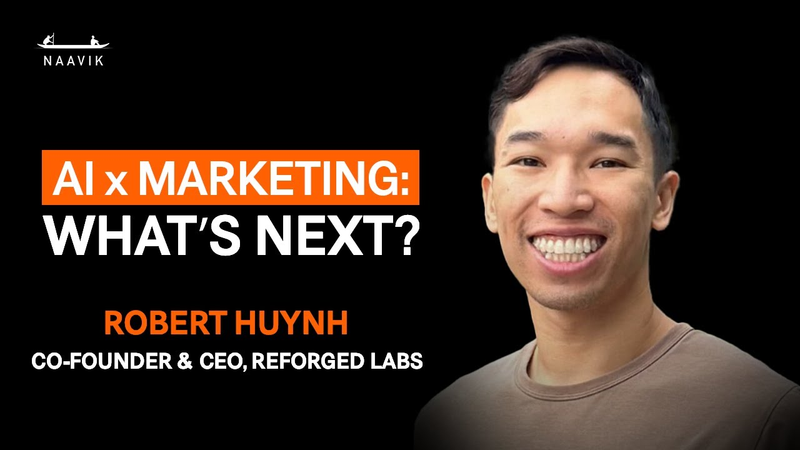
assurance, rethinking NPCs, and more. However, what we're going to unpack today, the intersection of AI and user acquisition, may be among the most powerful ways this emerging technology will impact our industry. Less innovating on the games themselves, but more about innovating around and democratizing how consumers learn about the games we make across the internet. And to help me break down this topic, I'm excited to meet with Robert Wen, the founder and CEO of Reforge Labs, one of Naavik's new Open Gaming Research Initiative partners. We'll dig into how this market may evolve, Reforge Labs' role in this change, and chat about entrepreneurship more broadly. So, with that preamble out of the way, Robert, welcome to the pod. Hey Aaron, it's great to be here, and it's great to meet everyone, too. I'm a long-time fan of y'alls. Awesome. Well, I'm super excited to to have you on today, and um it's a full
circle moment of getting to know you several months ago and watching your story and Reforge Labs' story just continue to to march forward step by step over the past many months. So, super excited about this. Um and we'll dig into all sorts of details about Reforge Labs and what you're working on and and how you see the market across this episode, but I think the best place to start would be for you to tell your story, and we can break this down into a couple pieces. And I think first where we should start is just you telling your story about your journey from big tech and school to becoming a first-time founder and what you learned from your first company. Totally. Yeah, that's a really great question. You know, I'm originally from Texas, born and raised on the Mexican border. Hocum. And I decided to go into tech because I love gaming. I started my career off at
Microsoft. I was working in their Xbox team originally in like this leadership rotation program. And fast forward after 4 years at Microsoft, 4 years at Google, I realized I always wanted to get back to my gaming roots. Um having grown up playing a ton of games, I realized that, "Hmm, this could be something that I could potentially combine uh with my passion for technology, but I wasn't sure exactly how to do that." So, I continued on just kind of leveling up, building up my skills. A lot of the things I did um in game, I applied to real life. Like, for example, min-maxing out my stats, trying to figure out ways that I could get promoted and leveling up. Uh when you join these big tech companies, they give you like these Pokémon levels, and of course I wanted to be level 100. And along that way, I realized, "Actually, what's the real game that I'm playing? I'm playing this game of like trying to make an impact."
And to do that, I needed to find my crew. I needed to find the right team. I went off to uh business school, and after 1 year at Harvard, I realized that I think I found my team. Why do I need to finish all 2 years? Let's go do the thing now. So, I decided to spend that summer instead of taking my internship with um at that time it was Riot Games. I was super excited to work for my favorite video game company. I decided to actually say like, "Hey, let's pause it. Let's do it in the fall." And I decided to start something with two of my classmates. We picked an area that I wasn't that personally passionate about, but I saw huge opportunity. We were focusing on construction, real estate, and the job labor market. It's an area that I knew we would be able to make a huge impact, but fast forward, I realized that having traction is not enough to sustain you in the long run.
When you're building a startup, of course you're going to excited when the numbers are going up. Of course you're going to excited that like people believe in you and they give you like tons and tons of investment. But, what I realized is that you needed a combination of like this like real passion on making a difference. And it took me almost like two, two and a half years before I made the cut and I decided to go and form something new. It was painful, Aaron, like my original co-founders, they would decided to go back to business school. I was like thinking like, "Well, what do I do with my life?" And I had came across um, you know, one of my good friends. We were talking, we were playing video games, and we were like, "Hey, actually, we're working on different startups. Why don't we do something together?" And I think that was like the first like inkling that like there was something wrong with the old startups that we were working with. When you start to take all these side hobbies and side jobs and not think about your startup full-time, you're like, "Oh,
shoot. Uh I'm trying to just do things to keep myself busy." And we were trying to make a game, and of course we also wanted to make money, so it became like a gotcha game. And at some point, we're like, "Wait, these are the games we hate. We don't want to like create games like this for people." So, the story of Reforge really started with us trying to make a game, realizing that we're AI experts, not game devs. And when we tried to insert ourselves into like the game development process, a lot of the game devs were like, "Hey, actually, that's the funnest part of our like job. Why are you trying to take that away from me?" And instead, we met so much friction. Most of the game studios wanted to build the technology to develop games faster, better, and more fun in-house. They wanted to just do it themselves. Instead, when we met one of the founders of the large game studio, King,
the founder there told us that actually our biggest problem is in marketing. And we spend the majority of our budget on making games stand out so that people can discover them, download them. And if we can come up with a way to make that a lot easier, then hey, he'd back us. And so, fast forward, we came back with a prototype. Um the first time we were like, "Whoa, he didn't like our vision. He wouldn't help us, even though he had actually backed my co-founder's last startup." We were really thinking there like, "Okay, how do we earn back his trust?" And in that second iteration, when we realized that actually marketing is the area where game devs are not excited to touch, it's actually not as creative as people think it is. And I know that could be controversial. But, a lot of the work in making creatives is actually running variants. And the real creative work is not on the performance marketing side, but on the
brand awareness side. And by focusing on these like really manual, really repetitive things, we could actually save them a ton of money. And so, that's what we did. We decided to level up game marketing. And that was the founding story of Reforge Labs. Awesome. And there's a lot of of interesting stuff and wisdom to unpack there. I mean, I think the idea of min-maxing life could be a podcast, probably a book in and of itself. Maybe maybe in a few years you can take on that that pursuit. Um yeah, it's it's clever. Um also, I mean, definitely understand the idea of, you know, traction not being enough. Um and and sometimes, I mean, you know, your shirt says, "Make something people want," which of course is the famous Y Combinator idea. But, sometimes, too, you also just have to make something that you want, right? To make it a sustainable multi-year endeavor.
And so there's a lot of wisdom in that. And I think that you know how you just naturally kind of found your way with the right people into the right idea into your your new business um is is really cool. And I'd love to before we kind of dig into the the details of this market and what you have built. I'd love to just kind of stick to the entrepreneurial tune at the moment and just ask like with company number two here, like what have you been doing differently to make it more sustainable for yourself or to make it more sustainable for the team or to just make it more successful in general. Like what as a second time founder, what's what's been different for you? Oh gosh, Aaron. There's so much that is different. But I'll say the number one thing that is different is embracing failure. When I was at Google uh I was actually
on a bunch of different teams. I started off on like our corporate strategy team helping our CFO Ruth think through capital allocation. But the second part of my journey at Google was at X, the Moonshot Factory. And that's where the founders spend a lot of time tinkering with these crazy breakthrough ideas with big problems and even cooler tech. The key lesson that was taught there was like embracing and celebrating failure. And I didn't do that for my first startup. Like knowing what I knew, having gone through the YC program, I still made up excuses when things weren't going well. And I was like, "Oh well, actually maybe there was this. Maybe there was this." And I kept on going even though I knew things weren't working or probably like 12 months into the startup I realized like, "Hey, things aren't really going as well as I thought they would." And I was embarrassed by that, Aaron. And I stuck with it because you know,
that's what brought me to where I am today. It's like sticking through hard work like, "I'm going to be able to figure this out." But what I realized is that in entrepreneurship it's all about learning. And having that like moonshot compost is what we would call it at X. Having that learning to be able to ship product out faster, to build the connections in this network, and reach our customers, and like find ways to like bring their problems, their pain point into a actual product and service. These are things that I'm actually doing now versus like trying to brute force of like hard work. And so the biggest thing that I've realized is like embracing failure celebrating that with my team so that, you know, when we do something and it doesn't work out, the team doesn't feel bad about it. We're actually like, "Hell yeah. We've validated this thing because it's a real experiment. Whether or not it works or not, like we're happy with that outcome as long as we can do it
quickly and cheaply." Every single time you run another experiment, you don't want to be spending tons and tons of money. You need to be able to get that learning as soon as possible to delight your customers. I love it. So much wisdom in there. And I'm sure I could talk to you for this whole episode about um lessons learned and the trials and tribulations and um you know, the wins that come with with being a founder and working with a team to to build things from from zero. But we should dial in on uh you know, what you're building right now and and how you see the market. And I think we should start um a bit bigger picture here and kind of zoom in as we go into what you're building. Um so first let's talk about AI big picture on UA. How monumental is AI's impact on UA going to be over the next decade or so?
Um and I expect you think that you think it will be quite large. And so if so, like what do you think the most profound changes are are going to be that we'll experience? Totally. Aaron, AI is here to stay. There's so much stuff happening that it's hard to keep up with. And every single month there are brand new breakthroughs. This is why like this week I'm out in Singapore for the Open AI event to just exchange and get new ideas from even on this part of the world. And when I look at like how I think about game development how I think about UA and even like the entertainment as a player there's like so many different parts to that. There are more and more games being produced every day because the cost to ship out a new game is lower than ever. You have great new coding tools, you have great concepts, and you have like smart people that are excited to build
stuff for everyone. But the flip side of that, it's harder than ever to stand out. There are tons of tools to help make your game. There are tons of tools to help you market your game. But there aren't tools to help you actually optimize your performance marketing. And that's where we saw a lot of our angels spend their money. And so that's where we want to go into and address this area in UA specifically. But to give you a couple of predictions, Aaron. I would say that one these privacy changes, they suck. It's hard to get precise targeting and the whole industry is feeling that. With AI, you're going to get a lot more probabilistic targeting. That's going to get way more precise increasing the amount of personalization that's happening. And you're already seeing that from like the big ad platforms. Two I would say that creatives is a huge space that's going to fundamentally change. And that's the area that we're
working on. And three, AI has always been a part of performance marketing and the auctioning, the bid spread, like all that stuff, the matching of where advertisers are and where they're trying to connect with players, that's going to fundamentally change. And for us, we realized that these are all actually very interrelated. For us, the net new thing that's happening and the area that we're most excited for as gamers is actually on the creative part. And helping games stand out because that's what's going to lead to whole diversity of new games and new concepts that you probably wouldn't see with the fragmentation and the consolidation that's been happening in the industry. Like I don't want just another sequel. I want like cool new concepts that are coming out. That's awesome. Um and maybe you can help us visualize like what this change means. And then we can talk about the the business implications a little bit more.
So for example um you know, big social media platforms for example where much of this digital advertising occurs, where much of you know, you create an image or a video that might increasingly be AI generated is going to be posted. Those platforms are going to go through a lot of change where much of their feed might turn more AI generated. Naturally, the ads in there will probably become a bit more AI generated. It there might be changed ideas about like how how that could work in in walled gardens I guess where maybe you as a person or or uh injected into the ad in in some way or uh you know, it it maybe is a bit more personalized to to you. Maybe not uh across platforms because of all the privacy issues, but maybe inside some some walled gardens. Um I guess my question to you like in general is like like where do you see this going from
like the user perspective? Like as a user who's viewing ads and is on all of these platforms on the internet, like how is there like what they consume like going to change and like impact like like what these ads are? And I totally understand that that's like a big question. We don't really maybe necessarily know. It's going to continue changing over the years. But like do you have a directional sense of like what that might morph into? Yeah, I think it's a really interesting question. It's not one that I have, you know, immediately have a strong response. Um as we don't think about it from like, "Hey, what are these platforms trying to serve you?" But my gut reaction tells me that it's going to be a lot more personalized. These platforms are looking for more engagement. And AI is already here. AI has been creating fake ads the last five years. And sorry, I'll correct that. Humans have
been creating fake ads the last five years. AI is only going to help you do more of what you're trying to do and save you time doing it. And so these fake ads that you're seeing are effective. It sucks because it's changing the rules of the game right now. And a lot of players in the market are adapting to that. So you get like these long drawn out This is really like a UA tutorial if you will. Because this game doesn't look like what you're advertising. When you're looking at your feed in the future, I would imagine that it's actually not going to look that different than what people are doing today except it's way more personalized just for you. Because the cost of making content is going to dramatically get reduced. Just like how today we have all this editing, post-production stuff, even like filters, right? AI is here to stay and it's already here. Got it. Yeah, I mean the reason why I I ask is because
like what what ads often are are a function of what these platforms morph into and what they end up prioritizing just based on um you know, like you create a feed, suddenly you have ads for a feed. The idea of stories, you know, is created and now suddenly you have ads in your stories and then Tik Tok pops up and now it's kind of like a new type of ad format. So, understanding or at least having some sense of like where these platforms are going and like what's going to be important to them and maybe change in terms of what they feed users, I think probably has a pretty strong impact in terms of like how you would think about what um ad products and you know, the ads you're creating um turn into. But I guess um you know, you know, whatever that turns into, maybe you can kind of help us understand like what do AI ads or them becoming more AI
generated, well like what does that unlock for companies that the that today's way of operating doesn't? Um you mentioned personalization in some instances. I'm guessing there's some cost effectiveness, but could you like beyond just like you know, what consumers will see that changes? Like what is this like fundamentally change beyond just looking at it for for businesses? Totally. For game studios, the way I see this playing out is that ads are going to get a little bit personalized. When we talk to our angel investors founders of large game studios, they tell us that they run a lot of ads and out of those like let's say 20 a week only one of them is a hero creative and that's the one that they're going to put their weight behind uh their budget the following week. But with a lot of ads, you get ad fatigue, you get ad
blindness in the player base and the algorithm starts to demote you and then you got to do this whole thing again. Imagine instead of like using 20 ads, you can actually have like hundreds or thousands that are more targeted based on different sub segments and sub audiences. You would get a way better experience without having to do very targeting uh targeted base uh tracking because now you can actually like do large-scale experiments instead. Yeah. Two. When we look at the cost of running an ad that is a huge barrier for smaller game studios to actually go and run large-scale experiments. So, those AB tests, those experiments to understand which um creative is most effective or even which like platform and channels to use it's prohibitively expensive for smaller studios to get into. And I think a lot of that is because there's this convenience factor that is not available to a small studio.
You don't have a marketing team, you don't have a creative director who that's pitching you creative ideas. Instead, it's like you and maybe like two of your friends trying to make a cool game. And so, leveling the playing field is something that I'm really excited for what AI is capable of doing. Looking even further out you have like new surfaces like uh virtual reality and I've been a huge fan for the longest time. I was a early adopter of Google Glass, I was on HoloLens back at Microsoft. Like I'm super excited for this even when it was called head-mounted devices. And you can imagine that ads are going to be way more immersive. You're going to imagine that playable ads or interactive ads going to be like super cheap. The biggest thing holding us back right now is like having like really efficient code that you can run on HTML5 and being able to optimize for all those things. Like you're just going to get a way better experience reducing CPI helping get your game out there without this
massive team. And so, I'm pretty excited for what AI ads unlock for these companies. Yeah, I I mean I think that's super interesting and I mean anywhere you see democratization forces at play, you know, usually there's like uh something very big or rumbling under the surface that you know, given enough time is going to have a pretty enormous impact um in the way that that teams operate and and give smaller companies a larger advantage than they've they've ever had um to compete uh more on a level playing field as you were saying. I want to talk about, you know, more specifically what you guys are are working on at Reforge Labs, but I have one more like bigger picture question here that I want to ask you about this landscape. Um it seems like every conversation that I've heard uh where people are talking about AI and
advertising, it's always turned a bit dystopian in in its tone where people are a little freaked out by how like personalized it might be or like anyone can create anything and you can't really tell what's real or not. I'm curious like how how you how you view this. Like is it as dystopian as people are saying? Like is there a responsibility to um companies across the ecosystem like yours to put in certain like best practices that um you know, provide some type of uh like benchmark or threshold that you know, doesn't dupe consumers in some way. Like like how do you think about this from from that lens? Because again, every time I I I see this talked about and I'm like, man, like I I I don't know, it's interesting that everyone takes it down this dystopian path, but I'm not entirely sure that it is as dystopian as as I've heard. Totally. And
I would say that this is such an interesting question and it kind of goes back to like, hey, how would the social media platforms think about having more AI in our feeds? And I think it's really like, hey, this point of view on AI and ads is already here. This is why we have new regulation and privacy laws that prevent us from getting too deep into the way that these ads are being built. But on the other side of it, I also see the market forces pushing us towards hey, how do we get stuff that people actually want? And on a generational level, I see tons of studies showing Gen Z and Gen Alpha really excited for personalized ads. Whereas like other generations like you're like, oh wait, that's too much of a privacy breach for what I'm focusing on. And so, this dystopian view I think uh is really different depending on who you talk to. And that a lot of the ads, a lot of the experiences and a lot
of the games that you're seeing out there that perform really well are for really niche targeted audiences. And that's just a function of so much content being generated out there that you're able to cover the whole spectrum out at this point. Got it. I can totally see the the generation point being real, which is not new to AI or you know, this aspect of AI, but is pretty relevant to every technological wave that has ever happened. Right? Where you know, the an older generation thinks that a younger generation is is is losing it in some way or going down the wrong path with the internet. They need to go outside and touch grass like you know, like with Fortnite, you know, like you know, you should go hang out with your friends in in real life. Like this is messed up, but you know, like in reality it's it's a very natural evolution and doesn't actually you know, break humanity, but you know, creates like unlocks barriers and you know, just innovates so the way that we
can connect and you know, do cool things together. So, I don't know. I I lean more optimistic what the dialogue uh morphs into over the next decade. But anyways, enough with the big picture. Let's talk about what you're specifically building, Robert. So, you talked a bit about the genesis of Reforge Labs, but maybe you can just tell us a bit more about like what exactly are you building? Like what is the product and and service? Um and you know, if there's any more details about like how you uh you know, iterated into that being your company's focus. I would love to to hear more of that story as well. Totally, Aaron. And it's a great question because it's iterated. We've listened to customers, they've told us some stuff and we built new things. Reforge Labs is building effortless AI ads. And the way that we do that is that we created this creative engine that thinks and analyzes and understands ads
and then deconstructs them so that we can get new ads that are being built. That's part one. What the customer sees is that the new ads that they're building, we structure them as almost like templates and these starting points are what customers will do. So, what we built today and we just launched our open beta in November is a way for customers to one, pick a template, a starting point for their video ad two upload any game assets that they might have fonts, video, like literally just give us anything and our AI will work with it. And three just wait. Couple hours later, we'll give you your ad. And this is really exciting because when I talked to you a lot of game studios, they don't want to write a design brief. They don't want to go through this elaborate process. If you're a larger game studio, it's actually very similar
to what you might do as like a UA manager. You'd wait for your creative director or your agency to pitch you new ideas, and you'd kind of pick from the ones that you have. If you had an initial initial starting point, you would write this design brief and like pitch this out to them to see what you get back. But we built this process mirroring off of what our customers have told us. And so there's always this like, "Hey, how do I get up to speed on the latest concepts? Ideating the best ideas. Two, storyboard and kind of get a rough draft of what that might look like. And then three, I ship that off to my creative team." Those are all areas that I believe are going to get drastically improved with AI helping game studios get better return on ad spend. Cool. And um maybe you can just share a bit more detail about like how the technology works or like like what you built and how this came together. Um uh it would just kind of be cool to get a little peek under the hood of of you
know, how exactly you're you're innovating and building with new technology here to enable this. Totally. So, what I've realized for AI to work is that you need like three big things. One, you need like really good models. We source from the best models on the planet in not only the US, not only in Europe, but we're also looking at like Asia. There's tons of great models that are coming out. And I think China is an area that people often overlook with government funding a lot of the key research over there. Everything is essentially open source, and there's a lot that you can learn from the models in the East. Two, when you need to build an AI system, you need great data. And when I was back at my last role at Google, I helped build one of the internal data annotation labeling services. And so that's like thousands of uh contractors that would help label data
to teach our self-driving cars how to perceive and see the world. This data that is annotated and labeled is critical as a proprietary data source in order to help those car understand what's around them. And for us, we do the same thing with our own video data set. And so I'll talk about that in a second. Uh and three, you also need to have lots of compute. And so that's more of a commodity service, but being able to source and have lots of funding in order to power compute uh needed in order to run these models is a big part of what makes AI work. So having the right models, data set, and compute power is the secret sauce. Going into our processes, what we have done is that we've created this crazy AI brain. And this creative engine takes the
Facebook ad library, the Meta Creative Suite, and basically all mobile game ads, and we ingest all of that in. We label it so that our AI has a deep understanding of what's trending on the market, deconstructing the visual elements and the structure of a high-performing visual mobile game ad. When you have that deconstruction, you can now create starting points, templates that our customers are now exposed to. So now that we have this constant AI brain that's analyzing the latest trends and spitting out recommendations for different game genres, for different customers, customers can now just go and pick what they would want to see and wait while their game ads are being delivered to them. That I mean that's that's super cool. Um and I'm curious too just I mean AI when you use, you know, LLMs like Claude or
Chat GPT, um there are always these surprising moments where it's like, "Whoa, I didn't know you could you could do that." And then there are other moments where it hallucinates and it's it's like, "Oh, like how did you come up with that?" Um are there certain like like elements in your own models and process that you're building where uh you know, you've been surprised like very much to the upside about like what the the AI spun out that just, you know, it wasn't programmed, but uh you know, it sort of like on its own um reasoning, you know, was able to come up with like really cool things. And so it would be cool to kind of hear um you know, like an example or two. Uh but then also too just like like from like your side of just managing like quality control of of what of what comes through and what uh you know, your clients see. Like how do you think about that? So curious about those two things. Totally, totally, Aaron. And so on the
first part, when I think about, "Hey, what are surprising things that AI can do?" It's always surprising me, dude. Like there are new stuff happening all of the time. And what a lot of CMOs told me about ads have really stuck with me. They tell me that the most high-performing ads are really surprising. Sometimes they're basic, ugly, or both. And you really just don't know what's going to work until you run an experiment and look at the data. Yeah. And so a lot of those hallucinations, a lot of those things that, you know, you'd be like, "Hey, actually human would never design an ad like this." That's actually a great thing for an ad to do. And so we take advantage of that by helping our AI understand different structures and create templates that you may not have come up with as like a human uh on your own. But often many times our AI is not best suited for the like real creative work.
Rather it's best suited for making variants of your best-performing ads already. And it's also really surprising too, Aaron, like when we launched this, we wanted to focus on the smaller game studios because we were worried about um having characters that were temporally consistent. Meaning that frame by frame they look exactly like that Mario character. But the larger studios are actually really excited to use a tool like ours to our surprise because it can help them actually create like a pretty high-fidelity um design brief that they can send to their creative team to touch up and make fully real. As a UA manager, you can now go out there and have this entire analysis of ads get pitched to you as potential concepts, and you can say like, "Oh, I like this. I like this. I like this." Shortening the cycle needed
in order to ship out an ad into just hours or days instead of weeks. So that's actually been really surprising for me. I mean that's that's really fascinating. Um you know, how this can be used for small teams to um you know, iterate in a way that they maybe haven't been able to do in the past. But it also totally makes sense to me how larger um companies would be interested in this as well, you know, especially over time. Um I guess, you know, you mentioned that you're in beta now. Um and I just want to ask, you know, a bit more pointedly, like who is it for right now? Is it for every company advertising a game? Is it for mobile? Is it for casual mobile? Like like how do you view what your your market is right now and where you're you're going with it? Who should be using Reforge Labs? Totally. We're excited for mobile game studios. And specifically, we built our open beta
to serve the small, mid-size game studios. A part of what we've been hypothesizing is that by making the cost of video ad generation go from like $500 to $2,000 per video ad in the US down to 50 USD per video, which is what we're charging today at a single unit price. If you buy more, we'll actually give you a discount. We would be able to drastically improve the process of you as a small game studio uh to getting your game out in front of players. We're going to be able to get these variants in all sorts of formats, portrait, landscape, um for meta for like literally any platform that need to go after. But we're starting with just mobile because that's where a lot of the performance dollars are being spent. We're focusing on mobile games because that's actually our training data set.
No one is going to be able to build this without labeling a ton of mobile game ads and having this creative brain that's able to analyze and come up with new ways for your game ads to be imagined. Got it. And so that's our initial starting point right now. Cool. And so I mean just to make sure I totally understand even what you're saying on the business model. So it's more of a usage-based model where you charge 50 cents per iteration essentially. And so the idea is, you know, you'll you'll scale up your business just by providing all sorts of these companies with more and more iterations to experiment with and increasingly see what works best for them. Is that correct? It's a 50 USD per video ad. Okay. And we'll drop down the price if you buy in bulk instead. We've also started doing a enterprise version just because a lot of large game
studios reached out. And what we've done there is we started experimenting with like, "Hey, let's give them more customization. Let's give them unlimited ads for a fixed monthly price. And we've even decided to expose parts of our creative engine to help them come up with new ideas." And so for us being able to super serve our customer is like a key key tenant. You know, when I was going through YC, I remember Brian Chesky he talked about this concept of like five stars and getting to seven stars. Because by default, when you go do like an Uber or DoorDash, everything's a five star. But what do you need to do in order for a customer to give you a six star, a seven star? And so for us in these early stages, like that's one of the key learnings for us is like how do we super serve our customers, especially when they're asking us things that we don't fully understand because they're the end user. And being able to trust in the process,
being able to learn from our customers, and being able to delight them, like that's a key part of what we're trying to do. So, that's why we decided to actually open up um our open beta to some of the larger enterprises as well, too. Yeah, I mean that flexibility is is great and, you know, just focusing on what customers need and super serving that as you said makes makes a ton of sense for you guys and honestly probably most anyone listening with their own businesses too. So, um I love that. Uh you guys also recently raised a 3.9 million dollar seed round. So, congrats on that milestone. Um I'm curious, how are you going to be using it? What are you going to be reinvesting in and building out? We're hiring. So, if you know great folks in engineering, in AI, in gaming, like we want to talk to them. Most of that 3.9 million is going to be spent in getting the best people on our team. Uh today I've hired like two of my old
former roommates. Um super smart. Um I met them at Microsoft. Another one went to XPS as well. And it's awesome because we all used to be in like a ranked team. I know they're not toxic, or not too toxic. And I know that these folks are like really awesome to be around. And so for us we look at it as like going off on an awesome adventure and we want great teammates, great crewmates to set sail. The other part of that 3.9 million is going to be invested into infrastructure. So being able to create a robust like data labeling operation and data annotation is huge. What I found is that instead of using like a out of the box service like scale.ai or like buying like solutions like Labelbox that will help you like you know, create labeling software we can actually do a lot of that ourselves. Um and drastically reduce the cost of it. Like
instead of like half a million dollar min contract sizes for some of these labeling services, I was like, "Okay, actually I should just do this myself." As long as we get the right people, processes and systems in place um this is going to be a core competitive advantage for us as we think about taking that proprietary like data set wherever we go with whatever data models that we come up with um and whatever models that we leverage from the market, um we'll be able to focus specifically on game marketing. Got it. So, I mean maybe you could talk a bit more to just about the the longer term vision. And so, you know, you just hit beta, you're hiring, you're building up infrastructure, but like do you have an even bigger vision of what you're trying to build Reforge Labs um into? And, you know, what other parts might that entail over time that people listening could be interested in and want to, you know, keep watching you guys because of it? Totally. I am really excited for just reimagining that entire UA process and
game marketing process with AI. So, everything that you have to do from like ideating, coming up with the concepts that you might have, storyboarding that like low fidelity prototype that you might come up with, and then eventually generating that ad is a big part of what we're doing today. Uh the latter part is integrating actually with the performance marketing. A lot of performance is critical to the success of a creative. So, like a creative will drive like what, 70, 75% of a campaign success. And depending on what the goals are, you actually have this like perfect you know, objective function that you can start to optimize against. So, I can imagine like once you start to create this uh really amazing performance AI and merge that with this creative AI, you get this like feedback loop that's going to be like crazy powerful for you to personalize and target players out there so that you can reduce your cost per install and find the most valuable
players out there. Yeah, I mean that's super cool. Um I'm also curious, um you know, ad tech is pretty complex. It's always changing quite a bit. Um you know, I think what you're building um and just what AI's impact in general is going to be could be, you know, shake things up in interesting ways. Um I'm curious like how you view your place in this large evolving industry in terms of like who you partner with, who you compete against. Um and, you know, you know, as you just think like big social media platforms, you know, are probably going to create all sorts of tool sets that create random, you know, like new advertising capabilities. Like should they partner with you? Will you compete against them? Uh you know, like others like in the ad tech stack are, you know, also helping people um uh like deploy capital effectively and like narrow in on effective ads. Like
how does Reforge Labs like fit into this broader evolving picture? Would love just your view of kind of where you want to be in all of that longer term. Yeah, definitely, Aaron. It's a really interesting question cuz like our team comes from, you know, I came from Google, from Microsoft. Uh teammates have come from Apple. And like when we look at like, you know, the entire landscape, I think it's going to be really exciting. Brands, advertisers are going to spend more with tools like Reforge Labs. And that's awesome for these platforms because they want people to spend more. We're helping them get more revenue. Yeah. And by focusing on a specific narrow industry vertical I think that it's very defensible. Um and on top of that, we know how fast large companies are able to move. Yeah. The other part of it this is that we're working cross-platform. So, if you like look at any of like the MMPs, one of their key advantages in their like
measurement systems or like their ways to think about like incrementality is that they're not biased, right? They're objective. And they're able to meet the customers where they are. And so these customers are going to be on every single platform. That's wherever they need to be to reach their customers. And so by obsessing over our customers, I think we're going to be in a really good shape. Um no matter where we play in this industry because if we're able to help um you know, media buyers deploy more capital uh if we're able to be objective and even like agencies, right? Agencies traditionally do a lot of the creative work that we're discussing. They could even be our potential users and lower their cost bases as well. And so by partnering and focusing on what we're good at, the gen AI part I think we're going to be in a really good shape when we look at this entire landscape cuz it's a really big uh pie that we're trying to bite off right now. Yeah, I mean that's what makes it super
exciting, too. So, I'm excited to to see how you guys continue to evolve and build um and and take over in in the the the years to come. Uh we do need to start wrapping up soon, but I just wanted to ask, is there anything else about Reforge Labs, what you're building, how you think about the market that you want to hit on before we start wrapping up here? I think you covered the key points, Aaron. For Reforge Labs, we're building effortless AI ads. And I'm excited because our best-in-class team are all AI experts. We're huge gamers. And with the right team, with the right process, and like the right mission of leveling up game marketing I think that there isn't anything else that you know, our audience um wouldn't want to know. It's just reach out if you have questions. Reach out if you're excited to experiment with AI in your game marketing. Where should they reach out? What's the best place to get in contact with you or
Reforge Labs more generally? Yeah, email me directly. So, [email protected]. If I'm not responsive uh within like a day, add in our team alias, hello@ uh and I'm also very active on uh LinkedIn as well. Sweet. Uh well, that's awesome. Before we we wrap, I also just wanted to ask, I know you're super dialed in on building your own business and mastering your corner of the market, but what else are you excited about in the the games industry right now? Maybe it's other aspects of AI that are making an impact. Maybe it's just games you're excited for the holidays to to play, but where is your your head at in terms of what you're excited about beyond your business? Yeah, so honestly, I'm a huge trading card game player. So seeing the new TCGP Pokémon game come out, that's been really cool. I'm of course watching Arcane right now. We have, you know, act three coming out next week. And so
that's going to be really exciting. Seeing League of Legends, my favorite game mode transmedia is huge. And there's of course the new TFT patch that comes out with it. Seeing how Arcane, seeing how like even LinkedIn is like adding games into their product, it's just crazy to me so. I think that it just shows that people are really excited for gaming and that, you know, when I was, you know, growing up in Texas, it was not cool to be a gamer. And I just think it's just such an awesome thing for the industry to embrace gaming and have this be everywhere. Even like you know, How to Train Your Dragon, it's coming to real life, too, and Switch, too. There's like so much stuff that's happening that I cannot wait for the future. Yeah, super exciting times. I also can't wait for the the future as well. Well, awesome. Let's go ahead and wrap up here. Robert, thank you again so much for hopping on. I really enjoyed learning more about you, your journey,
and everything you're building with Reforge Labs. And to all of our listeners, thank you as well for tuning in and we'll catch you next time. If you enjoyed today's episode, whether on YouTube or your favorite podcast app, make sure to like, subscribe, comment, or give a five-star review. And if you want to reach out or provide feedback, shoot us a note at [email protected] or find us on Twitter and LinkedIn. Plus, if you want to learn more about what Navic has to offer, make sure to check out our website, www.navic.co. There, you can sign up for the number one games industry newsletter, Navic Digest, or contact us to learn about our wide-ranging consulting and advisory services. Again, that is www.navic.co. Thanks for listening and we'll catch you in the next episode.
Auto-generated captions from YouTube — names and numbers may be misheard.





















Comments