Marketing reports and market data
Documents
How He Sold 500,000+ Copies Of His Games (Oliver Joyce) — Full Time Game Dev Podcast Ep. 036
Achieving commercial success in the independent game industry requires a strategic shift away from chasing fleeting market trends toward cultivating authentic, niche-driven development.
- Diversify income streams—such as YouTube channels, asset sales, or consulting—to mitigate the financial risk of game development and avoid the 'quit your job' trap for early-stage projects.
- Validate market interest early by building a demo or trailer before committing years of development; for example, a poor reception to a trailer with 25,000 views can signal a need to pivot or cancel a project to save time.
- Prioritize core game loops that respect the player's time, as games that offer incremental rewards and avoid tedious mechanics often perform better for time-poor audiences.
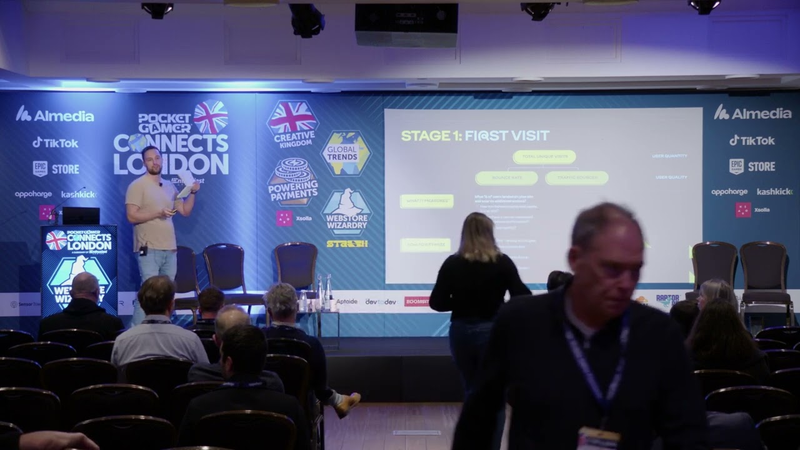
Session: From Data To Dollars – How To Crush Your Web Shop’s KPIs - Archie Stonehill, Stash.gg
Web stores for mobile games function best when treated as dedicated e-commerce products rather than simple extensions of in-game monetization.
- The primary KPI for web shops is channel share, which measures the percentage of total player spending occurring through first-party web channels rather than in-app stores.
- Increasing channel share by as little as 2.5% yields higher financial returns than equivalent percentage reductions in payment processing fees.
- Web stores should be treated as dedicated e-commerce products rather than simple extensions of in-game monetization to maximize revenue impact.
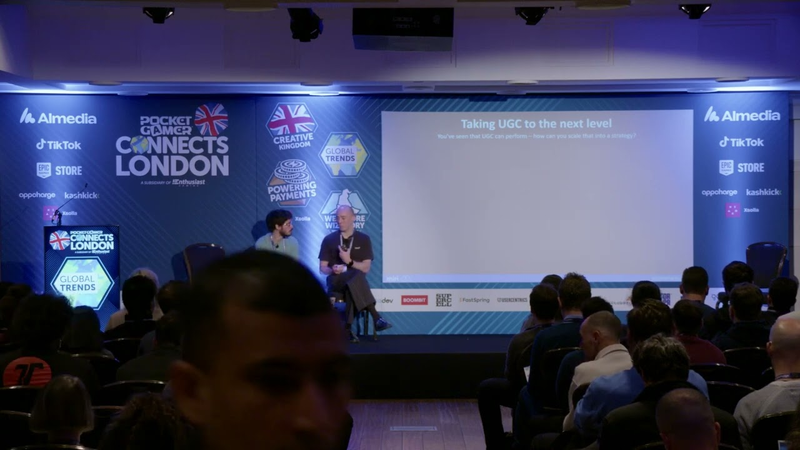
Fireside chat: How To Maximise Your Creative Win Rate - Zach van Driel & David Westerman.
Maximizing creative win rates in mobile game user acquisition requires a strategic balance between maintaining high-performing hero creatives and exploring new concepts to combat inevitable creative fatigue.
- Hero creatives typically experience performance degradation within four to eight weeks, necessitating a structured lifecycle management strategy to combat creative fatigue.
- When performance is strong, marketing teams should maintain a 40/60 ratio between exploring new creative concepts and iteratively testing existing winning assets.
- Underperforming creative sets should be addressed by pivoting toward competitor analysis or re-imagining past winners through different execution styles, such as shifting from gameplay to user-generated content (UGC).

Turning Privacy Pop-Ups Into Real Profits with CMPs
Consent Management Platforms have transitioned from basic regulatory compliance tools into essential strategic assets for driving advertising revenue.
- Consent signals significantly increase ad revenue, with InMobi data showing eCPMs for consented users are 150% higher in the US and 200% to 300% higher in the EU compared to non-consented users.
- Implementing a Consent Management Platform (CMP) should be treated as a growth lever rather than a compliance burden, as optimized consent flows can achieve opt-in rates of up to 70%.
- Publishers should avoid defaulting to 'check all' for third-party vendors in their CMP, as listing an excessive number of vendors can overwhelm users and negatively impact opt-in rates.

TWIG #316 Metaverse Myths, Ubisoft’s Struggles and the Stance for Marketing
The metaverse is increasingly viewed as a hollow, financially incentivized trend rather than a viable technological evolution.
- The metaverse vision of an interoperable digital landscape has failed to materialize, leading major players like Meta and Epic Games to prioritize closed ecosystems and pivot resources toward artificial intelligence.
- Ubisoft is currently experiencing significant internal instability due to the underperformance of major titles and a lack of mobile-specific expertise.
- Marketing budgets should follow an 80/20 split, with 80% dedicated to measurable performance channels and 20% allocated to creative brand stunts to drive organic awareness.
MMPs and Attribution: Grow Your Mobile Game Now!
Mobile Measurement Partners (MMPs) function as the foundational infrastructure for the mobile gaming industry, serving as centralized hubs that normalize data across fragmented ad networks.
- MMPs serve as the essential infrastructure for mobile gaming by normalizing fragmented data across ad networks and providing unified SDKs for cross-platform attribution and ROAS calculation.
- To counter the deprecation of the Identifier for Advertisers (IDFA), MMPs have transitioned to a privacy-first framework utilizing Apple’s SKAdNetwork, probabilistic modeling, and server-side conversion APIs.
- Modern studios use MMPs as data backends by piping raw, real-time data into internal business intelligence systems for custom lifetime value modeling and fraud detection.
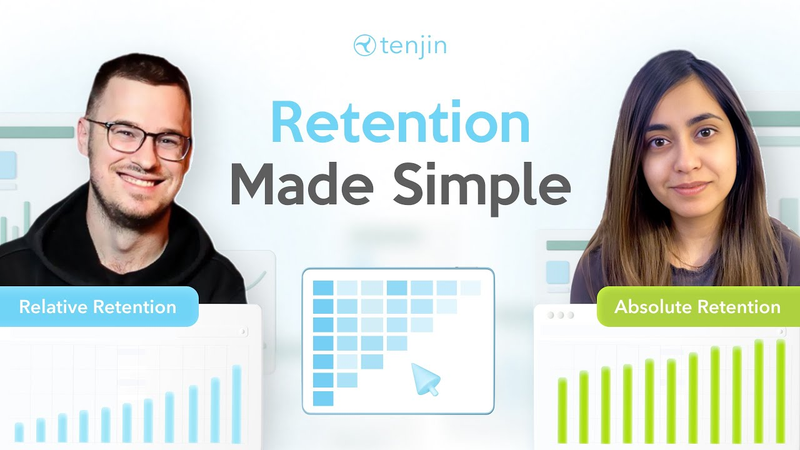
Mobile App Retention: The Critical Difference Developers Miss
Mobile app retention analysis relies on two distinct cohort methodologies—absolute and relative—which significantly impact how publishers interpret user behavior and evaluate campaign performance.
- Absolute retention tracks users by calendar day, while relative retention measures activity based on a strict 24-hour window following the exact moment of installation.
- Absolute retention typically yields higher figures than relative retention because it counts any return visit on a subsequent calendar day, whereas relative retention requires a full 24-hour cycle.
- Relative retention is the preferred metric for user acquisition analysis as it eliminates time-zone-based noise to provide a more accurate signal of engagement.

Building and Scaling Communities in 2025
In the current gaming landscape, establishing a dedicated community prior to launch has transitioned from a supplementary marketing effort to a fundamental requirement for market survival.
- Building a dedicated community before launch is now a fundamental requirement for market survival rather than a supplementary marketing task.
- Development strategies have shifted from top-down, influencer-led marketing to a bottom-up approach where developers collaborate directly with players to refine gameplay.
- Studios must utilize agentic AI and advanced social listening tools to synthesize massive volumes of unstructured feedback into actionable, data-backed development insights.
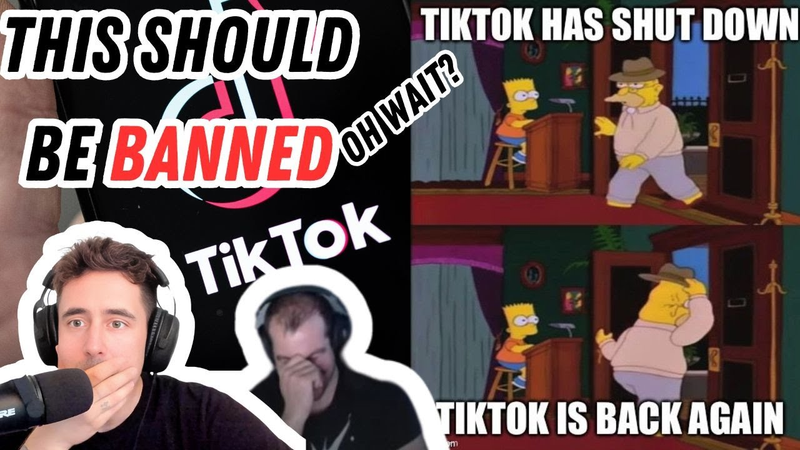
*Emergency Episode* TikTok is Banned in the US! Now what?
The recent legislative and judicial developments surrounding the potential ban of TikTok in the United States highlight the extreme volatility of the current digital advertising and user acquisition landscape.
- The U.S. government’s mandate for TikTok to divest to an American entity or face a total ban creates extreme volatility for mobile game user acquisition strategies.
- A temporary service suspension forced major gaming titles to immediately pause all marketing campaigns, demonstrating the high risk of relying on a single advertising channel.
- TikTok resumed U.S. operations within 13 hours of the initial ban after securing a 90-day extension to negotiate a potential sale.

Were there too many games in 2024?
The 2024 Steam market analysis reveals a significant increase in total game releases, with 18,234 titles launched during the year.
- In 2024, 18,234 games were released on Steam, with 75% of all titles failing to reach even 50 reviews, indicating that the vast majority of releases are hobbyist projects with minimal market impact.
- The success rate for games reaching the '1,000 review' milestone—a proxy for commercial viability—has remained relatively stable at approximately 2.44% in 2024, compared to 2.5% in 2023 and 2.7% in 2022.
- Valve has attempted to increase platform visibility by expanding daily deal slots from two to four, though this has resulted in less individual visibility per game compared to previous years.
How To Design A Loyalty Program That Players Love
The mobile gaming industry is increasingly defined by the need for sophisticated, experiential loyalty programs that transcend simple transactional rewards.
- IP and brand collaborations are critical for growth, as 20% of players cite them as a factor for installation and retention, while over 50% of those who engage with these events make related in-app purchases.
- Loyalty programs must transition from simple transactional models, like punch cards, to experiential frameworks that prioritize player status, exclusivity, and community building.
- Developers should treat all users as valuable contributors, recognizing that players who provide time, social interaction, and ad engagement are essential to the ecosystem and deserve rewards.

Let's Review Your Games — Ep. 009
The primary objective of indie game development success lies in the alignment between a project’s core gameplay loop and its public-facing marketing assets.
- Marketability is a critical factor for game success; even a well-designed game will struggle to sell if the Steam page fails to clearly communicate the core hook or gameplay loop to potential players.
- Visual clarity is essential for immediate player understanding; for example, a game about delivering beer should visually represent that theme rather than relying on ambiguous sci-fi aesthetics that confuse the user.
- Effective Steam page copy should be concise and focus on the primary gameplay hooks, such as specific mechanics like hacking, evolving, or procedural generation, rather than using overly long or vague descriptions.