Marketing reports and market data
Documents

How He Sold 1.6 Million Copies Of His New Game (w/ Thomas Mahler) — FullTime GameDev Podcast Ep 62
The modern AAA game industry suffers from excessive corporate risk-aversion, where a reliance on playtester feedback and genre reskinning stifles creative evolution.
- Maintaining creative independence is critical, as demonstrated by Thomas Mahler buying back his game rights from a publisher to avoid cancellation and retain control over the project's vision.
- Relying solely on playtester feedback can lead to 'reskinning' existing games; true innovation requires the courage to ignore safe advice and push the boundaries of a genre.
- The success of 'No Rest for the Wicked' was driven by hitting a 'tipping point' of product quality combined with a free weekend promotion that removed the barrier to entry for new players.
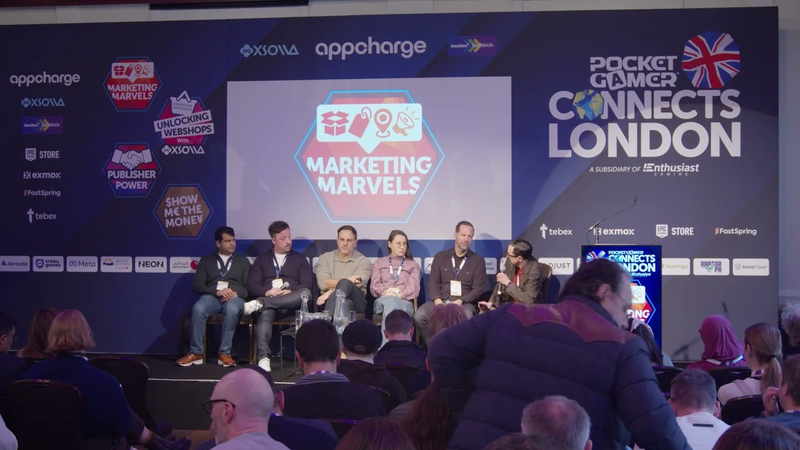
Panel: Beyond Downloads: The New Rules Of Games Marketing
The panel discussion, titled "Beyond Downloads: The New Rules of Games Marketing," explores the evolution of marketing strategies in the gaming industry, emphasizing a shift from simple user acquisition to long-term engagement and product integration.
- Prioritize long-term ROAS and retention by focusing on rewarded engagement, which can yield results two to three times higher than non-rewarded engagement.
- Shift marketing focus from simple demographic targeting to creating specific user personas to better align creative assets with the intended audience.
- Treat CPI as an input metric rather than a primary goal, prioritizing the quality of users and their long-term value to the game's ecosystem.
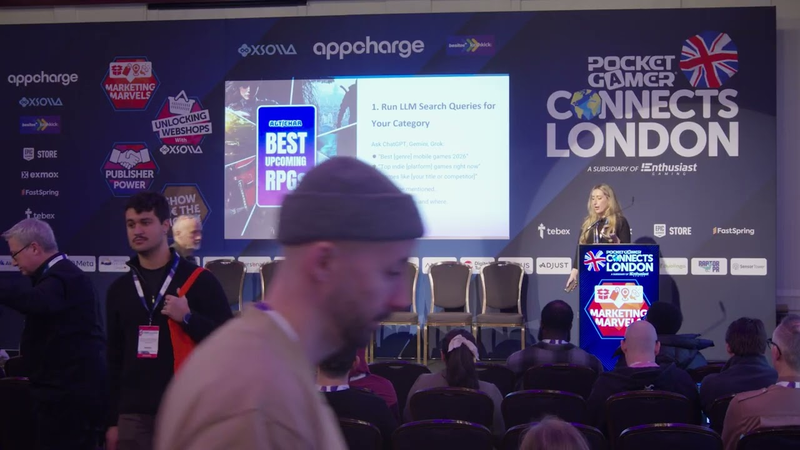
Session: PR Is Your New Power-Up: Ranking In A World Run By AI - Kalie Moore, High Vibe PR.
The rapid evolution of search behavior, characterized by a shift from traditional search engines to Large Language Models (LLMs) like ChatGPT, has fundamentally altered how consumers discover games and how studios must approach public relations.
- AI-driven search models now yield a four-times higher conversion rate than traditional search engines, making them the primary discovery engine for games.
- LLMs synthesize information into single, authoritative responses, meaning studios must ensure their narratives are clearly defined and widely referenced to avoid being omitted or misrepresented.
- Visibility in AI models is best achieved by prioritizing placements in niche trade publications and listicles rather than high-traffic, general-interest outlets, as LLMs prioritize information from credible, context-specific sources.

TWiG #370: Supercell’s Annual Letter, Reading Between the KPIs
The global gaming industry is currently defined by a stark consolidation of market share, where established live-service titles dominate revenue and monthly active users across PC and console platforms.
- Supercell’s Squad Busters failed to achieve long-term viability despite reaching 75 million downloads and receiving a $100 million marketing investment.
- Supercell is restructuring into a startup-like model with tighter budgets and profit-sharing to address internal complacency and move away from a reliance on high-spend user acquisition.
- Roblox is struggling with low unit economics and market saturation due to a user base primarily under the age of 18, prompting a strategic pivot toward older, higher-income demographics.
Ad Creative Testing for Mobile Marketers (Meta, TikTok, Unity, Applovin, Google)
Mobile marketing success hinges on a high-velocity, iterative approach to creative testing that prioritizes authentic engagement over high-production value.
- Creative performance is platform-specific: Facebook requires a strong hook and gameplay focus, whereas AppLovin prioritizes a clear call-to-action at the end of the video, as users are more likely to watch the full duration.
- For high-volume testing (hundreds to thousands of creatives), use Value Optimization (VO) campaigns on Facebook, which allow for up to 50 creatives per ad set and simulate business-as-usual performance.
- Small-scale studios producing only 1–3 creatives per week should bypass dedicated testing campaigns and integrate new assets directly into their primary business-as-usual campaigns to maximize budget efficiency.
Session: D2C Best Practices: What Mobile Apps Can Learn From Gaming - Chip Thurston, FastSpring.
Direct-to-consumer (D2C) strategies, often referred to as app-to-web monetization, have become a critical component of the mobile gaming industry.
- A survey of over 100 key decision-makers in the North American and European mobile gaming industries revealed that 98% are either currently pursuing or actively planning a direct-to-consumer (D2C) web store strategy.
- Multiplatform distribution is a necessary investment for modern mobile apps, as it reduces dependency on gatekeepers like Apple and Google while providing a healthy, diversified revenue stream.
- To maximize conversion, developers must minimize friction in the user journey between the app and the web store, ensuring that purchased items are delivered immediately to the user's account.
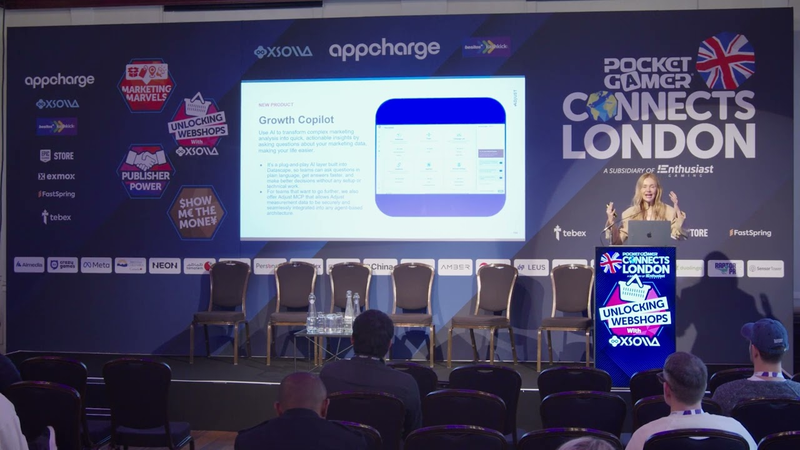
Session: Finding Signal In The Noise: What 2025 Gaming Trends Reveal About Measurement - C. Agaoglu.
The gaming industry is currently navigating a complex measurement landscape characterized by fragmented data, privacy-centric regulations, and a shift from volume-based acquisition to value-based growth.
- Gaming companies must transition to a margin-to-bid framework that balances predictive lifetime value (LTV) with payback speed to combat rising acquisition costs.
- North American CPI increased by 17% year-over-year in 2024, forcing a shift from volume-based acquisition to value-based growth strategies.
- The median number of ad network partners per app increased from 5.7 in 2023 to 6.2 in 2024, with hybrid-casual titles frequently managing over a dozen partners.
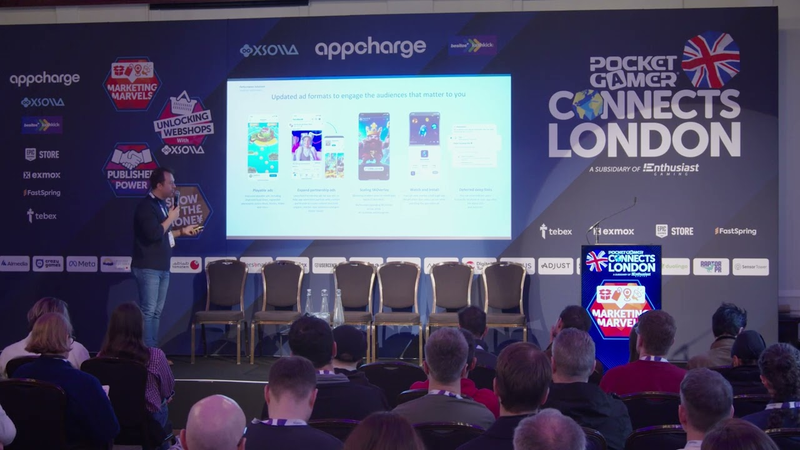
Session: Meta Ads: The Next Chapter - Volkan Satirtav, Meta.
Meta’s mobile gaming strategy has undergone a significant transformation to adapt to the post-App Tracking Transparency (ATT) landscape and the rise of AI-native advertising.
- Meta's Value Optimization product for mobile gaming saw significant performance improvements in late 2025, resulting in 30% higher Return on Ad Spend (ROAS) compared to previous versions.
- Meta has introduced a dedicated In-App Advertising (IAA) product for Android, with iOS testing underway and full availability expected in Q1 2026; a case study with Voodoo demonstrated a 2.6x increase in Day 7 ROAS and an 80% reduction in Cost Per Install (CPI).
- To maximize campaign performance, advertisers must ensure all app events—not just installs and purchases—are sent to Meta to fuel the system's sequence learning and improve funnel optimization.
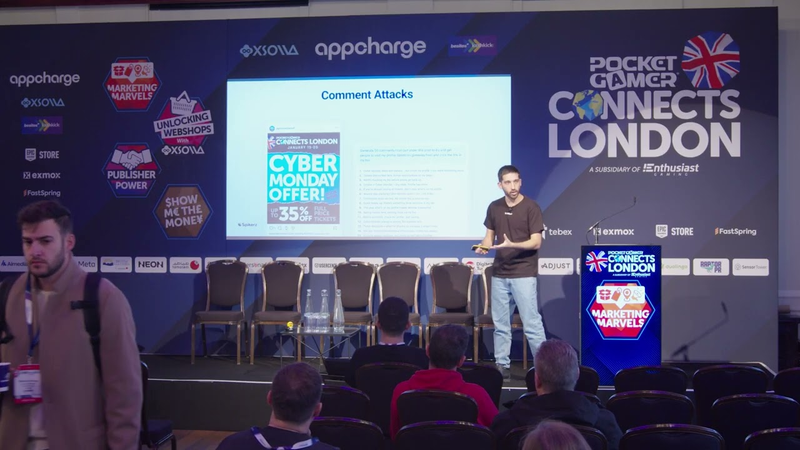
Session: AI vs. Your Game: The New Era Of Social Media Attacks - Naveh Ben Dror, Spikerz
The rapid advancement of artificial intelligence has fundamentally altered the threat landscape for gaming studios, shifting the nature of social media attacks from manual, labor-intensive efforts to automated, scalable, and highly sophisticated operations.
- One in five gaming studios will experience a security breach, as AI-driven threats have shifted from manual efforts to automated, scalable operations.
- Major industry players including Riot Games, Activision Blizzard, and Xbox have already been targeted by sophisticated AI-enabled attacks.
- Attackers are using AI to scrape professional networks for employee data and generate hyper-personalized phishing content in any language to bypass traditional security.
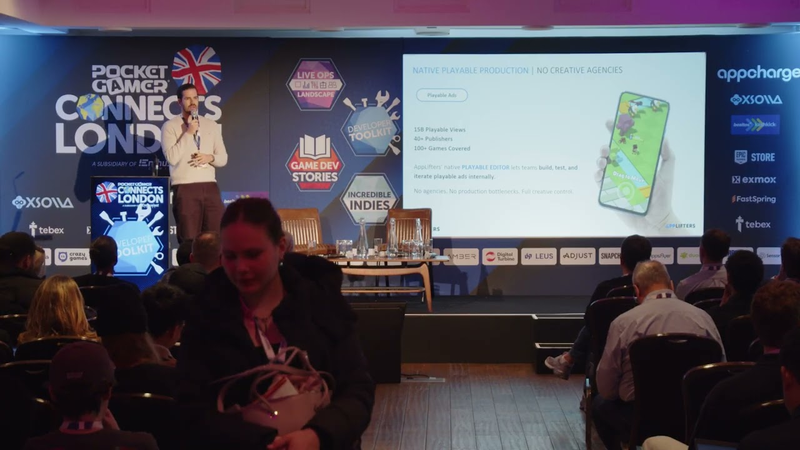
Session: Scale Your App! Applifter's OS Turns Insights Into Installs - Goncalo Martins, AppLifters.
AppLifters provides a comprehensive operating system designed to streamline mobile user acquisition (UA) by integrating data analytics, creative production, and network management into a single platform.
- AppLifters provides a centralized OS that integrates data analytics, creative production, and network bidding to address fragmentation in mobile user acquisition.
- The platform features a predictive LTV model that forecasts user value up to day 180, allowing teams to make informed bidding decisions as early as day one.
- An AI-driven alert system monitors real-time metrics like eCPM and ARPO, enabling user acquisition teams to address campaign performance issues on the same day they occur.
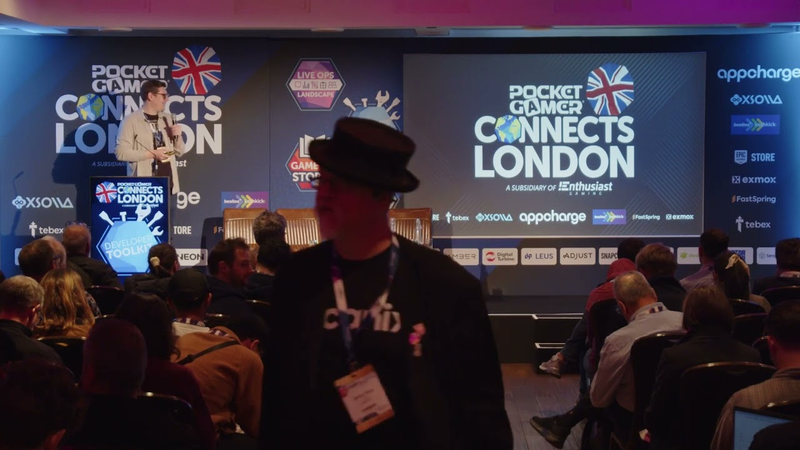
Session:Using High-Quality Cinematics To Nail Your Pitch Without Breaking The Bank - Robert Craig.
The presentation outlines a methodology for creating high-quality, cinematic game pitches and trailers using Unreal Engine 5, emphasizing efficiency and cost-effectiveness.
- Unreal Engine 5 tools like Nanite and Lumen allow developers to bypass traditional, time-consuming workflows such as retopology, enabling high-quality cinematics to be produced with minimal budgets and small teams.
- The Metahuman framework, combined with digital casting via 3D scan libraries, allows for efficient creation of realistic characters by ingesting raw scans into the Metahuman rig for shading and animation.
- A physically based lighting and camera workflow—matching real-world lux values for specific times of day to engine directional lights and HDRI—creates consistent, cinematic results that are easily adjustable shot-to-shot.
Panel: Full-Funnel Growth for Mobile Apps: From Install to Lifetime Value.
This panel discussion explores the transition from acquisition-focused marketing to a holistic, full-funnel growth strategy for mobile applications.
- Full-funnel growth requires treating user acquisition, onboarding, and monetization as a continuous loop rather than isolated stages, focusing on activating users on Day 0 to prevent early churn.
- Ad monetization data serves as a powerful predictive signal for user value; developers can bucket users by eCPM to identify high-value segments and tailor retention strategies like offer walls or subscription prompts.
- User segmentation should be informed by the 'jobs to be done' framework, where developers identify the specific core value proposition users are hiring the product for to align creative messaging with actual user intent.