VideoPocketGamer.biz
Panel: Beyond Downloads: The New Rules Of Games Marketing
13 Feb 202629 min video
Transcript
I can already say that depend will be about beyond downloads, the new rules of games marketing. Um, so we'll give it a moment and then I'll introduce the panel. Well, like I said, let's dive straight into it. The last uh session of our marketing marvels track uh panel, beyond downloads, the new rules of games marketing. Uh our moderator here, Stephen Haye. Um he will uh introduce the rest of the panelists and I'm looking forward to the insights. You
thank you very much. Um yeah, we're going to take it down now. I think everyone's been too excited. Um, and
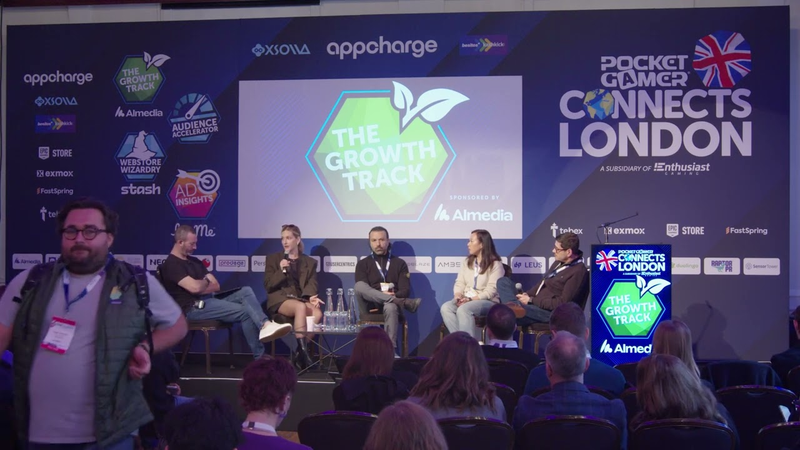
we've got um we've got a panel here of some of the the greatest uh marketing minds I think in video games um in this room if you know
No pressure
in in no pressure. Um so we've downloaded uh five uh AI avatars to uh come along. So just keep it relevant and um yes and we're going to talk about we're going to be quite general. Can I quickly ask um so people uh mobile involved in mobile show of hands? Cool. Thank you. Um big screen console PC. Okay, cool. So largely mobile but some big screen people out there as well. Cool. Okay, let's um quickly go to the panel then. If you give me your um just name, title, and uh company.
Sure. Uh I'm Marcus. I'm the uh founder and consultant at uh my own consultancy, Beyond the Wall Consulting. Been in the industry for about 30 years. Um held uh lead marketing roles at Activision, 2K
and private division. Started my own consultancy to support developers, publishers um and really all kinds of uh industry uh organizations in terms of marketing and business.
I will be short here. So I'm Julia. I represent Al Media and I'm responsible for user acquisition. So,
and hi, I'm uh Daniel Helmhold. Uh lead product marketing and marketing strategy for EA Mobile. Uh my background has been across Google, Capcom, Fox, Kabam, and a bunch of other places. Uh so, excited to be here with you all today. Um I'm Mike Gallagher. I'm the founder of Untitled Advertising. Uh yeah, I started out in film and production, so very much on the creative side. Uh, and then yeah, recently I was uh head of marketing at Hothead Games before unfortunately they uh they went up. Um, EA before that and uh, Hyper Hippo Games. So been around the industry for a little bit.
Hey, I'm Sashank. I work at AR as a product manager for our machine learning
systems and yeah, I've been in the industry for about 10 years mostly on backend systems, bidder, ML, AI, that kind of stuff.
Thank you. Um so um so we had a pre-chat because we're professionals or you know semi-professionals and um and to to kind of tackle this subject. It'll be on downloads. It's quite wide. Um and we want this to be quite a kind of um a tangible talk so that you can kind of take away some good tips. Um, and we felt the best way to handle this was to talk about the kind of product life cycle and how that fits into everything that we all do. Um, Marcus, your experience is is really wide um and varied and um and excellent. You know, you worked across mobile and PC. Um, where do you start? Where do we start? Where do you begin when you were talking about marketing?
Well, I'm glad you asked. Well, um, because that is actually
something that is is my my own personal soap box, if you will. Um, I'm old enough to, um, have grown up, uh, in an in a time where there were so few games that actually I would go to my local game store. Um, a couple of times a month and sometimes there was just not a single new release. Um, obviously this has changed massively and I'm also old enough to have read many interviews with game developers over the years where um there was this common uh term or even trope at some point where people said well we want to develop the games we always want we we we want to play ourselves and that's great and all um but that doesn't that doesn't that's just not enough these days. Um, so my advice really is like put your marketing head on extremely early and that is I would argue before you even start uh writing a single line of code. That is doing the exercises that the publisher used to do. Um, and that is now really everyone's job. Um, by that I mean coming up with um your target audiences.
Uh, create personas. Do a do a SWAT analysis analysis of your game before you even start doing it. Because that's the thing is like you a lot of uh developers do the games they're based on other games that they feel are successful or their own ideas. when you don't know who specifically you develop your game for and even as uh even as uh important who you don't uh develop this game for. Um that is if you don't know that then you're developing blind and I think it's it's crucially important um to do this. It's also going to be very helpful um in your business planning when you are starting to look for a publisher if if that's what you do unless you self-publish. But a publisher again used to do all of these things. I used to do this on the marketing side a lot. But um when you pitch your game to a marketer uh to a marketing team um to a publishing team to the salespeople and you can show them that you have defined your target audience that you know your SWAT that you know have you done your comp analysis you're showing that you
you have a commercial mindset which is really these days with so many games out is what everybody's looking for. It's not just a great creative game, great game creatively, but also viable commercially. And if you show this commercial mindset, that is going to take you a long way. And even more importantly, if you self-publish, you just need to do this.
Nice. Yeah. So, and and it's less about would you say it's less about age and sex, those kind of demographics, or is it more about personality?
Yeah, I think so. So, that's something on the marketing side that has evolved over time. Like it used to be like, oh, you have your primary, secondary, tertiary marketing, uh, target audience, and that was largely defined by age, by gender, um, and then genre specifics. Um, the more advanced version is really creating personas that has become more and more of a thing, which really helps nail it down, um, to the kind of person you you feel the game is for.
Perfect. Okay. Um if if anyone wants to
chime in with anything short can do.
I would just say we're we're very lucky now that I think uh in in the olden days uh the studio side's desire to bring marketing in early I think was maybe limited and now I think there's a lot more recognition on the development side that if they don't build a game that's marketable that can be rorowass positive that can actually make money they are probably moving in the wrong direction. So, it's been really exciting to watch the greater integration of studio and marketing at those earlier stages where you don't feel like you're trying to tear down walls as much as people are starting to recognize that there's value and that you can help make sure that they're building the right game from the beginning. So, I've really enjoyed seeing that evolution where marketing is brought into those rooms. And if you're not in those rooms, then, you know, break down those doors.
Um, I'm going to go to um Mike now. So um so so we we you know we we we know who we want to launch to. Um how do you kind of guaranteeing a successful launch
is is really hard. What do you do to um to to to to make your launch as successful as possible?
Yeah. Um that's easy.
Yeah. Right.
You gave me the hard one. Uh it's it's about showing up early, right? Like I think just kind of uh drafting off what Daniel said like you need to be in the room as a marketing team from the very beginning um and you need to show up early uh from from a marketing perspective right like don't wait for soft launch or for launch you know I mean I know we do 50% mobile 50% PC from our client base and it's very very different obviously this is probably more of a PC answer but um showing up early because players who see your game multiple times before they act like before they actually download right so you're reducing that friction by showing up early. Um, and I think like beyond just showing up early, it's about planning what happens after launch and being ready for post-launch because it's so easy for us to go, okay, we're turning on global spend. Um, but then
not having an update ready, uh, not having a community beat ready, not having something ready, uh, and like having it pre-produced and having those assets ready to go. So, you're not reacting, but you're being proactive about what you want your players to do. um attention will wayne right after that that first initial like blast. Um and if you don't have something prepared, you're not going to be able to kind of like extend that that like attention that you've already grabbed and kind of like keep it going and you're going to lose momentum pretty quickly.
Cool. Um can we move to Shashan? Um so tell us um about how how you can help on the mobile side. Yeah. So, um like I said, I' I've been working on like machine learning for a while, right? And I think to echo both of their thoughts, um one thing by which I've seen a lot of success with is like folks who are not afraid to experiment and experiment often tend to find a lot of success. Uh we've reached a stage, you know, with AI
and ML where the models that are there today are completely different from the models that were there 6 months ago. And suddenly you know even someone who was maybe someone a marketing partner you're working with 6 months back you wrote them off they didn't show good performance whatever um today they could have completely different models and suddenly they'll be beating everyone else. So um the more I guess aggressive you are with your experimentation as you know I keep telling my team like don't be scared it's okay to fail and um you know with the age of AI you can keep improving models at an alarming pace. So I I think that's that's where I've seen the most success like just aggressive experimentation. That's that's what I keep telling folks.
Excellent. Um so moving on to um Julia with um how how we go from launch to to build and sustain a launch on mobile. I would say that uh as soon as we turn our view into uh to user acquisition
from just generating installs and when we look at this more like long-term perspective from the very beginning it would be very beneficial for us. So I would say as soon like uh we used to think about user acquisition as about the thing that ends right after install but let's be honest the main value and results generates just starts there right the main uh value for the game starts after install and that's from my perspective this is where real work begins and for user acquisition team as well. So I would turn your view to your user acquisition more towards um the way to manage user value, user quality to shape their behavior after install and build the retention over the
time. So while talking about al media my company we are more focused on after install user behavior and what we see that rewarded uh engagement show us much greater results over the time in long term when we are talking about long-term rows sometimes it's like double two times higher than non-rewarded engagement or like our pool two three times higher as well as long-term retention ion. So uh like being on this side of the business, we have all the tools to support this approach. So we have all the instruments to focus on maximizing rorowas while keeping maximizing rorowas and scale actually at the same time while keeping CPI under control. So uh CPI for us is more like input not the final target. So what I'm
saying that role of user acquisition these days are changing towards the quality and real value and it's not just like user acquisition experiment. We see this is uh rewarded engagement is actually reflect of user behavior shift. Uh users these days expect to be rewarded for their ex uh for their engagement and they expect this value exchange. So basically this is just normal user behavior these days and I would say if you still consider rewarded channels and rewarded engagement and something nice to have you're really missing it and I really enjoy and as as uh guys already said that like long time ago you like marketing was different and being more than 10 years in digital marketing I really enjoy that our power is growing and we having more and more tools and instruments and channel really
influence this used to be product parameters right we always considered retention engagement more like to product team these days we can definitely form it and we can can definitely shape it and influence to this side and really I wouldn't uh I I cannot stress more to this point that user acquisition team and marketing team can really affect this can really influence this part of the user journey. That would be my take.
Okay. Can I just latch on to this really quick because I really like what you talked about like the the audience and also listening and also communicating with the audience. That's something that
that wasn't possible 15 20 years ago. And we're so we're so we're so
well that too. Um no, but we're we're so lucky that we have these these channels now and these opportunities now and we should use them. Um, AB testing has been done a while ago, a long time, but
everyone can do this now. And it's it's not just uh it's it's it's listening and it's interaction. And I think that's something that's underused still often, especially with smaller teams because they feel, oh, we don't have the time for that. It's like you have to make the time. There's just no way around it. There's the best opportunity for you to really figure out who your audience is and and and what what attracts them and what detracts them, too. And I think the really big benefit of this that you can make your communication and your way with the user much longer than before. So you can adjust your communication, you can adjust your offer, you can really work through that and you can work this way with your along with your users or like with us as a partner here. So whatever the opportunities grow are growing. That's for sure.
Yeah. Cool. Um Daniel, sorry. Um I'll come to you the last I mean you traveled furthest so well you Mike I don't know one of the fight there um so how do we go beyond this so we have this phenomena
now of evergreen games so people are just in those games those games sustained for for such a long time and it's it's not you know the the cycle I grew up with where it was game of the week and then the charts changed but now people live with these games forever.
Yeah. Which is exciting. I mean the thought of building something that can last for years or decades is I don't think something we thought of you know uh earlier in the kind of free-to-play uh uh evolution and now we can really plan for the long term and so when you think about how you are managing a game that you want to stay live for 5 10 years um you have to change the criteria that you prioritize right like it's so easy in a live op setting to be thinking about what is the next sale what is the next feature what is the next engagement opportunity But if you are thinking about how you sustain a community and and a game economy and a top offunnel acquisition system uh for years and years, it
changes the validation criteria and the KPIs that you use to prioritize that quality of user. You know, you talk about needing to stay engaged with your community. Well, we'll think about the the evolving nature of your community as a game ages. you have a higher and higher concentration of people who are more deeply committed to your game and the people who are casually uh related to your game are slowly weeding out. So two things happen. One, your population of you know payers or spenders or or or at least highly engaged people goes up uh and their expectations for you in your game and their emotional connection to you in your game also go up. So, how do you change the way you engage with them when they become a more and more involved, expectant audience? And how do you then relate that to continuing to try and bring in a top offunnel population to add to this highly entrenched, highly committed, highly opinionated uh group of people who who love your game. And so I think if you start to understand the different makeup
of the audience, uh you can then turn that back on who do we want to bring into the game and that can inform your your targeting, your top offunnel investment. I think the the other piece is being really self-aware like like who are we as a game and what are you trying to drive? Like we all hear the same KPIs whether it's something from DAU to ARPOW to LTV. Okay, those are those are industry metrics but are those what matter for your game? Right? If you have a a casual game, you're going to be much more focused on DAU, which informs your ad monetization, which informs the scaling potential, versus if you're building a midcore game and you're trying to drive payers who play every day at command, we called them regulars. We noticed that driving someone who plays seven days in a row correlates to long-term, you know, maximization. That is one model for understanding what matters in your player base. And there's going to be a different one if if you're monetizing on Admon. So, if you look at the stages of development in launching a game, they're very distinct, right? We're going to go into pre-pro, we're going to go into production, we're going into alpha and beta, and you have a very
clear idea of these phases of progression on the way to market. And then we get live and we're kind of just like live. Like, it's just here we are. Well, there are phases to being live as well, right? Like, how are we thinking about the life cycle stage of this game? Are we still scaling? Are we kind of having more of like a stable period of growth? or are we starting to see an inflection point where we no longer can deeply invest in this game? And if you want to create these evergreen games, you're really trying to force stall the point where your game no longer becomes investable. So if you define these phases, align the right KPIs with what happens at each phase. Then you can also actively say these are the things that happen that mean our game starts to decline and we can actively manage against those things. And I think there's just less of that in the live service playbook of actually recognizing there are distinct phases in a product life cycle versus just knowing that there's this curve and you're trying to figure out where you're at on it.
Nice. Thank you. Um so a question to to all of you. Are you seeing anything um
in the market that's unusual or any kind of tactics that are emerging that you think are not being used yet or not?
I Okay. Um I mean I I mean this isn't a new tactic, but I think there's this like growing trend that we're especially seeing from like our side with our clients of of showing up and and you know a lot of what we do is like community management, social media management, that type of stuff. Um, and and you know, traditional mobile marketing is very UA focused and we're starting to see a better bridge between those two teams coming together and funneling and finding creative going both ways. And I was listening to you guys both talk about showing up for your community. Um, and it kind of reminded me of of a case study that we had worked on before. I won't I won't name the game because it wasn't a client. Um, but uh, essentially what we had done was we like we really overindexed in in community. It was a legacy game. We had been around I think it's coming up 10 10 or 11 years now it's been live um been around for a long time we really overindexed in trying to grow community and find power
in community and what we found was that like we kept rediscovering a new golden cohort from community and social media and just engaging with the audience in that way um and there's a lot of power there like you know talking about what you guys are talking about like top of funnel metrics and and blah blah blah and like and and CPIs and all that but on the flip side we were able to completely remove our retargeting and remarketing budget s entirely from our from our stack because we kept reinvesting in community and social and keeping them engaged for the long term. Um, and them just keep coming back and we saw over and over again, oh, I forgot this game existed. I forgot this game existed. Go back in and we'd rediscover Wales. Um, and even though we eliminated that budget, our like we made our margins a lot better and revenue continued to either stay stable or grow. And the biggest trigger that we could really find that was really like like making that happen was through social and community. And so I think people are starting to discover that and realize, you know, traditionally if you look at like social or community, it's so gray, right? Like, okay, well, what are the metrics? What are we seeing? I give you an attribution link. I'm not seeing any
clicks coming up in in singular apps fly. It's because that's not how people engage, right? It's all about touch points, staying top of mind, uh, and getting people to come back into it. So, um, you know, we're seeing a lot of that and I think there's just a lot more connection now between, uh, hey, buddy. uh creative and uh and and UA and and working together to find what the community cares about and then serve it back to your UA team to to find better creative to uh to do better.
Nice. Cool. Um the the time on this panel goes incredibly short uh fast. Um I'm going to ask you then um each of you before we we we have to finish um if there's one thing that you want to leave people with for this panel um what would it be useful piece of information they can take back to the office or take back to their project. Um yeah sure. So I think what in like the last four years what I've seen happen is that the you can you can
arrive at the result of a test or an experiment like much faster than you used to be able to. So you actually don't need a lot of investment to figure out what is working and what is not. I think um like we work with with like major clients and the folks who like keep engaging with us and just say hey you know just try this out for two weeks like I I want to target this audience who's really not like engaging with our app very much uh we want to see if we can convert them to like W users just like run something for two weeks and see if uh you know you can run any models that find any whale users over here um just you know try it out for two weeks see what happens and if it works great you know you've managed to uh find some diamonds in the rough. If not, you know, no problem. Just move on to the next. Um and I think we've been able to have some really long engagements with clients who are willing to work with us with uh you know on on uh these sort of objectives where it's just about discovery and
rediscovery of users and you leveraging the power of AI to identify these sequences and these trends where users churn out and are you know very likely to maybe come back in.
Oh thank you. Um, yeah, we go.
Uh, I'll I'll just continue on my my thought for a second here. Um, like if you're going to look at social and community, don't look at it as like, hey, we need to post three times a week. Um, show up to what you're where your audience is. Listen to what they're saying and provide them real value. Understand where you fit into the stack. Um, you know, it's not going to be a top offunnel met uh top offunnel like conversion tactic. It's going to be a re-engagement tactic that keeps people engaged and keep them around for a long time. So, approach it that way. Um, and and listen to what they're saying and and be there and respond to and and act like appropriately uh to to kind of how they're showing up for you for a game and a product.
Um, you know, freetoplay gaming was kind
of built on the back of user acquisition. And I think there there's this idea that uh rorowass is the the job of the UA team. Uh for for me the thing that I would leave folks with is this idea that all marketing is performance marketing. Uh that if whether the the UA person, the brand marketer, the product marketer, if you bring that orientation that we're all trying to drive return, you can see it from your creative to your influencer campaigns to your brand partnerships uh and we all stay focused on driving that that same uh rorowass orientation together.
I will also stay focused on my part. So I would say I I totally agree with uh this setup when we see that marketing mix is definitely changing these days and uh all of these new kind and new elements are making impact on that and uh what I want to highlight once again that these days uh being performance orientated person I would say I'm super happy that we have the tools when we can
influence and when we can build direct impact into final uh indicators to ros to all the let's say long-term uh results being user acquisition person meanwhile so my final thought would be that first of all user acquisition people are more powerful these days and I would strongly recommend to miss this opportunity to build this engagement and retention from the very beginning from user acquisition side and from user acquisition point of view.
Thank you, Julia.
Cool. 85 seconds. Um, all right. I'm gonna I'm gonna end with something um maybe a little bit provocative and
don't break into song. You stole five seconds. Um and um and suggest something that uh a lot of people, a lot of companies, a lot of studios um don't dare to do, which is um going back to my
earlier waffling about target audiences and knowing what your target audience is and who your target who your target audience isn't. Um use that for your creative. Be a little bit be a little bit provocative. be a little bit divisive and put out uh creative that not just tells uh your audience who this game is for, but also who this game is not for. Um, everybody's trying to appeal to the broadest possible audience and that sometimes makes creative pretty bland. Um, you can stand out, everybody tries to stand out in some way. you can send out by clearly stating like this game isn't for you if um this is not limiting your a well obviously it limits your audience to a degree but it only that's that's that's almost irrelevant because if you know who your audience is and you're excluding a certain part of an audience that you know is not going to be interested in your game that makes the audience that is interested in your game um make it makes it feel better makes it feel more connected to your game and creates some sort of like not exclusivity but they feel like yeah this
this for me. It's not for these guys. It's it's a little provocative. It can be uh little bit challenging to because you also don't want to insult anyone, but I really I really think that sharpening um who your audience is and who it isn't and making that clear in your creative um can make can help you stand out.
Um I was just doing some self-branding with uh Lego Steven. Um, so pee behind the curtain, we've got red lights flashing at us, so I think that means we got to finish. And also, this is just a telly. We could watch Cash in the Attic on this. It's not a lectern. Um, but thank you. Really exciting and and really useful insight. So, thank you very much to the panel. So, round of applause.
Auto-generated captions from YouTube — names and numbers may be misheard.
Key insights
7 takeaways · ~3 min read- 01Prioritize long-term ROAS and retention by focusing on rewarded engagement, which can yield results two to three times higher than non-rewarded engagement.
- 02Shift marketing focus from simple demographic targeting to creating specific user personas to better align creative assets with the intended audience.
- 03Treat CPI as an input metric rather than a primary goal, prioritizing the quality of users and their long-term value to the game's ecosystem.
- 04Implement aggressive experimentation in user acquisition, as AI and machine learning models evolve rapidly, often rendering previous performance data obsolete within six months.
- 05Integrate marketing teams into the product development process early to reduce friction and build brand awareness before the official launch.
- 06Leverage community and social media as a primary re-engagement tool to reduce reliance on paid retargeting budgets while maintaining stable or growing revenue.
- 07Manage live-service games by defining distinct product life-cycle phases and aligning specific KPIs to each stage to forestall the point where a game becomes non-investable.
Ask AI about this video
Cite this video
Citation
Generating citation…






















Comments