VideoPocketGamer.biz
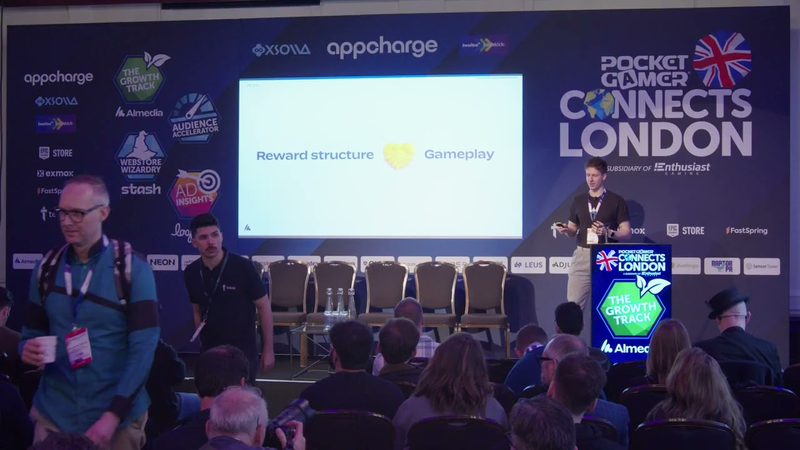
Session: D2C Best Practices: What Mobile Apps Can Learn From Gaming - Chip Thurston, FastSpring.
11 Feb 202619 min video
Transcript
very important best practices what mobile apps can learn from gaming. And we have Chip Thirsten from Fastring. So Chip, please take the podium.
Congratulations on finding this room here today. I certainly barely got here in time. Uh so I'll talk to you as she said about best practices in direct to consumer. I think it's a really uh important topic right now because especially in mobile apps because it's something we've been doing in the gaming industry for the last several years. Uh when I personally started getting involved in direct to consumer at Scopely, it was back in 2022. Um so that's three years of learnings and best practices just across the industry that have been cultivated over that time. And so what I wanted wanted to talk to you about here at the uh business summit is
really about what mobile apps can learn from gaming, right? What has gaming learned over these last few years that you can take to hit the ground running and get your direct to consumer strategy up and running. So that is what I will run through today. First a little bit about me. Uh I'm the head of gaming at Fastbring. So I am focused on the gaming vertical which can include mobile and premium gaming. Um, and at Fastpring, we're an all-in-one direct to consumer payment provider. We power web stores. Uh, we do that globally. We have over 3,500 customers. We, uh, have been around for 20 years, and we're here to help you grow. Uh, this keeps changing. Uh, but for me, I am leveraging over a decade of experience in the mobile gaming industry. And so, uh, worked at, like I said, Scopely, before that, worked at Scyplay, wore a number of hats across marketing and monetization. And so my focus at Fastbring is leveraging all that experience and taking what I can to help our sellers, but really the industry overall to drive forward in
direct to consumer marketing and monetization. Uh I'm based out of Austin, Texas, over in the States. Uh father of one awesome 8-year-old kiddo and uh despite knowing nothing about boats, I'm our honorary DTOC captain. DOC is our uh cringe-worthy name of our uh boat party series that we put on at various events. And so if you happen to be at a future event like GDC and would like an invite, let me know. Uh and I should also clarify DTOC is how we call it in gaming, right? That's what we call this direct to consumer or web store revenue. I recognize in mobile apps that it's more traditionally known as appto web or app to web marketing and monetization. Uh you'll hear me use I need to just set this down. You'll hear me use DTOC a lot today, but also just know I'm kind of using that interchangeably with uh app to web. So today I'll talk about why uh kind of a mispers misconception that I've heard about direct to consumer why it's seen as this forbidden fruit when it really shouldn't be um and then some of the normaly about doing direct to consumer monetization before getting into the
meat of it which is really these five best practices that I'll talk with you about today. So, one thing I heard a lot, especially early on in gaming with direct to consumer is that it would be great, wouldn't it just be great if we we Why does this keep changing? Uh if we could go up and get that forbidden fruit, right? It would be wonderful if we could drive half our revenue through a web store, but and then any number of reasons, right? It could be uh it's hard, it requires a technical investment. I don't want to upset my relationship with major platforms like Apple and Google. Like publishers can find these reasons not to do it. When if you look at the other side of the tree, there are these other developers who are just going up and down into the tree and plucking that fruit, right? Benefiting significantly from having a direct to consumer strategy. And that's because they know it can be done and they're creative about how they can how it can be done. And the other piece of this is maintaining that relationship with Apple and Google. At no point would I advocate for going 100% direct to consumer and
foregoing any relationship with them. Like they are critical partners. The successful direct to consumer strategy is about treating that relationship as you should, right? You you understand the policies that Apple and Google have agreed to and then you operate within those policies to maximize those revenue channels. And I'll I'll talk a little bit about what that looks like and the normaly of it just that selling a product directly to your consumer is normal business. So when I think about outside of mobile uh when I think about just uh consumer goods in general, right? If I want to buy a mouse, a new mouse for my computer, I know I can go to Amazon and find that mouse. Maybe I find a nice Logitech mouse and I know I can buy it on Amazon or I know I can go to Logitech's website and find that same mouse and I can buy it there. More importantly, Logitech knows they can sell it on Amazon through a distribution channel or they can sell it directly on their website. They can sell it directly to their consumers. That's their prerogative. And this is the same thing.
It's saying you can sell it on mobile on a mobile platform through the mobile store or you can sell it through your website. You can sell that inapp purchase through your own website. It's a normal way of doing business. But again recognizing that Apple and Google are excellent distribution partners and you want to always treat them as such, right? They are critical relationships to maintain. But at the end of the day, what I think has become apparent in 2025 is that multiplatform distribution is healthy. It empowers you as a developer that you're not beholden to these gatekeepers like Apple and Google. Uh you have other distri distribution channels as well. And lastly, there's a huge precedent here. Leading publishers and developers are investing heavily in direct to consumer. We actually ran a survey last summer. You can read the full report on the Fast Spring blog, but we asked dozens of questions to over 100 key decision makers in gaming, mobile gaming specifically across North America and Europe. And we asked them all these questions about web stores. But one of the most interesting conclusions from
that survey for me is that 98% of respondents were either pursuing direct to consumer already or they were actively planning to pursue direct to consumer. So basically it's uh become recognized as a necessary investment to succeed in mobile gaming and to maximize your success. So we're seeing a lot of influence there and it's really on the back of some of these rulings and regulations that have materialized in 2025. So with that, I'll get into the five proven insights, things that I would encourage you to take away if you're just starting to get involved in it from a mobile app standpoint, what things that we've learned in gaming. So the first is to identify your growth vectors. Don't just be tunnel vision on how you communicate this inside your app. Uh when I worked on it personally, I would look at all the different channels available at our disposal and I would say, okay, we're rolling out this new feature in our game. what what does the go to market plan look like for them? And so, yes, there's inapp communication, but there's also maybe a
blog that we have that we use to communicate with our uh users. Maybe it's an email campaign. Maybe it's social media on Instagram or X. Maybe it's a a forum like Tik Tok or Discord or Reddit. Um, but the point is using all these different places to communicate with players is critical. And it's especially critical because when I think about these rulings and regulations, they specifically control what you can say inside of your app. But what you say in email is not controlled by the major platforms, right? So if you want to go send an email to your players about something you're doing on your website or your web store, great. Go do that. Send that email and route them directly from there into your store. There's also talk of fees coming up this year where Apple and Google are implementing these programs where they'll actually start to take a percentage of revenue for the web store revenue as well, but those fees are limited in scope. That will only apply to linked payments. And so, we'll have to wait and see what the final form of those looks like. But the point with that is that's only the tip of the spear
here, right? any of these other channels. Not only are they great ways to reach your players or users, sorry, your app users and tell them about these things, uh, but they also won't have these fees attached to them. And so, what I would do anytime we had something to communicate is list out all these vehicles we had at our disposal and say, "All right, which ones make sense for this roll out, right? Do should we send an email to players? Should we post on social media about it?" Uh, and in doing so, we ensured we were reaching our users strategically and also comprehensively. in a way to to communicate with them about whatever it is that we were trying to promote. And the last idea is to leverage non-link text as another way to promote inside of your app. So if I wanted to say go to fastsprpring.com to learn more, I can make that a link. But if it's a link and then once these fees roll out, well, there can now be a fee attributed to revenue that I get. If I just say go to fastsprpring.com as text, yes, there's a little bit more friction for the user to take that and go find their way to the website, but I'm still promoting and
there won't be a fee attached because now there's not, you know, tracking back through the link. So, I think there's all these ways that we'll have to be strategic about how to continue to grow. But the point is don't only focus on one of these vehicles. Make sure you consider all the vehicles available and then leverage those to grow your uh web store revenue. The other piece and this is probably a pretty obvious one but any opportunity you can take to minimize friction will improve your conversion right so something we inherently know as app developers we'll look at every step of the journey uh and do what we can to minimize the friction we'll we'll scrutinize the first-time user experience we'll break it down into 50 steps and we'll look at every step of that and say ah step 37 has a bigger drop let's see what step 37 is and try to improve that so we can improve retention in our app right but We don't do that with other aspects of the game. And so when I break down what the journey might look like for a user going from the app to the web store, it could be something like this where maybe I'm taking them in this case to a support
page or maybe a a a news page on my website. So I go from the app to this what I'm calling the web portal here, which for me is just the website. [snorts] So okay, let's optimize the landing page. The quicker I can get that page to load, the more I can serve the relevant information to the user, uh the better that conversion is going to be. So step one, then they're at the website. Okay, well now that they're on the support page, I want to get them into the web store. So I want to make sure that web store visibility is prominent. Maybe it's a big button that's always on the page in the corner. Maybe it's a flashing glowing button. Like whatever I can do to say, "Hey, you're already on the website. Let's get you over to the web store." Now then once they're on the web store, let's convert them. Let's get them a purchase. Maybe that's offer segmentation. Maybe it's something like at Fastpring, we offer one-click pay to really streamline conversions. And we've seen that boost conversion rate. Um, and then they check out. And don't miss the final step here, which is once they check out, get them back inside your app. Have a button they can tap or just automatically spit them out and get them right back into the app. Uh, so you can close the loop and make sure they
immediately receive those items inside the app. Otherwise, they'll start to ask questions, right? When you purchase on mobile, it's immediate. When you purchase in the web store, it should be immediate as well. And so the point is if you can look at any step of this journey and improve it, if you can reduce friction at any step here, it will improve your conversion of your web store. If you can make that page load faster, more optimally if you can serve the information better to the user on that page, that's great and that will have that downstream effect of ultimately driving more uh driving more revenue in that case. Next is trust. Um, one thing that I think we as app developers have taken for granted with Apple and Google is the trust. The trust that they've cultivated over decades of use, right? They uh [clears throat] whenever an app user goes to make a purchase, they don't have a second thought of, oh, is this the right place to purchase for the app that I'm using? Is my payment information safe when I'm going to purchase with Apple or with Google? Uh so that's just
something that it takes a long time to uh this is jumping all over the place. Uh it takes a long time to really cultivate that sense of trust. And when you're asking them to go to a web store to make this purchase, uh it's you're you're asking them to trust you as well. And so it it's not it might be more subconscious for a player. They're not asking themselves, oh, do I trust this page? Um, but they will ask, is this the right page for the app that I'm using or is this some thirdparty app that's trying to sell me stuff to use in this app that I'm using? Uh, is this can I trust them with my payment information? Will I immediately receive these items or will there be some lag to it? Right? They'll they'll have all these questions that might pop up that might give them hesitation and say, "H, you know what? Maybe I should just go purchase inside the app." And so trust will remain a key concern. Even for games that I've seen that have been driving over half of their revenue through the web store, they'll run a survey with their players that are not purchasing on the web store and ask them like, "Why are you not
purchasing there?" You see, you get more more uh value for purchasing on the web store. And the answer typically remains trust. They're like, "I'm just a little hesitant, a little not sure about that." Um, and so one way that I would say to to overcome this is to be consistent. be consistent in your brand and your voice. Uh, one pitfall that I've seen with developers is to get caught up in all the bells and whistles you can use on a web store. Right? When you're developing on mobile, you're you have some guardrails. There's there's some uh parameters that you have to operate within, whether it's design or pricing or whatever. When you're on a website, those guardrails are gone. You you can do whatever you want on that website. And so, sometimes developers might get caught up in that and say, "Oh, we can do all these cool different things." And then the web store looks radically different than the mobile store. And it looks way better, but it's so different that then it introduces that mental friction for the players that they might not trust it as much. And so I think doesn't need to be a copy paste of your mobile store, but keeping it similar again in brand and voice is very important and can help cultivate that
trust with your players or users. Another one is uh don't ignore engagement. So when I talk to publishers and developers about driving direct to consumer revenue, it immediately goes to the revenue that they're driving. Understandably, right? That's that's the priorities, this monetization aspect, but engagement is equally valuable. If a user engages with your app today and uh doesn't monetize, there's still value in that, right? They they're engaging with your app and that's what you want to uh prioritize and cultivate as much as you can. and get them engaging with your app every single day. And if they don't monetize on a given day, that's okay. You just want them keep coming back and you know that eventually you'll monetize them. And so it's the same with your web store. By having them continuing to visit your website, maybe it's a support page, maybe it's a community page, uh maybe it is a news page or a blog or even just the homepage. Uh, but having them visit that again will start to
cultivate that trust and we'll we'll get them assured that this is an authentic website and getting them back. Um, and so having just your website be part of the ecosystem of your game has a lot of value for players to go visit that even if they're not purchasing every single time they go visit that page. So don't ignore the engagement of uh your users going to visit your website. A few ways you can do that. You can have free gifts. You can literally just incentivize people for visiting the website by giving them free little commodities in your uh app, whatever that might look like. You can also put helpful guides or detailed news on events and features there. One thing we found is uh we would have a new feature release for our app on a game that I worked on and we put a few bullets very high level of that app inside uh of the app and a little popup and then we would say click here if you want the full details. They click on a button, it takes them out to the website where there's paragraphs and paragraphs of content. Really breaking down the details of everything about that feature. And it became like something
that our most engaged users would use. They would say, "I want that degree of detail about this new feature. I will tap on that button and go to the website." And that was perfect because those are the ones we want on the website, right? You don't want to get 100% of your user base over to the website. I mean, it's great if they do, but really, if you just get your top spenders over there, your top users, your power users, whatever that looks like, that can shift over a lot of your revenue pretty quickly. And so, uh, something like having the more detailed news breakdown on the website drives that engagement on the website, which then has the end result of driving more revenue through your website. And last thing is to monitor regulations. Uh, I have not talked about regulations yet, but 2025 was this year of sweeping regulations. There was Epic versus Apple, Epic versus Google, Google, the Mobile Software Competition Act in Japan, all of these things that when I look at direct to consumer and web store revenue now versus 12 months ago, it is transformatively different,
right? It just the the growth that we've seen, the number of players in the space that we've seen from the payment processing side, uh, and just the potential, right? the developers that have adopted this and seen growth in the space and that's really come from these regulations. And so it's important to stay on top of it. The more responsive you can be to these regulations, the more successful you'll be. When this ruling with Epic versus uh Apple happened in April of 2025, some publishers were caught flatfooted, right? They didn't have they were like, "Oh, well, now we need to invest in direct to consumer and get that up and running and then we can scale and try to capitalize on this." Whereas the ones that benefited the most already had a web store. they already had a partner like fastpring in place to power that. So then they were able to just turnkey solution drive more traffic with the new regulation. Right? So whenever these happen, ask yourself what's within the scope of the regulation. Uh does this impact the language I can use, the landing page I can use? Does it impact are they introducing some fee like I alluded to earlier? Um make sure you
understand the scope, but also understand when it takes effect. Just because you read about a ruling getting established doesn't mean it's in effect yet. The mobile software competition act is a great example of this where it was established in summer of 2024 but went into effect in December of 2025. There was this like 18month lead time for compliance for Apple and Google before it actually went into effect. By contrast, the Epic versus Apple ruling was established and in effect immediately. And so we have this huge variance of time and so make sure you understand when something's going into effect and of course where like what countries are within the scope of that regulation and we we publish on the Fast Spring blog about it but ultimately if you're reading about them those are the three key questions to ask yourself. So uh that's all I hope that was helpful. Certainly if you have more questions we have a booth over at the Pocket Gamer uh connect side of this and you can find us at fastbring.com/apps or you can find me on LinkedIn. Thank you for your time.
[applause]
Auto-generated captions from YouTube — names and numbers may be misheard.
Key insights
7 takeaways · ~3 min read- 01A survey of over 100 key decision-makers in the North American and European mobile gaming industries revealed that 98% are either currently pursuing or actively planning a direct-to-consumer (D2C) web store strategy.
- 02Multiplatform distribution is a necessary investment for modern mobile apps, as it reduces dependency on gatekeepers like Apple and Google while providing a healthy, diversified revenue stream.
- 03To maximize conversion, developers must minimize friction in the user journey between the app and the web store, ensuring that purchased items are delivered immediately to the user's account.
- 04Building user trust is critical for D2C success; developers should treat their web store as an authentic extension of the app ecosystem to overcome user hesitation regarding payment security and legitimacy.
- 05Beyond direct revenue, developers should leverage web stores to drive engagement by offering free in-game commodities or hosting detailed content, such as event guides and feature deep-dives, that cannot be fully displayed within the app.
- 06Growth strategies should utilize multiple communication channels—including email, social media, and in-app non-link text—to promote web stores while strategically navigating platform fee structures.
- 07When responding to regulatory changes, such as the 2025 Epic vs. Apple ruling or the Mobile Software Competition Act, developers must proactively assess the scope, effective dates, and geographic reach of the mandates to avoid being caught unprepared.
Ask AI about this video
Cite this video
Citation
Generating citation…





















Comments