1 free read left. Create a free account for unlimited reading + AI research.
Create free accountPresentation Modern Times Group
1 free read left. Create a free account for unlimited reading + AI research.
Create free accountPresentationModern Times Group
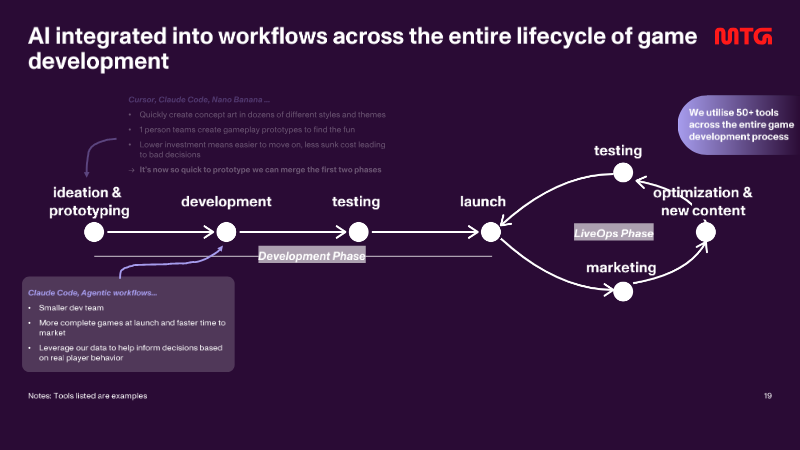
This integration aims to accelerate production timelines and improve developer productivity. AI is reshaping the game development lifecycle from ideation to live operations.
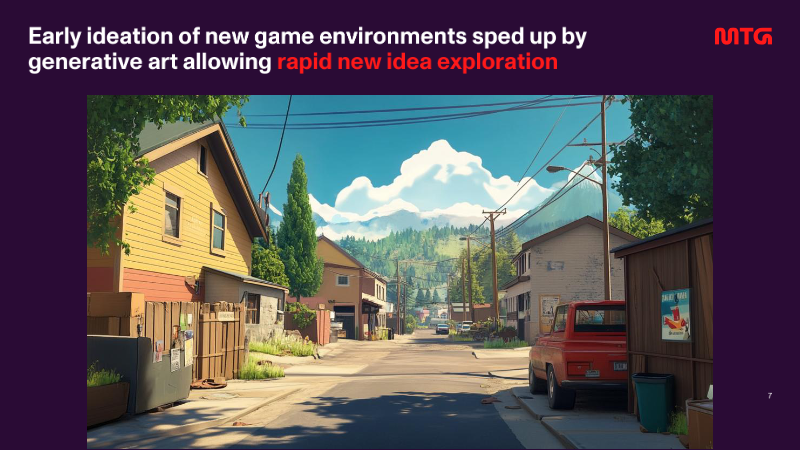
Artificial intelligence is fundamentally reshaping the game development lifecycle at MTG, transitioning from initial creative ideation to the management of global live operations. By integrating generative tools across engineering, art, and data analysis, the company aims to enhance operational efficiency while maintaining creative oversight. This strategic shift focuses on streamlining workflows to accelerate production timelines and improve developer productivity across its studio network.
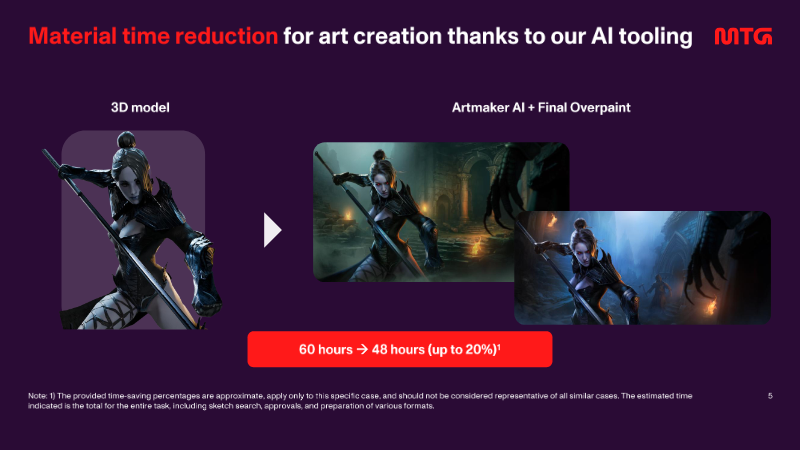
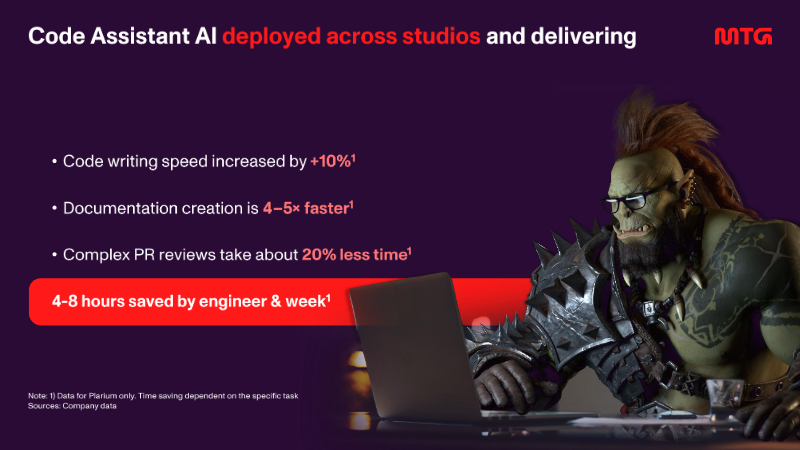
Empirical data from internal implementations demonstrates significant time savings in art and software development. In art production, the integration of AI-assisted tools has reduced the time required for 3D modeling by 20 percent, while specific workflows involving handcrafted sketches and AI-driven overpainting have achieved efficiency gains of up to 50 percent. Engineering teams have seen similar improvements, with code writing speeds increasing by 10 percent and documentation creation accelerating by four to five times. Furthermore, complex pull request reviews have been shortened by 20 percent, resulting in an average savings of four to eight hours per engineer each week.
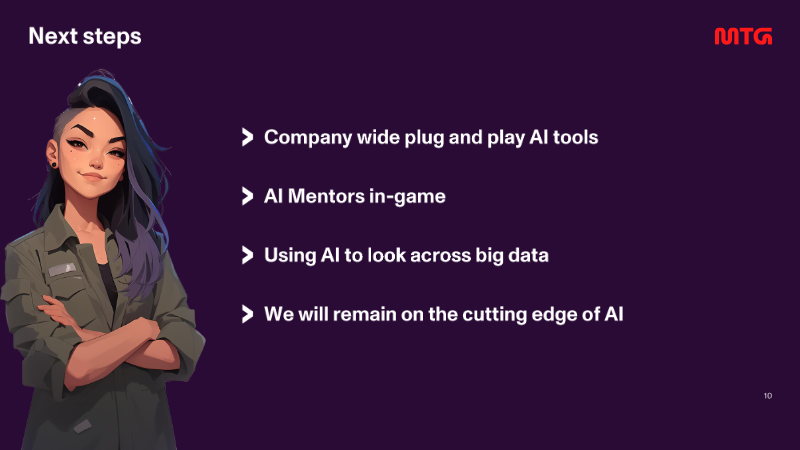
The scope of these initiatives spans the entire MTG group, with specific performance metrics derived from Plarium studio data. Moving forward, the company intends to scale these capabilities through the deployment of company-wide, plug-and-play AI tools and the introduction of AI-driven in-game mentors. Future efforts will also prioritize the utilization of AI to synthesize large-scale data sets, ensuring the organization remains at the forefront of technological adoption within the global gaming industry. These advancements reflect a broader commitment to leveraging automation to optimize resource allocation and foster rapid innovation in game design and maintenance.
Modern Times Group · 2026
Modern Times Group · 2026
Modern Times Group · 2026
Modern Times Group · 2026
Modern Times Group · 2026
Modern Times Group · 2025
Modern Times Group · 2025
Modern Times Group · 2025
Modern Times Group · 2025
Modern Times Group · 2025
Modern Times Group · 2024
Modern Times Group · 2024