In-Game Advertising reports and market data
Documents


Ad Monetization Without Killing Retention
Hybrid monetization can increase revenue without eroding player retention by treating advertisements as an integral part of the game’s design system.
- Integrate advertisements as core gameplay design elements rather than external overlays to increase revenue without negatively impacting player retention.
- Deploy rewarded video ads during high-stakes moments—such as revives, boosters, or time-limited rewards—to leverage scarcity and urgency for higher conversion rates.
- Implement strategic gating for ad triggers based on level progression, total playtime, or specific cooldown periods to minimize player frustration.

🚨Tactile & Loomit: How Top Games Make Money From Ads
Modern mobile game monetization requires a sophisticated balance between maximizing ad revenue and protecting the integrity of in-app purchase ecosystems.
- Developers should shift from static monetization models to hyper-segmented strategies that use geography, platform, and spending history to ensure ad revenue is incremental rather than cannibalizing in-app purchases.
- To protect long-term retention, studios must curate ad quality by requesting conservative creative formats, monitoring ad duration, and actively swapping formats to prevent aggressive ads from degrading the user experience.
- Studios should prioritize a 'buy-over-build' strategy for ad infrastructure, leveraging specialized external tools to manage complex auction dynamics rather than maintaining internal systems.

Subway Surfers City: Sybo built the Best Ad Placements in Mobile Gaming, then forgot to run UA
Subway Surfers City represents a significant attempt to evolve the classic runner genre through a highly polished, shard-based gacha economy and sophisticated monetization architecture.
- Subway Surfers City has reached 10 million downloads but is struggling to retain players, with daily active users currently declining to approximately 730,000.
- The game generates $100,000 in daily ad revenue, yet it relies too heavily on rewarded ads rather than in-app purchases, threatening long-term profitability.
- Sybo has failed to implement aggressive user acquisition tactics, such as robust AppLovin integration, AdROAS strategies, or effective cross-promotion within the original Subway Surfers ecosystem.

UA Monthly #2: AppLovin's Social Network, Google Fee Cuts & Unity Vector
Unity is aggressively challenging the current user acquisition landscape by introducing D28 in-app purchase ROAS campaigns powered by its Vector engine.
- Unity is testing D28 in-app purchase ROAS campaigns using its Vector engine, moving beyond the industry-standard seven-day optimization window to better identify high-value players.
- Google has reduced Play Store fees from 30% to 20% for new installs, providing developers with marginal improvements in unit economics and increased bidding power for user acquisition.
- AppLovin is exploring expansion into e-commerce and social networking to secure first-party inventory, though analysts view this as a high-risk departure from its core B2B ad-tech expertise.

MDM Podcast, Season 7, Episode 11: Understanding Unity's Vector (with Felix The)
Unity’s Vector platform represents a strategic evolution in mobile user acquisition by leveraging the company’s dual role as a game engine provider and an advertising network.
- Unity's 'Vector' advertising product leverages engine-level runtime data to improve user acquisition performance by providing high-fidelity, sequential event signals that are superior to traditional, often fragmented, software development kit (SDK) data.
- Unity is shifting from fragmented machine learning approaches to 'massive unified models' that allow for better autocorrelation, covariance, and causal understanding of user behavior across the advertising ecosystem.
- The company is prioritizing generative AI tools that focus on improving Return on Ad Spend (ROAS) rather than just increasing creative volume, ensuring that advertisers do not simply shift costs from production to marketing without performance gains.
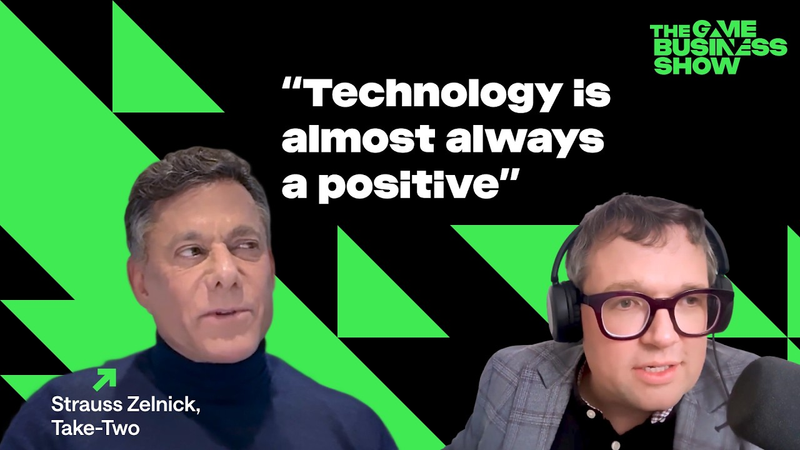
Take-Two CEO Interview: ‘The notion that AI can make GTA is laughable’
Take-Two Interactive CEO Strauss Zelnick asserts that while artificial intelligence offers significant potential for operational efficiency and creative support, it does not pose a threat to the traditional model of high-end interactive entertainment.
- Take-Two Interactive projects a major shift in revenue distribution over the next decade, with the U.S. share expected to drop from approximately 65% to 20–25% as the company expands into India, Africa, the Middle East, and Latin America.
- CEO Strauss Zelnick maintains that AI is a tool for operational efficiency and asset creation rather than a replacement for human creativity, explicitly dismissing the idea that AI can generate blockbuster titles like Grand Theft Auto.
- Take-Two currently utilizes hundreds of AI implementations across its labels to streamline workflows and support the company's core strategy of creativity, innovation, and efficiency.

🐻 SAVED $1.6 mil UA BUDGET! How Super Bear Adventure became a MASSIVE ad revenue game with 0 spent
Super Bear Adventure demonstrates that high-scale mobile gaming success is achievable without traditional user acquisition budgets by prioritizing organic growth and sticky, nostalgic gameplay.
- Super Bear Adventure generates $1.9 million to $2.5 million in monthly revenue through a rewarded-ad economy without any traditional user acquisition spend.
- The game has achieved a scale of over 6.5 million daily active users by targeting Tier-2 and Tier-3 markets like Indonesia, Brazil, and Russia with a nostalgic, console-style platformer aesthetic.
- Organic growth is sustained by a long-tail effect where community-generated content on YouTube consistently drives new installs years after the initial release.

📈🤌 Why studios now spend 40% on Rewarded UA?
Rewarded user acquisition has transitioned from a peripheral growth tactic into a foundational pillar of modern mobile game marketing, with studios frequently dedicating 30% to 40% of their total acquisition budgets to these channels.
- Studios are allocating 30% to 40% of their total user acquisition budgets to rewarded models, shifting from a peripheral tactic to a core growth pillar.
- Rewarded playtime models allow developers to reach break-even points two to three times faster than traditional advertising methods.
- Integration of rewarded offer walls into mid-core and strategy titles with robust meta-economies consistently generates a 5% to 15% revenue uplift.
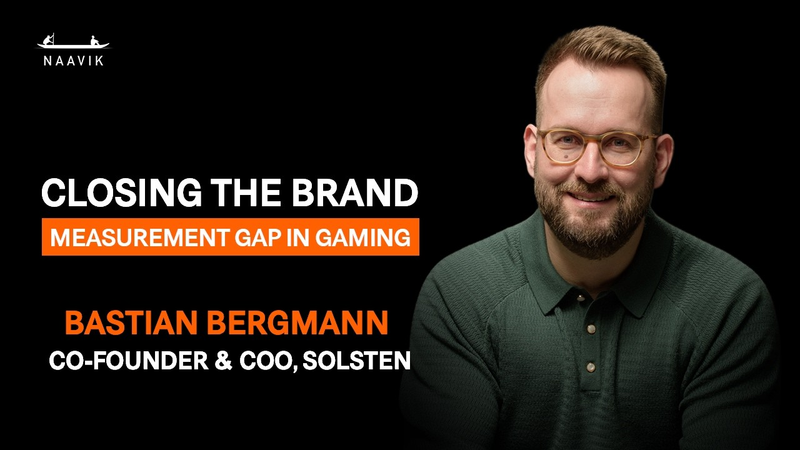
How Better Measurement Will Unlock the Next Wave of Brands in Gaming
Gaming represents a massive, underutilized advertising frontier that currently reaches over three billion people globally yet captures only five percent of total ad spend.
- Gaming reaches over three billion people globally but currently captures only five percent of total advertising spend, representing a significant underutilization of the channel.
- Consumers who purchase virtual items with physical counterparts exhibit an 86 percent conversion rate, demonstrating the potential for gaming to drive bottom-line revenue.
- The industry is at an inflection point similar to early social media advertising, where growth is currently constrained by a lack of standardized, transparent measurement and technical maturity.
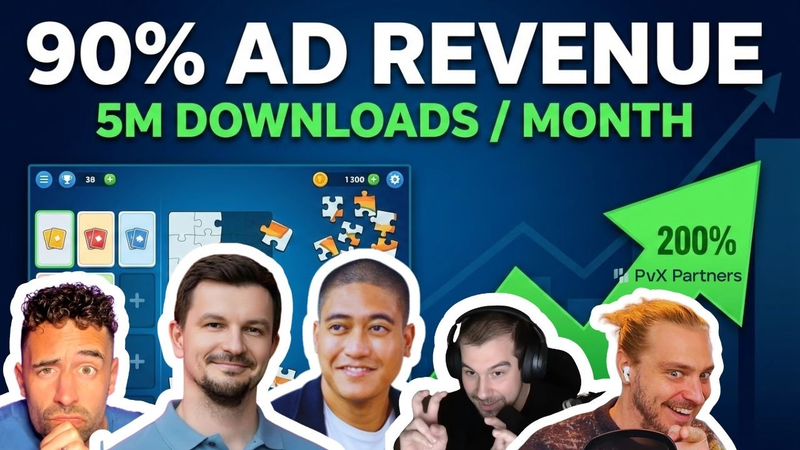
How Malpa Games scaled “Boring” puzzle games to millions!
Malpa Games has achieved significant scale in the mobile puzzle market by prioritizing operational efficiency and high-volume ad monetization over experimental game design.
- Malpa Games achieved 5 million monthly downloads by focusing on evergreen puzzle genres like word games, Sudoku, and jigsaw puzzles rather than experimental design.
- Over 90 percent of the studio's revenue is generated through ad monetization, which is continuously optimized via rigorous A/B testing of ad frequency and placement.
- The studio scaled growth by transitioning from fixed budget caps to a return on ad spend (ROAS) model, allowing for uncapped marketing expenditure as long as performance thresholds are met.

The future of Xbox and Pokémon's 30th anniversary | Week in Mobile Games podcast
Microsoft is undergoing a fundamental leadership transition within its gaming division, marked by the departure of long-standing executives Phil Spencer and Sarah Bond.
- The UK's Advertising Standards Authority (ASA) has issued an enforcement notice requiring mobile game publishers to provide clearer disclosure of loot boxes in advertisements and app store listings, deeming existing 'in-app purchase' labels insufficient.
- Microsoft Gaming is undergoing a leadership restructuring, with Asha Sharma—formerly president of Microsoft's core AI product—taking on a key role, though the company has stated there will be no top-down directive to force AI implementation across its games division.
- Pokémon is preparing for its 30th anniversary, with expectations that the franchise will announce a tenth-generation title to coincide with the launch of the next Nintendo console.

“I’m pretty frightened by the DRAM crisis” – Matthew Ball Part Two
The gaming industry is currently navigating a period of profound structural transformation characterized by leadership transitions, corporate retrenchment, and a strategic realignment of labor.
- The gaming industry is facing a critical economic threat from a looming DRAM crisis, which is inflating hardware costs and undermining the viability of traditional hardware-subsidy business models.
- Companies are shifting away from direct consumer spending toward advertising as a primary growth engine, with projections indicating that ad-supported revenue will eventually surpass direct sales.
- The industry is undergoing a geographic pivot in hiring, moving away from traditional North American hubs to align operational footprints with global revenue distribution and emerging market growth.