Transcript
How should we think about this when launching a new game? Should I always try to include this like like rewarded UA channels for the global launch or should I start doing this maybe already in the soft launch so I know what can I That's a good question actually. I think maybe not in the soft launch because rewarded needs the game to be mature to have all the events live ops and can we can simplify saying that it needs to have a monetization system that it's pretty much
[music] [music] [music] [music]
[music] [music] [music]
Let's let's not be super serious. Let's not be super serious. Hello everybody. Welcome to our special episode. I mean I stopped counting which like how many special episodes we we have because A lot. A lot. I know I know I know. But when we have a special guest I guess we can we can start calling it super special or super super super. Anyway, my name is Matej Lancaric. I'm Felix Braberg. And we are your hosts for today. So we have a we have a special guest we have a special guest Max from MAF. Can you introduce yourself and and the company? Sure, it would be a pleasure. First of all, thanks for having me. It's I'm very excited to be to be in the podcast. It's been a while I've been watching you guys and now I have the chance to to take part. It's amazing.
Well, my journey starts about a decade ago in in mobile advertising in general and I've been restarting my journey when we release our first app which was MyAfree at the time. And well, maybe you remember all the concept of the app of the day when we used to get games paid games and price drop for free for 24 hours. So MyAfree was exactly doing that. There was a couple doing the same things and the goal was just you you rank up paid games on top of the chart in Apple Apple and Google, no? Yeah, obviously unfortunately it doesn't work anymore. It's been uh it's been kind of fixed by the App Store and that that's why we started introducing rewards inside the inside your app. So we started giving stars to the to the user to play games and they just they just got crazy about it. They just played like five six games at the same time just to get more rewards and then we we quickly figured it out oh maybe maybe we should give gift cards to those users so they will spend back in the games we are
we're sponsoring essentially and it kind of worked. From there we then we took the the leap with MAF to release MyChips. It's our SDK monetization or advertising solution for games and apps. Essentially it's doing the same thing as the app but it's distributed across many other apps and games. So it's yeah, that's what we are focusing right now. Very hands-on from app developer game developers and so on. And we saw some of your recent case studies with Spin comes Tap Nation and whatever else. So just set the context for for for our discussion. So where is like the the rewarded UA right now sitting in the in the current like UA channel mix or like the overall setup? I think lately it's a topic that you guys probably seeing the same on your side it's increasing a lot. There is more and more developers that are actually building UA teams specifically for for rewarded channels, no? Because before it was like a mix you have the guys working on AppLovin or Meta and then maybe when they have time left they they going to
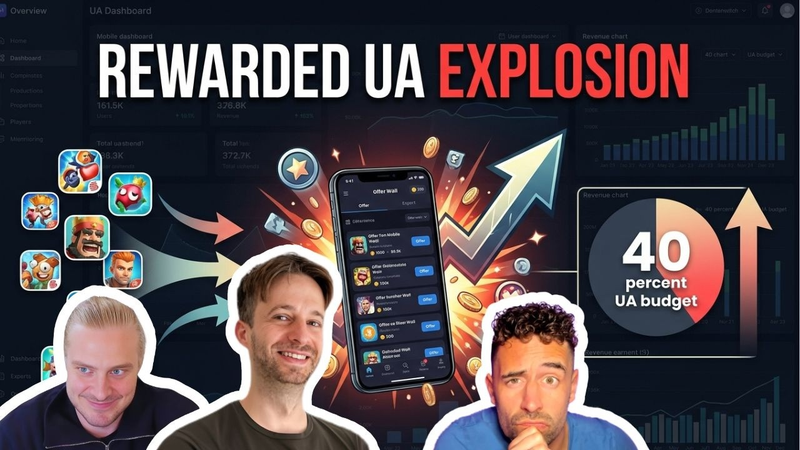
launch a rewarded source. But now now it's totally different. They have a team focused on that. There's more developers jumping into into this I cannot really say new channel because it's been around for 10 15 years but they are really seeing good good return right now. So that's why they're focusing more there. I believe lately it's also besides getting more more traction so more split of of all the UA budget. We're talking about 30 40% sometimes. We are changing the paradigm that before it was like you you first max all the classic channel you have like AppLovin, Meta and the other and then you test rewarded. Now I've seen developer jumping directly into rewarded or starting at the same time with new games essentially. So this is very important I think because it's a signal that the industry really believes it's a channel where you can make money when you can make a decent and a massive scale sometimes. It's not anymore like one of the latest priority you see you check in your in your UA strategy, no? Okay, yeah so I don't think like that's
that's changing that much because yeah as you said like I I heard and and did I mean my approach was pretty much the same. Top like traditional channels and then oh what what's next? Oh let's just start doing that rewarded UA and as you said you said like there are UA managers only that are kind of now managing the rewarded UA channels. Yeah. Like I say one person manages 10 15. So that's that's true. So but but yeah like what's what's the change actually like from like now and let's say two or three years ago which was already kind of pretty much like rise of of rewarded UA. Yeah, but I think it was maybe still early days because the competition was not very strong in in terms of publishers UA channels that can drive players to games. I think the competition helped a lot to improve the retention the engagement mechanism that we are using with the users. So obviously this improved the the quality of those users in the games. Developers have seen increasing scale.
They've seen more ROI. They've seen longer term ROI and retention. So that's why they are investing more and more there. I believe also there's there's definitely other factors like privacy on iOS a lot because you basically lost most of the targeting. And also nobody really wants one channel to be 85 90% of our UA, no? So that's why they are trying to differentiate and I think the short term ROI window that rewarded has usually can bring you to break even like two or three times faster than than AppLovin. I think it's it's an important factor, no? Because they are seeing that their money coming back earlier from from the players. So they can reinvest and it's it's just growing this way. I think I'm super curious about a question I've always wanted to ask on this. Just the people that convert on offer wall, do you notice any difference in the number of people when like times are rough or the economy is booming? So like if people are struggling they convert more, yeah? Oh yes yes. This is
mainly in apps that are paying rewarded we call real money rewards. So any virtual currency that can be translated to something you can spend in in the real world like gift cards, Bitcoin or even cash sometimes. So in this particular type of channels definitely when the economy is going down you see the users going up. But if we go on any other publisher that use an offer wall like games or apps then there it's it's not really the case. There is I think there is more like the case okay there's a COVID COVID-19 everyone is playing mobile games so of course the the volume on the offer wall is going up. Mhm. That makes sense. Unfortunately we all saw that. It's not going to happen again but that's you know, from time to time we should be prepared. So like why is like now the time of like the offer walls and having like this resurgence like because this was already getting like pretty bad reputation, no? Yeah. I believe in the past they've been used offer walls mainly for like ranking
boost or very easy campaign where the goal for the user was just install the game and then leave it which definitely never ever return over investment. And they were used mainly for ranking boost or any other cosmetic numbers you want to show in your games. Not a real strategy. I think the paradigm changed a lot when we started talking about rewarding the play time that actually the user is spending in the game and by rewarding the play time it's a totally different paradigm. You really change the game and you reward a positive behavior of the user, no? Spend an hour playing your game or two hours or whatever it is. So the the goal it's not keep paying the user forever because it's not going to be sustainable but it's giving them some rewards that will make them addicted to your game or make your game an habit for them so they can just play play even after, no? Of course we don't expect the user to keep all the games they try the offer wall but what we are trying to do is making the right match between the user and the game so
they can keep 30 40% of the game for for a very long period. We usually can track events up to a year and so we we see the lifetime of the user for for a year and that's yeah that's the goal. That's the vision. Technically users should be playing the games they download as long as possible in order to to break the reward window. Yeah, I mean that that sounds pretty good on paper or looks pretty good on paper. Yeah, there is there is there is a challenge is obviously which is make the economic work for the advertiser for the publisher and for the user. It's definitely more tough when when you have real money rewards because when you have a real money value then you need to make the math work essentially. But if you're talking about games or apps where you just give like a virtual currency that cannot be translated into into cash then then it's totally different, no? You can potentially reward the user for a year and and it's going to be okay as long as they are playing. Yeah, but then there's really a lot that the app or game needs to kind of think about the monetization or the balancing
especially so you don't up the economy of the game, right? Or app. Yeah, yeah, but I think it change from from case to case because yeah, you can take an example which is uh which is a very nice example to show how the how how brands look at offer walls like you you said it before earlier it was probably not a very good feeling on offer walls because they they have a different UX, they bring user to other games, sometimes the reward doesn't even work. So you have a like a bad bad user experience for the user and the user is your user so essentially it's the publisher to have a bad review in the face of their audience. So I think a case is like ANA which is the Japanese airline probably one of the major airline in the world that recently adopted offer walls. They're using they're using our solution for that. Shows exactly the opposite so they are not driving primary monetization with the offer. Of course there is monetization as well but they're using it to drive engagement.
Think about their company, they're making like 10 plus billion billion a year. Right. I found yeah, I found this. Yeah, they're making 10 plus billion a year so it's Nice.
be it would be and their business is not in the games it's just moving people with planes, you know?
yeah, exactly.
So it would be it would be crazy to think that an offer wall can drive their company revenue 10% more, no? Or 5% more that would be really crazy. But but they need to have the user that in this case the customers they call it customers to be loyal to the airline because next time they book a flight they need to book again the same airline obviously. One way one way that they've been using for the last 50 years is giving them miles. But if they can give a way to the user to earn miles while playing games imagine you are waiting waiting for the check-in or you're just waiting to take off, no? And you play the games and you earn miles for the airline you are you're actually flying. It's a very good engagement solution and loyalty solution that they use to make them user customer
buy again the flight next time. Genius. How did you speak to someone in an airline? Like you never get them on the phone it's impossible. Yeah. It's a it's definitely a long sales cycle I can say but
[laughter]
Fair enough. You need you need to get a little bit on the side, you know? Yeah, yeah. No, but but in this case the the app I'm referring it's they made a companion app it's Yeah.
to earn miles, no? So they have different activities like walk and earn miles or Okay.
take survey and earn miles and the the natural next one would be play games and earn miles. So either you follow the the Netflix style so you build your own portfolio of games. So it's like
And we know maybe it's not going to work or you you you rely on on games from third parties Okay. have been building games for the last like 20 years. Okay. So talking talking about the the case studies and then I want also to ask like you mentioned iOS or or I was thinking about iOS like I think you were like one of the first
rewarded UA channels that were actually on iOS. Wasn't that like the case because I know I was I was working with Colibri and I saw you guys there and it was like oh wait a second iOS oh my god.
[laughter]
I mean it's amazing. Yeah, that's true. I could I could say one of the first for sure now it's more broad. Obviously. Well, Apple has always been a little bit tough when it comes to offer wall in the past. I I'd use a different word but okay. We all know about that. I need to be politically correct. Yes, yeah, yeah, yeah, yeah, that's true. That's true. You guys cannot be I need to be politically correct.
Yes, yeah, yeah. No, yeah, what I what I wanted to say is that recently we can say they stretched the rules and also when the paradigm changed a lot from installing app and artificially boost the ranking in the app store that that what what they didn't want to. Now the focus is more like get rewarded for your loyalty in a game for your play time in a game. So don't don't switch like 100 different games and just leave them. Choose one,
play them for like a two months, three months in a row and get rewarded for doing that obviously. It's very similar to any any other loyalty program you can have on e-commerce, on airlines, on your supermarket or things like that like So that's why it changed.
Yeah, I so Now if we go directly in the in the in the play to earn which is our format I think uh what is obviously not possible on Apple compared to Android it's getting access directly to the play time of the user because my APIs forbid it. It's it's a privacy setting. You can you cannot receive it. So yeah, we tried to go the opposite side so instead of reading the data directly from the from the device then we analyze all the data we receive from the tracking system the MMP so the signals from the app itself and then we estimate the play time the user is actually playing. So we do everything on the back end, we don't we don't violate the privacy of the user and that's why it can work Android iOS potentially even web it doesn't need a
SDK. It can work anywhere even even on Telegram or WhatsApp. Yeah. Okay, so I guess like this is why rewarding the play time works better than just rewarding installs which was really the case now how Yeah, I think there's a there's a different different reason. This is one of the reason also if you think about Apple users, iPhone users they basically never been exposed to to to this experience before to the experience of rewarding their play time. Before they didn't even see any offer wall at all then they started seeing offer walls with the installer simple multi reward steps and now they are exposed for the first time to get rewarded for their play time so that's why it's normal they are engaging more and for a couple of years will be will be like that then I think everyone will need to come up with a different idea as well, no? You need to innovate every every now and then. Mentioning innovation and the players playing for for long time. So and also you mentioned the companies actually see faster returns all from
rewarded UA channels. So like how is there any any kind of comparison that you can mention traditional UA versus rewarded and then because I mean you know like the everybody was always complaining oh my god like these players are dying after 30 days. Yeah. But I mean we're that's blast from the past I would say. Right? So Yeah, I think it's still a struggle for some teams and some publisher. I think you touched the right point. Definitely with the rewarded you can see faster ROI in the first weeks or even the first 30 days. But but you need to be sure there is no drop after. Like if if your if your attention goes zero and then your ROI is flat after 30 days you can be at 99% but you never get profitable. Exactly. Is 1% left it's it's pretty much more important than the other 99, you know? Yeah, yeah, for sure. So that's why I believe that you should push to the user positive behavior, no?
I mentioned it before. Tell the user don't rush the game, don't play 24 hours a day but sometimes it might be counterintuitive but the play to earn works that you cannot play more than a certain amount of hours per day. It change game by game but let's say two hours per day. So it might sounds counterintuitive that you tell your player hey, don't play more or at least you're not going to get rewarded if you play more than two hours. You get only the first two hours. This is because you you guys know better than me like longer session doesn't mean higher CPM most of the times or spending rewarded video doesn't mean you're going to get more revenue in the end because the network will drop the CPM. So we try to create a positive behavior in the users that if they play two hours a day for for for like 60 days when we stop paying them rewards most likely they will keep playing the game. So the the retention is usually higher after the reward window finish and if we want to see from like a engagement perspective if somebody force you to play a game
like uh every day all day you probably going to end up hating this game, no? Like you're just going to trash it when you have a chance. Pretty much. So you said like how you solve the the long-term progression then like how do solve like the 30 60 90 days windows for We usually work on a 60 to 90 so the 30 days it should should be rewarded. I think it's basically connected to what I said. If you play 60 or 90 days in a row a game a couple of hours per day then most likely you're you're liking the game because you could you could switch and start playing another game and then earn the same rewards essentially, no? So we we make sure that the user play as long as possible because there is higher chance they just continue playing. One tactics also that we are we are using is that you should to switch but this is more connected with the game developer itself. You should switch from paying rewards in the app to paying rewards in the game. So imagine that you're receiving rewards from the app or or the
reward app you're coming from and when the reward window finish then you start giving rewards to the user of course in your currency which doesn't have any monetary value by by continuing playing the game, no? So the the in the mind of the user they're just continuing doing what they did before and they are engaging they they are having fun doing that. You're you're not going to have like double digit day 60 or day 90 maybe but definitely not zero which is the goal.
Yeah. Okay. So creating creating a habit pretty much. Yeah, definitely. Creating an habit it's what we're trying to do. And the advertisers like typically what type of monetization mix works the best in terms of ad revenue and IAP revenue? Is there a Goldilocks zone? So think about the the play to earn like a mix between the multi reward and rewarding only for the play time because basically if we take the uh potential total reward for a user let's make it one $100 and then we can decide how much is allocated for the for the play time and
how much is allocated for the milestone. So if you have a game which is more towards ads monetized let's say 100% IAA then you will pay the majority on the on the play time because you want user just to play watch ads progress in the games and then the milestone are secondary. On the other side if you have a IAP game or fully IP then you want to pay more on the on the milestone because you want to make sure the user is progressing in the levels so most likely they will become pay paying users. But also the same time you need a little bit in the in the in the play time because you want to avoid the stress or the churn when a user needs to get from I don't know level 100 to level 500 and there is no milestone no rewards in the middle it could take 10 days and you we know like 10 days playing a game without rewards kind of sucks. So that's why uh user will just will just churn and and try another game no? So we use this let's say 20% 10% it change from game to game from the total reward allocated to the play time in order to avoid the churn.
Okay. And in about the good question Felix about the monetization setup but how about the like the genres themselves like do you see casual versus mid-core works better? Or not really? I think it depends a lot on the on the type of user there's a if if you think about a an offer wall with a hundreds or thousands of different sources that there will be sources more towards the IAP because they're coming from a similar game or they will be sources more toward casual game because maybe they're coming from from an airline for example no? So you need more casual game just to kill just to kill this 30 minutes or an hour your commuting. So I think it really depends and it's where it comes the personalization of the of the games that we're showing to the user comes into place and it's really important. I would say we can maybe make a group between games that work on offer wall and game that doesn't work on offer wall which because there are obviously and the game that doesn't work on offer wall I believe are the one that doesn't have a deep meta for the user like if
you don't have more than 30 60 days of play time then it's probably better you don't even try like I'm thinking about hyper casual. They still exist. I don't know just Yeah I'm thinking about Yeah just joking. I think about hyper casual for sure and then uh it's it's probably not the best fit because they can buy cheaper on other media and and a higher scale that it doesn't really make sense while on on mechanics like strategy game or social casinos then the average customer acquisition cost gets very high quickly and they have enough content to keep the user for for 2 years if they want and also the mechanic of the games it's basically like a coin game. So the mechanic of the game is very very much aligned with the with the intent of the user just earning coins no? So that's where they stop earning in the app they're coming from and they start earning or farming in the game they're now playing. So let me let me ask differently then what's the the best game that you can scale on on map then like when you when you sign a client then you immediately
say oh my god this is going to work so well. I think it's probably merge and then social casino. I think that would be that would be the If I ask the same question as Machi asked but for who should implement the map offer wall like in their games to monetize to earn money and what's the Goldilocks zone there?
You're we're talking all about games not apps in this case Felix. No leave it for games now we can leave it for games now then we can talk apps later. Okay okay okay okay. Uh well for games I believe where you have a very strong economy and a very strong currency because think about that like players engage with the offer wall because they want your currency and you're targeting mainly those 90 plus percent of user that are not paying user but they are playing your game. So what's going to happen if they don't want to pay then eventually they will churn in the future. So this is a way to give to the users that are still not paying user a sense of the premium experience now get this thousand gems or get the premium package
try a little bit to fight with other users and then maybe you end up either engaging again with the offer wall or making an app purchase because you progressed more in the game. So I think the best fit it's probably hardcore strategy mid-core while it's probably not the best fit for hyper casual or casual because there there is a very strong alternative which is the rewarded video no? So you just watch 30 seconds and you get these 20 coins or whatever it's more quick for the user and it's more aligned with the type of game play they're having on on hyper casual very quick session. And for these games that implement an offer wall what's usually a good benchmark for the percentage of earnings from an offer wall overall let's say from a hardcore game if they put it in an offer wall. I think the minimum to consider a success would be 5% uplift and then from 5% you can get up probably 15 on average. I've seen cases even higher like 25 but it it really depends on the game and I think one mistake that the monetization team should avoid when they
implement an offer wall is thinking that it's going to be going to be an autopilot like like another network no? They just put a rewarded video they define the placement and it's going to be autopilot it's going to generate the money. It's actually not the case with offer wall so you need to work with live ops you need to work with the monetization team your team but also the offer wall team to actually create experiences for the user. I exactly I think the the the main concept would be that offer wall is more like an experience rather than just an ad. So if you don't design the experience if you don't upgrade the experience from time to time it's not going to work like a banner placement or rewarded video placement. Okay. So then the question is you you mentioned 5% to 15% uplift. What's the I mean and then you still need to pay attention and invest all resources into managing the experiences as you said. What's the minimum kind of let's say monthly revenue for for companies to justify this exercise? Uh well this
uh it's really up to the developer but I think for mid-size developer it could be from 50 to 100k a month while for for for big studios it could be millions at the minimum for for justify for justify the effort. I think it really depends on the scale of the studio. Uh but sometimes you know 10% more can uh can let you buy more effectively on your UA so you can get this incremental and bring it to UA and you scale more and it's from there you scale you scale even more and you create a you create a positive a positive trend. So I think in in the end of the day it really depends on on what kind of effort the team have to actually put into place. Yeah I mean talking about the UA I mean with Tab Nation I mean I saw insane numbers quite right like this like day 14 ROI which was positive like how what was the kind of different between there like how they run UA on the traditional
channels versus what what they've achieved with you and what's the scale comparison pretty much that's what I'm Yeah. So I believe that in comparison with other clients I think with Tab Nation there was a very good alignment so they listed they listened to our strategy and we implemented it together which is not to give it for granted.
insane. These are great numbers. Yeah yeah not not to give not to give it for granted for sure and I think that the the main change from the multi-reward to the play-to-earn it's it's because the games really align we're talking about idle game for example in a merge or so I think the the games really align with the concept that every time you play like 30 minutes or an hour you can get rewarded some coins so the the the the players really enjoyed the positive rewards for them and and and that they made it as an habit so we we we were able to scale significantly I'm not sure I can share share exactly the number but it
it's one of the I think that they're they're spending a majority of the budgets on on rewarded right now and That's exactly the comparison I I I need because again you also mentioned in the beginning companies are now spending let's say 30% of their budgets on on the UA side for for rewarded and I ran a survey on my subscribers on the Batalion as newsletter and last year they said like 10 20% and I asked if they're willing to increase the budget the next year and they said like 80% said yes. So now it's 30% and I know some companies are running let's say 80% of the of the rewarded UA which is which is insane. Yeah. That's that's great. Yeah but then you you end up in the other situation before you had 80 90% on play in now you have 90% on rewarded.
yeah.
[laughter]
I think you should have a middle ground. Yes for that for sure but then like that time kind of leads me to pretty much Spring Games because I know like they
they launched the game and they already kind of with new title they started with rewarded UA right away. So and I mean we we touched this little bit in the beginning but how should we think about this when launching a new game? Should I always try to include this like like rewarded UA channels for the global launch or should I start doing this maybe already in the soft launch so I know what can I That's a good question actually. I think maybe not in the soft launch because rewarded needs the game to be mature to have all the events live ops and can we can simplify saying that it needs to have a monetization system that it's pretty much mature not long like very basic one because you are you're actually rewarding the user for playing your game so So, the game is not able to generate enough app download every day, then you're not going to be able to sustain it. That's why hyper casual probably doesn't work on offer walls, not because they are bad games. They are very high retention in general. They are very engaging, but they're not able to generate this high revenue per day,
which will make them spend and scale on offer walls. They could work at a lower scale, obviously. So, I think yes, you should definitely try maybe after the soft launch the moment you're you're starting with any other rewarded. I think the the the mistake to avoid is thinking that you should cap any other channel at the point you cannot scale anymore and then just try offer. Also, because the game will be kind of old and the performance will be will be lower. Yeah, okay. Now, I'm I'm thinking about actually, let's say late late monetization stage in a soft launch where the game is pretty much ready from the monetization point of view. And then just right before going global, start testing rewarded UA and putting them in Okay. Then then you can scale afterwards after global. Yeah, but I think you touched on a a good point there because you're saying before going global. So, an offer wall channel could be a very effectively when when you want to test a new a new region
in the world, especially if you need a lot of localization for that region. I'm thinking about Asia for example, like Japan, Korea or or similar region. You would have to prepare all the ads. Okay, we have AI obviously today, so it's faster, but you know, sometimes even the user experience of the game needs to be changed. And you need to spend a lot of energy in order to set up your UA campaigns there and then drive user to the game to see if it's working or not. So, in the case of offer walls, the creative are pretty much the icon and the funnel of the steps, so it's very easy and quick to to start a campaign to get some initial traction, initial metrics on that region and then use this data to optimize your game or to localize or whatever you want to you want to call it, you know? And then you you can scale in the region. I think it some some some clients of ours are using this strategy and it's it's paying out. That's very interesting point because yeah, I don't really need to localize any of my ads. No, you don't. You don't even local I don't even localize. It just needs to be
really much changed drastically to to be able to to run in Korea and Japan. It's that's a very good point. Nice. And but then like after global, like how do you even scale? Like what's the the scale opportunity on on rewarded? Do I need to have 20 channels to be able to scale compared to traditional UA, let's say AppLovin or is it just still decent scale that I can do to run I mean I I remember running math for idle bank and it was decent scale. Yeah. No, I believe that you touched another good point. As of today, there is no mediation in in the offer wall ecosystem. So, if you want to get the maximum scale, you need to have a at least all the major platform live at the same time, you know? Like the let's say maybe not 20, but we can name 10 probably that could be should be live at the same time. And this could be a like a big effort from from big stress for
the UA team. I think we'll get to that point where there will be some mediation or aggregation of all the sources that you can basically just plug in one campaign and get access to all the traffic all the offer walls in the world, but we are not there yet. So, my strategy would be try to start with the with the biggest obviously, try to create a system that reports all the cost, all the revenue in in a structured way same as you do with any other channel. You just you just go in parallel. Here you have the you're lucky because you're not going to need to take care of creative, refresh the creative every week or so, so it's it's a big relief for the teams. But on the other side, you don't have one platform to rule them all. Exactly. And also creative is not like that big of a problem, but then you need to still work with the team and find different offers and and try to balance that out, right? Yeah, you mean different you need to adjust and find the perfect user funnel like the milestone in the game.
Yes. Yeah. Yeah. And also like running live ops event, so live ops event it's events it's probably what's driving the majority of the revenue. So, you need to be sure if you want to maximize it when you're running a live ops in your game, then this should be visible in the offer wall. So, user get attracted by that. Okay, there is a special winter event or some Valentine or Super Bowl, so they will just jump into the game and eight six. Super Bowl. You know Super Bowl tournament and and can you talk about like that that activity that that you recently done? Yeah. Yeah, sure. Sure. That was That that's yeah, that's it's very good that you mentioned that because I saw I saw some some case study around that as well. That was that was actually actually very fun. So, maybe for for the people that are not aware like the the tournaments that we are using in my chips is a type of live ops where actually people compete with each other in order to see who's playing more games for for longer time and to get the jackpot essentially. Usually last for like a week or so and it's not
based on the miles, it's based on the time you spend in the games. Of course, by playing you cannot just leave the game open. It's it's not going to count. Yeah, that's the jackpot. This is the jackpot pretty much. Yeah. So, what we have done is getting this concept and then using with a with a team event. We know that Super Bowl it's probably the the major sports event in the states. I think 60-70% of the entire USA population are watching it. So, we came up with the idea, why not having an an event in the offer wall that will be branded as a Super Bowl game tournament with the graphics and everything to see if the user engage more. And actually, we saw 80% increase in the in the volume during this Wow. Yeah, during this
Nice. this event. And the players were playing even during the Super Bowl event itself. So, I imagine those guys just watching the Super Bowl and then rolling dice or I don't know playing any game. Yes.
That's yeah, that's that was fun. I think this proves obviously, if you stick only to one event, you see a spike
for these three, four days and then you're back to the normal level, but if you create a calendar in conjunction with your offer wall team with your partners, then you can really have an uplift on on on the whole quarter or year if you leverage on all the all the events. So, if you have only one event, I guess that's short-term gain, but if you have a calendar and an actual schedule that can be quite long-term impact. Yeah. Yeah, definitely. You you still see spikes, but the the incrementality of those events when you look at your P&L in the quarter of the year will be quite impressive. Nice. So, what's what's next for for offer walls in in in 2026 then? And then the maybe also whole like rewarded UA, but offer walls mainly. Yeah, that's like where can start. Yeah. Yeah, I mean we have plenty of time. Don't worry. That's a that's a that's a huge question. I will start probably from what what really cares for for us, what we are focusing on and I think every player in the industry has a little bit different approach. That's why there is
a lot of innovation lately. There is a lot of new solution in the market. For us, I think the the case study that we're having with some partners like any and and the others are really changing the game. So, we are trying to change the user intent from playing a game to get cash, which is we we we believe is not sustainable in the long term from a system and SDK that will be more engagement rather than monetization. So, we want the user to play the games and earn rewards to be loyal for the brands they are actually discovering this this games. So, earn miles was was just an example, but you can get a gift card for your favorite supermarket or you can get coins to spend in your ebook reading apps just to read more more manga or more coins, you know? So, I think this is the future of offer walls of going outside of the classic play for cash and start mixing the the play time of games of mobile games with the with the
actual loyalty program that has been there for like 20, 30, 40 years. So, they're pretty pretty much consolidated and working, you know? If we're able able to merge these two systems, I think the scale that we can bring to our clients, we can will be massive and we really can have them access an audience that you cannot easily target on AppLovin, you know? It's it's it's it's not going into games right now. That I think that's the real value for for our clients is to find ways to reach all these users that are using the supermarket app for example. And when do you think like and why do you think there hasn't been like a DSP that has just kind of rolled up all the supply where you can go and buy different type of offer wall supply from different yeah, from That's a good question. Maybe somebody's working on that right now. I don't know, but I think because the the reward mechanism and the funnel it's it's way more complicated than the classic impression, you know? I think in this it's easy because you're paying for the impression and you kind of don't care what happens
after. You only optimize for for what happens after. If they play, if they spend and so on. With the offer wall, you actually pay reward the user for what happens after. So, it's way more deeply engaged with the with the play time that they're going to have in the game in the advertiser game rather than just watch an ad and and and pay the the CPM to to the publisher. I think we'll eventually get there. Definitely, but so far there hasn't been a very strong solution. So, it's more likely there will be a mediation type solution for publishers coming first and then instead of a demand side platform for the UA side.
Yeah, I think so. Then yeah. Then And build the demand side platform on top of it. Yeah, I'm pretty sure there's going to be an ad network combining all of the all of the reward video.
Maybe already this year, we don't know. The industry is moving fast. Yeah, I'm pretty sure this is I'm pretty sure it's going to happen this year. There are definitely signs. Amazing. Max, I mean, thank you very much for for coming on and for for
sharing all the all the insights. If anyone wants to reach out, uh where can they where can they do so? Well, you can always reach out to me on LinkedIn or my email is uh it's very simple to remember. It's [email protected]. So, very short. Nice. So, yeah, happy to happy to talk with anyone that has question on ad offer wall monetization or UA and uh yeah. Get a virtual coffee. Amazing. Thank you very much. Guys, thank you very much for listening as well. If you have any comments, any questions, yeah, reach out to Max or put them under the video into the comment section. We love your comments. So, see you there and see you next time. Bye-bye.
Bye-bye. Thank you. Bye-bye.
Auto-generated captions from YouTube — names and numbers may be misheard.


















Comments