In-Game Advertising reports and market data
Documents
In-game advertising Sucks. We are fixing that – A chat on dynamic in-game advertising
The current landscape of in-game advertising is characterized by intrusive formats that often degrade the user experience and fail to provide effective brand awareness for advertisers.
- Dynamic in-game advertising achieves brand recall rates of 80% to 85%, significantly outperforming the 17% to 18% recall typically seen with standard video ads.
- Traditional ad formats like rewarded videos and interstitials cause over 70% of gamers to actively avoid them, often leading to player churn and the cannibalization of in-app purchase revenue.
- Dynamic advertising replaces intrusive pop-ups with non-disruptive, cinematic-style product placements on in-game assets, such as billboards, that maintain the game's aesthetic integrity.

Synative's Cynthia Du on making fun and engaging playable ads for games
The evolution of mobile advertising has shifted from intrusive pop-ups and banners toward interactive, programmatic playable ads designed to enhance user engagement.
- Users who engage with Google Play Instant playable ads demonstrate a 6% higher retention and registration rate compared to organic users.
- Synative’s toolkit enables developers to build interactive, gesture-based playable ads in approximately 30 minutes by repurposing existing CG media and video assets.
- The platform abstracts technical ad network integration, allowing developers to create cross-platform compatible ads without writing custom code for each network.
How to monetise with Facebook Audience Network
Facebook’s Audience Network provides a comprehensive ecosystem for mobile game developers to manage both user acquisition and monetization.
- Facebook Audience Network paid out $3.2 billion to publishers in 2017, leveraging data from 2.2 billion users across Facebook, Instagram, and Messenger.
- Developers implementing advanced optimization and bidding solutions have reported revenue growth ranging from 20% to 100%.
- Rewarded video is a primary monetization tool that consistently delivers high fill rates and competitive CPMs for mobile game developers.
The staggering rise of mobile app gaming – 2018 insights
The mobile gaming industry has reached a pivotal milestone, with mobile platforms now commanding the majority share of the global $137 billion gaming market.
- Mobile platforms now hold the majority share of the $137 billion global gaming market, driven by the widespread availability of high-performance mobile hardware.
- Mid-core and strategy titles dominate the market, accounting for 52% of all non-organic installs, while hyper-casual games experienced a 300% growth surge in a single quarter.
- Organic growth multipliers have diminished, forcing developers to rely on paid acquisition strategies despite rising costs-per-install (CPI), which remain consistently higher on iOS than on Android.
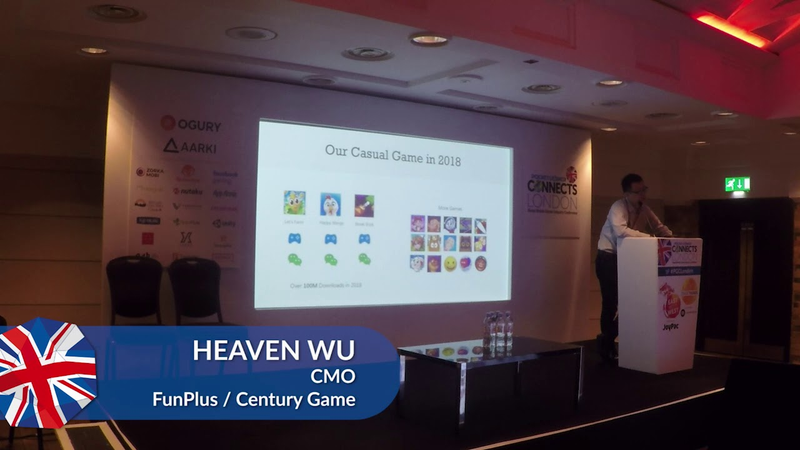
A new opportunity for casual game success in the West and China
The casual gaming market presents distinct challenges and opportunities when comparing Western distribution models to the Chinese landscape.
- WeChat Mini-games have become the primary distribution channel for casual games in China, effectively bypassing the country's fragmented Android ecosystem.
- WeChat Mini-games achieve a day-one retention rate of approximately 25 percent by leveraging social features like invitation sharing and 'moments' updates.
- Monetization on WeChat is primarily driven by rewarded video ads and banner placements, which benefit from high advertiser demand and competitive CPMs.
Debunking header bidding in mobile apps
The mobile advertising industry is currently navigating a transition toward header bidding, a technology designed to increase publisher revenue by enabling real-time, competitive auctions for ad impressions.
- Header bidding is designed to increase publisher revenue and eCPM rates by enabling real-time, competitive auctions for ad impressions.
- Adoption of header bidding remains slow as publishers prioritize the stability of established waterfall mediation models over the technical complexity of new implementations.
- The industry is trending toward a hybrid model for large-scale publishers, which combines existing mediation systems with header bidding to maintain revenue stability during the transition.
Understand the complete mobile user journey – Attract brands in your games, drive revenue
Mobile game developers often struggle to maximize revenue and user engagement because they lack visibility into the 99% of user activity that occurs outside their specific applications.
- Developers can move beyond performance-based ad networks by using first-party mobile journey data to profile users based on their broader digital behavior, including browsing habits and cross-platform engagement.
- Accessing data on the 'App Universe' allows developers to prove audience value to major consumer goods and technology brands, enabling a shift toward higher-value brand campaigns that improve ad relevance.
- Developers must move away from simplistic 'accept all' consent buttons to implement robust, transparent consent management platforms that allow users to opt out, access, or delete their data to ensure GDPR compliance.
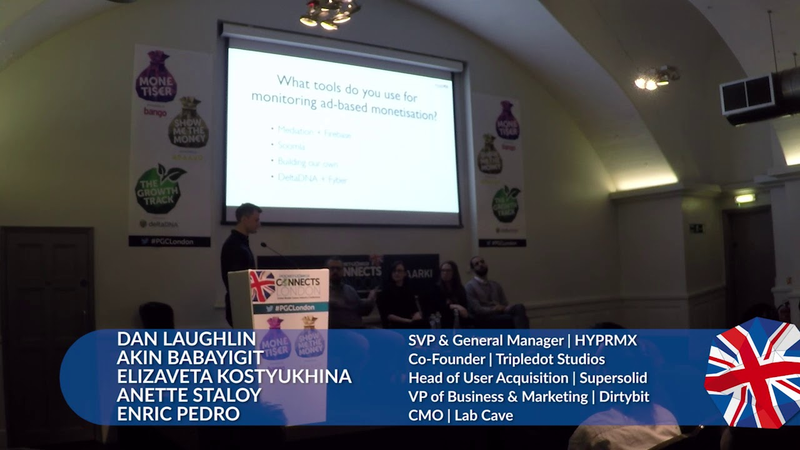
SpeedPanel: Ad monetisation takes over the world
The panel discussion at Pocket Gamer Connects London 2019 explores the rapid evolution of mobile game monetization, specifically the shift toward integrating ad-based revenue alongside traditional in-app purchases.
- Ad monetization has evolved from a secondary revenue stream into a core, data-driven product feature essential for scalable user acquisition.
- Developers should prioritize rewarded videos and non-intrusive ad formats, as these implementations can improve player retention rather than detracting from the user experience.
- The industry is shifting toward bid-based mediation, which increases efficiency but requires greater technical sophistication from development studios.
Games as Ikea – A service design approach to in-game marketing
The primary objective of this analysis is to apply service design principles—modeled after the retail strategy of IKEA—to optimize in-game marketing and user retention in mobile gaming.
- Transitioning from an opt-in to an opt-out navigation model via an 'event lobby' showroom increased event participation by 88%, in-app purchases by 56%, and ad engagement by 129%.
- Mobile game 'Drive Ahead' identified a 'bazaar' problem where content abundance caused decision paralysis, leading 80% of players to repeat previous modes and 74% of classic mode users to never explore other content.
- Applying the 'peak-end rule'—placing high-reward, short-duration events early in a session and ensuring satisfying conclusions—improves the overall player perception of the gameplay experience.
The history of ad monetisation and how we got here
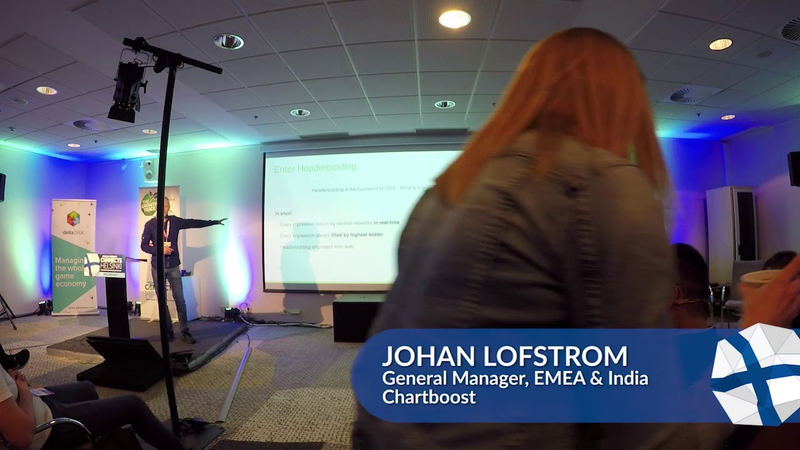
The evolution of mobile game ad monetization has transitioned from simple, single-network integrations to complex, real-time bidding systems.
- The mobile gaming industry is shifting from waterfall-based mediation to real-time header bidding to maximize publisher yield.
- Header bidding allows multiple ad networks to compete for every individual impression simultaneously, ensuring the highest bidder consistently wins.
- Adopting header bidding is estimated to increase publisher revenue by 20 to 30 percent compared to traditional mediation methods.
Unity Mobile Business: LiveTune - Increase mobile retention and session length
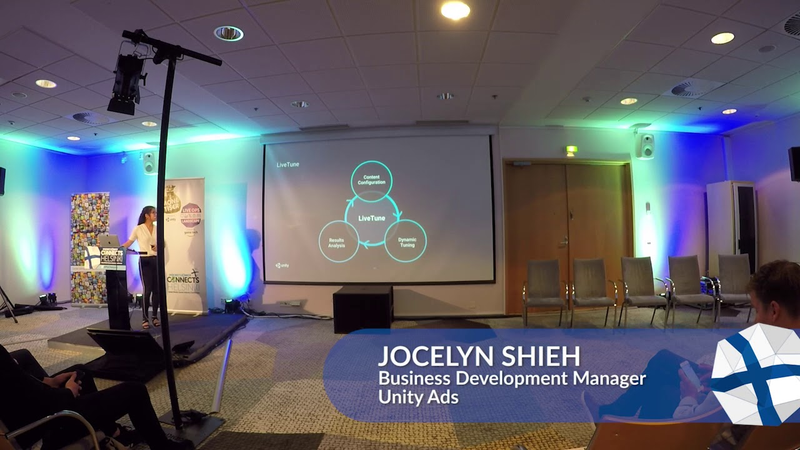
Unity’s LiveTune platform addresses the critical challenge of device fragmentation in the mobile gaming industry, where over 50,000 unique device models create inconsistent performance, leading to app crashes, frame stuttering, and poor user retention.
- Unity’s LiveTune platform automates game performance optimization across 50,000+ unique device models to prevent crashes and frame stuttering, allowing developers to maintain a single build.
- Case studies show significant performance gains, including a 5 FPS increase and 50% improvement in long-term retention for RollerCoaster Tycoon Touch on Android.
- Publisher Yoda1 reported a 26% increase in day-one retention, a 17% increase in playtime, and a reduction of 200 engineering hours for the game Rodeo Stampede.
The real story of mobile game ad monetisation
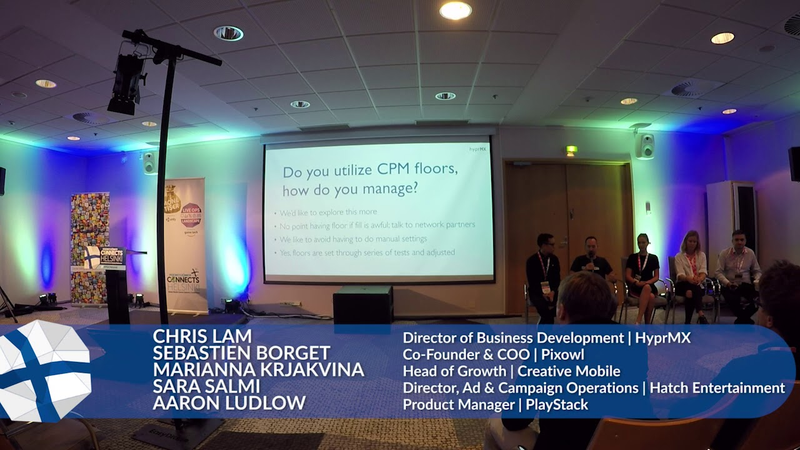
Mobile game monetization requires a shift away from aggressive, high-volume ad integration toward a strategy centered on technical stability and user experience.
- Developers should prioritize technical stability and user experience over aggressive ad volume to avoid the diminishing returns and maintenance burdens associated with overloading games with excessive software development kits.
- Studios should utilize specialized third-party mediation platforms to manage complex tasks like waterfall optimization and CPM performance, allowing internal teams to focus on core game design.
- Ad placement must be treated as a fundamental design element, with developers using soft launches to conduct data-driven experimentation on ad density and user response before a full release.