1 free read left. Create a free account for unlimited reading + AI research.
Create free account
Games as Ikea – A service design approach to in-game marketing
Key insights
6 takeaways- 01Curating the user journey through service design principles helps combat player churn by preventing the fixation on a single game mode.
- 02Mobile game 'Drive Ahead' identified a 'bazaar' problem where content abundance caused decision paralysis, leading 80% of players to repeat previous modes and 74% of classic mode users to never explore other content.
- 03The 'Drive Ahead' case study demonstrates that guiding players through curated content is a viable strategy for increasing both monetization and long-term retention.
- 04Transitioning from an opt-in to an opt-out navigation model via an 'event lobby' showroom increased event participation by 88%, in-app purchases by 56%, and ad engagement by 129%.
- 05Personalizing in-game marketing messages to match specific player behaviors is more effective for retention than using a one-size-fits-all approach.
- 06Applying the 'peak-end rule'—placing high-reward, short-duration events early in a session and ensuring satisfying conclusions—improves the overall player perception of the gameplay experience.
Ask AI about this video
Transcript
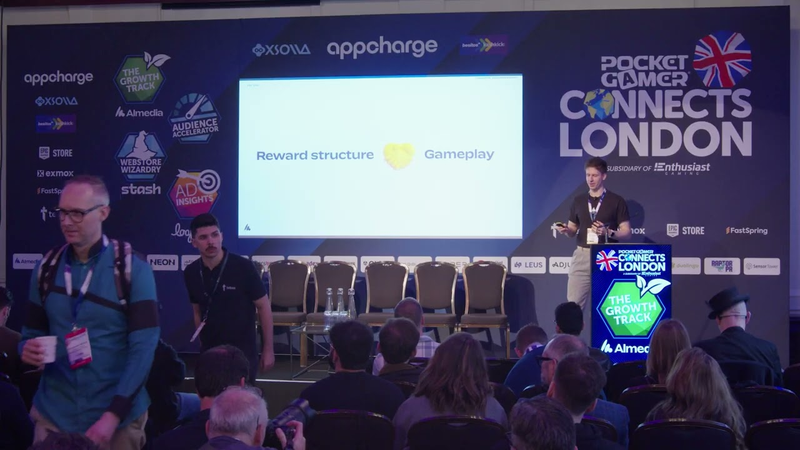
[Music] hi everyone and welcome to to my talk yeah so my name is Edward ground firm and I work as head of marketing at du dreams and do dreams is of course the developer of the drive ahead series of mobile games and to those unfamiliar with our flagship title drive ahead it's a physics-based head-to-head car battler we've launched it almost four years ago but it still has quite a steady amount of users and a substantial community around it we actually we take
great pride in creating games that are not only fun to play but also fun to watch and share with others and through this strategy we've actually been able to reach over 100 million downloads for our games and still today even though the game is a few years old we still get over 100,000 new organic downloads every day but of course a massive influx of users like that also causes substantial amounts of churn and as we know that can cause anxiety so today I'm gonna be talking about how we at do dreams use service design to develop and optimize our in-game marketing efforts and how we shape the user journey and though some of the learnings we've gathered here are actually more applicable to some of our games in development I'm going to illustrate some of the points with implementations we've been able to make for drive ahead but first to introduce
myself really quickly before joining new dreams I worked at Rovio entertainment for almost seven years I worked on quite a few titles during that time but mostly Angry Birds 2 and Angry Birds much and I also have a background in business development and ecommerce and I guess especially the e-commerce part has kind of a shaped how I like to focus on service design and UX and conversion and efficiency when developing so as I mentioned before Turin has always been our number one issue for the game and what we originally figured was that we need to give players more stuff to do inside the game so given more game modes more content and the freedom to choose between that game mode or those game modes we figured that would solve our issues but that didn't quite work out that way because the more we introduced new game modes
sometimes our kpi's would even go down but certainly not make them better so once our tools and methods were developed enough to actually look into this issue a bit more we took a really deep dive into this problem and started by analyzing our player paths and watched how our players kind of interact with our content within game sessions and between game sessions and we found that our main problem was that drive ahead had become a bizarre so there was tons of new discoverable content inside the game but navigating your way through it was challenging and what happened was the new players will feel overwhelmed by the multiple game modes and a lack of hierarchy between the game modes and even worse players that did stick around kind of had developed performed habits of engaging only with one specific game modes and continued to do that all the time until they finally churned and in
fact regardless of what game mode a person was engaging with there was about an 80% chance that the following game mode would be the same one and then the next biggest probability was that they would end the playing altogether so for instance our classic mode as you can see here 74% of players who start playing classic mode continue playing that same mode without really going into our other or other parts of the game and it became an issue for us so this was a serious problem considering we've we'd really spent a lot of time working on especially live ups events that we knew we're superior experiences to to some of our so-called legacy game modes and we were unable to get people to even try them out so here's where we are and we started thinking about how to fix
this and as we were throwing around bizarre analogy in the office we kind of thought why not fix this on the same analogy level so what's the opposite of a bazaar well that one was quite easy actually because that's of course IKEA it's actually IKEA 75th birthday today so what a day to be getting this talk but yeah love it or hate it one can't deny that IKEA has been able to design a customer journey which goes far beyond what most retailers are capable of but what exactly is IKEA doing differently and how does that translate to mobile games well there are of course tons of different strategies that an established retailer and company like IKEA uses to shape their user journey but we've chosen specifically to look at three different parts of it and I'm gonna be walking you guys through those right now so first off its personalizing the value proposition so the value proposition in
the experiences or the interactions with IKEA are not necessarily the same one for everybody who engages with them in fact they've made a practice of analyzing customer values and attitudes and interests and use those insights to hyper optimize their communication so while some customers will be you know favoring the reasonable pricing other will be looking for Scandinavian sleek design somebody else might be going there primarily for the meatballs and then there's of course the space-saving solutions for people who are mindful about that and the point being here that a brand can represent different things to different people and there's no one way to that rules all of them when looking into in-game marketing communication so in mobile games varying the marketing message is of course mostly used in UA where you can have tons of different versions of your
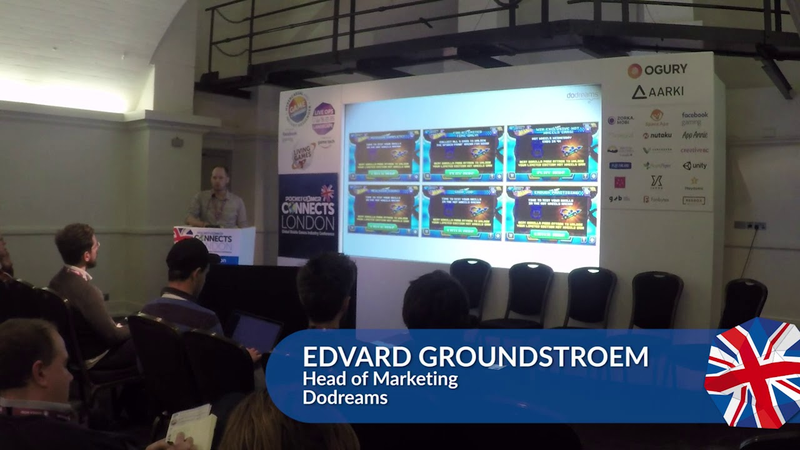
Creator flying around the internet but there are use cases for this philosophy inside the game itself and for us as we've had an issue with players spread out into the different game modes what we were what we are working on building now is a in-game marketing system that allows us to customize our marketing communications to highlight qualities and features in different events and game modes that match individual player behavior so and the end goal of course is trying to break the vicious cycle of people kind of getting stucked in in one game or remaining there until they churn so for this example we have a hot wheels collaboration event that that recurs every week and even though at the moment we're only able to change the copy on these kind of pop-ups that we run between and after the event it's still a good start for us and and yeah this is something we're really developing further so number two is focusing on the
peak and rule and the peak and rule is a psychological phenomenon where people tend to judge a past experience based on the most emotionally intense moments of that experience as well as the end of the experience instead of kind of the whole sum or average of all parts of it and with the X IKEA example here so say you're slowly walking you know you're making a way through the IKEA showroom you maybe have a couple of kids with you they're growing increasingly Restless and you're already feeling like a tension built up in your stomach and you haven't even reached the actual store part yet so these kinds of emotions obviously won't make you more inclined to do some heavy shopping while you're actually reach the store but what is it you see there's more meatballs and there's toilets and there's play areas and the reason they do place this restaurant like exactly in the middle of
their shop is so that you would kind of have a super positive experience after you've been privy to their you know marketing messaging throughout the showroom also it's no coincidence that after you've you know checked out and arranged your delivery options and everything and also try to figure out how getting batteries and a light bulb escalated into a living room makeover what you see next is a stand selling reasonably priced hot dogs and ice cream because who cares how much you spent because you're basically robbing them with these items now a strive ahead essentially is a collecting game with dozens of vehicles and helmets determining how much fun you have in the game what we or for us it's very natural to kind of give out new items towards the end of an experience but it's also important to distinguish here that we don't want to just hand out items for free because if a service or product makes tasks too
easy it also runs the risk of kind of undervaluing the players and for a skill based game like drive ahead that's basically taking out the main reason of our main feeling of achievement that comes with playing the game so what we're doing instead is we're beginning the session with these events or daily challenges that are kind of designed to have top rewards but also how to rewards like super reachable so we were able to give our players like an emotional high quite early on in the experience and then send them along their journey with a you know encouragement to go try out that new special car so these events are actually quite short and designed for a player to be able to complete them in in a quite a short amount of time number three its mapping out the customer journey so when it comes to the layout of an IKEA store and the path customers
take when getting from entrance/exit very little is of course left to chance and for IKEA they of course use a bunch of quantitative quantitative and demographic data too to really allow for optimising inventory and clustering together products that tend to be purchased together but they also use qualitative data to figure out how to build their showrooms to really investigate how people live and how they behave and and what's the optimal way of setting that up and it's a powerful tactic but icky because it allows their customers to really experience their solutions instead of just trying to imagine them and for us of course what we wanted to do was start by building a similar very simplified set up to to how we're how we're working at the moment and as we knew the majority of players would go directly from tutorials to settling in on one game-mode basic basically for all
eternity we instead employed the concept of IKEA showroom to gently encourage them to take part in our events and in practical terms that means was that when a person entered a game during the time we were running these events they were forced to walk through the showroom of the event which in these cases of course the event lobby and it's very simple it's a very very simple setup we made the events opted out instead of opt in and the results well event lobby doubles visited sorry event lobby visits doubled and of course that is to be expected since now nobody had a choice everybody had to go through the lobby and one kind of criticism or risk we had thought about internally was that if we used a showroom tactics potentially the only thing would accomplish is a bunch of pissed off players who will hit the back pocket button and go back to what they were going to do anyway but that's not
actually what happened so in fact out of these new players that came into the game our event participation increased 88% so this is actually not people only visiting the lobby obviously but obviously with people actually playing the event also our ia piece increased 56 percent within the event and our amount of players watching ads increased 129 percent so our conclusion for this was that perhaps it's not poor UX after all to kind of make your players see that cool content you worked hard on creating for them so to summarize our approach to ingame marketing has resulted in these three practices and recommendations so first of all personalize the value proposition players will have different motives even though they interact with the same content so identify those motives and customize the message number to focus on
the peek and rule make sure that each set each session includes elements of the absolutely most fun a rewarding part of your gameplay because that's what they will remember after it's done also if possible try to predict when a session is coming to an end and give them something that could be classified as hot dogs and ice creams in this case number three map out the desired player journey so identify points where your players stray off the path and make sure your players are actually exposed to the content you created for them so that was those are our recommendations [Music] you
Summary
The primary objective of this analysis is to apply service design principles—modeled after the retail strategy of IKEA—to optimize in-game marketing and user retention in mobile gaming. The core thesis posits that by shifting from a disorganized, bazaar-like content structure to a curated, guided user journey, developers can effectively combat player churn and increase engagement with live operations.
The findings are based on internal data from the mobile title Drive Ahead, a physics-based car battler with over 100 million downloads. Analysis revealed that the game suffered from a "bazaar" problem: an abundance of content led to decision paralysis, causing players to fixate on a single game mode until they eventually churned. Specifically, 80% of players tended to repeat their previous game mode, with 74% of users in the "classic" mode never exploring other content.
To address this, the development team implemented three key strategies. First, they personalized the value proposition by tailoring in-game marketing messages to match individual player behaviors rather than using a one-size-fits-all approach. Second, they applied the "peak-end rule," a psychological phenomenon suggesting that users judge experiences based on their most intense moments and their conclusion. By placing high-reward, short-duration events early in a session and providing satisfying rewards at the end, they improved the overall perception of the gameplay. Finally, they mapped the user journey by forcing interaction with new content through an "event lobby" showroom. This shift from opt-in to opt-out navigation resulted in an 88% increase in event participation, a 56% rise in in-app purchases within events, and a 129% increase in ad engagement. The conclusion is that guiding players through curated content is a viable, effective UX strategy that significantly improves monetization and retention.













Comments