1 free read left. Create a free account for unlimited reading + AI research.
Create free account
Unity Mobile Business: LiveTune - Increase mobile retention and session length
Key insights
6 takeaways- 01Unity’s LiveTune platform automates game performance optimization across 50,000+ unique device models to prevent crashes and frame stuttering, allowing developers to maintain a single build.
- 02Case studies show significant performance gains, including a 5 FPS increase and 50% improvement in long-term retention for RollerCoaster Tycoon Touch on Android.
- 03Publisher Yoda1 reported a 26% increase in day-one retention, a 17% increase in playtime, and a reduction of 200 engineering hours for the game Rodeo Stampede.
- 04The platform uses real-time performance metrics to dynamically adjust assets like textures and shaders, ensuring games meet predefined FPS thresholds on varying hardware.
- 05Integration is designed for efficiency, typically requiring less than half a day of engineering effort to set up quality levels and dynamic tuning rules.
- 06The open beta is currently available to developers with at least 1,000 daily active users on Android, with a recommended A/B testing period of two weeks using at least 20% of the user base.
Ask AI about this video
Transcript
[Music] Thanks hi guys my name is Jocelyn and I am the business manager for life - it is a product that Slava just talked about previously and it is our first foray into nearly automating your retention optimization efforts so imma get started live soon is actually really it's a really special project to me because it's one of the first ones I ever worked on since joining unity and it is the first thing that we're trying to do again as I just talked about for automating retention for you guys so as you can see here this is our entire like retention and monetization platform that we want to build out to make it easy for you guys to increase retention and improve your monetization what live stream does is improve the entire play experience for your players and it's
super relevant to anyone in your studio from your engineering leads it helps with reducing the time it takes to you know scale out to all devices and improve the performance for your UA managers it does help indirectly improve your UA efforts and for monetization obviously helps with you know just improving LTV and lastly for your live ops for for churn problems that you might have so I want to give you AB or some more context about why we made live C in the first place and that's because there is a common problem that you guys all know that bad performance leads to bad retention and LTV not only does this impact your current retention it impacts your future UA efforts so let's say that you're you a manager you're spending a lot of money on getting players to see your ads and players click on your ad go
to the install page unlike Google Play or I or at the app store but they stop there because they see really low reviews on on the store then players are still gonna say like hey like I see this average review of like maybe three stars might not want to spend my time downloading and trying a game that people have already negatively reviewed so that impacts your future growth efforts as well that's another problem both both of our problems that we're trying to solve for you guys so you know some examples of bad performance just to reiterate so app crashes long loading times frame stuttering if that loads yeah so as players ourselves you know how frustrating this is this takes you out the very immersive experience that all games should be but why if there is such a huge problem in games why hasn't anyone addressed this and the problem is device fragmentation so device presentation in a nutshell is the fact that there are more than 50,000 devices
out there and and growing every day and that's because on the Android side there are so many different device models different manufacturers and based on where a model might be made and what time I might be made it might have like different GPU specs so let's say you have a Samsung Galaxy s5 and you're testing out your game on it it might work perfectly on that galaxy s5 but someone else might have a device that was manufactured completely different region completely different time doesn't run your game properly crashes and there you have a bad review and some churn so unity in order to address this problem made live tuned and as Slava mentioned before unity is strategic in making these sorts of products that take this enormous amount of data at hands three billion devices that we have information on and condensing it into something that you can use automatically so with live tuned you can deliver the optimal quality and performance on every device that we have information on how it does
that is that it will adjust content quality for every device so that you get manual control over your game so you're basically so creating create the content being the artist of your game and leveraging what we offer you to make sure that you're optimizing for everything out there with minimal effort so here are the benefits just layout for you guys so the first one is by bettering performance obviously players will get a better player experience and lead to lower user churn the second part is your boosting player of attention because of the previous benefit and we actually had a case where an vizio increased their long term player attention by 50% on Android devices the third one is increasing the market coverage you get to support more devices with high revenue potential by relying on unities data set so you guys don't have to do the device research and implementation into any performance improvement processes that you have and that leads into the lower engineering
cost because you don't have to spend the money or the engineering hours in order to do that you can focus that on creating content for your game instead so the live scene difference we just say this video but I want to play it again for you guys just to reiterate how strong of a product live team is so this was actually created while live scene was still in alpha so we worked with Sylvain the executive producer of an vizio who is here with us today on his game roller coaster tycoon touch which you can see is a giant amusement park world builder game where you're you keep adding like more assets that make the game a really immersive really cool experience I highly recommend trying out the game it's really fun to play but as you can see because there's so many assets there's so much going on the game that devices that have like lower specs might have like lower FPS and we were able to deliver a live tuned to Sylvain
and his team and improve their FPS from 8 points in that example as you saw 214 in the live scene example oops so to sum it up his results were that a third of his players got better performance average FPS improved by 5 and again 50% of the Android players oh the 50% improvement of long-term attention on the Android we worked with another customer called Yoda 1 they're a big publisher in China and there the publisher of this game called rodeo Stampede which is an endless runner they were able to see a 26 percent increase in day 1 retention 17% increase in playtime and save 200 engineering hours because they swapped out a similar system that they had on hand to use live tuned so now I'm going
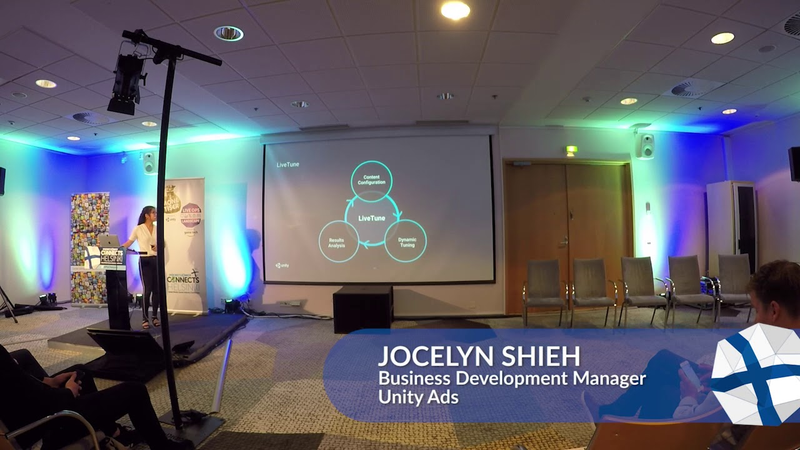
to get into how live scene works and live scene as a really simple 3-step process to work with the first part is the content configuration where you get to decide how you want to change up the content in your games the second part is the dynamic tuning and that's where all of our data comes into play and that's where you can just you know kind of deliver all the different content you want to all the sorry all the different devices out there in near-real-time and the third part is the results analysis where you get to see what's going on in your games and make some decisions on experimentation segmentation etc so for the content configuration section this refers to that one so the first part is defining the quality levels of your assets in the game the second part is to setting up the dynamic tuning rules and the third part is creating an a/b test to launch this experiment so quality
levels these are the quality levels that we support that you can configure in your game so any sort of assets like textures shaders any sort of effects shadows and lighting rendering like target FPS those are all available to be supported by live tuned and you can go in tune them decide how many particles how strong the shadows are etc in your game and you have a lot of control over everything you want achievement in the game so this is what it looks like you're gonna set a default level on different kinds of quality settings and our system will take these the default level send them out to devices and then based on the device performance what the device information we have on hand is will deliver different kinds of levels to optimize your performance for that game so for livetune what we do is we shake up the status quo we we know that right
now a lot of developers are building maybe to the four bills and saying them sending them out to every device out there but with live tune you make one build and set different quality levels inside the game and it will automatically match the quality levels with the device in order to deliver an optimal performance so these are the this is how dynamic training works so you get to set the parameters of what you want to define as good performance so right now the metric that we have is average FPS but we're going to be working on new metrics down the line that's gonna be helpful for you guys you get to set the target fps and then you say the thresholds for this would be like maybe like 23 would be the minimum and then below that you want to degrade the quality level and maybe you want to enhance it once it enhance a quality level once it hits 28 so you get some a no control over this as well so how it works as you can see this diagram here
is that we first sent out a default level of quality settings to the device it will measure the average FPS based on different snapshots of performance that you guys you guys can set up as well and it's going to compare the average FPS with the thresholds that you decide so if it's like below for example it will say hey you know this is not quite up to par and then it will degrade the quality levels and send out a better experience for your players so for the live stream package it's actually quite simple to implement it takes around like maybe like less than half a day that's what we've we've been hearing from our developers to actually implement and what it will do is track performance in your game and apply the latest settings that you configure in your dashboard and it's a very light package I think it's like 20 kilobytes I think so there's like no harm done to your games the third part is launching with an a/b test
so this is what our dashboard looks like and as you can see here you can and you can experiment with the control group as well as a test group you can see the average FPS playtime average revenue per daily active user so you can actually see how life can impact your LTV as well and it will show you like whether a result is statistically significant or not and the exact percentage difference is it was also very relevant is that we'll show you exactly when live team was implemented so you can see the actual time frame it took to reach these specific goals so live team is now an open beta we just opened up a few days ago and we'd like to invite all of you guys to try it out so we have more than 70 games currently using live tuned in alpha and TOEFL lists of course in Visio and some here are some of other partners so the requirements for join our ballet is obviously you'd like to use FPS to
improve retention you do have to have analytics on and that's because we need to be able to send performance data over analyze that and then you know optimize your games and we do strongly recommend that you run the a/b tests for at least 12 weeks without least 20% of your users in your test group and that your game has a thousand or more Diu on android and this is for you guys to make sure that the results that you're the results that you are getting are you know significant so it's completely free while you're in beta so whether results that we've been seeing from our partners it's a win-win solution you save a lot of money on the engineering improve your retention LTV and to get started it's a really simple process just go to your operate dashboard go to optimization and then to live team and I'll have all the instructions the link to the live stream package and everything you need to get started if you have any questions like
please feel free to email either me so jocelyn s at unity 3d comm or live to net univ III comm we also have a connect group and a lot of our ads BD managers are available to talk about this cool oops sorry that's it [Applause] [Music]
Summary
Unity’s LiveTune platform addresses the critical challenge of device fragmentation in the mobile gaming industry, where over 50,000 unique device models create inconsistent performance, leading to app crashes, frame stuttering, and poor user retention. By leveraging data from three billion devices, the platform automates the optimization of game content quality to ensure consistent performance across diverse hardware. This approach allows developers to maintain a single build while dynamically adjusting assets—such as textures, shaders, and lighting—based on real-time performance metrics like frames per second (FPS).
The primary objective of LiveTune is to improve player retention and lifetime value (LTV) by mitigating the negative impact of poor technical performance on user experience. Case studies demonstrate significant efficacy: the game RollerCoaster Tycoon Touch saw a 5 FPS increase and a 50% improvement in long-term retention on Android devices, while the publisher Yoda1 reported a 26% increase in day-one retention and a 17% increase in playtime for Rodeo Stampede, alongside a reduction of 200 engineering hours.
The implementation process involves a lightweight package that enables developers to define quality levels, set dynamic tuning rules, and conduct A/B testing through a centralized dashboard. The system operates by monitoring performance snapshots and automatically scaling quality settings to meet predefined FPS thresholds. Designed for efficiency, the integration typically requires less than half a day of engineering effort.
As of its open beta phase, the platform is available to developers with at least 1,000 daily active users on Android. To ensure statistical significance, the recommended methodology includes running A/B tests for at least two weeks with a minimum of 20% of the user base. By automating device-specific optimization, the tool aims to reduce engineering overhead, allowing studios to focus resources on content creation rather than manual device research and performance tuning.























Comments