Key insights
6 slides
Market size
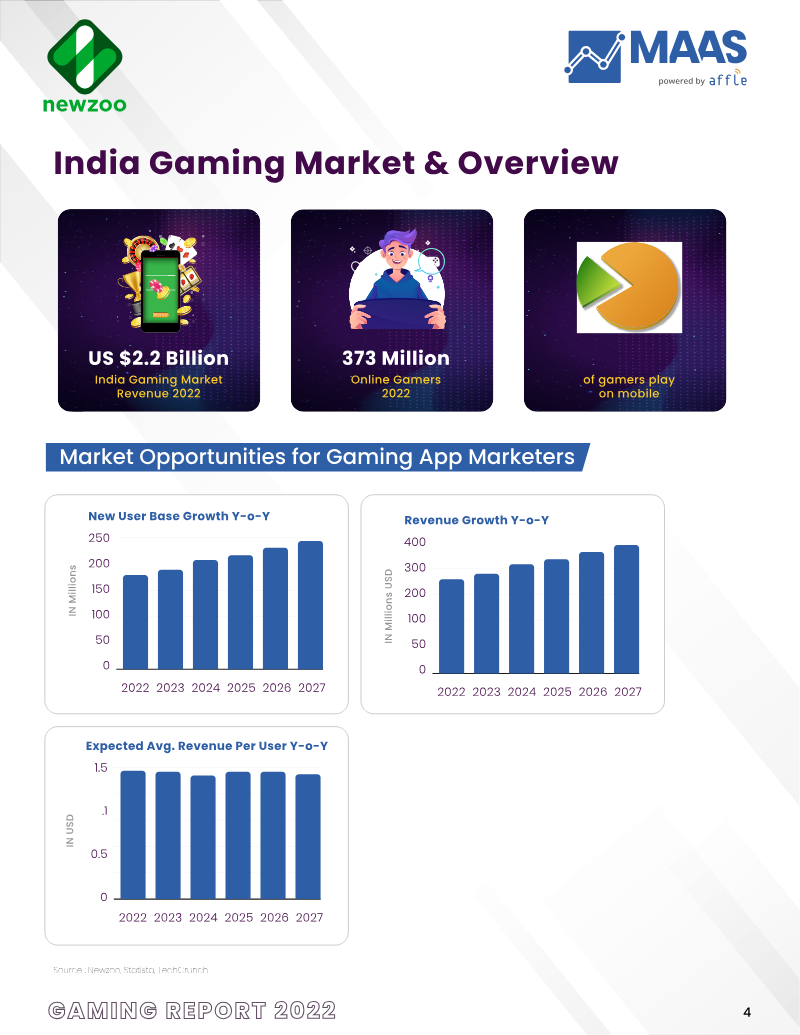
India's mobile gaming market generated US$2.2 billion in 2022.
Smartphones account for 91% of the online gaming audience. The market is rapidly expanding.
Demographics
55% of Adventure and Battle Royale players are aged 13–27.
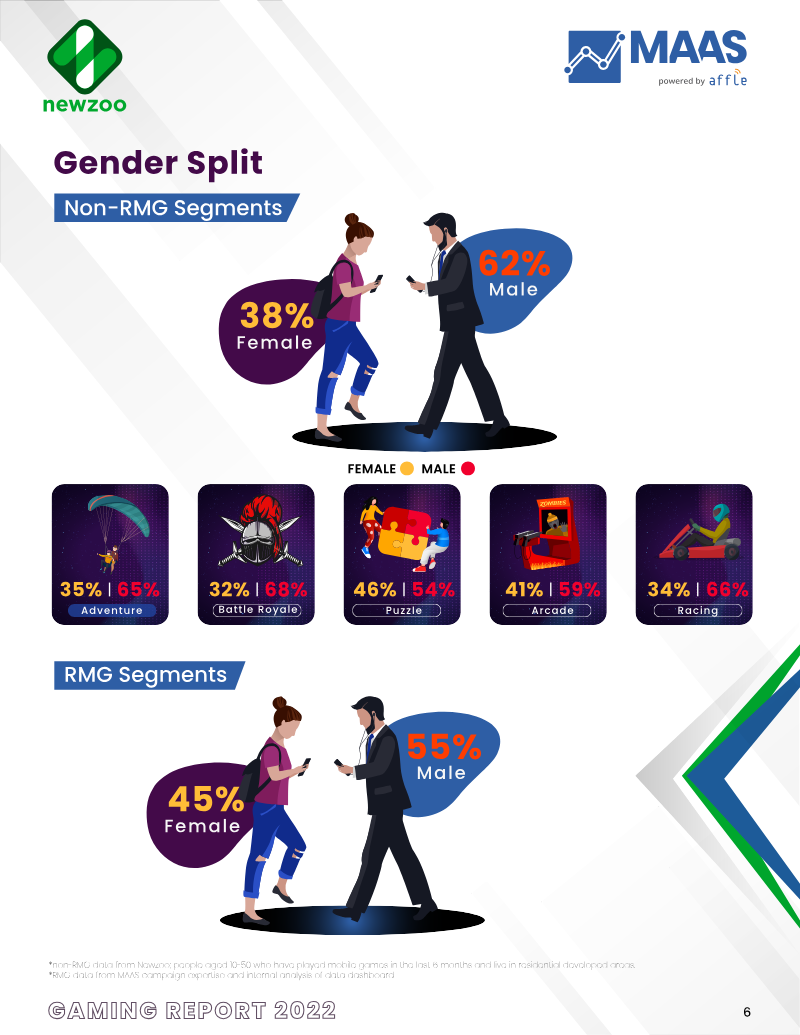
The player base skews young. 62% of non-RMG gamers are male, while RMG users are 55% male.
Young audience. 55% of Adventure and Battle Royale players fall into the 13–27 age bracket.
Monetization
Average revenue per user is projected to reach US$1.5 by 2027.
Monetization remains a challenge for non-RMG segments.
Advertiser metrics
Casual games show a 50% install-to-registration rate.
Casual game retention drops from 30% on day one to 3% by day thirty.
Funnel performance. Casual games show a 50% install-to-registration rate compared to 25% for card-based RMG.
Page 13 of the report50%
Install-to-registration rate for casual games
- Install-to-registration rate for card-based RMG
- 25%
- Casual game retention by day thirty
- 3%
Market maturation
Web3, esports, and super-apps drive market maturation.
Emerging trends include Web3 play-to-earn models, esports expansion, and super-app consolidation.
Page 21 of the report- 01Web3 play-to-earn modelsEmerging trend in the Indian mobile gaming market.
- 02Esports expansionGrowth area driving market maturation.
- 03Super-app consolidationConsolidation trend in the gaming ecosystem.
Genre split
Non-RMG is dominated by Adventure, Battle Royale, Puzzle, Arcade, and Racing.
RMG centers on card games and sports-fantasy. Motivations differ: non-RMG gamers seek entertainment and challenge, while RMG players are driven by seasonal events.
1 / 6
Ask AI about this report