In-Game Advertising reports and market data
Documents
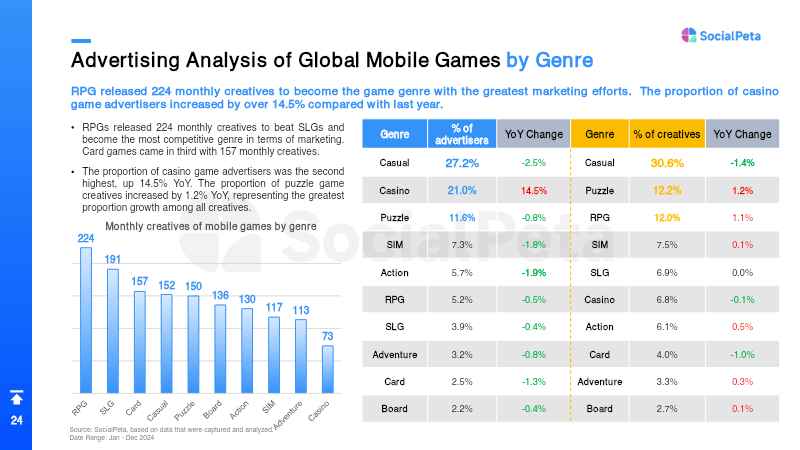
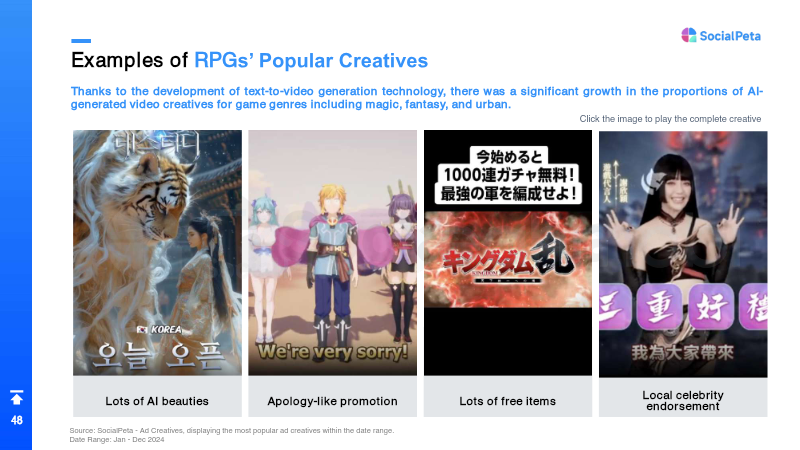

2024 Global Mobile Games Marketing Trends & Insights
The global mobile gaming industry is currently defined by extreme market concentration and a fundamental shift in monetization and marketing strategies.
- The top 50 publishers now control 70% of total global mobile gaming revenue, driving a market-wide shift toward hybrid-casual models that combine ad-based revenue with in-app purchases.
- Advertising activity surged by 60% year-over-year in 2024, with 250,000 advertisers deploying 46.2 million creative assets despite a decline in new market entrants.
- Short-form video has become the dominant engagement driver, accounting for up to 81% of impressions in the Puzzle and Simulation genres.
The 84% Problem: What Bad Ads Are Costing Game Publishers
The gaming industry faces a critical retention crisis driven by the prevalence of disruptive, deceptive, and poorly placed advertisements.
- Approximately 84% of players uninstall games due to disruptive, poorly placed, or inappropriate advertisements, directly impacting publisher retention and revenue.
- Publishers must actively police ad partners and implement manual monitoring or automated ad-quality tools to prevent offensive, deceptive, or category-specific content (such as political or religious ads) from appearing in their games.
- The transition from waterfall mediation to header bidding has increased revenue competition but significantly reduced publisher control over the specific ads displayed to users.
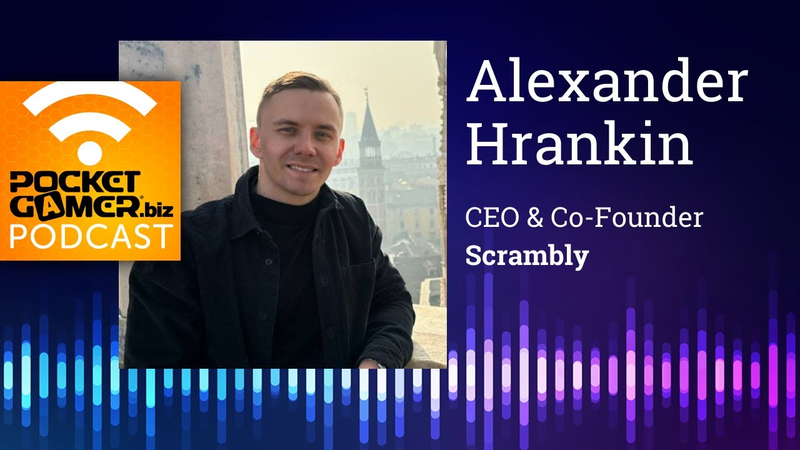
Scrambly.io’s Golden Rules To Fighting Fraud Before It Starts
Rewarded discovery platforms provide high retention rates for mobile gaming, yet they remain vulnerable to user-level fraud and low-quality traffic driven by individuals seeking quick incentives rather than genuine engagement.
- Rewarded discovery platforms must implement fintech-grade Know Your Customer (KYC) protocols, including mandatory ID and selfie verification, to prevent duplicate accounts and maintain ecosystem integrity.
- Fraud mitigation requires monitoring behavioral KPIs such as purchase frequency, average revenue per user (ARPU), and abnormal progression speeds to isolate bad actors completing tasks at impossible rates.
- Ad networks bear the primary responsibility for filtering traffic via AI-driven detection before it reaches the advertiser to protect return on investment.
AdMob Mediation: Top Tips and Best Practices
AdMob serves as a foundational pillar for mobile game monetization, offering high-quality ad inventory and reliable account management.
- Implement a mediation strategy immediately after soft launch by integrating Mintegral, AppLovin, and Unity alongside Google’s native inventory to create a competitive bidding environment.
- Maintain a lean ad stack by removing any mediation partners that contribute less than five percent of total revenue to reduce technical overhead and ensure app stability.
- Perform manual optimization of non-bidding waterfall price points every one to two weeks to maximize eCPM until real-time bidding becomes the industry standard.
New ways of monetization with Bright SDK
Game developers are increasingly adopting bandwidth-sharing as a viable alternative to traditional advertising models.
- Integrating bandwidth-sharing SDKs allows developers to generate consistent, non-intrusive revenue by utilizing idle user bandwidth for public web data collection.
- This monetization model can increase average revenue per daily active user (ARPDAU) by approximately 15%, with some partners reporting total revenue growth of up to ten times their previous baseline.
- Developers can generate approximately $21,600 in monthly revenue from an application with 50,000 daily active users, with earnings based on daily active devices regardless of app usage.
Game Industry Hot Takes: Ubisoft's Struggles, Unity's Revival, and Microsoft's Game Pass Gambit
The global gaming industry is currently navigating a period of intense structural volatility, characterized by the decline of legacy development models and the struggle to integrate massive acquisitions.
- Ubisoft faces significant operational challenges, with analysts suggesting the company should pivot to a leaner model focused on its core Assassin's Creed franchise rather than high-budget, underperforming titles like Star Wars Outlaws and Avatar.
- Unity is undergoing a corporate turnaround under new leadership, marked by the strategic decision to eliminate controversial runtime fees to stabilize its 70% market share in game engine technology.
- AppLovin has emerged as a dominant force in mobile advertising, generating $1 billion in quarterly revenue and demonstrating strong free cash flow that positions it as a high-growth, maturing tech entity.
Ad Revenue in Mobile Games: Key Insights and Trends
Mobile gaming monetization is undergoing a structural shift as ad revenue growth, currently expanding at an annual rate of 10% to 15%, outpaces traditional in-app purchase models.
- Mobile game ad revenue is growing at an annual rate of 10% to 15%, outpacing traditional in-app purchase models within a total market exceeding $100 billion.
- The industry is shifting from volume-based user acquisition toward strategies that prioritize long-term retention and high-value user engagement.
- Developers are increasingly adopting hybrid monetization models and AI-driven content to remain competitive as Western markets reach saturation.
Hexasort: Unpacking the $500k/day revenue success. A new era of casual & puzzle games!
Hexasort represents a pivotal shift in the hybrid-casual mobile gaming landscape, establishing a new benchmark for combining addictive puzzle mechanics with sophisticated monetization.
- Hexasort by Lion Studios has achieved significant financial growth, doubling its daily in-app purchase (IAP) revenue from approximately $70,000 in September 2024 to $140,000 per day within a single month.
- The game maintains high user engagement, achieving an average of six sessions per day, which is considered exceptionally high for the puzzle genre.
- Hexasort utilizes an aggressive ad monetization strategy that allows for a maximum load of nine interstitial ads and 16 rewarded ads per 40-minute daily session.

Cup Heroes: Voodoo's new hybridcasual hit making $160k/day! Steady growth w/ adplacement excellence
Cup Heroes, a hybrid-casual title published by Voodoo, has emerged as a significant revenue driver since its February 2024 soft launch.
- Voodoo's hybrid-casual title Cup Heroes is generating approximately $160,000 per day in combined revenue, with a significant portion driven by ad monetization.
- The game utilizes a unique bulk-sale monetization mechanic where each purchase provides a 10% discount on the next item, incentivizing players through a sunk-cost fallacy loop.
- Cup Heroes deviates from standard survivor-genre mechanics by removing traditional XP leveling in favor of a skill-selection system between waves that requires currency or ad engagement.

How to Set up and Optimize ROAS Campaigns in Unity Ads
Successful user acquisition in the mobile gaming industry requires a strategic alignment between a game’s monetization model and its advertising objectives.
- Transitioning to ROAS-based campaigns requires an initial foundation of historical data from standard install campaigns to train Unity Ads' machine learning algorithms.
- Campaigns must maintain a minimum daily budget of $500 per country to provide sufficient data for effective algorithmic optimization.
- Advertisers should allow cohorts a minimum of eight days to mature before making any performance-based adjustments.
Ad placements & Ad monetization trends in Mobile Games - September 2024
Mobile game monetization is currently defined by a strategic shift toward aggressive ad placement and design loops that prioritize high-volume user acquisition over traditional in-app purchases.
- Mobile game monetization is shifting from in-app purchases toward high-volume ad-driven revenue models, particularly in ultra-casual and puzzle genres.
- Core gameplay mechanics are increasingly being gated behind ad-walls, forcing players to engage with rewarded ads to progress.
- Developers are utilizing high-pressure UI patterns, such as delayed exit buttons and deceptive sliders, to drive conversions toward ad-removal subscriptions.

What Are Rewarded Ads? A Complete Guide for Mobile Game Developers
Rewarded advertising serves as a critical monetization and retention strategy for mobile game developers, functioning by offering players tangible in-game incentives in exchange for engagement.
- Strategic implementation of rewarded ads, such as those used by Homa Games, can improve key performance indicators by up to 130 percent within a single month.
- Campaign management requires a minimum testing cycle of 14 days to ensure statistical significance, supported by a baseline of 150 to 200 daily installs.
- Developers should direct 70 percent of traffic toward Tier 1 markets to maintain industry-standard performance levels.