Global reports and market data
Documents

Alert Hockey: An Endogenous Learning Game
The research evaluates the effectiveness of an implicit learning mechanism in a sports-action video game titled Alert Hockey, which aims to reduce aggressive and negligent behaviors in youth hockey players.
- Integrating educational objectives directly into core gameplay mechanics—rather than treating them as external tasks—significantly improves behavioral outcomes while maintaining player engagement.
- In a study of 62 youth hockey players aged 12 to 14, an implicit learning mechanism successfully shifted player behavior toward safer playstyles through a karma-based reward system.
- The experimental group demonstrated a significant linear improvement in behavior scores over three sessions, with statistical significance confirmed at F(2, 40) = 10.589 and p = 0.0002.
Automating Content Analysis of Video Games
Automated content analysis of video games addresses the inherent limitations of manual observation by embedding software instrumentation directly into game engines.
- Automated content analysis embeds software instrumentation directly into game engines to replace labor-intensive manual observation with scalable, quantitative data collection.
- By utilizing sensors, actuators, and a centralized coordinator, researchers can systematically track gameplay mechanics and generate precise, time-stamped logs in real-time.
- Implementation testing in Unreal Tournament 2004 confirmed that instrumentation can capture granular metrics—such as weapon usage, mortality, and offensive language—without degrading engine performance.
Game-Framed Conversationally-Articulated Modelling and Simulation
The primary purpose of this analysis is to advocate for the integration of multiplayer gaming, dynamic system modeling, and structured learning conversations as a superior framework for educational technology.
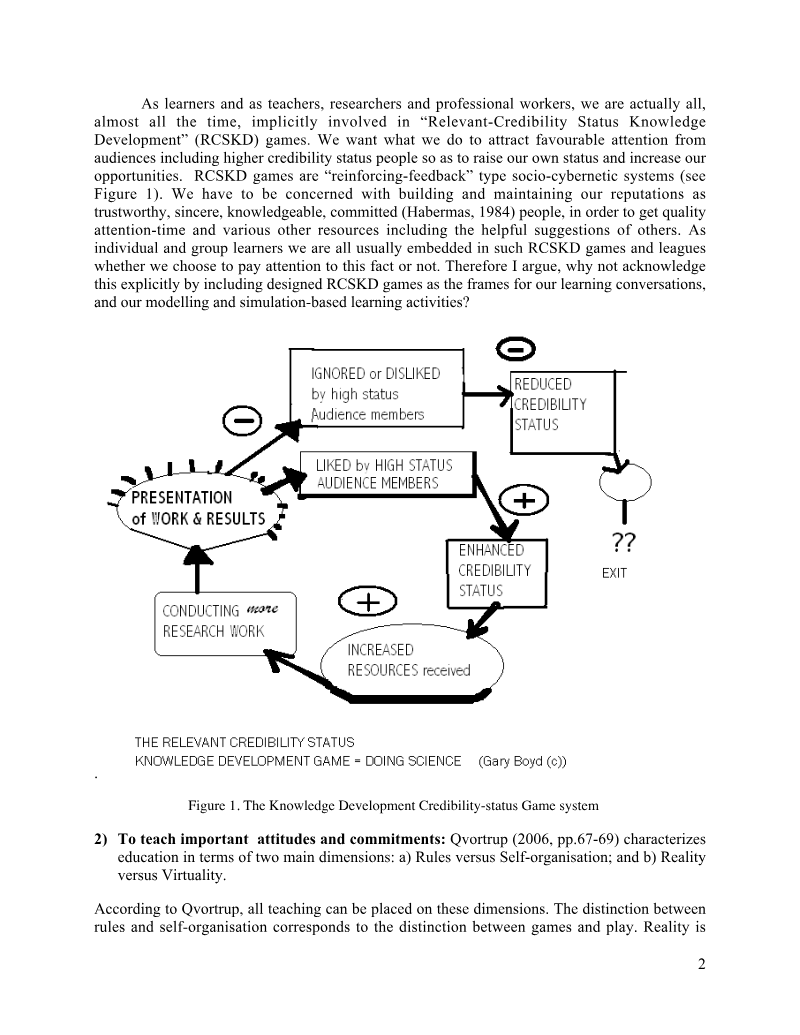
- Educational technology achieves higher engagement by framing complex socio-technical-ecological learning as multiplayer games that leverage human status-seeking and knowledge-development behaviors.
- Effective learning in these systems requires a synthesis of three specific conversational types: discussions on subject necessity, exploration of core content, and metacognitive regulation.
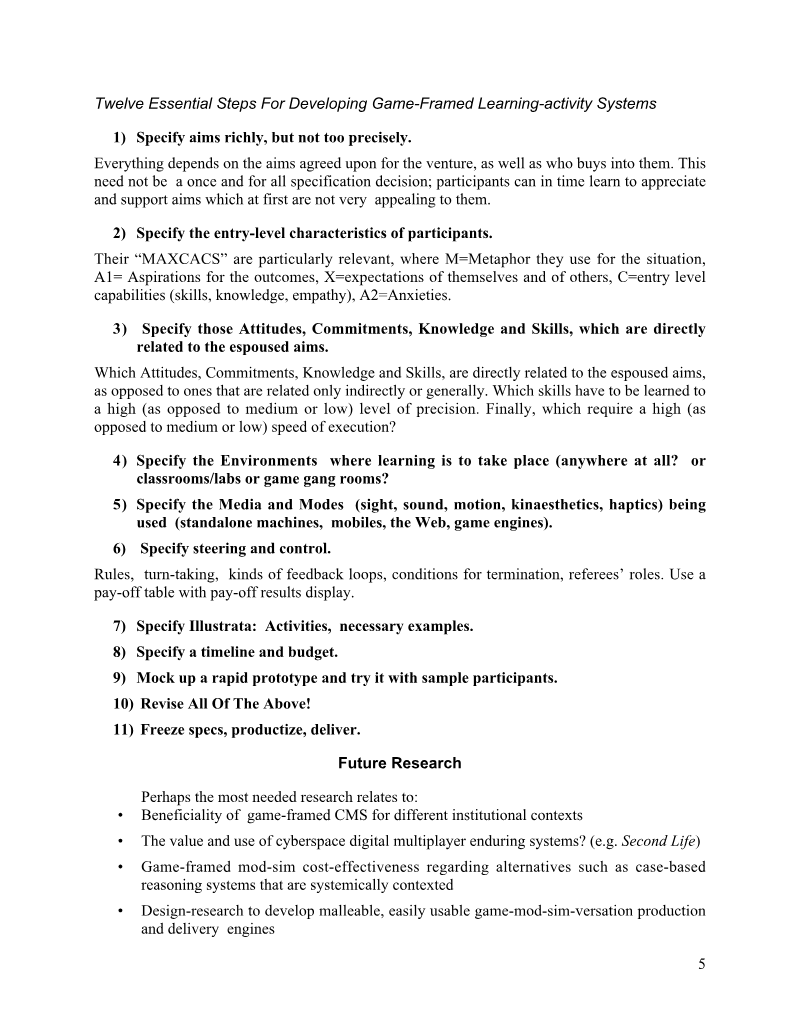
- The optimal development methodology for these environments is design-based research, which prioritizes evolutionary prototyping and formative evaluation over rigid, fully engineered production cycles.
Classifying Learning Objectives in Commercial Games
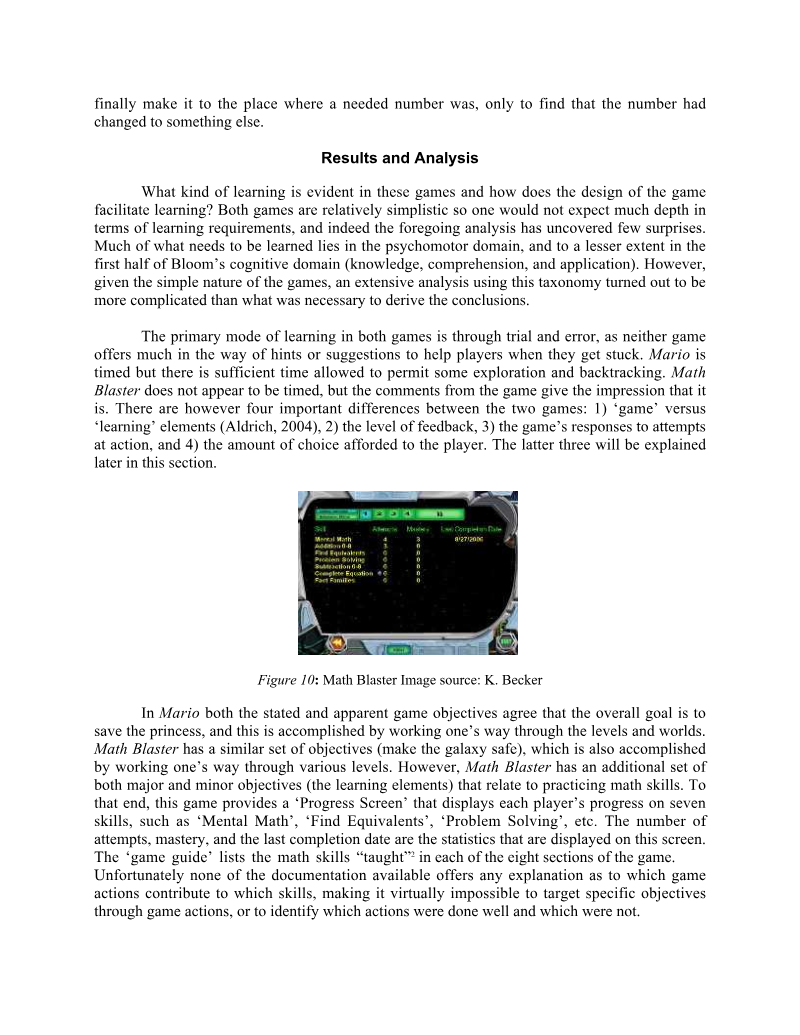
Commercial video games function as sophisticated learning environments that utilize inherent instructional strategies, often achieving educational efficacy without explicit pedagogical intent.
- Effective learning in games relies on embedding instructional objectives directly into core mechanics rather than treating them as arbitrary additions.
- Commercial titles like New Super Mario Bros. outperform educational games like Math Blaster by integrating challenges, feedback, and player agency into the gameplay loop.
- Successful learning environments utilize iterative trial-and-error processes, allowing players to master complex skills through natural difficulty progression.
Games and Narrative: An Analytical Framework
This analysis addresses the academic tension between ludology and narratology by identifying two primary sources of conceptual confusion: the nature of immersion and the reliance on the traditional narrative arc.
- Traditional narrative arcs are ineffective for interactive media because player agency inherently disrupts the authorial control required for linear storytelling.
- Games should be analyzed through a framework of five granular parameters: storyworld, character, emotion, narrative interface, and micro-narrative.
- Narrative engagement in games is defined by praxis, or the story as enacted, rather than the passive diegetic or mimetic modes found in cinema and literature.
Game Design Guided by Visual Attention
This research explores the integration of human visual attention models into game design to dynamically adjust difficulty levels.
- Integrating eye-tracking data into game engines enables adaptive difficulty by predicting player reaction times based on visual fixation and pursuit patterns.
- High local image entropy at fixation points significantly slows player reaction times, as complex visual environments effectively 'glue' attention and delay disengagement.
- During pursuit tasks, player attention is biased toward the direction of motion, which drastically reduces reaction times for targets appearing ahead of the pursuit path.
Kansei Games: Entertaining Emotions
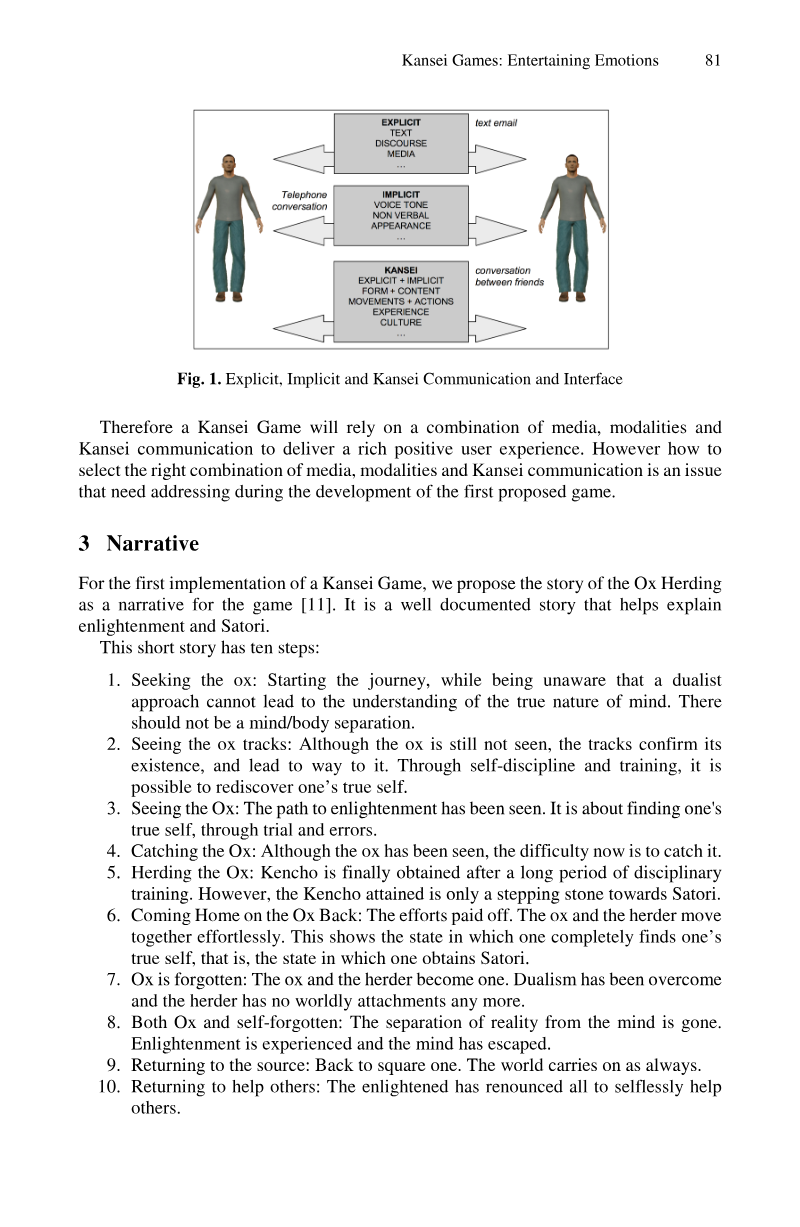
Kansei Games represent a novel genre of interactive entertainment designed to foster positive user experiences, inner balance, and self-awareness rather than traditional competitive goals.
- Kansei Games utilize Kansei engineering to translate subjective human emotions into specific product features, prioritizing user well-being over traditional competitive mechanics.
- The gameplay model replaces external win conditions with a progression system based on the player's ability to regulate their own mood, attitude, and arousal levels.
- The system integrates physiological monitoring—including heart rate, galvanic skin conductance, and body posture—to influence the in-game environment and character attributes.
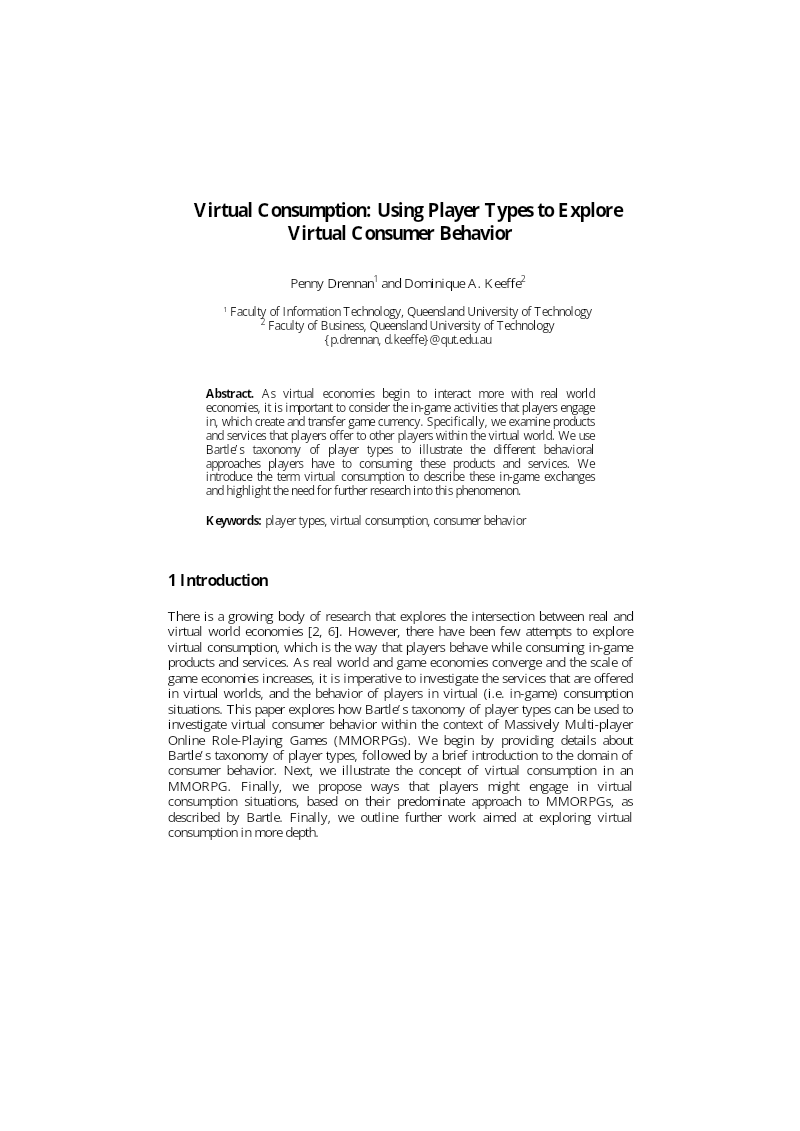

Virtual Consumption: Using Player Types to Explore Virtual Consumer Behavior
Virtual consumption represents an emerging field of study focused on how players in Massively Multiplayer Online Role-Playing Games (MMORPGs) engage in the exchange of goods and services.
- Bartle’s taxonomy of player types—killers, socializers, achievers, and explorers—serves as a predictive framework for understanding consumer behavior and retaliation patterns within MMORPG marketplaces.
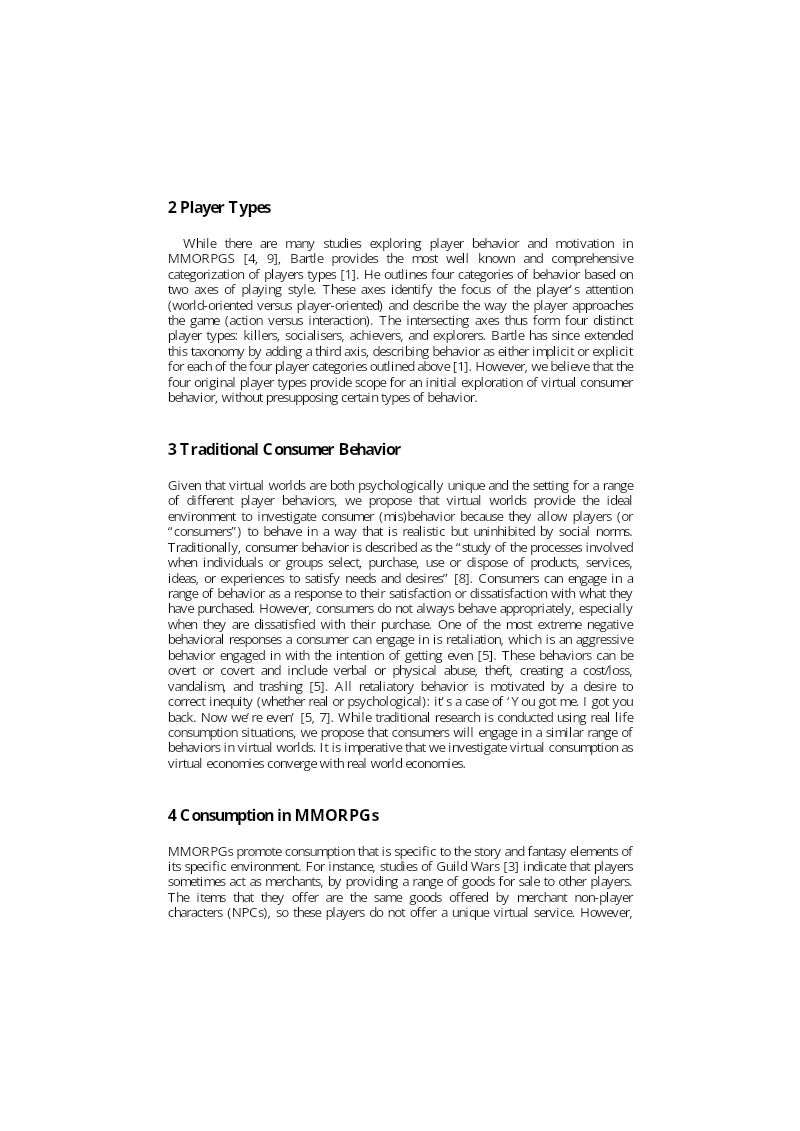
- Socializers prioritize relationship-building and act as advocates or negotiators, whereas killers are prone to disproportionate retaliatory behavior when dissatisfied due to the perceived anonymity of virtual environments.
- Achievers and explorers function primarily as service providers, utilizing their game-specific skills to supply specialized goods and navigation services to the broader player base.
Waiting for Something to Happen: Narratives, Interactivity and Agency and the Video Game Cut-Scene
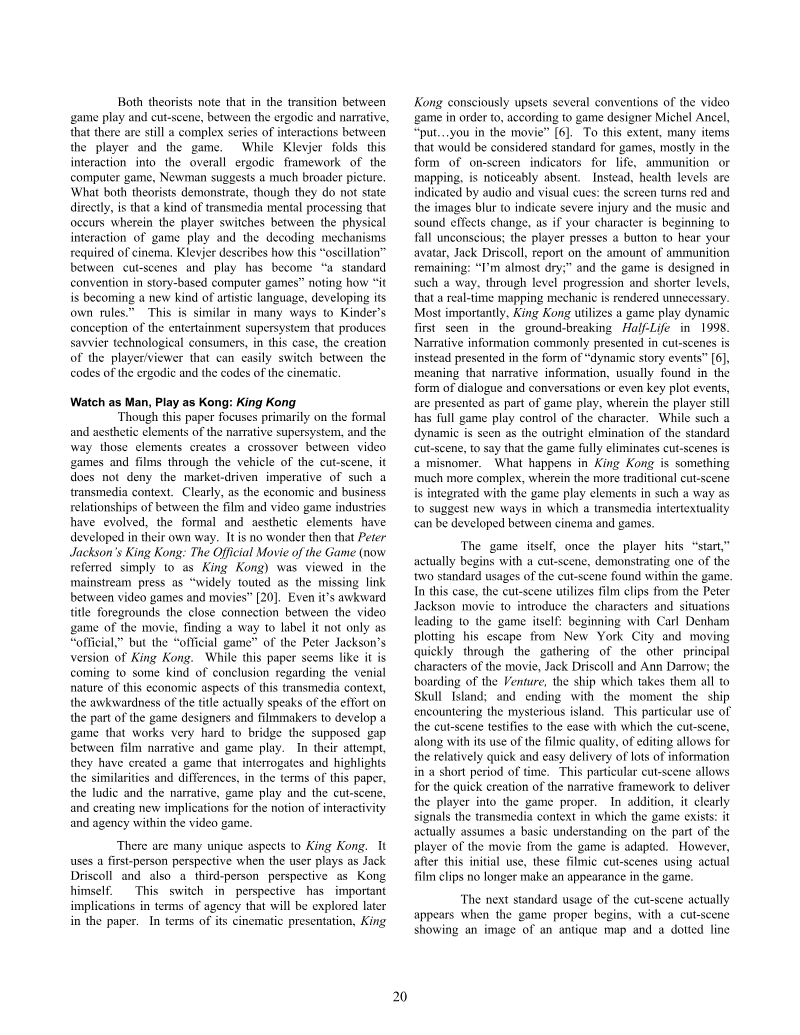
The document explores the complex role of cut-scenes in video games, challenging the notion that they are inherently passive and disruptive to player agency.
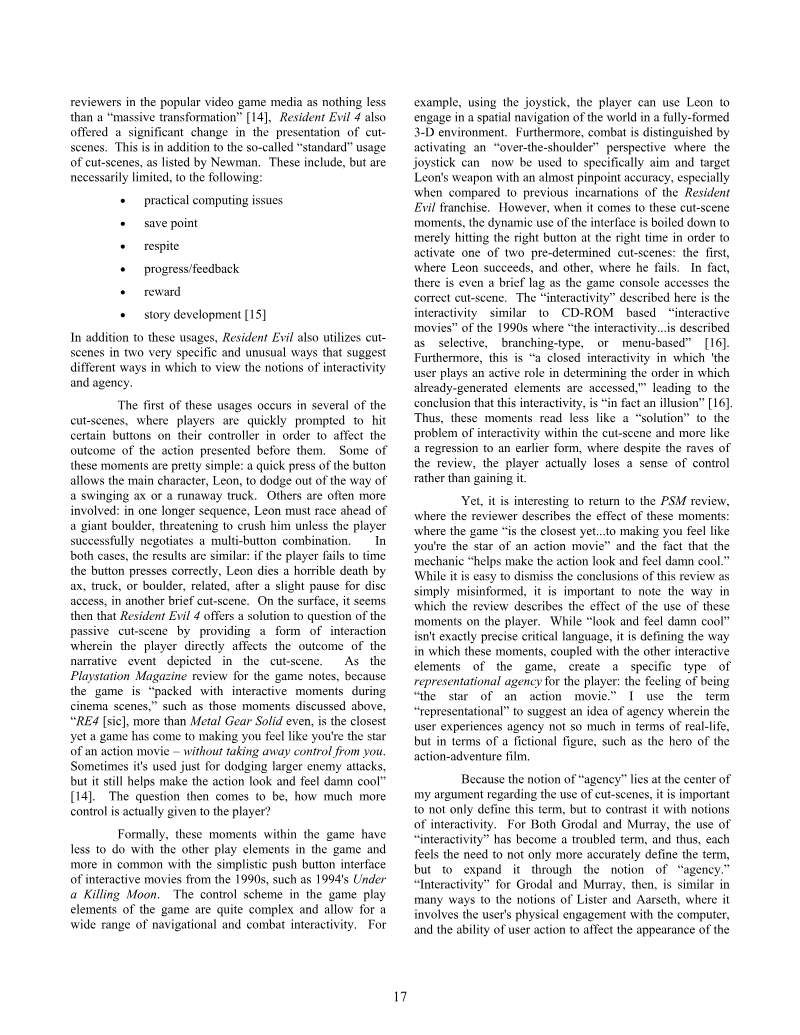
- The paper argues that interactivity and agency must be distinguished: a cut-scene can involve minimal player input yet still generate a strong sense of agency.
- Using Resident Evil 4, the author shows how quick-time event sequences create "representational agency," the feeling of being the protagonist of an action film, even when the underlying interactivity is tightly constrained.
- The paper challenges the "radical ludology" view that cut-scenes are merely passive interruptions of play, framing them instead as a contested site where narrative and gameplay converge.
Your Second Selves: Resources, Agency, and Constraints in Avatar Designs and Identity Play in a Tween Virtual World
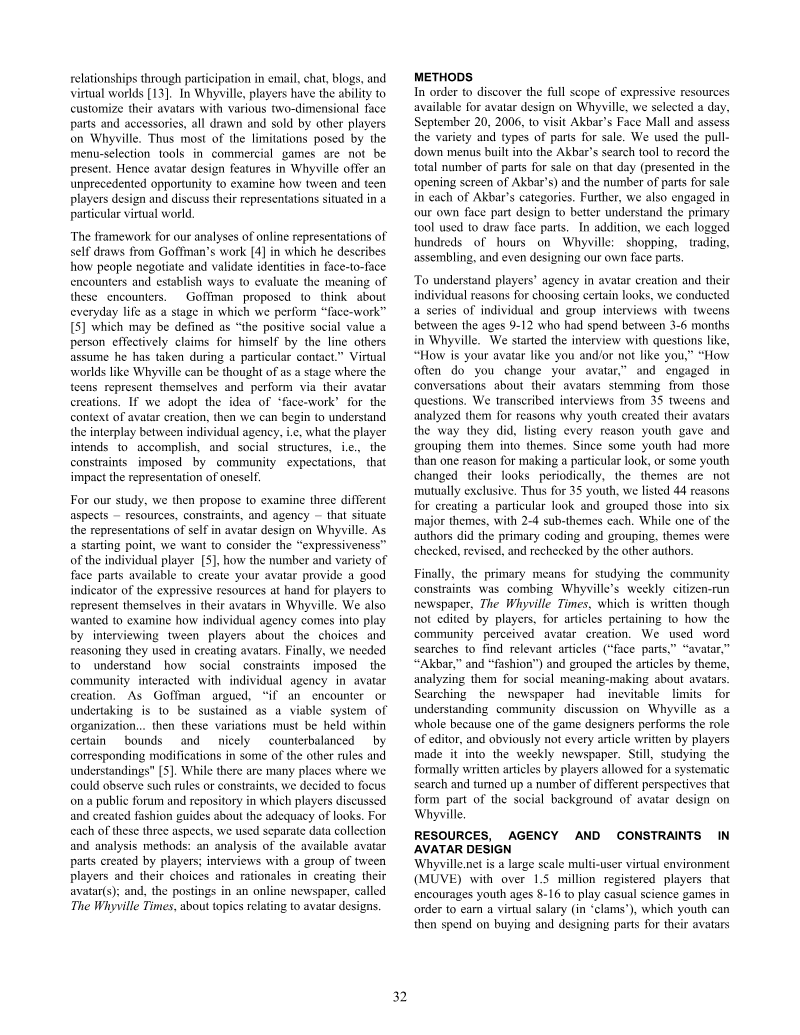
The study, "Your Second Selves: Resources, Agency, and Constraints in Avatar Designs and Identity Play in a Tween Virtual World," investigates how tween players construct and express identity through avatar design within Whyville.net, a virtual world with over 1.5 million users.
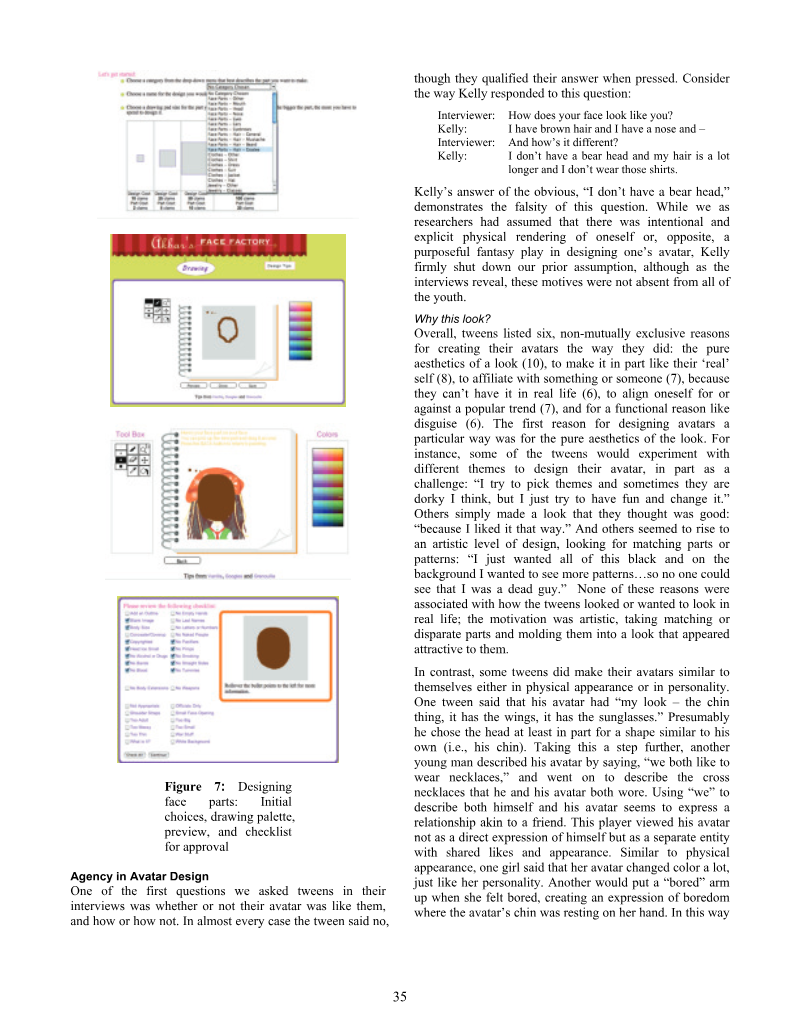
- Whyville, a virtual world with over 1.5 million registered players aged 8 to 16, is distinctive because players create and sell avatar parts themselves rather than company designers, and they earn virtual currency through science games to buy them.
- The study frames Whyville as an "identity playground" supporting multiple, fluid "second selves," drawing on Goffman's concept of face-work and combining analysis of over 30,000 parts for sale at Akbar's Face Mall, interviews with 35 tweens, and seven years of community newspaper coverage.
- Avatar design blends aesthetics, self-representation, affiliation, fantasy, and functional disguise, and tweens often deny their avatars resemble them even though probing reveals personal traits embedded in their choices.
Cross-Format Analysis of the Gaming Experience in Multi-Player Role-Playing Games
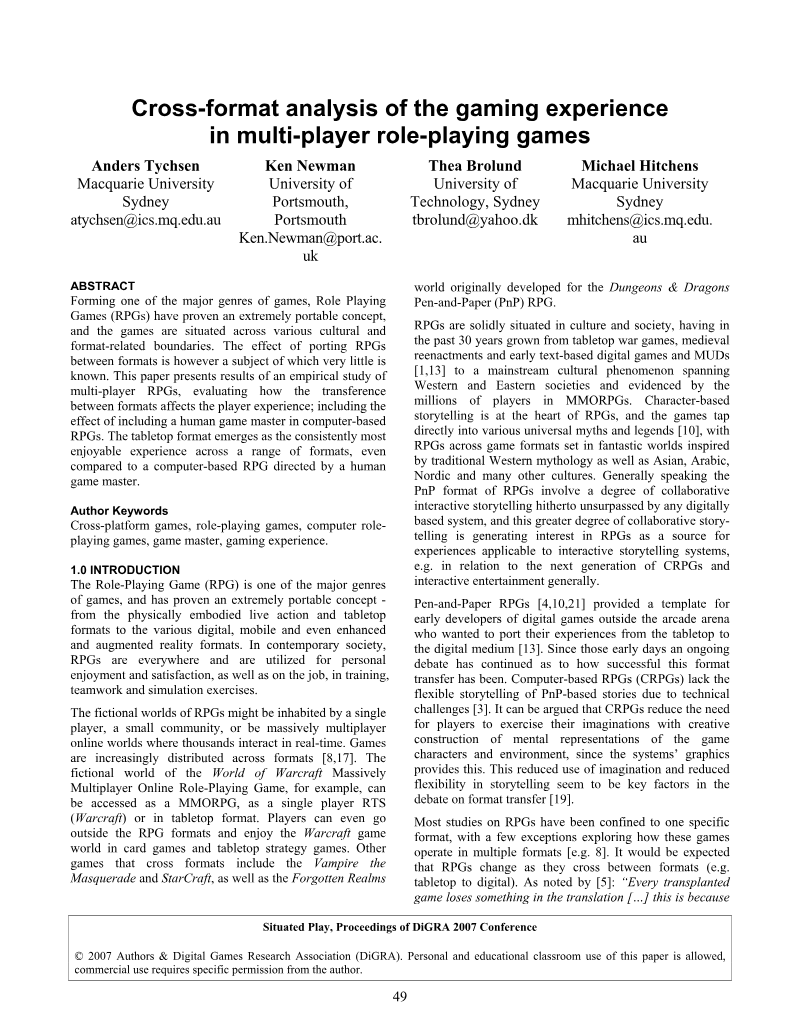
This study empirically investigates the impact of transferring Role-Playing Games (RPGs) between formats on player experience, specifically comparing tabletop (Pen-and-Paper), standard computer-based RPGs (CRPGs), and CRPGs directed by a human Game Master (GM).
- Pen-and-paper role-playing delivered the highest mean FUN rating (3.98 on a five-point scale), versus 3.44 for CRPG with a human Game Master and 3.22 for standard CRPG, across a cross-format study of 51 players in 10 groups from Australia and Denmark.
- Pen-and-paper ratings were also more uniform, with a notably narrower response distribution than either CRPG format, indicating more consistent player enjoyment.
- Tabletop play outperformed CRPGs across most sub-constructs and across age, gender, and experience groups; the "I had fun" item averaged 4.75 for pen-and-paper versus 4.00 for CRPG.
Interaction Manifestations at the Roots of Experiencing Multiplayer Computer Games
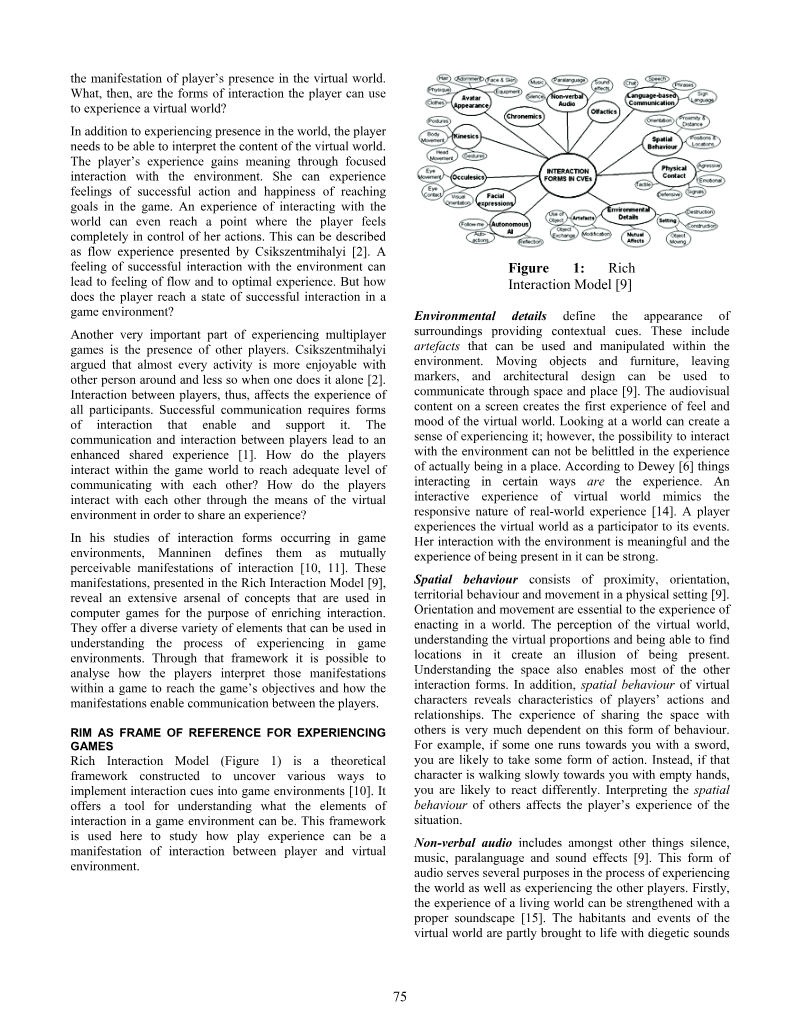
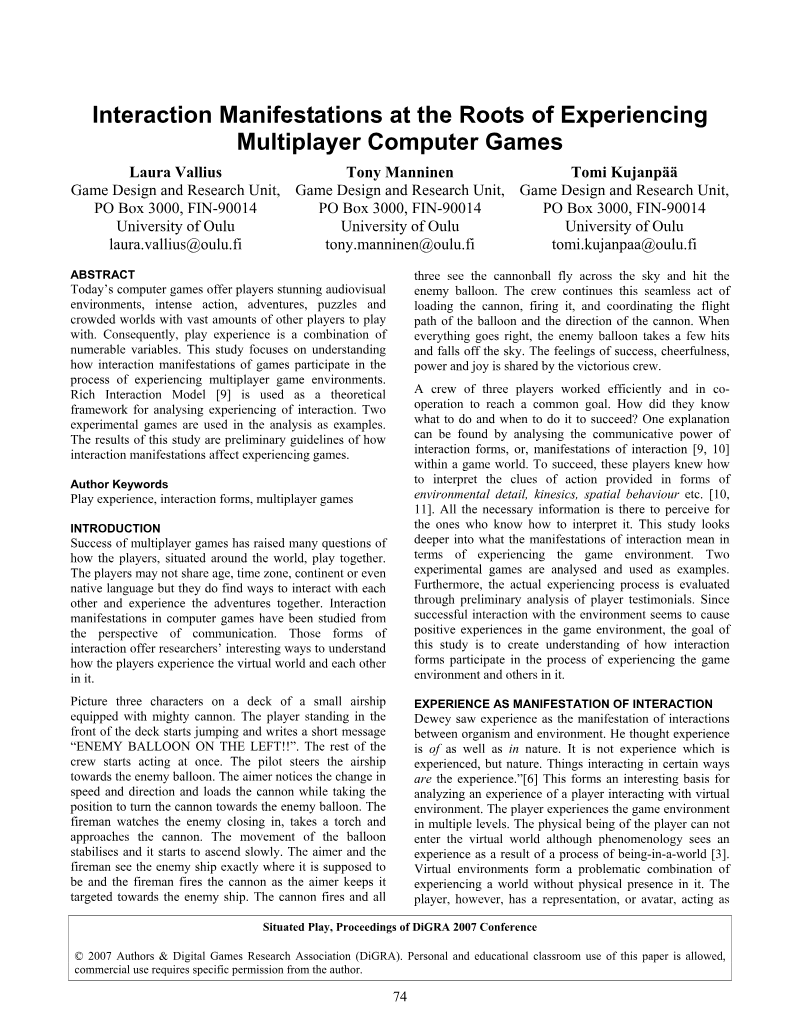
This study explores the foundational role of interaction manifestations in shaping the player experience within multiplayer computer games, employing the Rich Interaction Model (RIM) as its theoretical framework.
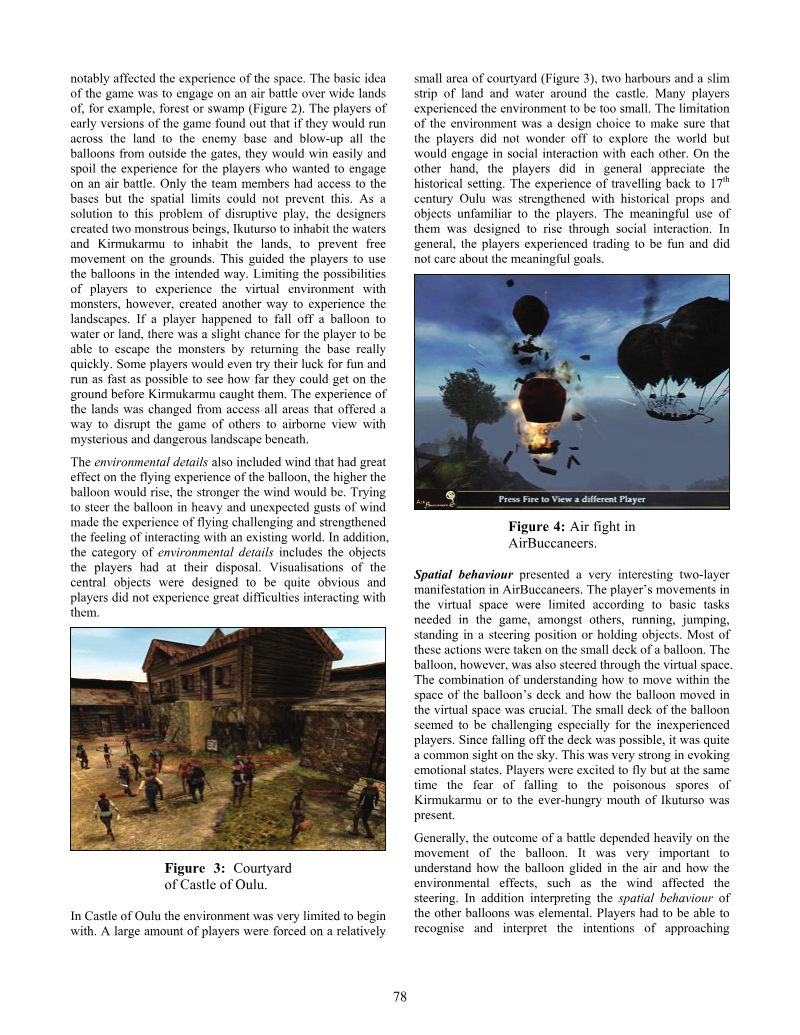
- The paper proposes the Rich Interaction Model (RIM), which treats environmental details, spatial behaviour, chronemics, kinesics, audio, and avatar appearance as the perceivable cues players use to interpret multiplayer game worlds, and argues that successful interaction with the environment and other players drives flow and shared enjoyment.
- Findings from two experimental multiplayer games, AirBuccaneers and Castle of Oulu, based on player testimonials, showed that environmental design, spatial positioning, slow chronemics, and sound effects strongly shaped player emotion and team coordination.
- Facial expressions and occulesics were largely absent or unimplemented, so players had to infer others' emotional states, while language-based communication (text chat or spoken headset conversation) served as the primary channel for sharing information and feeling.