Global reports and market data
Documents
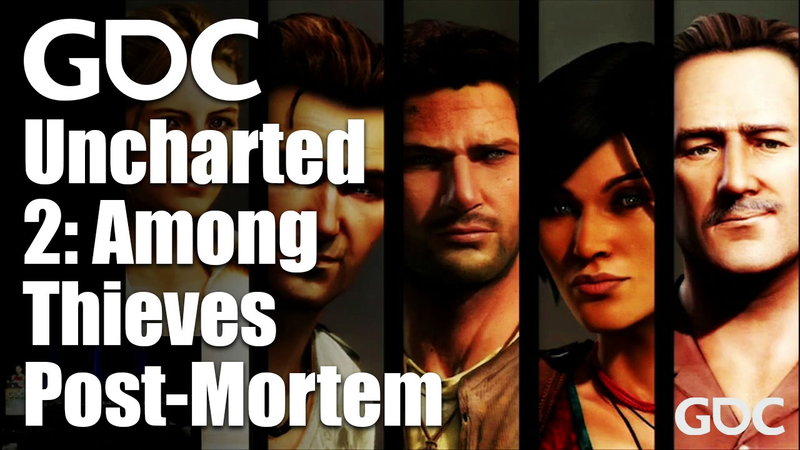
Among Friends - An Uncharted 2: Among Thieves Post-Mortem
The development of Uncharted 2: Among Thieves centered on the ambition to create a playable summer blockbuster, prioritizing character-driven narratives integrated with high-stakes, cinematic set pieces.
- The development of Uncharted 2: Among Thieves relied on a six-month pre-production phase to prototype core innovations like the Dynamic Object Traversal system, which enabled combat on moving platforms.
- Naughty Dog Engine 2.0 leveraged the PlayStation 3's Cell processor to implement advanced graphical features like screen space ambient occlusion and physically correct depth-of-field while maintaining a consistent 30 frames per second.
- The project’s extreme ambition led to a grueling, extended crunch period, prompting the studio to conclude that future development must prioritize disciplined timelines, mandatory time-off policies, and dedicated post-production phases.
Global Game Jam 2017: Keynote Address - Extra Credits
The Global Game Jam 2017 keynote address serves as a strategic guide for game developers participating in intensive, short-term development environments.
- Success in a 48-hour development cycle depends on disciplined execution and scope management rather than the initial concept.
- Prioritize simplicity by distilling projects into a single, high-quality mechanic or scene instead of attempting to build sprawling, unpolished systems.
- Effective communication and a culture of mutual support are the primary differentiators between struggling and successful development teams.

Video Games and Gambling - When Does a Game Cross the Line? - Extra Credits
The integration of video game mechanics into the gambling industry and the emergence of unauthorized wagering within gaming ecosystems present significant ethical and operational challenges for developers.
- Developers must actively monitor in-game economies for anomalous transaction volumes and one-way asset transfers to identify and disrupt third-party gambling platforms.
- To prevent illicit betting, developers should implement strategies to detect and remove automated bot accounts that facilitate unauthorized wagering within their ecosystems.
- Mainstream developers face a design trade-off where disabling digital asset trading eliminates gambling risks but simultaneously removes the benefits of a player-driven economy.

Recognizing the Health Risks of Game Development - Beyond Carpal Tunnel (Sponsored by the IGDA)
The game development industry faces a critical health crisis that extends far beyond common misconceptions of minor repetitive strain injuries.
- A survey of 420 international game developers indicates that industry-wide systemic issues, including extreme stress and normalized 'crunch' periods, are leading to severe, life-threatening physical and mental health outcomes.
- The industry's operational model frequently discourages essential breaks, despite data suggesting that consistent physical movement is a critical factor in mitigating long-term health risks such as cancer.
- The prevailing culture of job insecurity and the glorification of crunch create significant barriers to seeking help, as employees often feel pressured to sacrifice their well-being to demonstrate professional commitment.
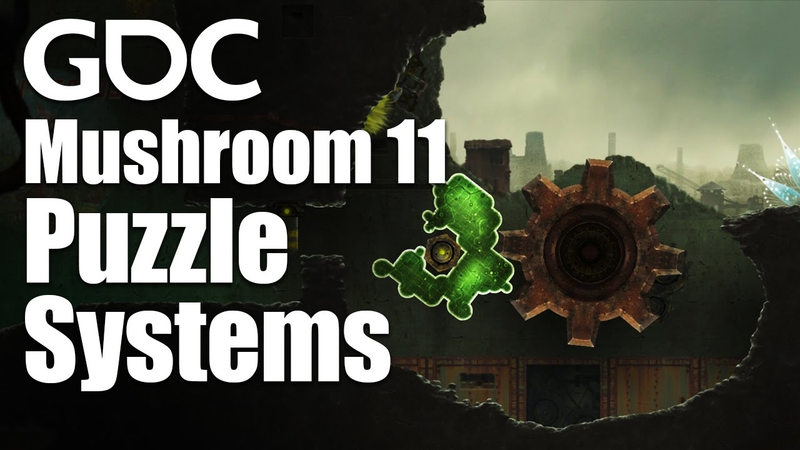
Designing the Anti-Platformer: Mushroom 11 Puzzle Systems
Mushroom 11, a 2D puzzle game developed by Untame, centers on a unique mechanic where players control a shapeshifting, cellular organism that moves exclusively through a cycle of destruction and regrowth.
- Mushroom 11, developed by Untame since its 2012 game jam origin, utilizes an 'anti-platformer' mechanic where players navigate by pruning and regrowing a cellular organism rather than using traditional jumping abilities.
- The game design prioritizes puzzle purity by avoiding power-ups and mid-air growth, instead forcing players to manipulate the creature's center of mass, momentum, and physical footprint to interact with the environment.
- Boss encounters are designed as skill-check milestones where players must utilize the remains of defeated enemies to progress, reinforcing the game's focus on environmental logic over standard tropes.
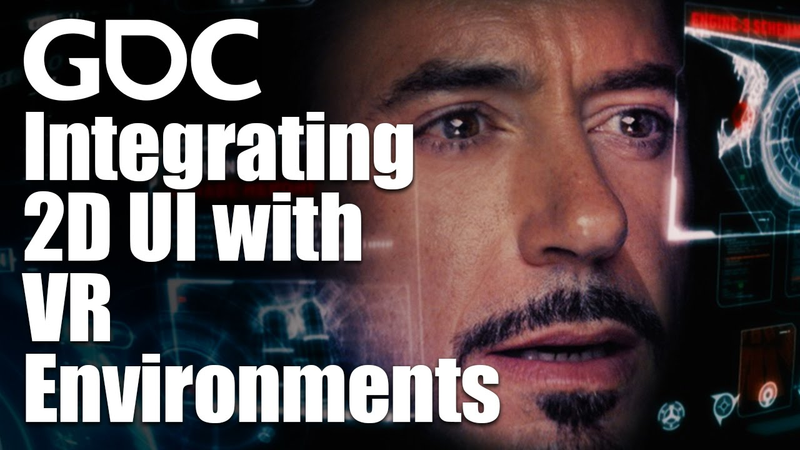
Integrating 2D UI with VR Environments
Two-dimensional user interfaces remain a fundamental component of virtual reality development, serving as the most efficient medium for non-spatial tasks while avoiding the occlusion and complexity issues inherent in three-dimensional representations.
- 2D user interfaces are the most efficient medium for non-spatial VR tasks, as they reduce cognitive load and avoid the complexity of 3D representations.
- UI elements should be positioned at arm’s length to mitigate depth disparity and prevent visual fatigue for the user.
- Designers must prioritize large, accessible interface elements that accommodate head-tracking to avoid the need for fine motor skills or excessive neck movement.
Multithreading the Entire Destiny Engine
The Destiny engine architecture achieves high-performance, cross-platform scalability by transitioning from traditional synchronization primitives to a sophisticated, job-based multithreading model.
- The Destiny engine utilizes a fiber-based, job-driven architecture to replace traditional synchronization primitives, enabling high-performance scalability across diverse hardware generations including PS3 and Xbox 360.
- Workloads are organized into discrete job sequences with explicit dependency management to prioritize simulation tasks and minimize latency.
- System integrity is maintained through a strict execution environment that uses resource handles, producer-consumer models, and whitelisting to prevent data races and unsafe memory access.
Governance in F2P Multiplayer Games
Traditional free-to-play models often struggle with player burnout due to an over-reliance on content-driven drip strategies.
- Shift from content-driven drip strategies to high-agency systems that prioritize emergent player governance and social hierarchies to reduce player burnout.
- Design game architecture to facilitate proximity, repeated informal encounters, and rich communication channels to foster self-organizing communities.
- Function as an architect of physical laws rather than a moderator, providing tools that allow players to negotiate their own norms and resolve disputes.
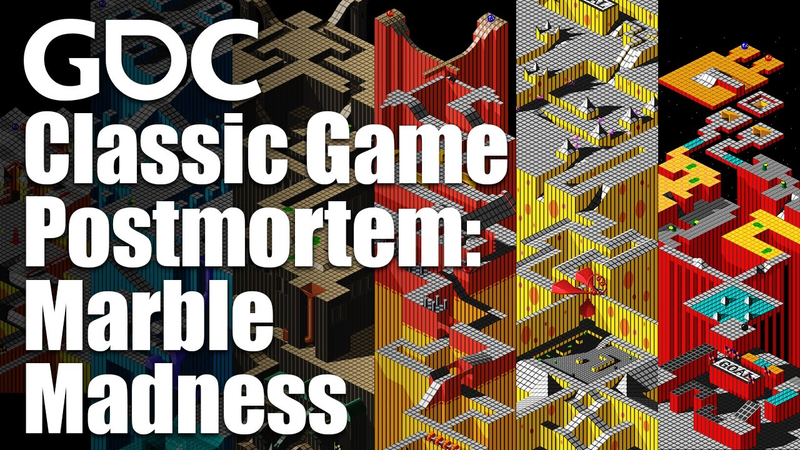
Classic Game Postmortem - Marble Madness
The development of Marble Madness during the mid-1980s arcade industry contraction serves as a case study in balancing technical innovation with the unforgiving economic realities of coin-operated gaming.
- During the 1982-1984 arcade industry crash, sales plummeted by 90%, forcing developers to pivot from custom hardware for every game to a 'system hardware' model where operators bought a base board and swapped out cartridges.
- Atari's development process for Marble Madness involved a high-stakes 'coin drop' testing phase where games were built to 80% completion and placed in arcades; historically, two out of every three games were canceled based on these results.
- Marble Madness achieved commercial success by selling 4,000 units in a depressed market, making it one of the top-selling games of 1984 despite the industry's decline from the 100,000-unit sales peaks of the Pac-Man era.
The Triple Postmortem - Black Ice, 6180 The Moon, The More You Know (About the Devil)
Independent game development thrives when creators prioritize financial stability and disciplined scoping over the pursuit of industry trends.
- Maintain a day job while developing indie games to ensure financial stability and reduce pressure during the long development cycle.
- Actively identify and reach out to your specific target audience at conventions or online communities, as players will not naturally discover niche titles on their own.
- Establish professional standards and clear expectations with contractors, including firm deadlines, to avoid losing assets or stalling development for years.
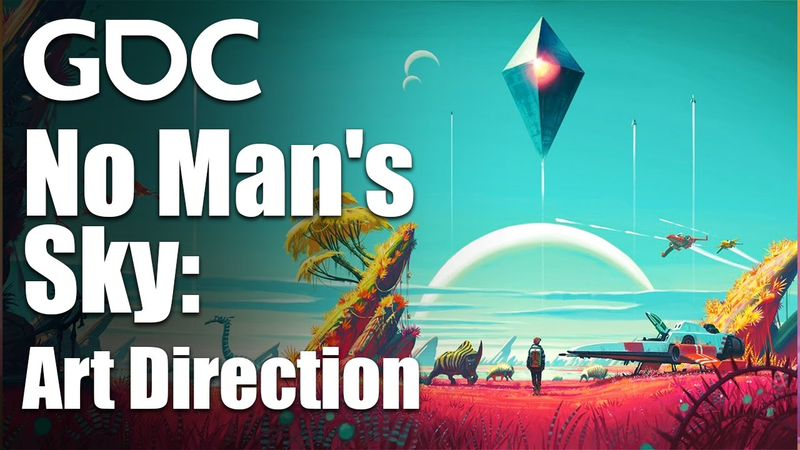
The Art Direction of No Man's Sky
The visual identity of No Man’s Sky draws primary inspiration from the optimistic, vibrant aesthetic of 1970s science fiction book covers, specifically the works of artists like Chris Foss and Moebius.
- The visual identity of No Man's Sky is based on the 1970s science fiction aesthetic of artists like Chris Foss and Moebius, intentionally prioritizing vibrant wonder over industry-standard post-apocalyptic grit.
- The game utilizes a flexible super-biome system that dictates landscape formation based on environmental variables, such as a planet's proximity to its sun, rather than relying on rigid, predictable biome presets.
- Artistic control is maintained through a blueprint system that applies structural constraints to procedural assets, ensuring visual consistency and readability across ships, flora, and fauna.
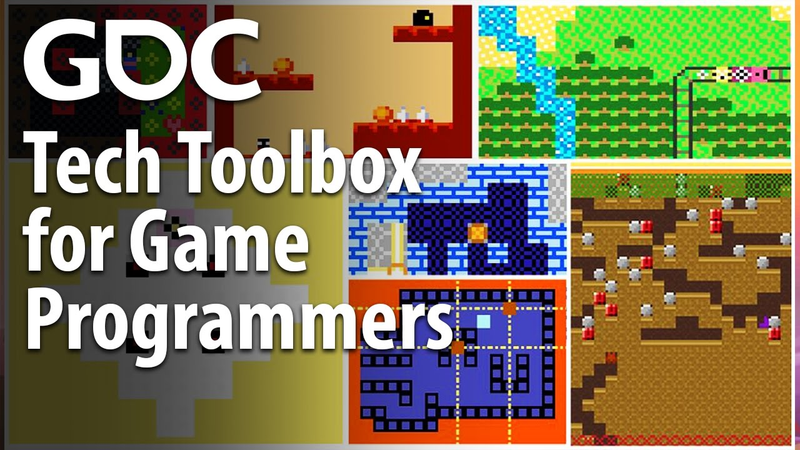
Tech Toolbox for Game Programmers
Custom tool development serves as a critical strategy for game programmers seeking to optimize development pipelines and maintain creative autonomy.
- Prioritizing bespoke, lightweight utilities over third-party software allows teams to achieve 80 percent of required functionality with only 20 percent of the typical development effort.
- Embedding runtime debugging tools like the C++ library Dear ImGui directly into the game allows non-programming staff to inspect game states, democratizing technical access and improving team communication.
- Custom tools such as node-based dialogue editors and ID-based synchronization systems serve as living documentation, providing a more accurate and accessible shared vocabulary than traditional written guides.