1 free read left. Create a free account for unlimited reading + AI research.
Create free account
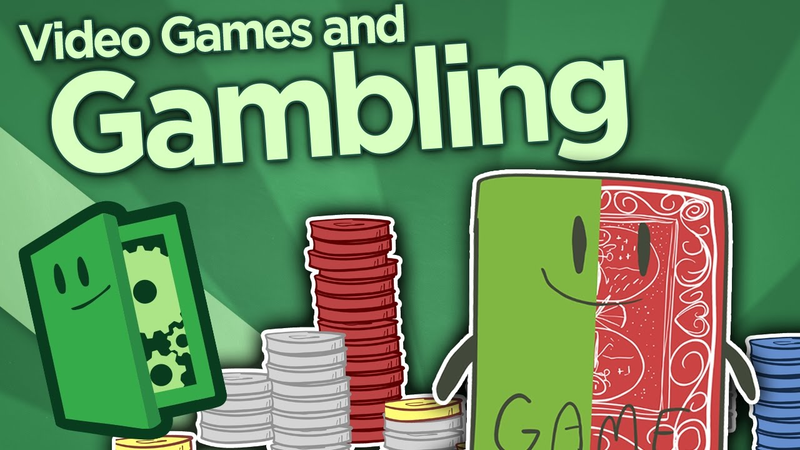
Video Games and Gambling - When Does a Game Cross the Line? - Extra Credits
Key insights
6 takeaways- 01The casino industry is increasingly adopting video game mechanics to attract younger demographics who prefer skill-based interaction over traditional slot machines.
- 02Developers entering the casino market must ensure their products are clearly distinguishable from standard arcade games by prioritizing entertainment value over pure random number generation.
- 03Mainstream developers face a design trade-off where disabling digital asset trading eliminates gambling risks but simultaneously removes the benefits of a player-driven economy.
- 04Developers must actively monitor in-game economies for anomalous transaction volumes and one-way asset transfers to identify and disrupt third-party gambling platforms.
- 05To prevent illicit betting, developers should implement strategies to detect and remove automated bot accounts that facilitate unauthorized wagering within their ecosystems.
- 06To protect players, developers should proactively educate their communities on the inherent risks of unauthorized gambling platforms, including the lack of regulation and potential for fraud.
Ask AI about this video
Transcript
When does a game become gambling? If you've been to a gambling expo in the past, let's say 2 years, then you probably saw something interesting. Guitar Hero, Space Invaders, Candy Crush, skill-based games that allow the player to rack up winnings when they achieve a goal or lose money when they fail. Casinos are turning to these skill-based games or hybrid skill and chance games due to a demographic shift. You see, young people don't really like slot machines. So, to attract them youths, the gaming industry uh well, okay, not the gaming industry you're thinking of, the other one that makes like slot machines and video poker and stuff. I mean, technically gaming industry is the proper term, but just for the sake of clarity, I'm going to call them the casino industry. Anyway, the casino industry is hoping that game-based machines will pull in a fresh batch of young millennial gamblers. They've even rewritten gambling laws to accommodate new machines that rely on
performance rather than mere chance. But, it isn't just the casinos who are getting into video game gambling. As you have probably heard, Valve is currently cracking down on third-party websites that leverage Counter-Strike Go weapon skin trading as a form of gambling. With all of these factors coming into play at once, designers have to start thinking seriously about how they want to approach gambling in games, even if, like Valve, they don't intend for people to use them for gambling. This raises a lot of ethical questions that the industry hasn't had to consider before. So, let's go ahead and try to address it now while it's still on the horizon. First of all, just to say this up front, there's nothing inherently wrong with developers creating games for the casino industry. Gambling is legal in many places, and provided developers go about it in an ethical manner and abide by local laws, there's a lot worse things you could be doing as a high-tech company. In fact, when we started looking at this topic, we were ourselves initially worried that the melding of video games and gambling might make kids more likely to form a gambling addiction
later in life. But, gambling addiction experts that we consulted shrugged off that idea. It turns out that gambling addiction rates remain pretty consistent either way. And, though a childhood affinity for games of chance can predict future gambling behaviors, there's no evidence that these games somehow turn people into gamblers. Which, I mean, I guess that makes sense. It's not like everybody who spun the wheel in Candy Land became a roulette fiend. But, there are still a lot of things to consider. The first is the worrying possibility of what may happen when we combine the incentivized feedback loop of games with the already addictive practice of gambling. We've talked about this a bunch of times already, so I won't repeat myself talking about that danger. You can see our episodes on humane design, exit points, and the Skinner box if you want to dig into that subject more yourself. Suffice it to say that building a humanely designed casino game will be a very hard line to walk. But, that's not to say that it can't be done. Second, if a designer decides to make a casino game or adapt a game they've already made for gambling use, the
casino version needs to be different in immediately obvious ways. By which I mean, police should be able to easily tell them apart without any special training. We've already seen machines come out of China that are basically slot machines disguised as arcade games, and that's allowed unscrupulous arcades to double as gambling dens. Third, designers need to make sure that these games that they're making are actually games, not just glorified random number generators. One of the good things about casinos deploying skill-based games is that they provide inherent entertainment value. They aren't just mindless slot machines or roulette wheels where players get hooked on dopamine. They're more like poker, a thing you can enjoy in and of itself with winning money just being a fun bonus. It's better for the casino, too. I mean, part of why millennials hate slot machines is that they aren't inherently fun to play. But, okay, enough about casinos. What about a normal shooter with loot boxes and item drops? How can a developer ensure that they won't end up in Valve's position, where their game becomes an unintended
venue for wagering? The simplest solution is to take the Overwatch or Hearthstone route, where you don't let players trade digital goods from loot drops. Now, I understand that that suggestion may not be the most popular one, because boy, we dropped just as much money as anyone else trying to get that Mercy Halloween skin. But, that system does at least ensure that developers aren't exposed to legal challenges, because no transaction between players, no trouble. But, there are legitimate reasons to want players to be able to trade loot. After all, it creates a player economy. It fosters social interaction, and it gives loot a sense of value. Trading opportunities make it more exciting when a player hits the jackpot from a random drop, and it offers them some consolation if they get an item they can't use. So, how can developers regulate trade in a way that isn't open to bad actors? Well, first, let's review how skin gambling works. In Counter-Strike: Global Offensive, players can obtain skins for weapons or characters via in-game loot drops, with certain skins being rarer or more
sought-after than others. Players can then trade these skins to each other, or buy and sell them for funds in their Steam Wallet, but they can't sell them for real-world currency. However, third-party gambling sites, unaffiliated with Valve, have offered venues where people can use these skins as casino chips, betting them on professional CS: GO matches, or even at simulated table games like roulette, blackjack, and slot machines. When players win or lose, the skins they've wagered get automatically traded through Steam via bots controlled by the third-party gambling site, which also offers to cash those skins out for real currency. Now, obviously, this is illegal, and worse, a lot of underage kids got sucked into skin gambling. Valve is currently cracking down by sending cease and desist letters, but there are other things developers can do to make sure that gambling doesn't become an accidental feature of their games. The first is to monitor transaction volumes and flag accounts with substantially higher activity than the mean. Now, sure, some of these will
just be power players, but at least it narrows down the data set to help discover the bad actors. Developers can also track one-way transactions, where a player sends skins to somebody while getting nothing or something of negligible value in return. If a developer can easily identify accounts that seem overgenerous, they've gone a long way toward identifying who's giving or getting skins from an external bet. After all, power players are trying to make a profit, not give away stuff for free. Another avenue for shutting down the trade is bot hunting. Many gambling sites execute these trades via bots, and if developers can detect those accounts and lock them out, it'll go a long way toward killing the site. Because, let's be honest, if players bid skins at one of these sites and then never get those gambled assets back because the bot accounts got locked, that site is going to lose its customer base pretty quickly. And while it is true that gambling sites will just turn to VPNs or domain masking to create new bots, well, there are tools to counter that, too.
Just ask Netflix. But probably the best way to keep players away from gambling is by informing the public that many of these sites just aren't fair. After all, legal casinos are heavily regulated to ensure that games meet payout standards, but underground gambling operations, they can offer crooked odds. In fact, that whole Valve case first broke when it was revealed that the YouTubers doing how-to videos about a gambling site actually owned the site they were promoting. Some even got the numbers ahead of time so that they could demonstrate how easy it was to get a large payout. And that revelation damaged those sites as much as any cease-and-desist. If developers are willing to talk about these sites in terms of consumer protection, it might prevent people from going there in the first place and prevent their players from getting burned at the table. Now, this is a rapidly evolving topic and likely to shift in the next few years as gambling sites find ways around roadblocks, but it's important to keep it on our radar. The more games become
an integral part of our lives, the more real-life problems they inherit. That's just the price of success. See you next time.
Summary
The integration of video game mechanics into the gambling industry and the emergence of unauthorized wagering within gaming ecosystems present significant ethical and operational challenges for developers. Driven by a demographic shift where younger audiences favor skill-based interaction over traditional slot machines, the casino industry has begun adapting popular game formats to attract new players. Simultaneously, developers of mainstream titles face the unintended consequence of their in-game economies, specifically loot boxes and tradable digital assets, being exploited by third-party gambling platforms.
While experts suggest that exposure to game-based mechanics does not inherently cause future gambling addiction, the combination of incentivized feedback loops and wagering creates a complex design environment. To mitigate risks, developers entering the casino space must ensure their products are clearly distinguishable from standard arcade games and prioritize inherent entertainment value over simple random number generation. For mainstream developers, the primary challenge lies in preventing their games from becoming venues for illicit betting. While disabling trading entirely is the most effective way to eliminate risk, it sacrifices the benefits of a player-driven economy.
To maintain healthy ecosystems, developers are encouraged to implement proactive monitoring strategies. These include tracking transaction volumes to identify anomalous activity, flagging one-way transfers that suggest wagering, and actively hunting the automated bot accounts that facilitate third-party gambling sites. Furthermore, developers can protect their player base by emphasizing consumer protection, specifically by highlighting the lack of regulation and potential for fraud on unauthorized gambling platforms. As the gaming industry continues to grow, developers must remain vigilant, treating the prevention of unintended gambling as a critical component of responsible game design and community management.
























Comments