1 free read left. Create a free account for unlimited reading + AI research.
Create free accountWhitepaper Journal of Games Criticism
1 free read left. Create a free account for unlimited reading + AI research.
Create free accountWhitepaperJournal of Games Criticism
Distilling the key insights…
Proceduralized whiteness functions as a foundational ideology within video games, manifesting not merely through visual representation but through the core rules, mechanics, and goal structures that govern play. By embedding Eurocentric and settler-colonial logics into computational systems, game design often normalizes extractive, expansionist, and violent relationships between the player and the virtual world. These systems rely on repetition and automaticity to reinforce dominant social norms, effectively framing whiteness as the invisible, default state of humanity within digital spaces.
The scope of this analysis spans the contemporary gaming landscape, focusing on Western role-playing games and 4X strategy titles that frequently equate progress with territorial conquest and resource accumulation. Titles such as Civilization, Mass Effect, and The Oregon Trail serve as primary examples of how traditional design tropes perpetuate colonial ideologies. Conversely, the analysis highlights Indigenous-led projects like When the Rivers Were Trails and Never Alone as critical counter-models. These games demonstrate that by shifting mechanics toward cooperation, non-violent problem-solving, and communal stewardship, developers can actively subvert systemic inequalities.
Ultimately, the transformation of the gaming industry requires more than superficial changes to character creation or narrative content. True resistance to proceduralized whiteness necessitates a fundamental reconfiguration of the material and social structures of game development. By intentionally redesigning the underlying logic of play, creators can move beyond the constraints of colonial design, fostering environments that prioritize diverse perspectives and equitable interactions. This shift represents a necessary evolution for the medium, moving toward a more inclusive future that challenges the historical invisibility of racial ideologies in digital design.
Each row is a game or company this document names, each column a document, oldest first. A mark means that document names it. Select a row to see those documents.
Journal of Games Criticism · 2026
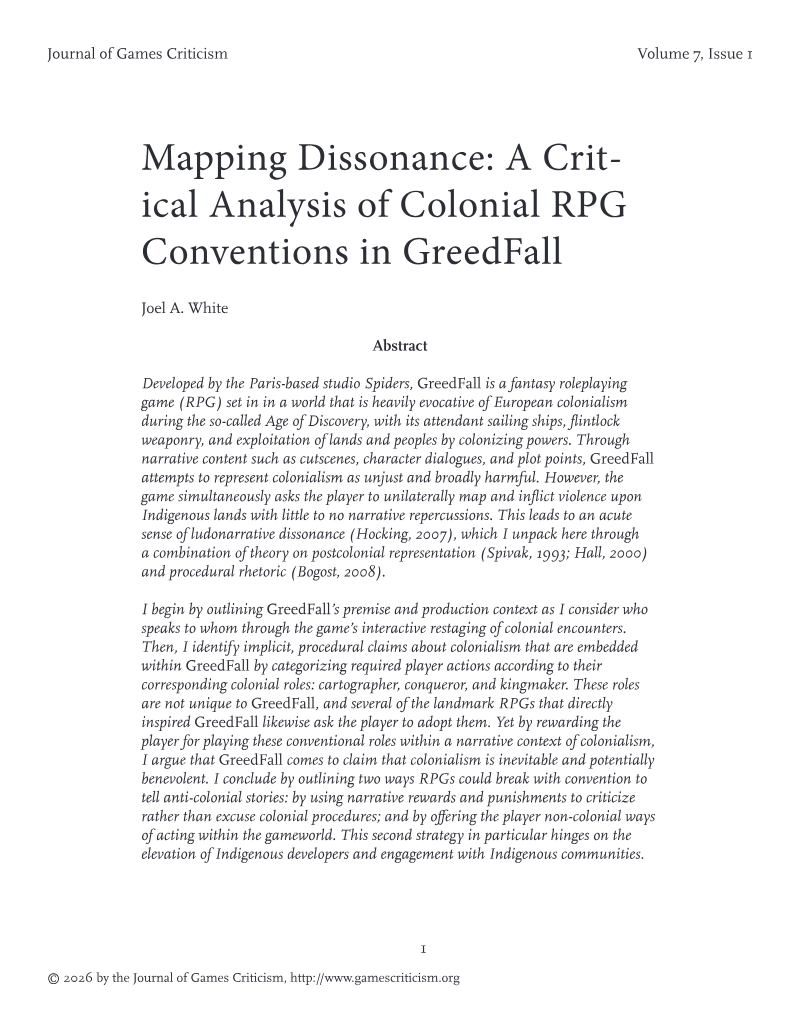
Journal of Games Criticism · 2026
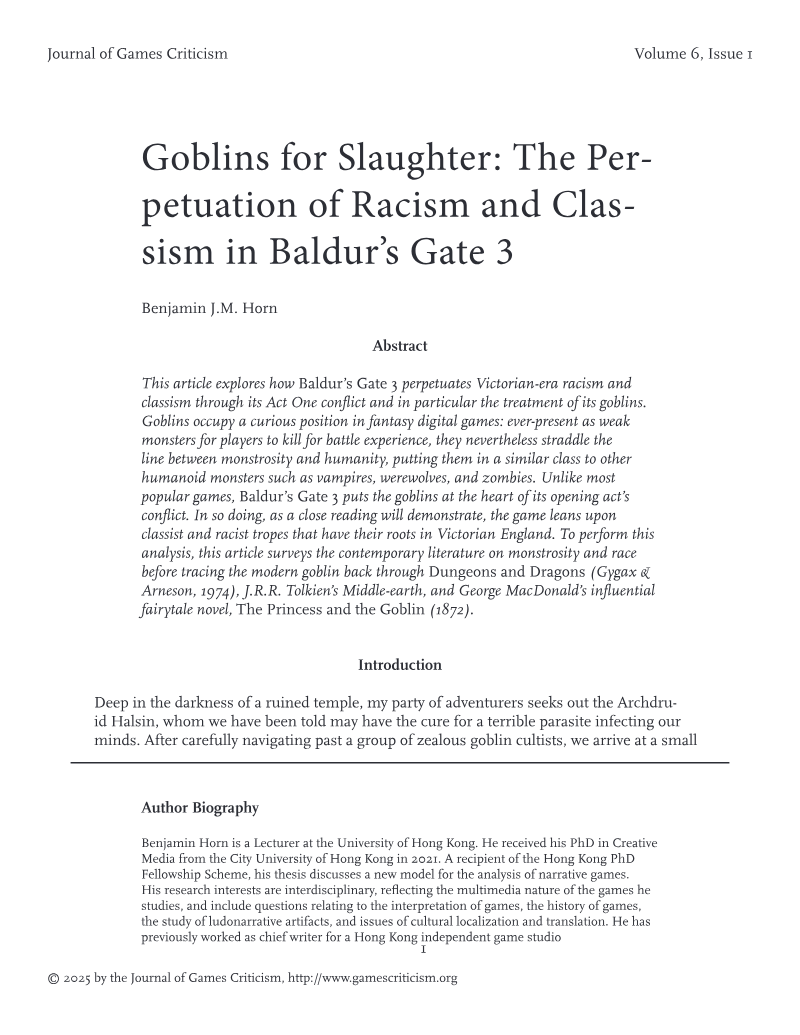
Journal of Games Criticism · 2025
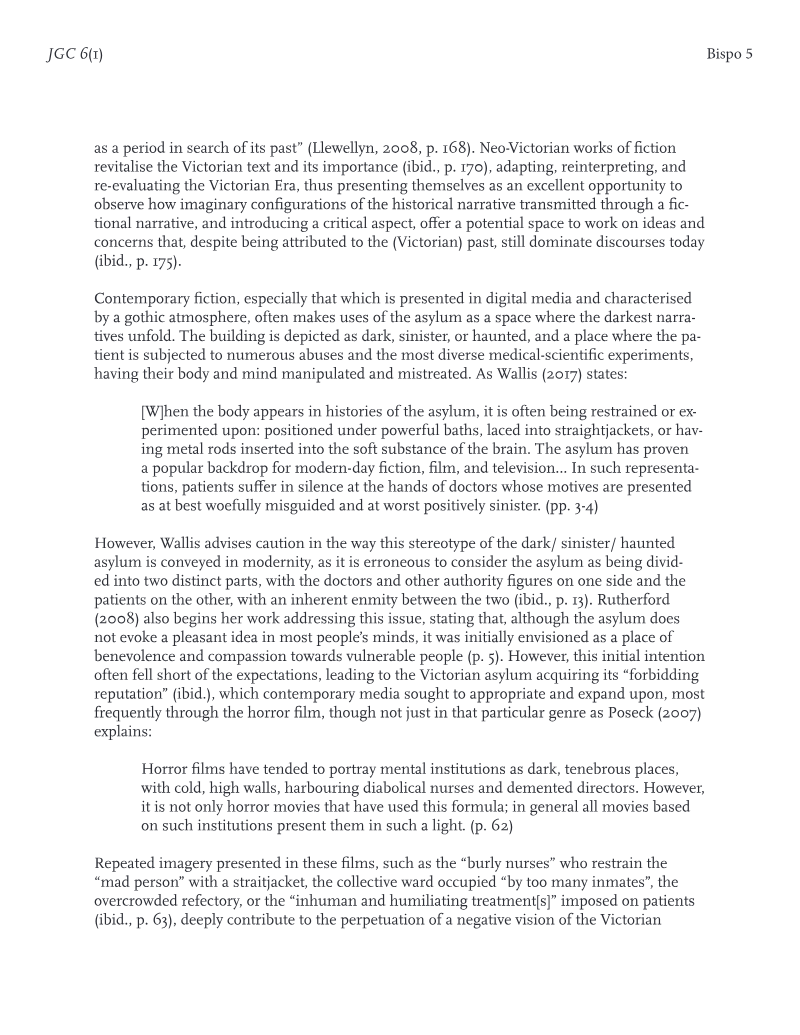
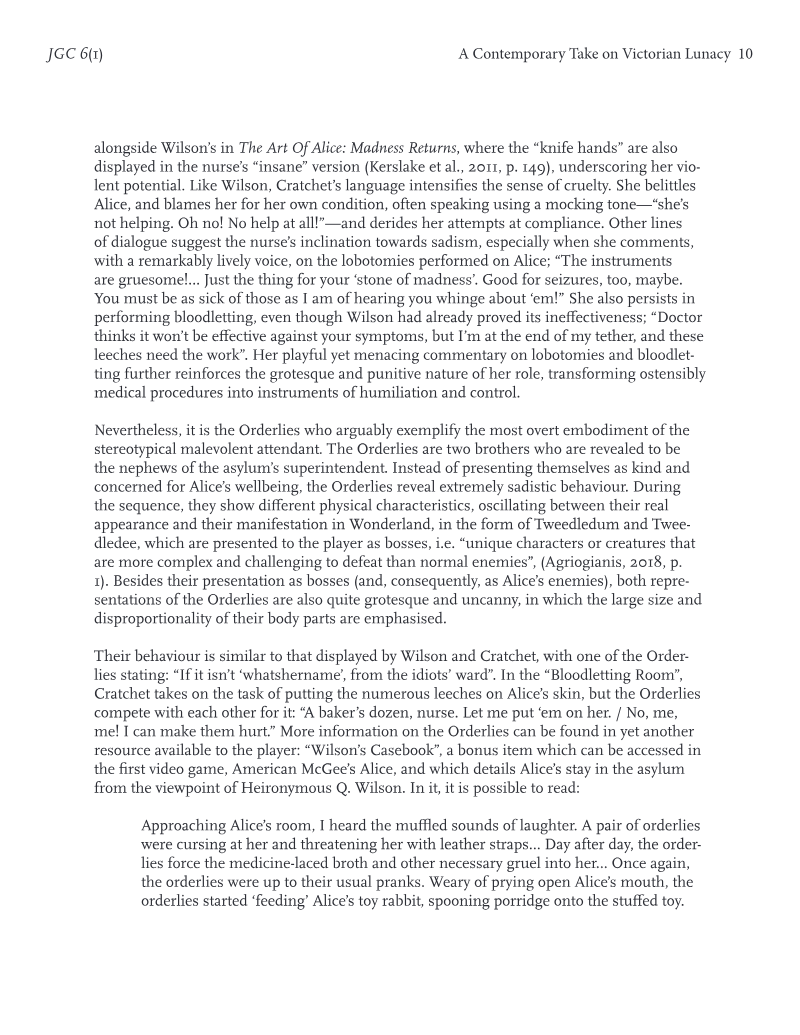
Journal of Games Criticism · 2025
Journal of Games Criticism · 2025
Journal of Games Criticism · 2025

Journal of Games Criticism · 2024
Journal of Games Criticism · 2024
Journal of Games Criticism · 2024
Journal of Games Criticism · 2024
Journal of Games Criticism · 2024
Journal of Games Criticism · 2024
National Taipei University of Technology · 2021