1 free read left. Create a free account for unlimited reading + AI research.
Create free accountWhitepaper Journal of Games Criticism
1 free read left. Create a free account for unlimited reading + AI research.
Create free accountWhitepaperJournal of Games Criticism
Distilling the key insights…
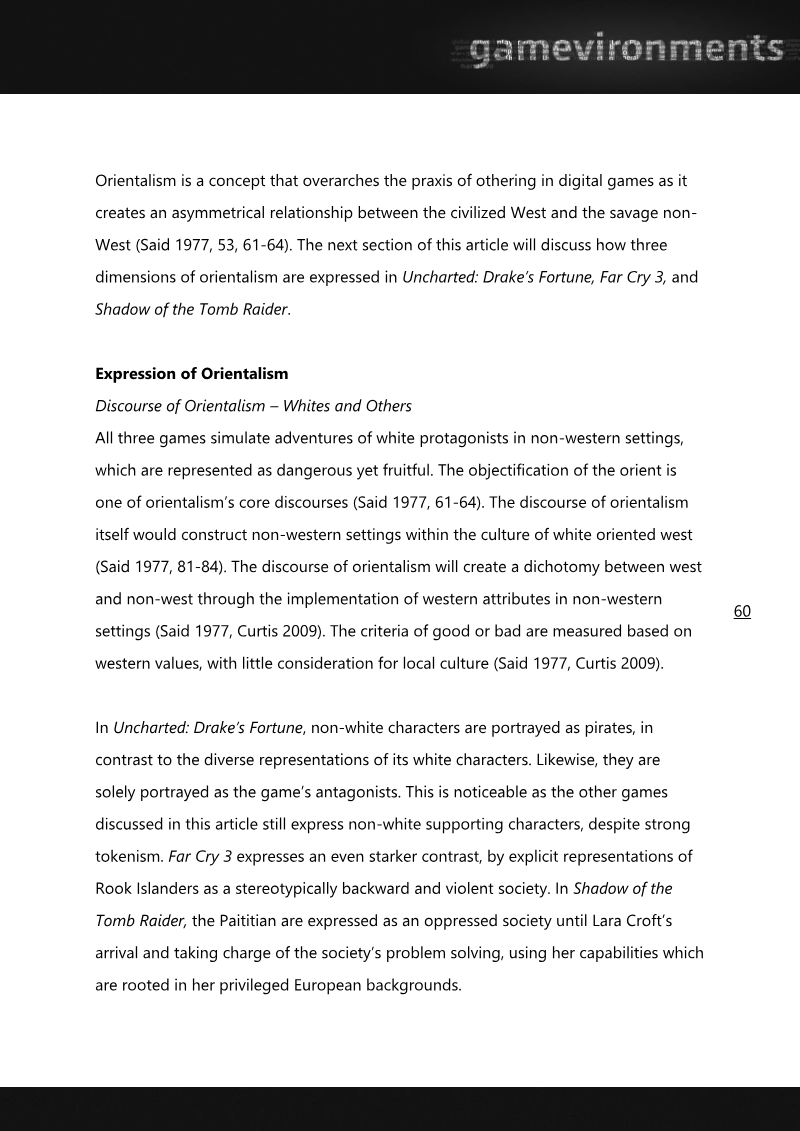
Traditional game studies often rely on rigid, binary frameworks such as colonizer versus colonized or white versus other, which fail to capture the fluid complexities of identity. By shifting toward a circular model of engagement, play becomes a transformative space for self-discovery that transcends static, Eurocentric power structures. This approach posits that the playground serves as a critical site for navigating and dismantling hierarchical categorizations, allowing individuals to explore multiplicity rather than conforming to fixed social or cultural roles.
Whiteness operates as a pervasive system of power, capital, and colonial influence that intersects deeply with caste, class, and geography. Traditional games, including hopscotch, cricket, and various nursery rhymes, are historically rooted in these colonial structures, often reinforcing authoritative norms. However, these activities also provide a unique mechanism for subversion. When participants choose to play with the rules rather than strictly by them, they effectively challenge systemic dominance and reclaim agency within restrictive educational and social environments.
The scope of this analysis spans the intersection of global colonial history and personal, lived experience, particularly through the lens of South Asian heritage. By modifying established game mechanics, marginalized players can confront and reshape the power dynamics embedded in their cultural surroundings. Ultimately, play functions as a vital tool for resistance, enabling a departure from binary constraints and fostering a more nuanced understanding of how identity is negotiated within globalized, post-colonial contexts.
Journal of Games Criticism · 2026
Journal of Games Criticism · 2026
Journal of Games Criticism · 2025



Journal of Games Criticism · 2025
Journal of Games Criticism · 2025
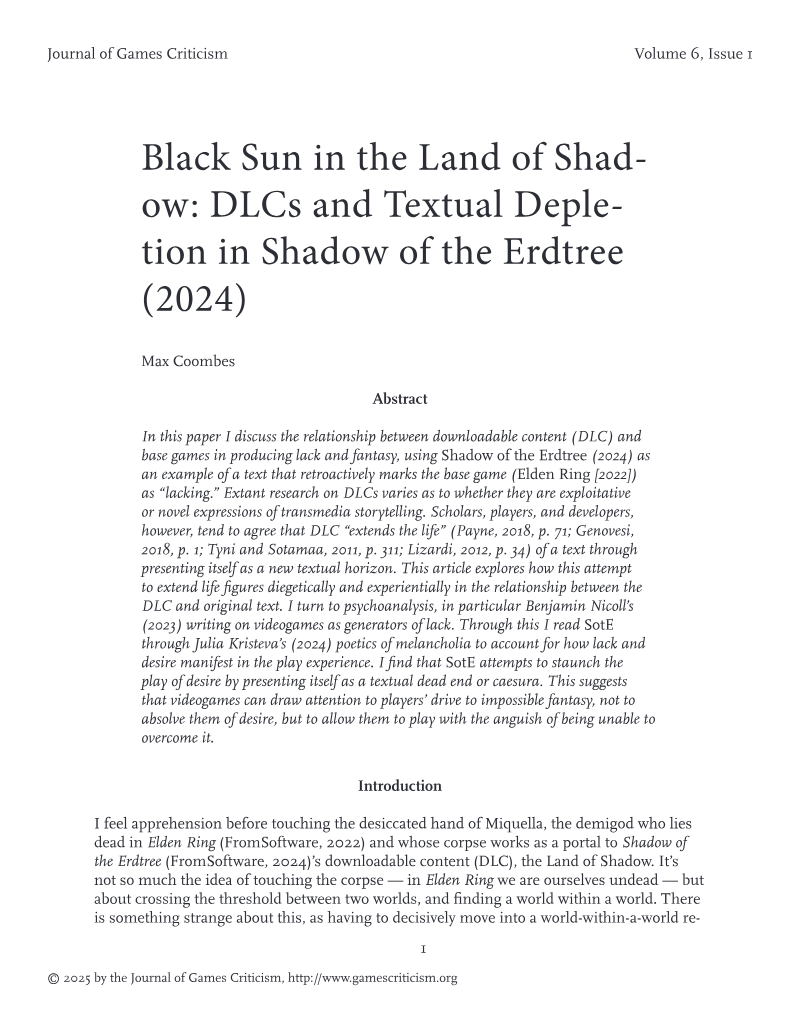
Journal of Games Criticism · 2025
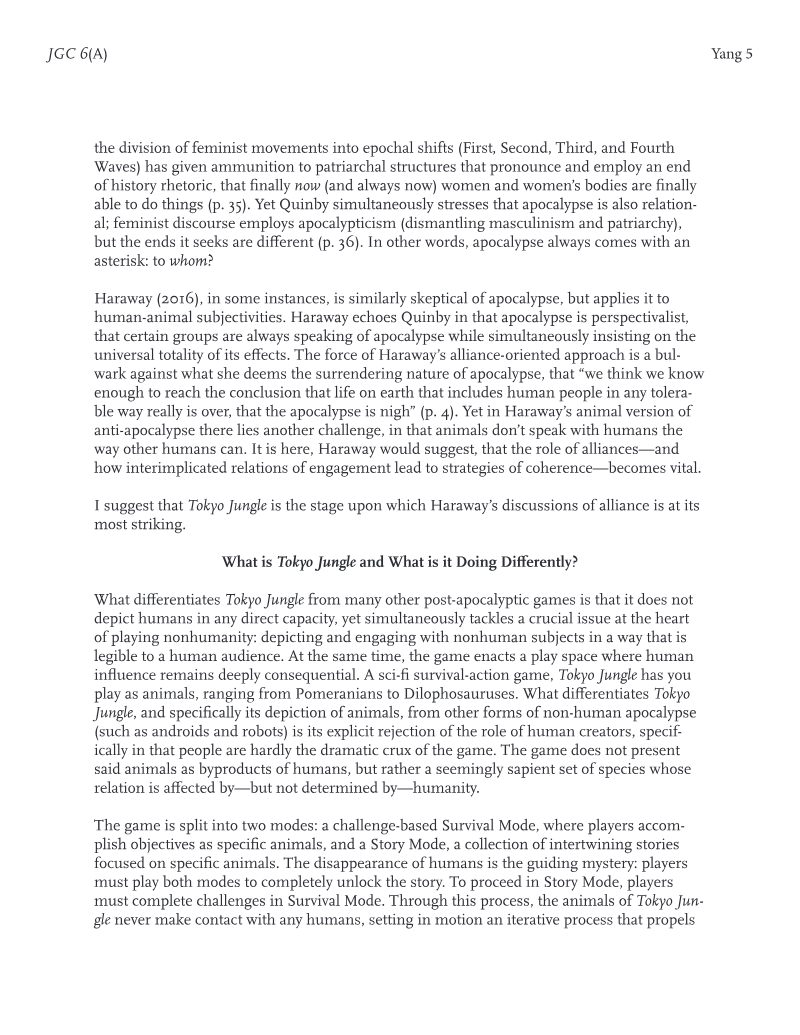
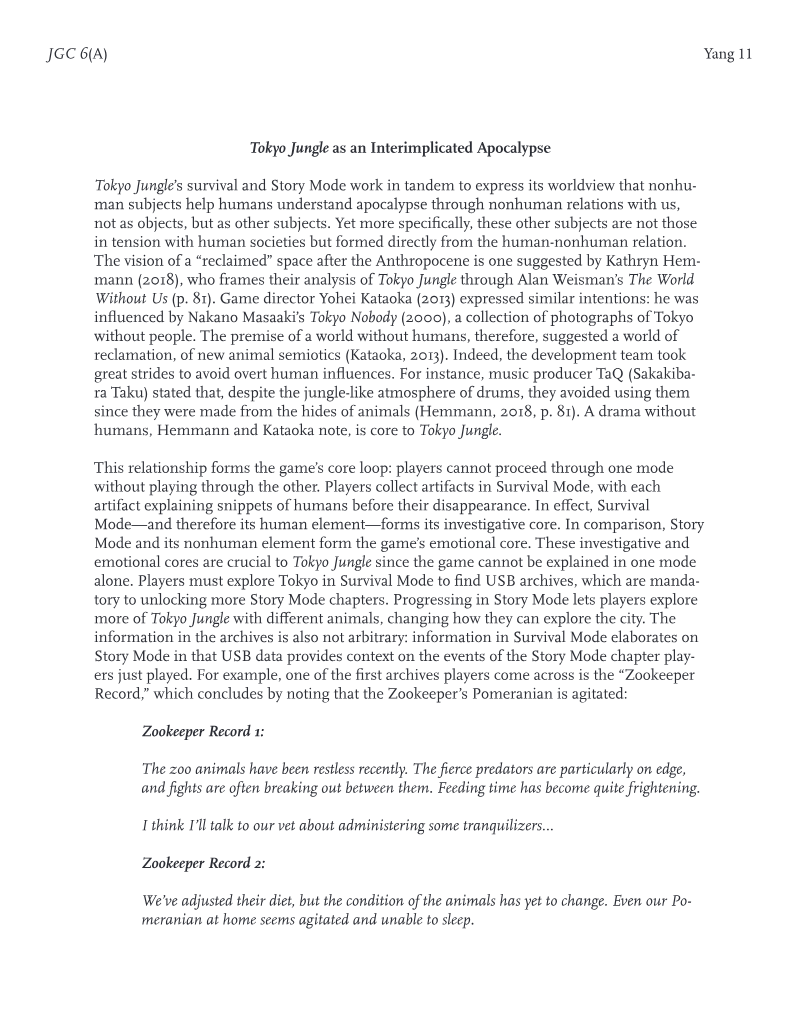
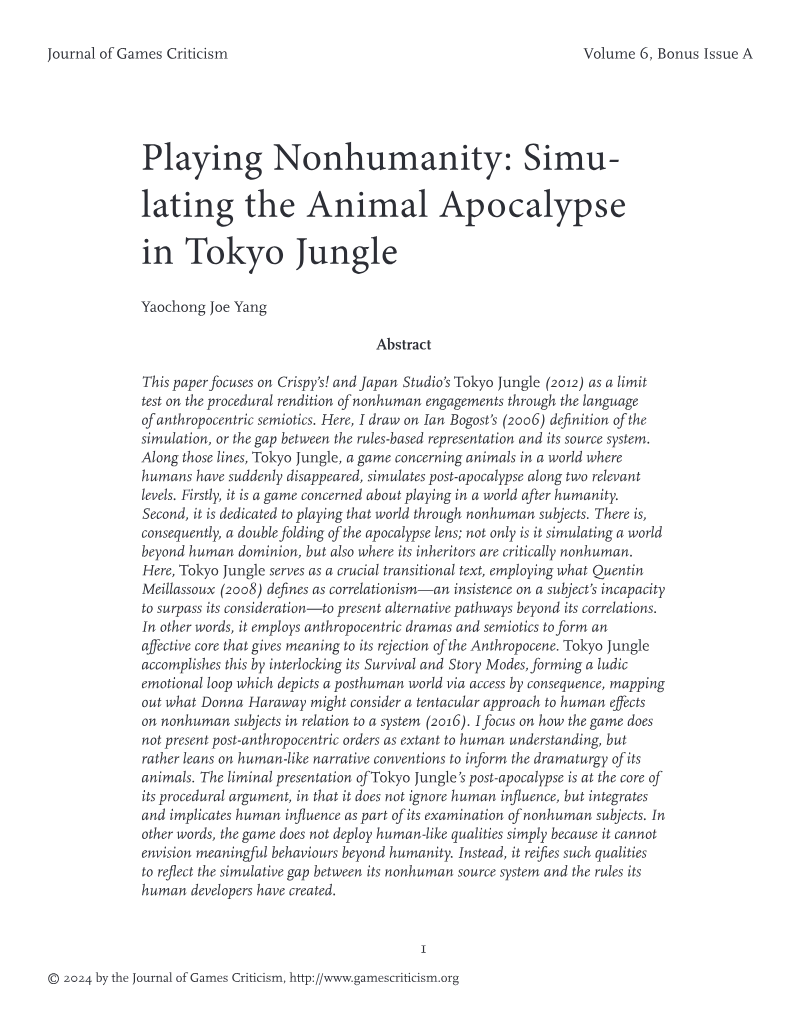
Journal of Games Criticism · 2024
Journal of Games Criticism · 2024
Journal of Games Criticism · 2024
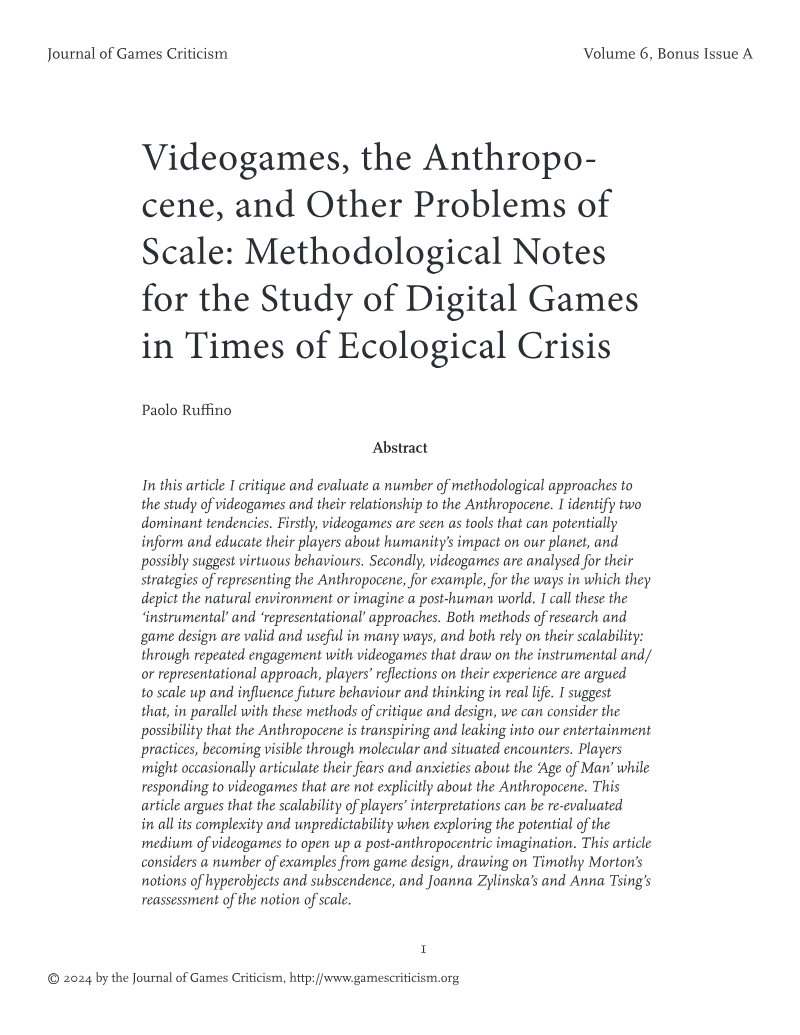
Journal of Games Criticism · 2024
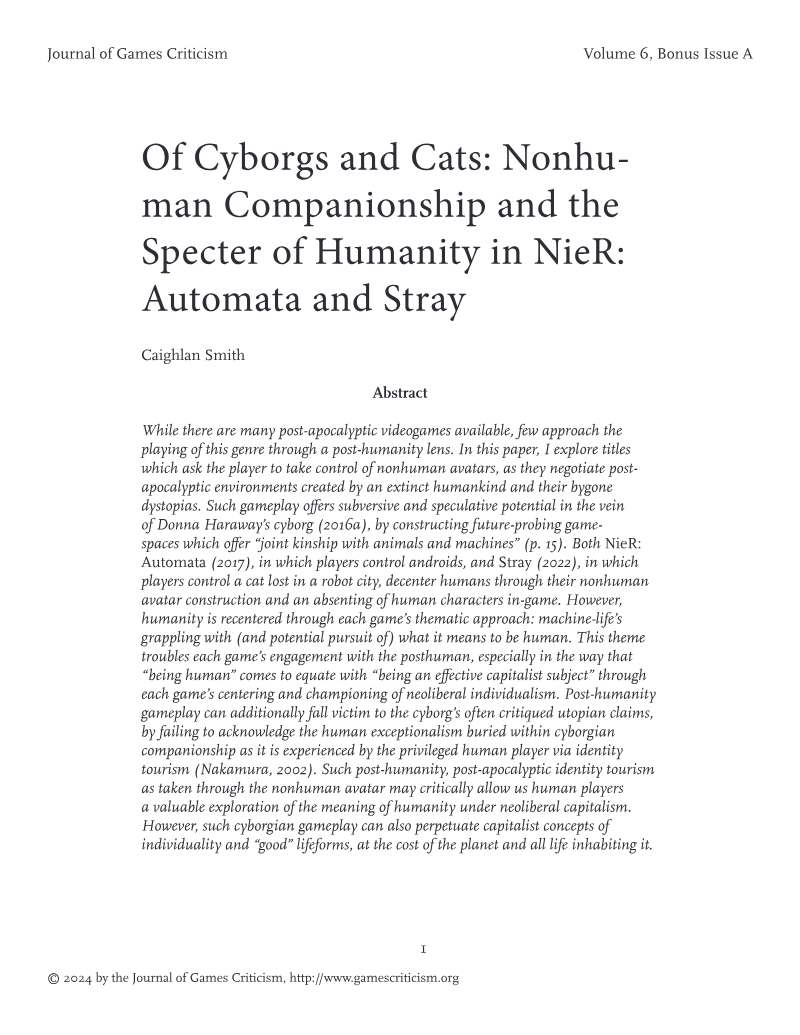
Journal of Games Criticism · 2024
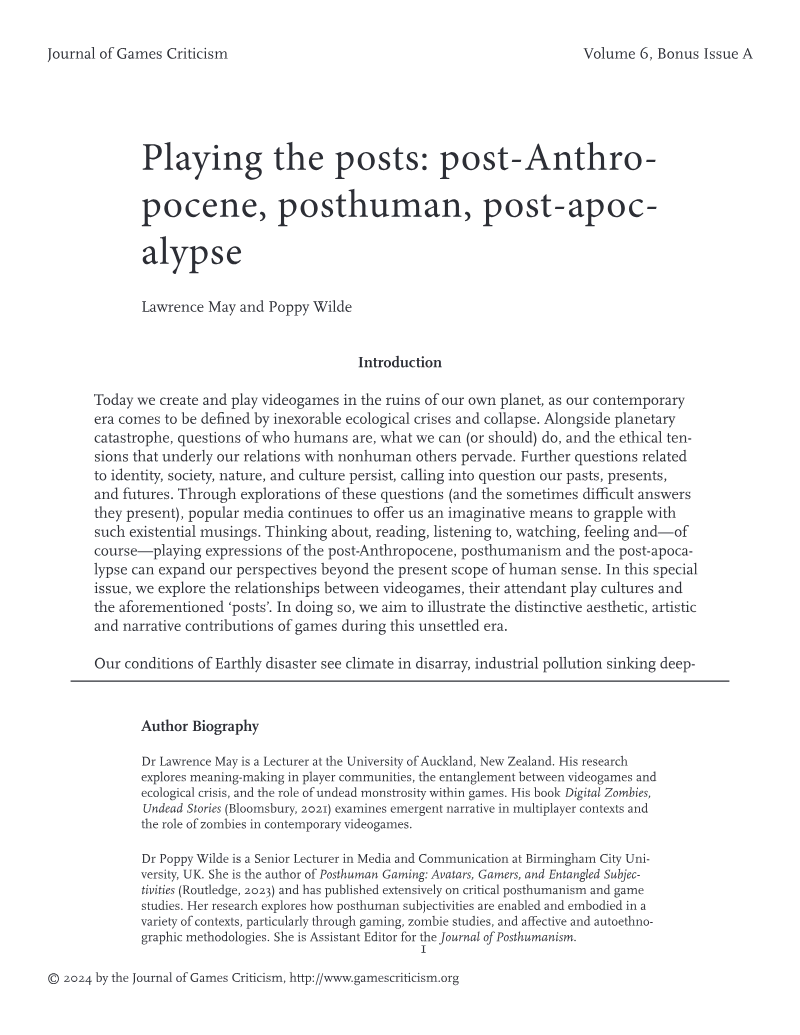
Journal of Games Criticism · 2024
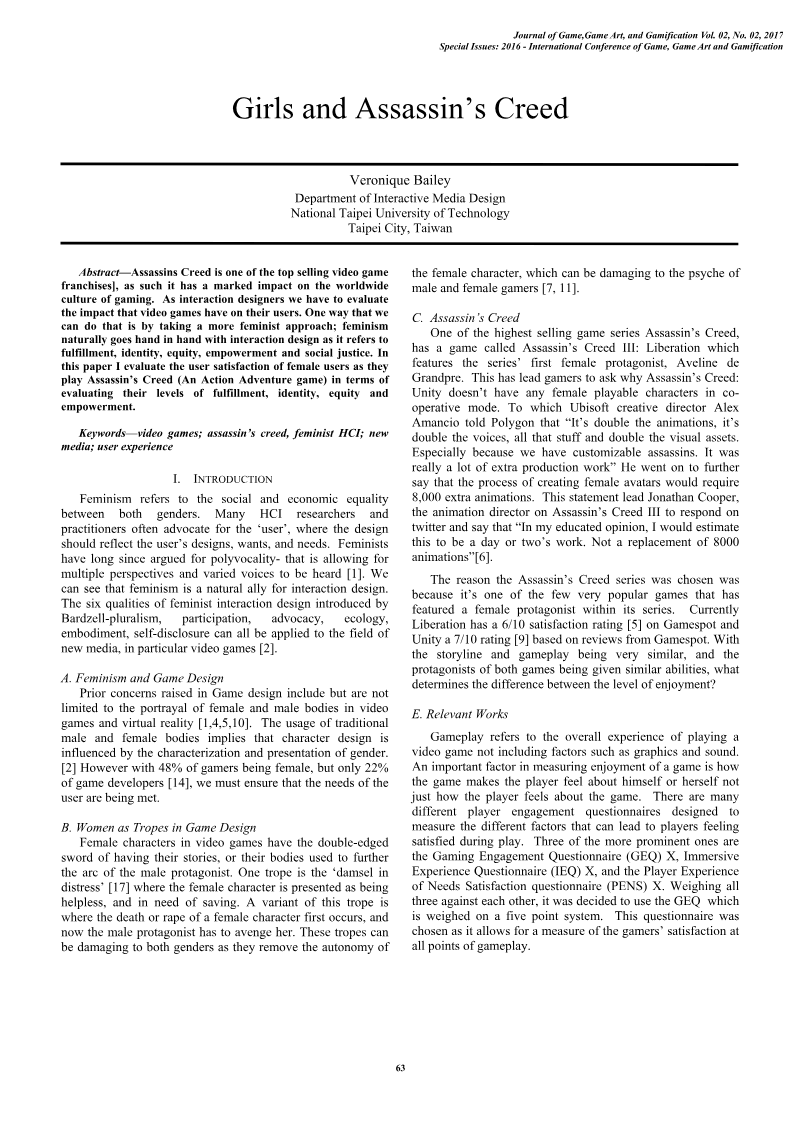
National Taipei University of Technology · 2021