Game Studies reports and market data
Documents
Looking at the History of Video Games Through the Prism of Ludicisation Processes
The concept of ludicisation provides a transformative framework for analyzing video games, shifting the focus from rigid, static definitions toward an understanding of games as dynamic, socio-cultural assemblages.
- Ludicisation defines games as dynamic socio-cultural assemblages rather than static objects, where play emerges from the interaction between a player's attitude, the environment, and the situation.
- Games function as historical 'ludic strata' that evolve and transform as they migrate across different cultural landscapes and territories.
- The boundaries between traditional gaming and everyday reality are becoming increasingly porous as ludic structures are applied to non-traditional domains.
The Construction of Civilization
The study provides a methodological framework for analyzing the history of the Civilization game series, arguing that popular journalistic accounts often oversimplify the development process by focusing exclusively on lead designer Sid Meier.
- The Civilization series evolved from closed systems into open architectures that intentionally integrated modding capabilities under designers like Brian Reynolds and Soren Johnson.
- A cyclical development pipeline emerged where players who learned to program by modifying early titles eventually transitioned into lead architects for later installments in the series.
- Core gameplay mechanics, such as tile-based resource management, are not isolated inventions but are transmedial developments rooted in board game designs dating back to the 1930s.
Exhibiting The Hobbit: A Tale of Memories and Microcomputers
Museums face significant challenges when attempting to collect and exhibit videogames, as these works are often defined by their technical variability and the subjective experiences of their players.
- Museums must shift from preserving a single 'idealized' version of a game to embracing the 'multiplicity' of digital works, including various platform ports and hardware-specific constraints.
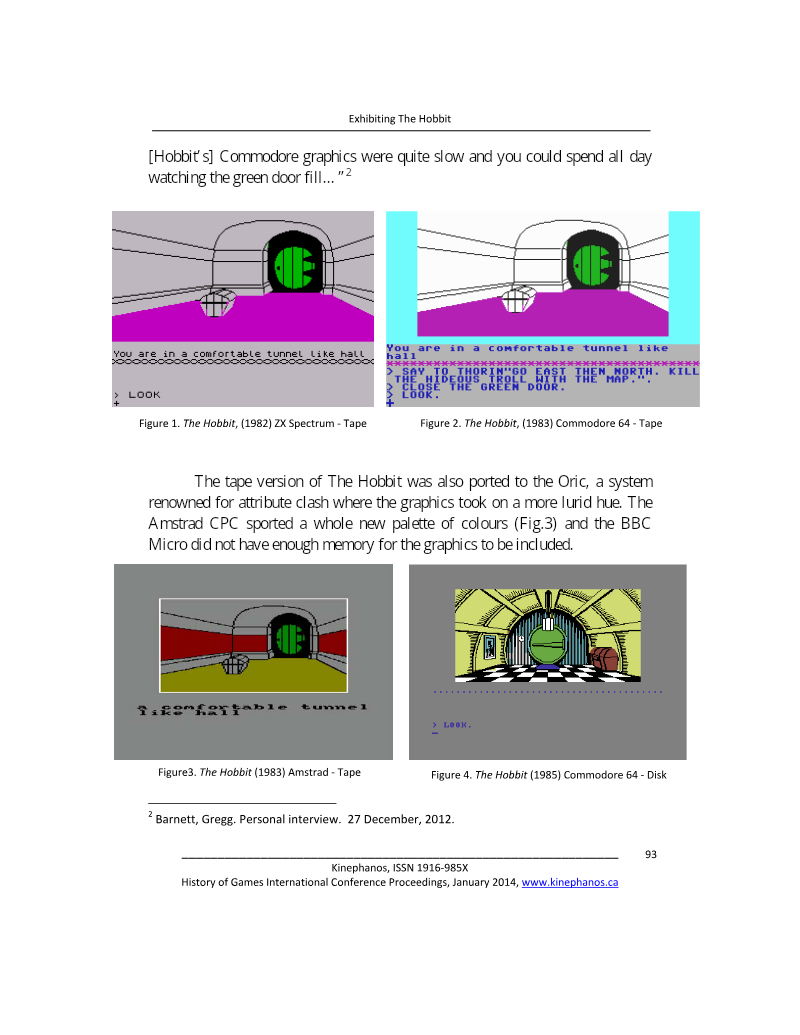
- Beam Software’s 1982 text adventure, The Hobbit, serves as a primary case study, having been released across more than nine distinct platforms with unique graphics, speed, and sound capabilities.
- Relying exclusively on emulation or a single version of a game risks homogenizing the history of 1980s microcomputing by erasing the technical ingenuity required to adapt software to diverse hardware.
Conserving Portal: Defining and Documenting the Object
Video games represent complex cultural artifacts that challenge traditional museum conservation practices due to their ephemeral and interactive nature.
- Video game preservation requires a shift from treating games as static objects to managing their technical, aesthetic, and interactive components to ensure long-term accessibility.
- The Mechanics, Dynamics, and Aesthetics (MDA) model provides a structured framework for curators to systematically document the core elements that define a game's identity.
- Effective preservation must combine technical solutions like migration and emulation with comprehensive documentation to maintain the functional and artistic intent of the work.
A History of Real-Time Strategy Gameplay: From Decryption to Prediction
The evolution of the real-time strategy genre is defined by a fundamental transition from a paradigm of decryption to one of prediction.
- The evolution of the real-time strategy genre is defined by a fundamental shift from 'decryption'—mastering fixed systems and AI patterns—to 'prediction,' which requires anticipating the maneuvers of human opponents.
- Genre development is driven by the institutionalization of player habits and the iterative accumulation of shared tactical knowledge rather than the impact of singular foundational titles like 1992’s Dune II.
- The transition to a prediction-based paradigm was necessitated by the rise of competitive multiplayer environments, which demand active scouting and real-time strategic adaptation.
Arcade-Style Game Design: Pinball’s Connections to Coin-Op Videogames
Early coin-operated videogames represent a direct evolution of electromechanical pinball rather than a departure from traditional gaming frameworks.
- Early coin-operated videogames evolved directly from electromechanical pinball, sharing core design philosophies like high-score objectives, rapid reaction gameplay, and near-miss mechanics.
- The 1947 introduction of flippers in pinball was the critical innovation that shifted the medium toward the real-time, skill-based control systems that define early digital arcade titles.
- The transition from pinball to digital arcade systems was driven by a continuity of industry personnel, hardware components, and a shared focus on immediate feedback and escalating difficulty.
The Ends of History and the Tyranny of the Algorithm
The evolution of the video game industry is defined by a tension between technological potential and the rigid constraints of commercial strategy.
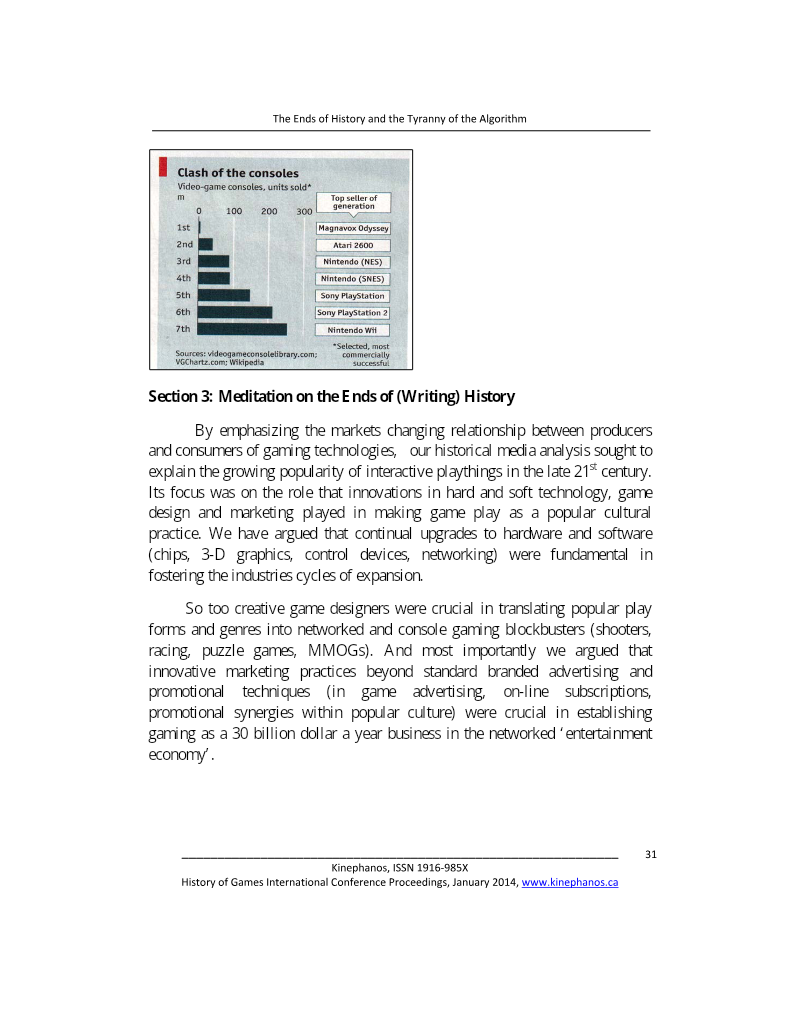
- The video game industry is transitioning from traditional console-based blockbuster models to mobile platforms that prioritize data-driven advertising and user information monetization.
- Commercial imperatives and corporate business models consistently take precedence over digital innovation, leading to a stagnation where predictable design is favored for profit.
- The industry’s current turmoil stems from a conflict between legacy hardware-centric strategies and the adoption of invasive surveillance practices common in the modern digital economy.
Video Games: Play That Can Do Serious Good
Video games, the document argues, are serious learning tools rather than mere entertainment.
- The report's central thesis is that modern video games embody established learning principles such as time on task, dopamine-linked reward schedules, calibrated difficulty curves, and varied practice that supports transfer.
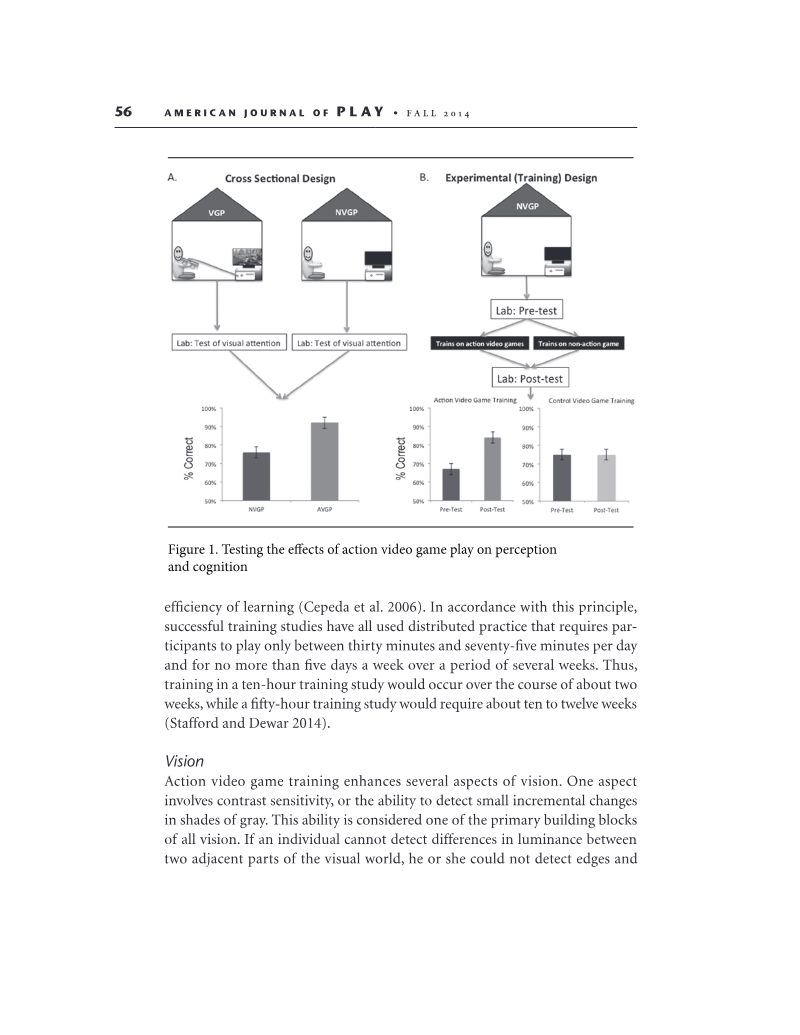
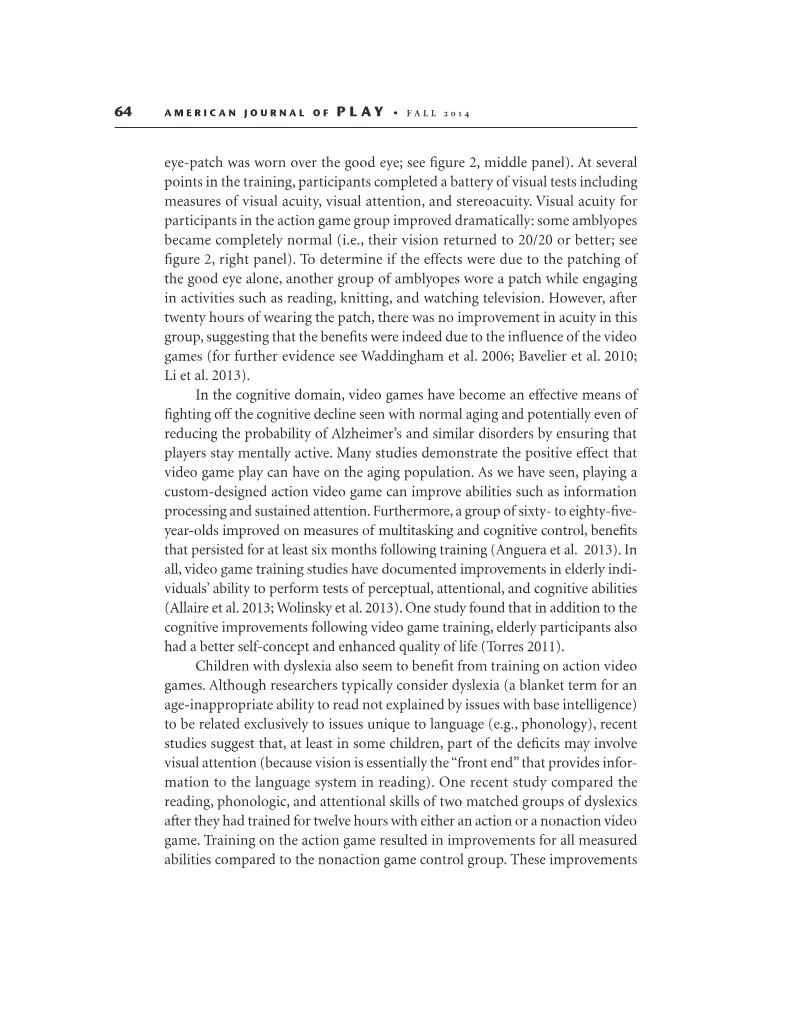
- Causal training studies cited show action video game play improves contrast sensitivity, visual attention, multiple-object tracking, sustained attention, multitasking, and task switching, typically involving roughly 15 to 50 hours of distributed practice.
- Unlike most perceptual-learning research, which finds narrow gains that fail to transfer, the report cites some studies showing broad benefits persisting for at least six months.


Learning and Enjoyment in Serious Gaming: Contradiction or Complement?
This study examines whether presenting a serious game as "serious" or "playful" shapes its enjoyment, perceived credibility, and learning outcomes.
- Playful versus serious framing alone did not significantly change perceived credibility or enjoyment in a 54-student study; instead, learners' prior attitude toward learning games was the strongest predictor of enjoyment, and framing's effect depended on that attitude.
- In a 16-employee industry study, a serious game with explicit learning cues stripped out produced significantly higher immersion than traditional instruction, with a large effect size, but lower perceived credibility.
- Learning transfer did not differ meaningfully between game-based and traditional instruction, and attraction and satisfaction differences were not significant, so the game's entertainment advantage did not translate into clearly better learning outcomes.
Analysing the History of Game Controversies
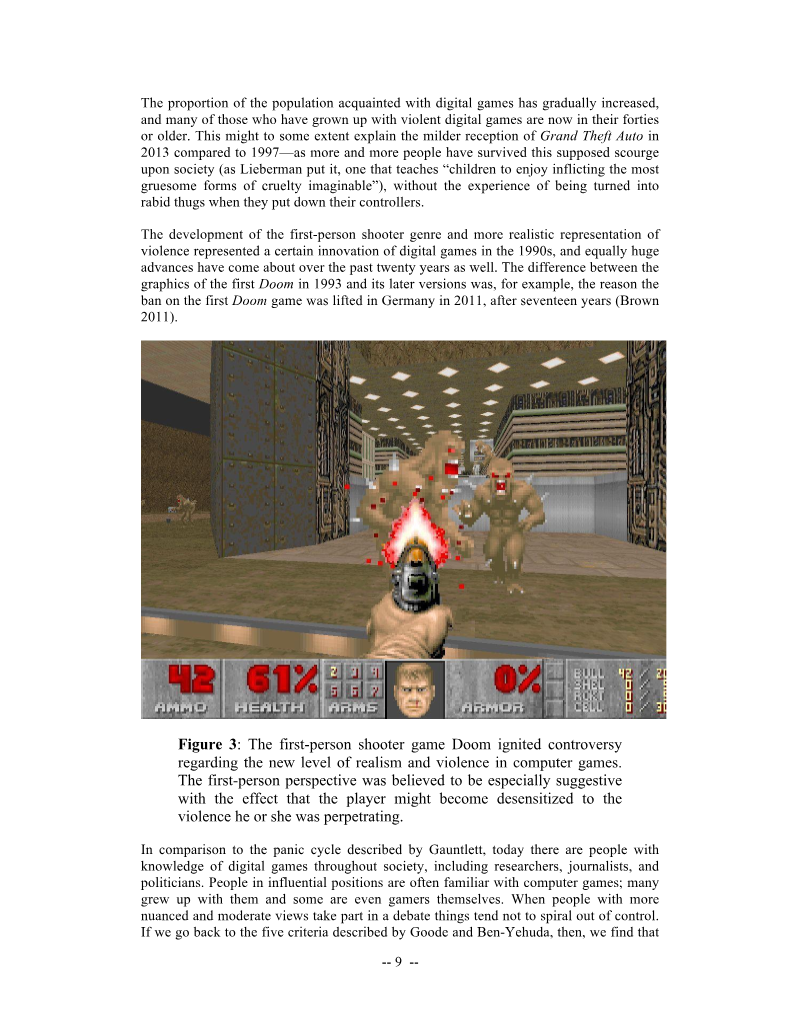
Karlsen's analysis examines the recurring cycles of public alarm over digital games, beginning with the 1976 controversy surrounding Death Race, which prompted the first worldwide debate linking games to violence.
- The report traces recurring moral panics over digital games back to Death Race in 1976, the first worldwide debate linking games to violence, and argues these reactions were often disproportionate and shaped by cultural hierarchies that rank games below books.
- Despite more than five thousand studies over fifty years, research has not established a clear causal link between media violence and real-world violence, though some psychologists still argue for a meaningful effect.
- Controversies centred on games where players actively commit socially unacceptable violence (Carmageddon, Grand Theft Auto, Mortal Kombat) drew far more criticism than militarised violence in titles such as Tank or Space Invaders.


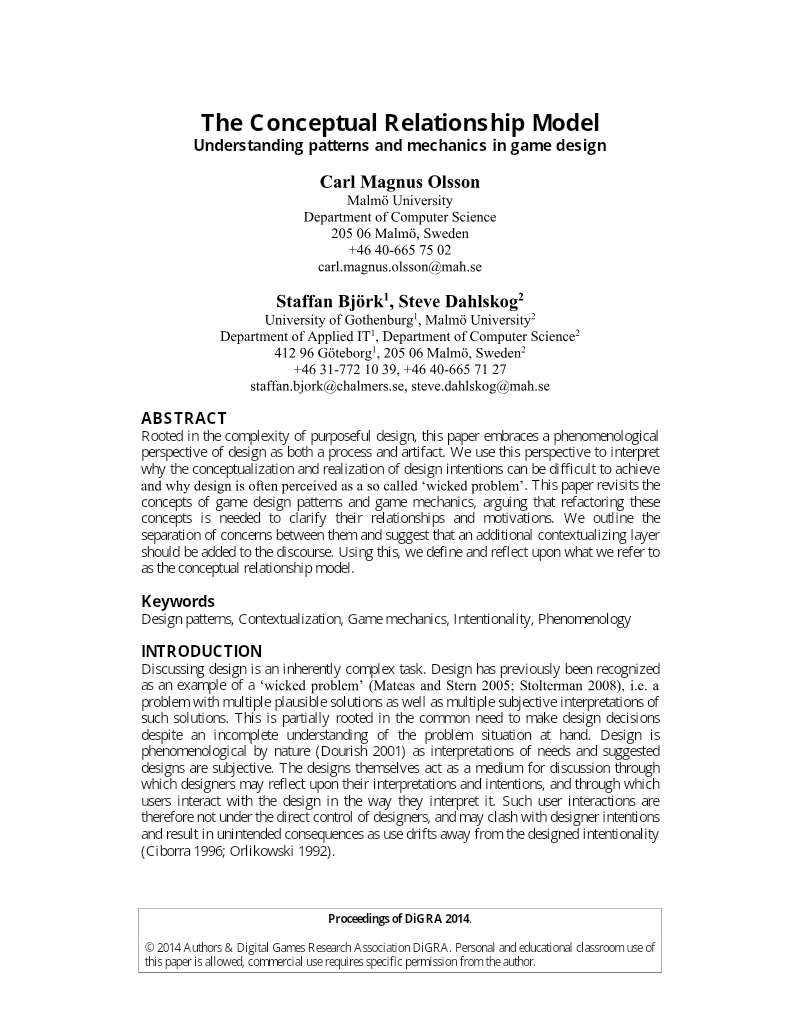
The Conceptual Relationship Model: Understanding Patterns and Mechanics in Game Design
The paper argues that game design is a "wicked problem," meaning designers' intentions are difficult to encode fully into game artifacts, and that the field therefore needs a shared design language.
- Game design is framed as a 'wicked problem': designers' intentions are hard to fully encode in game artifacts, which motivates the need for a shared design language.
- The paper's central contribution is the Conceptual Relationship Model, linking design patterns, mechanics, contextualization, and code, with a proposed contextualization layer that captures design intentionality.
- Patterns (de-contextualized, relational descriptions of recurring design elements) and mechanics (context-specific, interaction-focused rule components) overlap heavily in practice, so their distinction rests on context and relational framing rather than intent.

L'effet-clip au cinéma
The music video effect, or effet-clip, represents a significant aesthetic shift in cinema that prioritizes sensory immersion, rhythmic editing, and musical integration over traditional linear narrative structures.
- The 'effet-clip' is a cinematic technique that prioritizes rhythmic editing and sensory immersion over traditional linear narrative structures.
- Rather than being a sign of poor quality, the technique functions as a narrative parenthesis that suspends plot to explore character interiority and emotional resonance.
- The aesthetic has roots dating back to the late 1960s, predating the rise of the MTV era.