1 free read left. Create a free account for unlimited reading + AI research.
Create free accountWhitepaper Journal of Games Criticism
1 free read left. Create a free account for unlimited reading + AI research.
Create free accountWhitepaperJournal of Games Criticism
Distilling the key insights…
The tension between procedurality, which posits that meaning is embedded within a game’s formal rules, and play-centrism, which emphasizes the subjective role of the player, serves as a critical framework for understanding modern game design. Rather than viewing these concepts as contradictory, they function as a symbiotic two-step process. Procedural rules establish the necessary constraints and imperatives that define the play environment, while play-centrism allows the individual to transcend those rigid structures to create personal, emergent meaning. This dynamic interaction mirrors the broader human struggle to reconcile the demands of labor with the pursuit of selfhood.
Spiritfarer serves as a primary case study for this synthesis, as its core mechanics are built upon repetitive resource-gathering and task-oriented labor. While these procedural elements risk reducing the play experience to mere instrumentalized work, the game succeeds by providing a framework that encourages players to reframe these obligations as acts of care. By navigating the inescapable nature of the game’s systems, players transform functional imperatives into a vehicle for emotional reflection. The procedural framework acts not as a definitive source of meaning, but as a launching pad that facilitates a deeper engagement with complex, lived experiences.
Ultimately, the most effective game designs are those that provide a structured foundation while simultaneously granting the player the agency to interpret that structure through a personal lens. By balancing the rigidity of rules with the fluidity of subjective play, developers can create experiences that resonate beyond the screen. This analysis underscores that the true value of interactive media lies in the space between the designer’s intended procedural rhetoric and the player’s unique, transformative interpretation of their own agency.
Each row is a game or company this document names, each column a document, oldest first. A mark means that document names it. Select a row to see those documents.
Journal of Games Criticism · 2026
Journal of Games Criticism · 2026
Journal of Games Criticism · 2025
Journal of Games Criticism · 2025



Journal of Games Criticism · 2025



Journal of Games Criticism · 2025
Journal of Games Criticism · 2024
Journal of Games Criticism · 2024
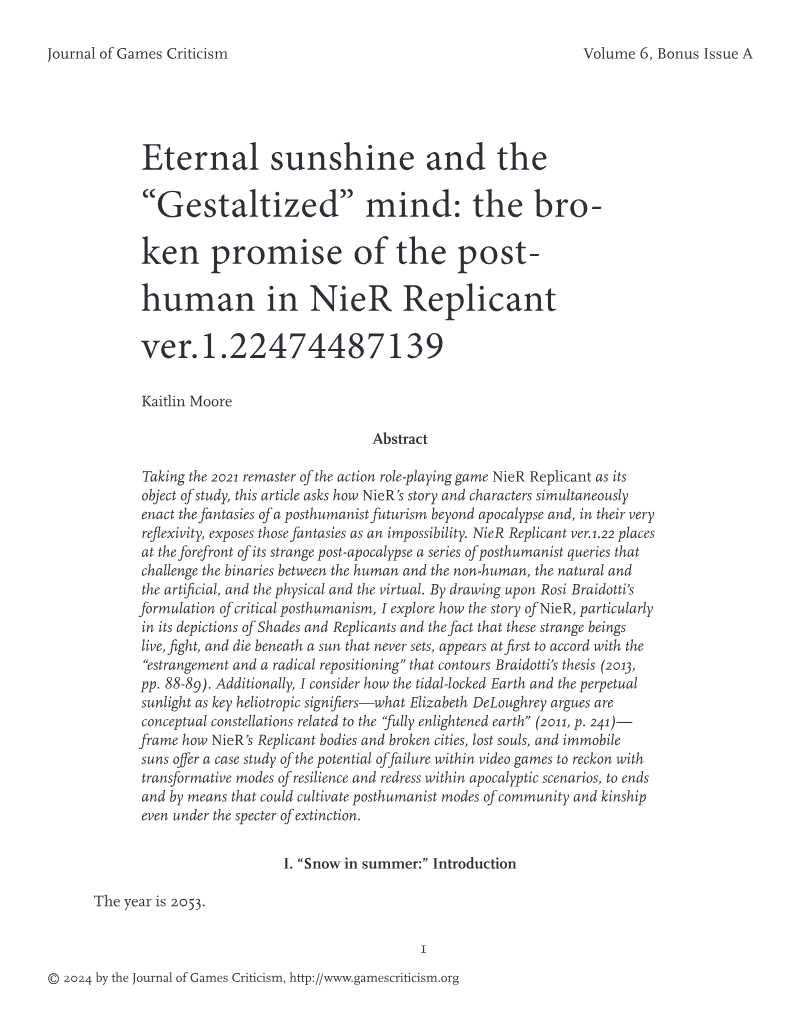
Journal of Games Criticism · 2024
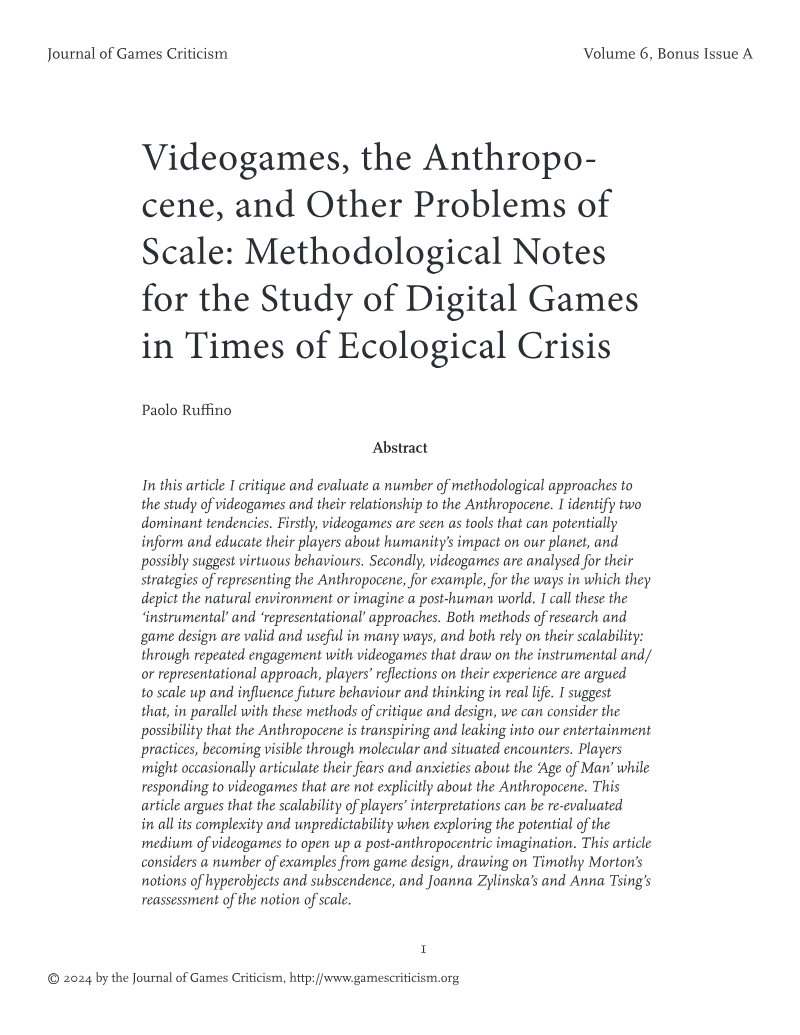
Journal of Games Criticism · 2024
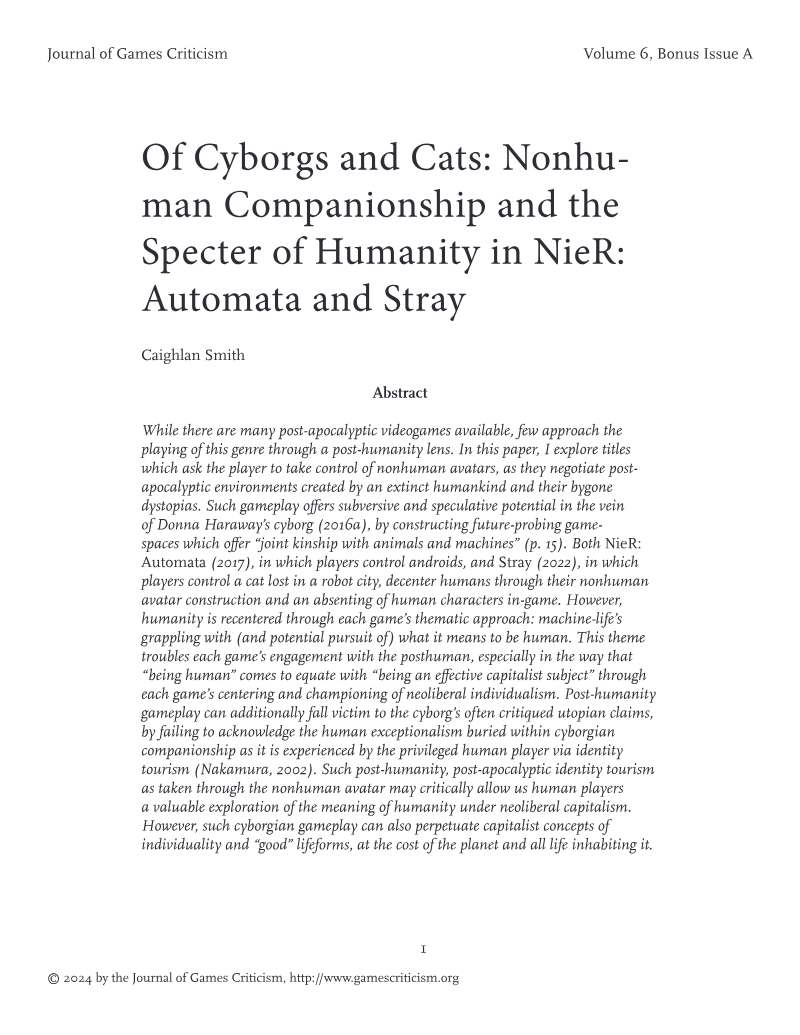
Journal of Games Criticism · 2024
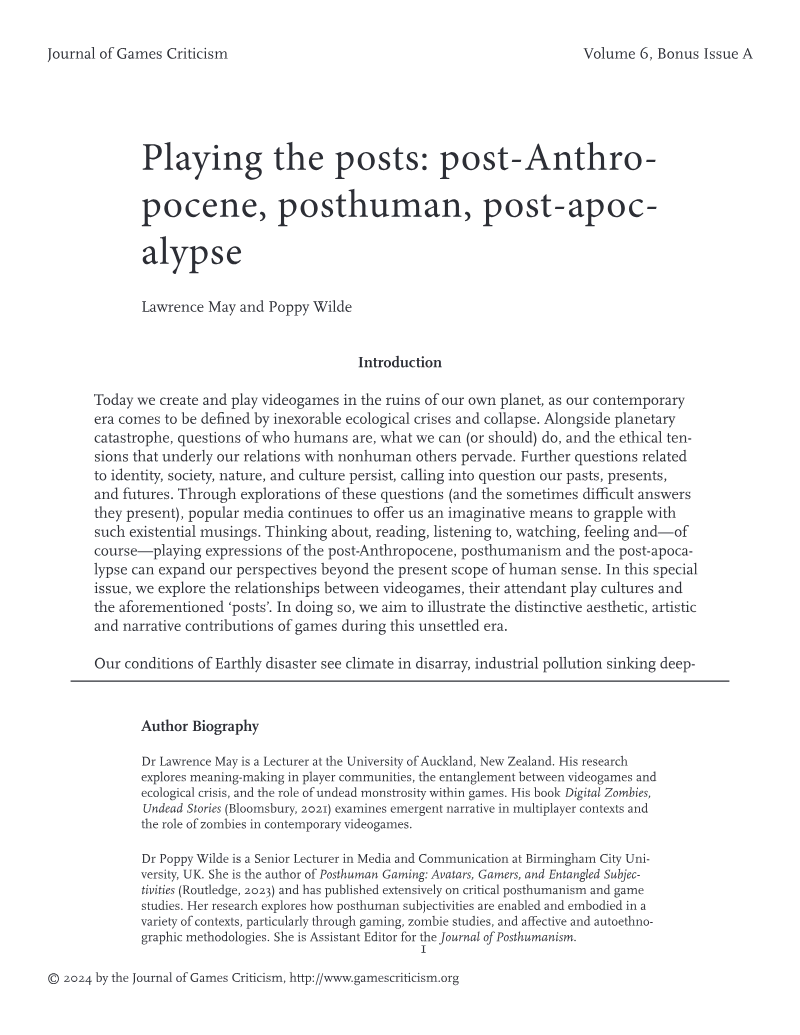
Journal of Games Criticism · 2024
DiGRA · 2026