1 free read left. Create a free account for unlimited reading + AI research.
Create free accountWhitepaper Journal of Games Criticism
1 free read left. Create a free account for unlimited reading + AI research.
Create free accountWhitepaperJournal of Games Criticism
Distilling the key insights…
The sacrificial child trope in contemporary gaming serves as a critical narrative mechanism designed to justify hypermasculine, militarized violence. By framing the death of a vulnerable child as a personal loss, these games transform the protagonist’s lethal actions into acts of righteous, protective paternalism. This narrative structure effectively resolves the tension between the player’s desire for moral agency and the game’s requirement for extreme, often indiscriminate, violence. By positioning the child as a symbol of innocence that must be avenged, the medium strips away moral ambiguity, allowing the protagonist to adopt a brutal, retaliatory persona that validates patriarchal power dynamics.
Focusing primarily on the Assassin’s Creed series, including titles such as Odyssey and Origins, this analysis reveals how developers manipulate player agency to enforce these themes. The narrative arc typically begins by fostering an emotional attachment to a child character, only to abruptly strip that agency away through a scripted death. This loss induces a sense of guilt and frustration in the player, which the game then redirects into a sanctioned, adrenaline-fueled bloodbath. Consequently, the player’s frustration with the loss of control is channeled into a hyper-aggressive playstyle, effectively aligning the player’s goals with the protagonist’s vengeful trajectory.
Ultimately, this trope functions as a modern evolution of the woman-in-the-refrigerator motif, reinforcing gendered hierarchies where maturity is equated with agency and childhood with feminine vulnerability. Female characters within these narratives are frequently relegated to roles as villains or foils, further cementing the hero’s dominance. By cauterizing the protagonist’s vulnerability through the sacrifice of a child, these games perpetuate a cycle of violence that equates heroic status with the capacity for lethal retribution, thereby reinforcing traditional models of masculinity within the interactive medium.
Each row is a game or company this document names, each column a document, oldest first. A mark means that document names it. Select a row to see those documents.
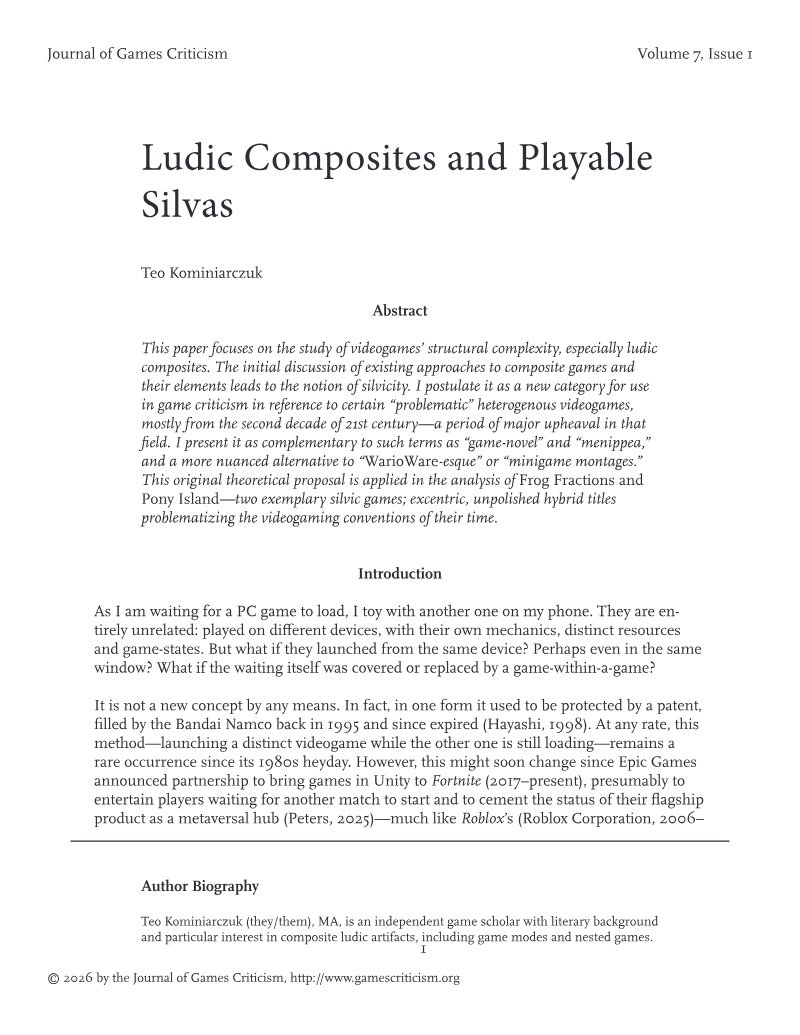
Journal of Games Criticism · 2026
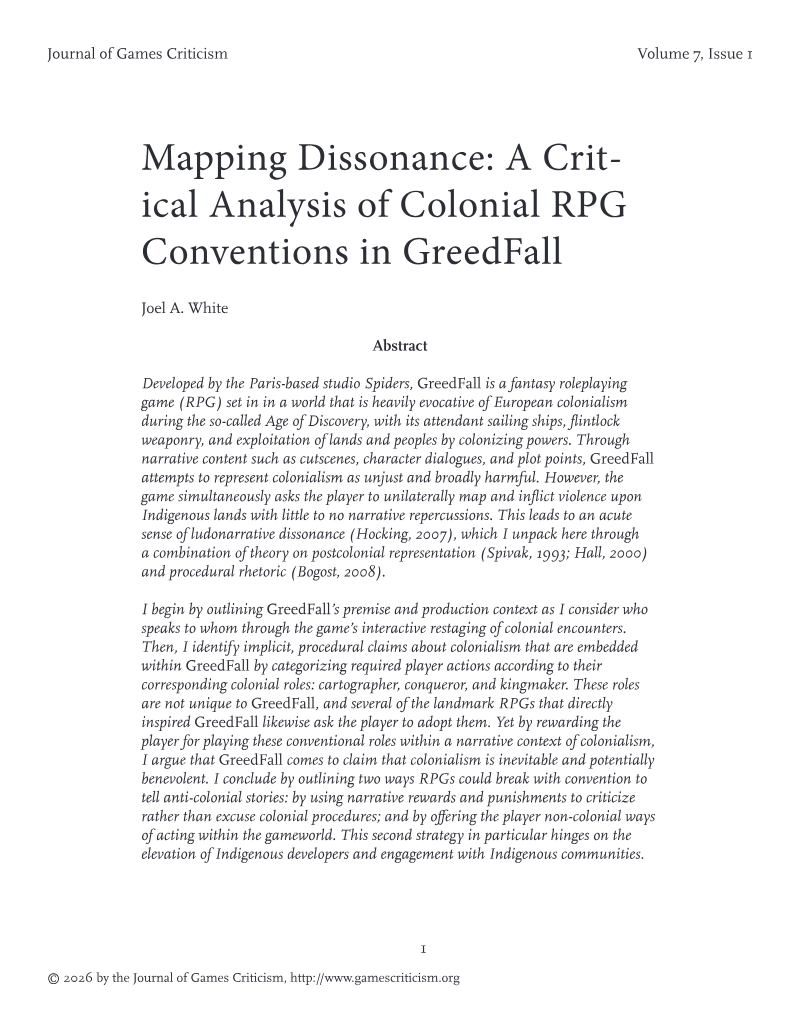
Journal of Games Criticism · 2026
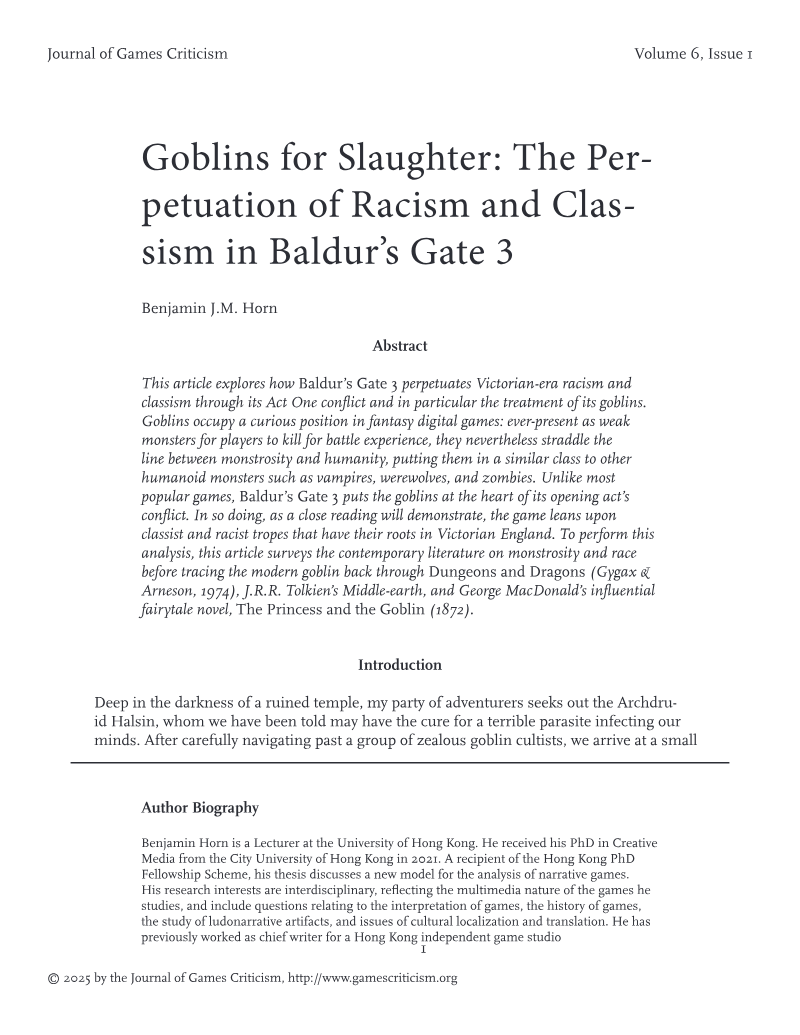
Journal of Games Criticism · 2025
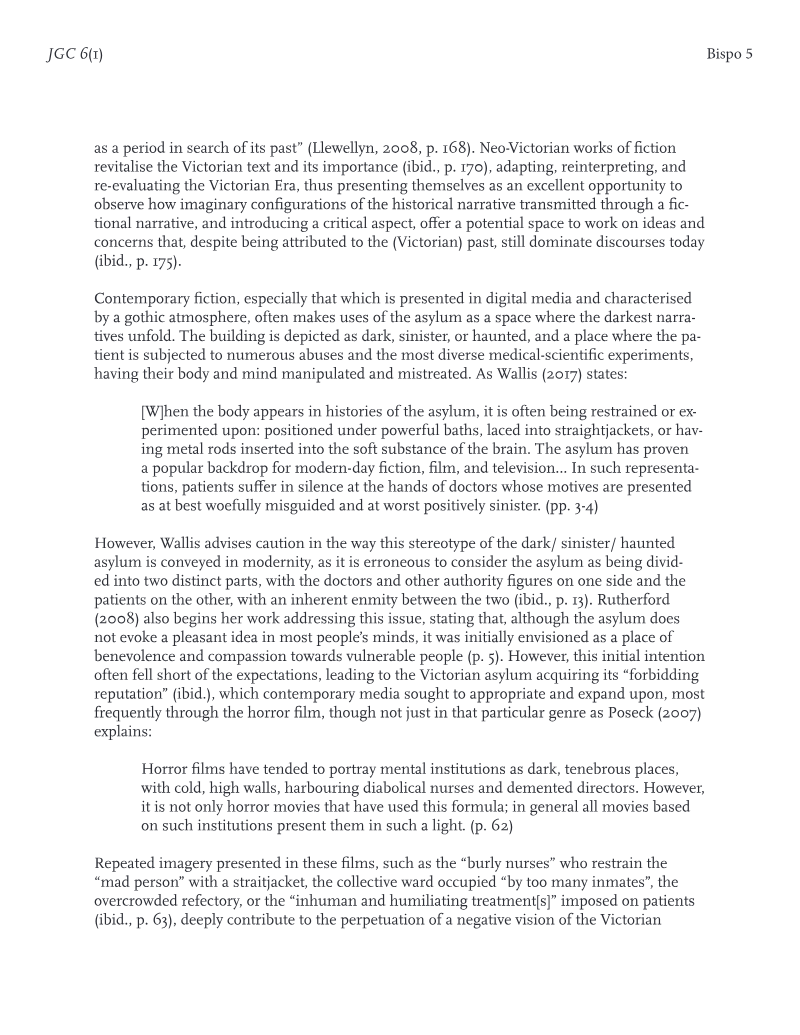
Journal of Games Criticism · 2025
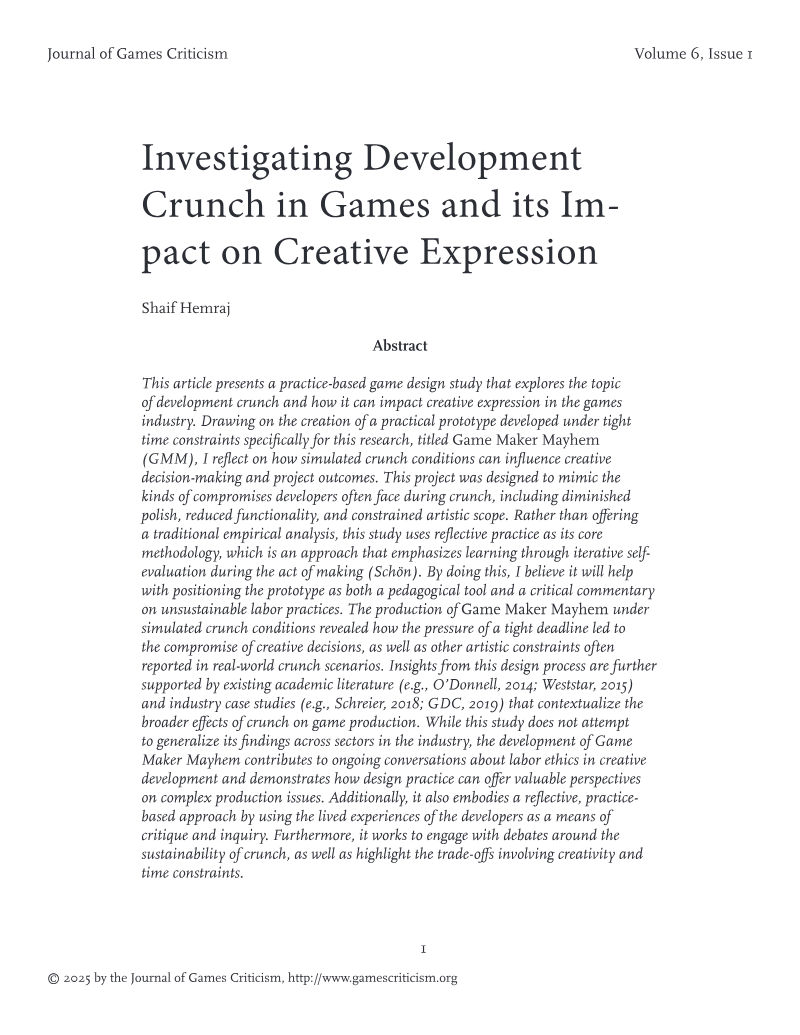
Journal of Games Criticism · 2025
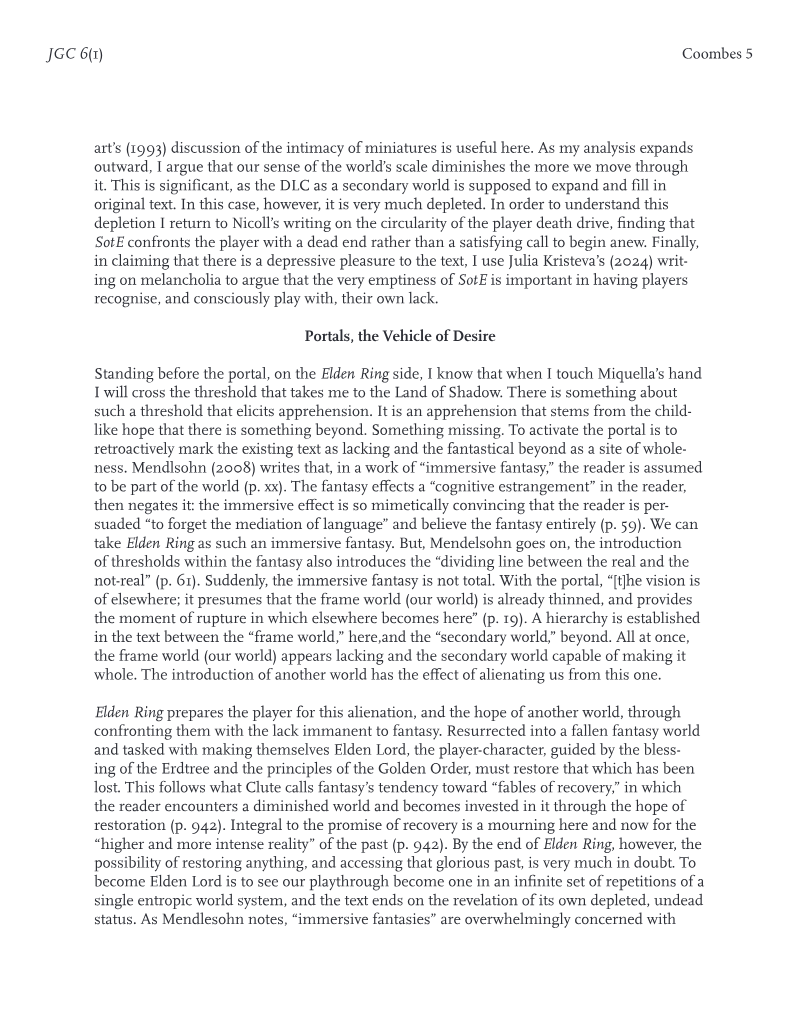
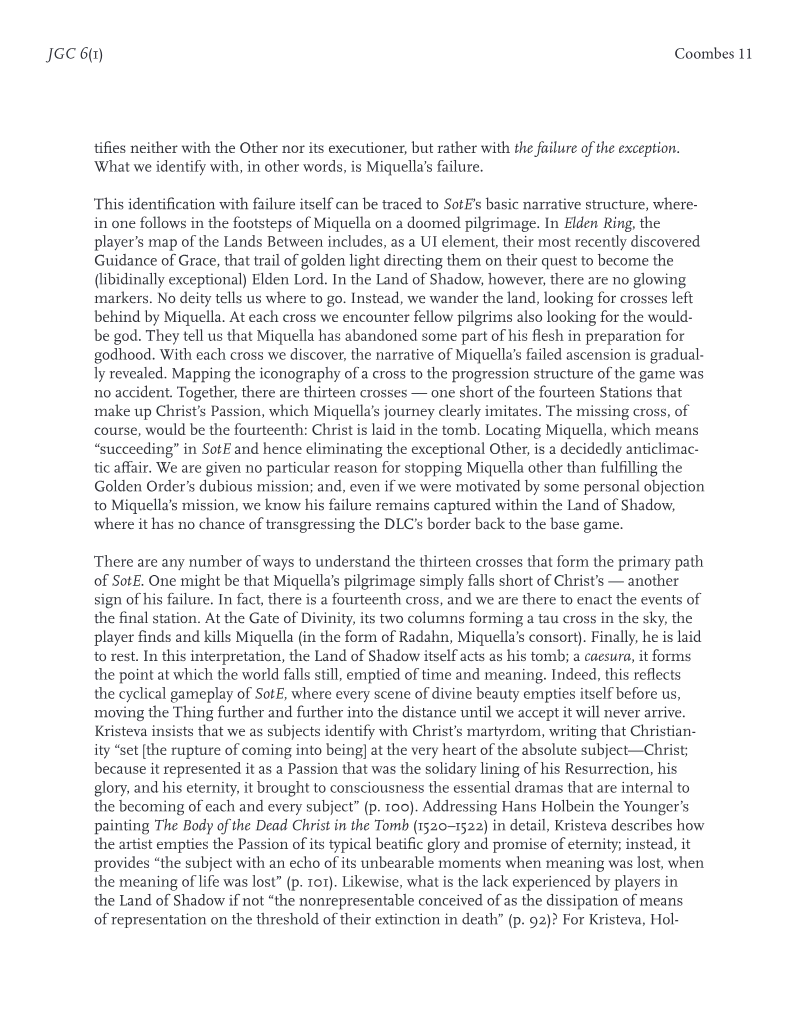
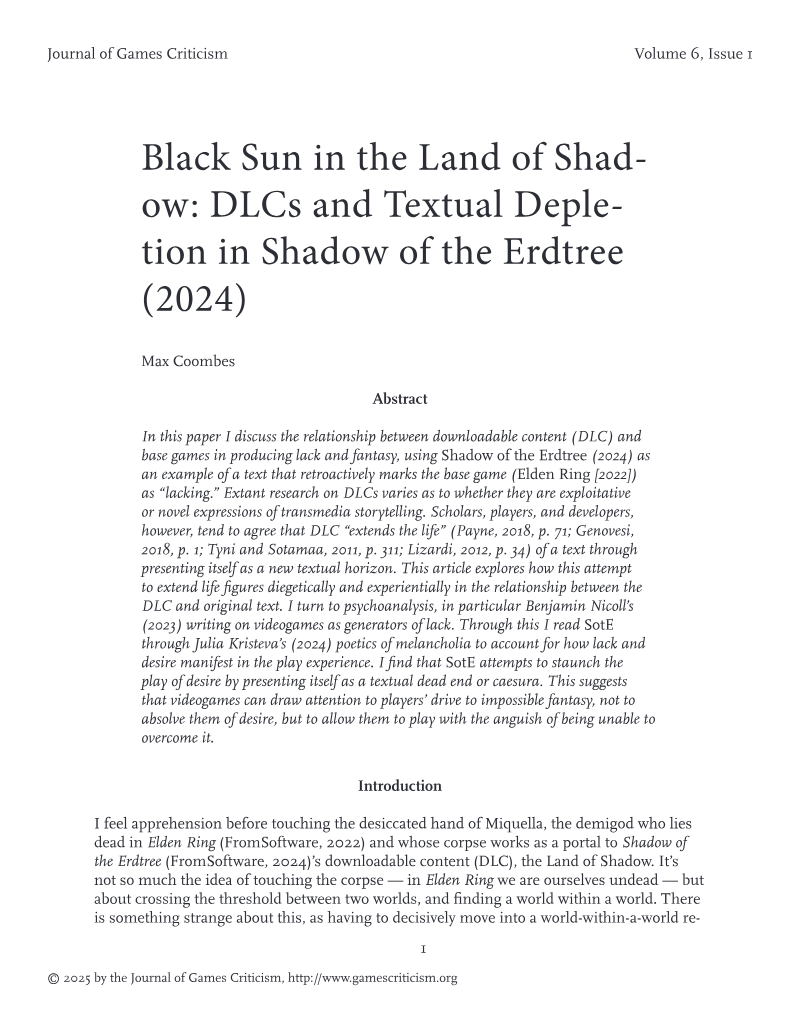
Journal of Games Criticism · 2025
Journal of Games Criticism · 2024
Journal of Games Criticism · 2024
Journal of Games Criticism · 2024
Journal of Games Criticism · 2024
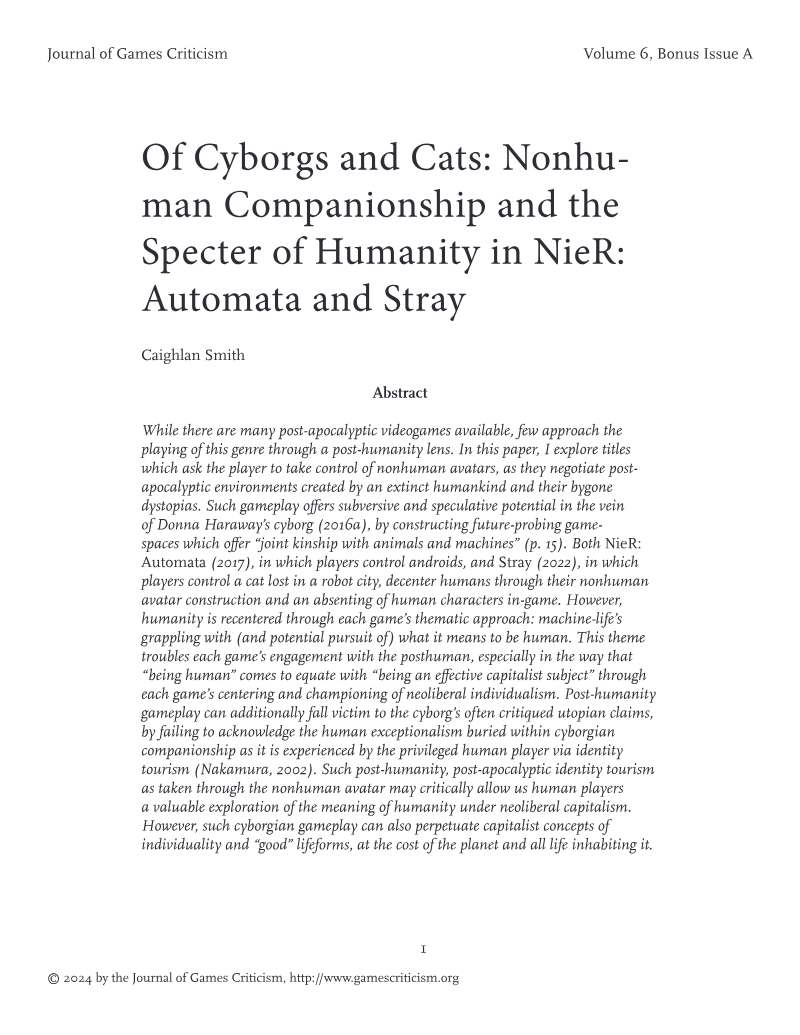
Journal of Games Criticism · 2024
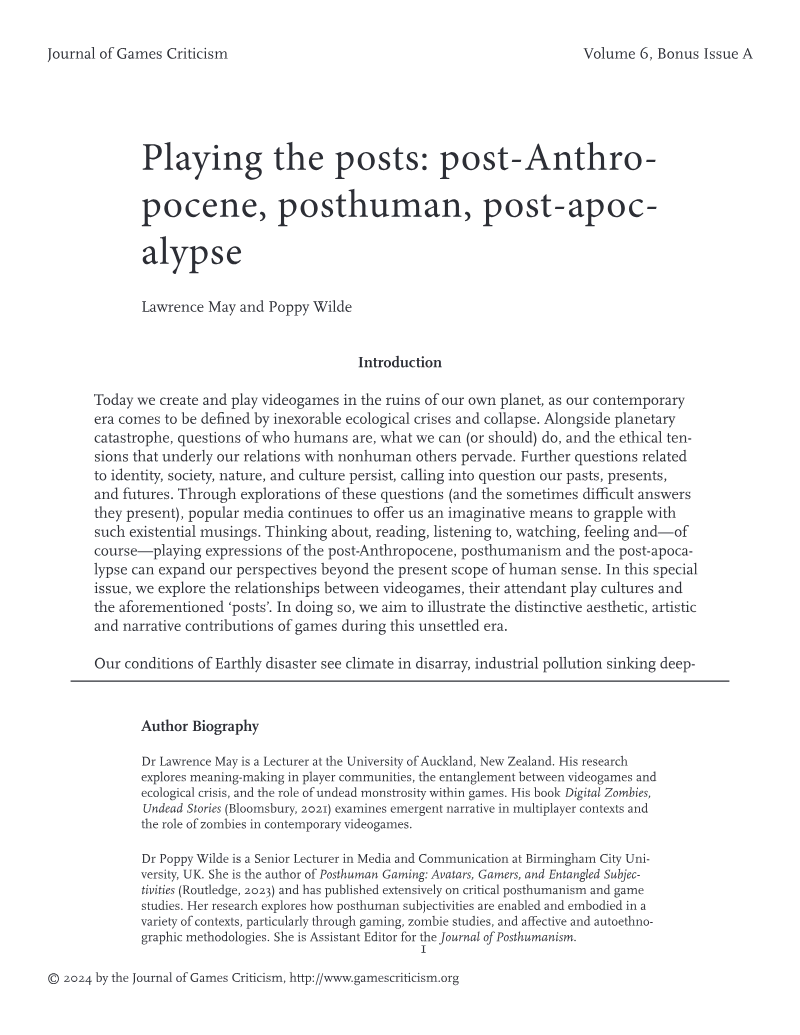
Journal of Games Criticism · 2024
DiGRA · 2025