1 free read left. Create a free account for unlimited reading + AI research.
Create free accountWhitepaperKinephanos
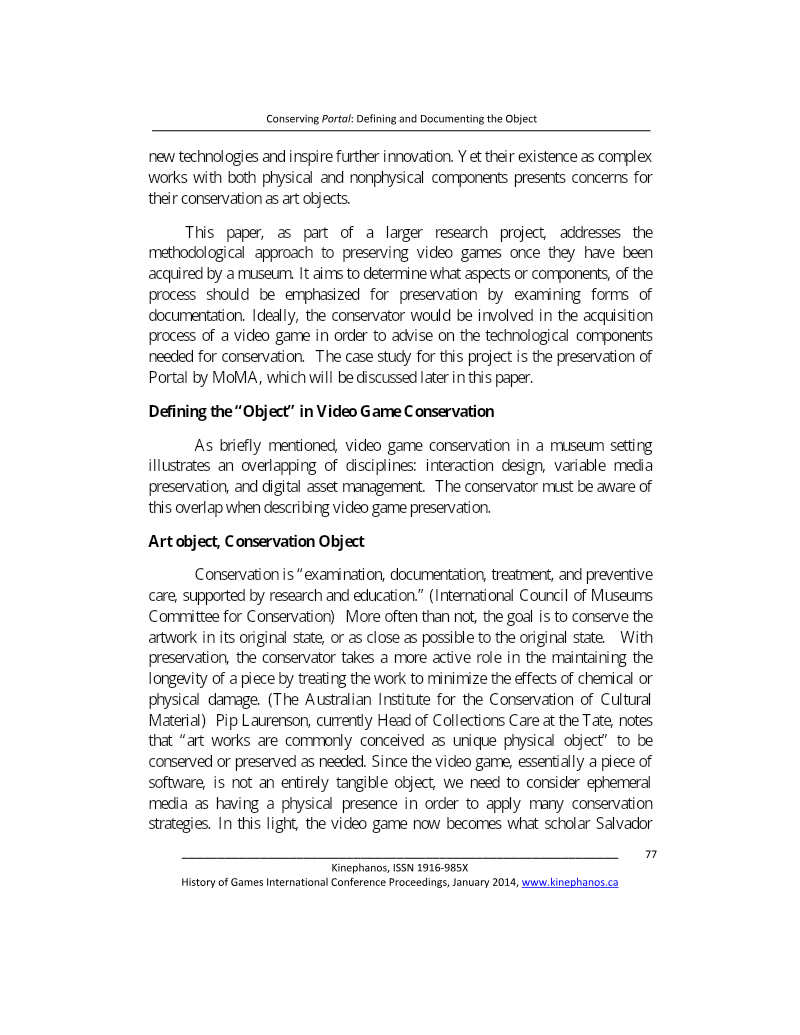
Traditional museum conservation practices are challenged by video games' ephemeral and interactive nature. Games rely on evolving hardware and software, so they cannot be treated as static objects.
Preservation shift. Video game preservation requires a shift from treating games as static objects to managing their technical, aesthetic, and interactive components.
Video games represent complex cultural artifacts that challenge traditional museum conservation practices due to their ephemeral and interactive nature. Because these works rely on evolving hardware and software environments, they cannot be treated as static objects. Instead, preservation efforts must shift toward managing the technical, aesthetic, and interactive components that define a game’s identity. By adopting a holistic framework, institutions can ensure that the core experience of a title remains accessible to future generations, moving beyond simple physical or digital storage to capture the essence of player interaction.
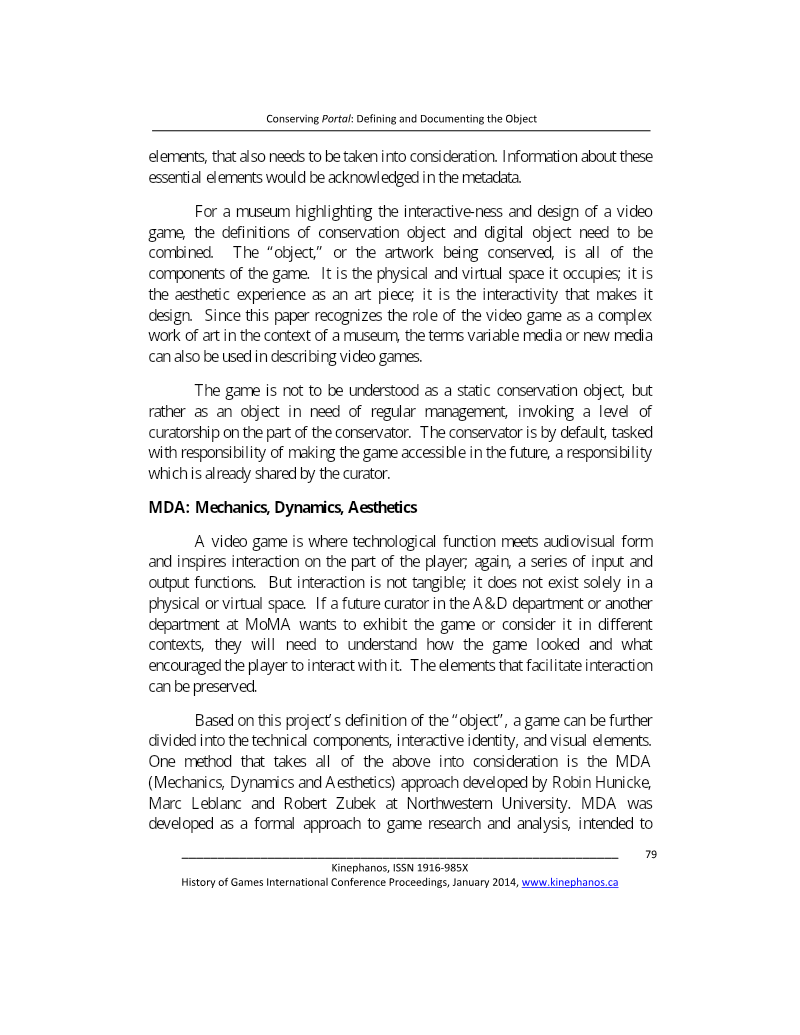
The Mechanics, Dynamics, and Aesthetics (MDA) model serves as a vital methodology for this process, providing a structured approach to documenting the multifaceted nature of games like Portal. This framework allows curators to systematically record the technical mechanics and aesthetic elements that constitute the player experience. Effective preservation strategies integrate diverse documentation methods, including high-fidelity screen-capture video, comprehensive audio recording, and the preservation of annotated source code. These records act as a critical foundation for future interpretation, ensuring that even as underlying technologies become obsolete, the functional and artistic intent of the work remains intact.
While technical solutions such as migration and emulation continue to evolve, they are insufficient without robust documentation. The long-term viability of digital heritage depends on a dual commitment to maintaining functional software environments and creating detailed records that explain how a game operates. By prioritizing the documentation of interactivity alongside technical preservation, museums can successfully bridge the gap between historical software and contemporary exhibition, securing the place of video games within the broader canon of cultural history.



Kinephanos · 2026
Kinephanos · 2026
Kinephanos · 2026
Kinephanos · 2025
Kinephanos · 2025
Kinephanos · 2025
Kinephanos · 2025
Kinephanos · 2025
Kinephanos · 2025
Kinephanos · 2025
Kinephanos · 2025
Kinephanos · 2025
International Journal of Role-Playing · 2026






























Comments