1 free read left. Create a free account for unlimited reading + AI research.
Create free accountWhitepaper DiGRA
1 free read left. Create a free account for unlimited reading + AI research.
Create free accountWhitepaperDiGRA
Designers' intentions are hard to fully encode in game artifacts. This difficulty motivates the need for a shared design language.
The paper argues that game design is a "wicked problem," meaning designers' intentions are difficult to encode fully into game artifacts, and that the field therefore needs a shared design language. Its central contribution is the Conceptual Relationship Model, which links game design patterns, mechanics, contextualization, and code. The authors observe that patterns (de-contextualized, relational descriptions of recurring design elements) and mechanics (context-specific, interaction-focused rule components) overlap considerably in practice and are used for both design and analysis, so their distinction lies in context and relational framing rather than in intent. To address this gap, the authors propose a contextualization layer that captures design intentionality, drawing on phenomenological and spatial theories of context.
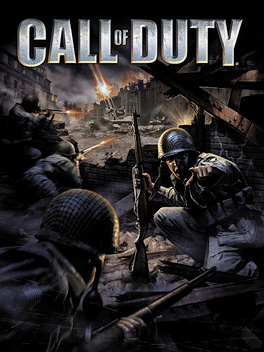
The model is presented as a conceptual framework for designing and analyzing games rather than as an empirically validated one. A qualitative mapping of four actors (players, designers, developers, and researchers) to their primary concerns and typical points of engagement indicates that players tend to focus on mechanics while designers focus more on contextualization. The authors support their argument with illustrative examples, most notably the "quickscoping" practice in Call of Duty, where the perceived value of a single mechanic shifts depending on the surrounding context, and they contend that shared understanding depends on ongoing communication rather than vocabulary alone.
Among the paper's practical recommendations are that contextualization be treated as an continuing communicative process and that developers play their own games to understand how code shapes gameplay. The authors also caution that researchers risk drifting from the concerns of players and developers. The concluding section sets out four research directions and draws on a bibliography of roughly eighty references spanning game studies, human-computer interaction, phenomenology, and organizational studies. The paper reports no original empirical data, so its conclusions remain largely theoretical and forward-looking.
Each row is a game or company this document names, each column a document, oldest first. A mark means that document names it. Select a row to see those documents.

DiGRA · 2026

DiGRA · 2026



DiGRA · 2026



DiGRA · 2026



DiGRA · 2026



DiGRA · 2026



DiGRA · 2026



DiGRA · 2026



DiGRA · 2026

DiGRA · 2026



DiGRA · 2026



DiGRA · 2026
European Conference on Games Based Learning (ECGBL) · 2023