Key insights
4 slides
Core shift
Real-time strategy gameplay evolved from decryption to prediction.
Early games focused on mastering fixed systems and AI patterns. Modern play requires anticipating human opponents' strategic maneuvers.
Key change. The genre's evolution is defined by a fundamental shift from 'decryption' to 'prediction'.
1 / 4
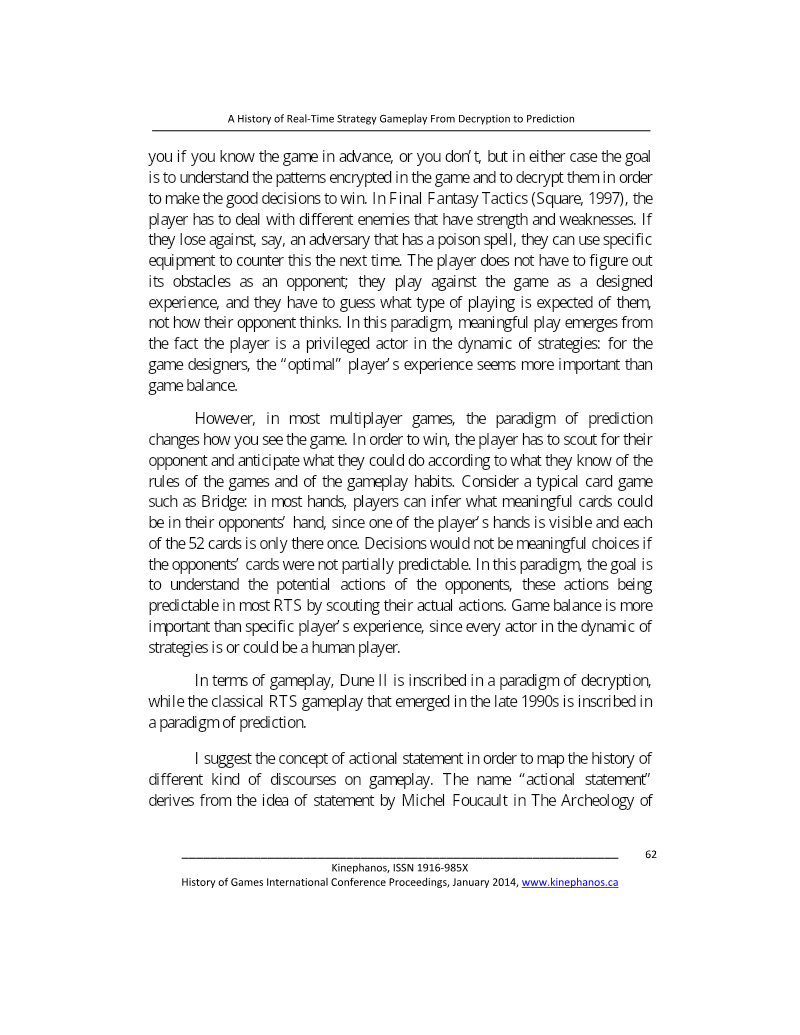
- 01The evolution of the real-time strategy genre is defined by a fundamental shift from 'decryption'—mastering fixed systems and AI patterns—to 'prediction,' which requires anticipating the maneuvers of human opponents.See it on page 10
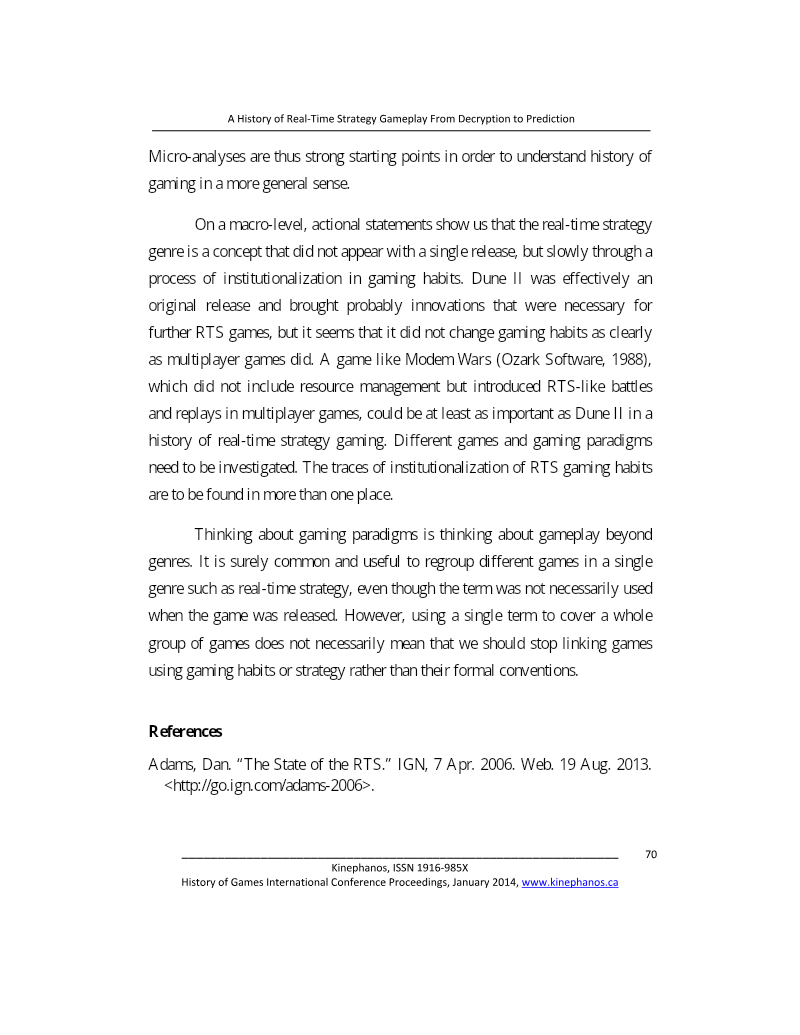
- 02Genre development is driven by the institutionalization of player habits and the iterative accumulation of shared tactical knowledge rather than the impact of singular foundational titles like 1992’s Dune II.See it on page 13
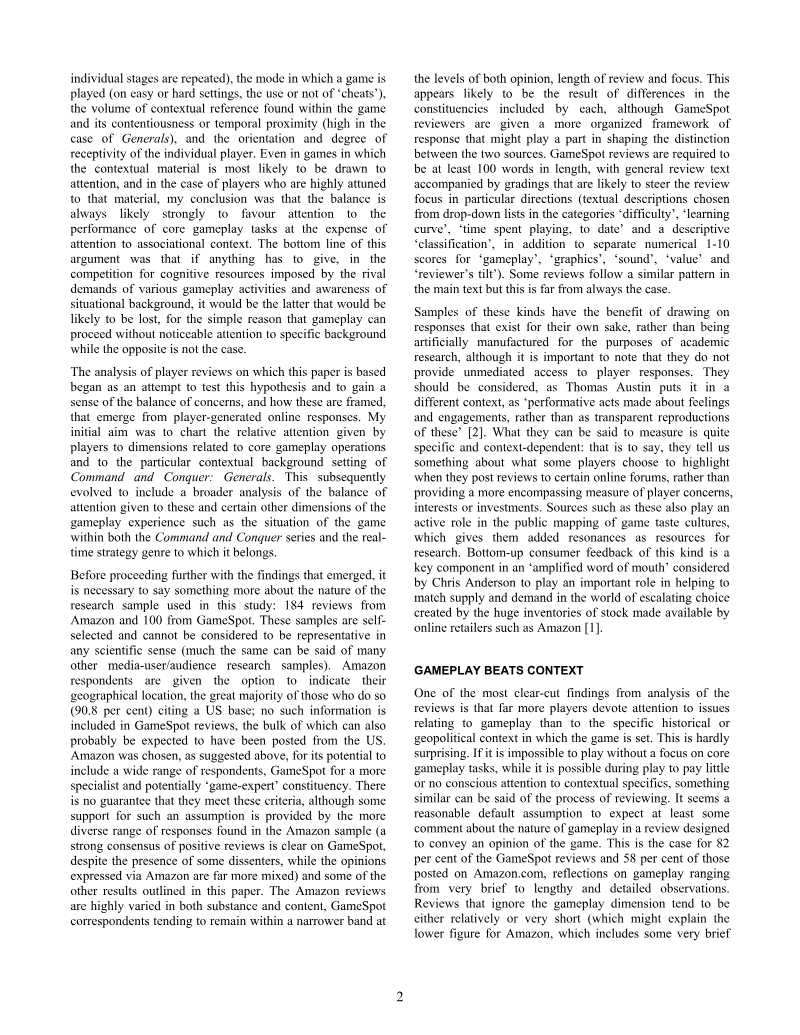
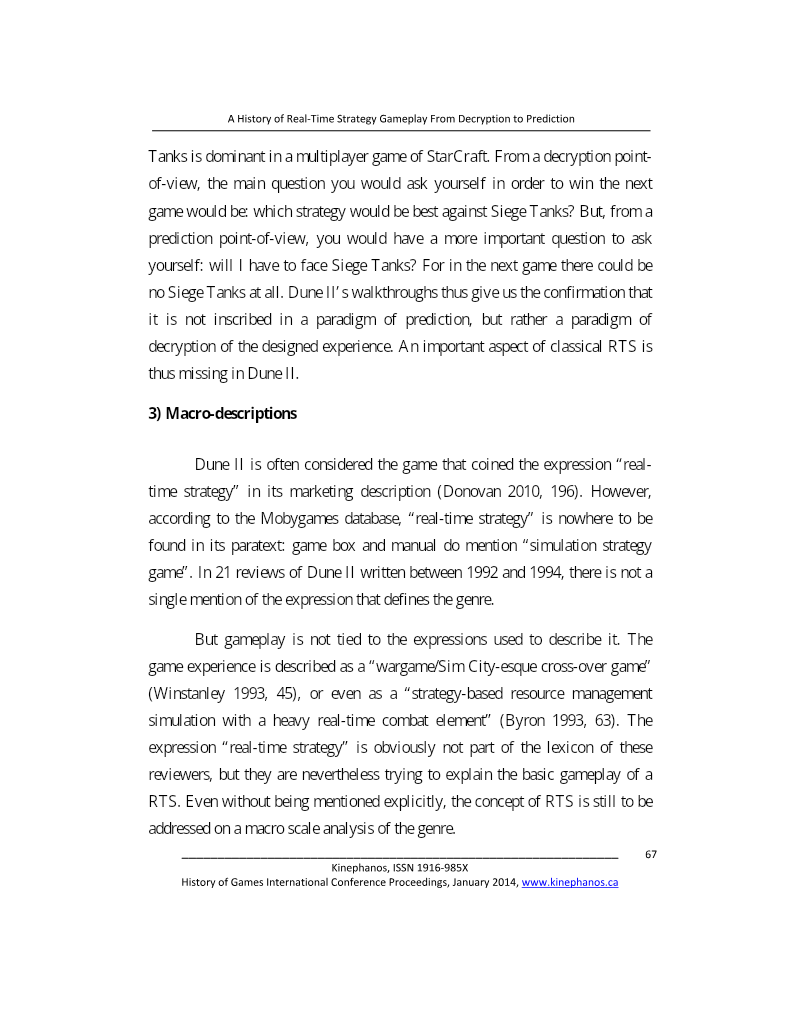
- 03The transition to a prediction-based paradigm was necessitated by the rise of competitive multiplayer environments, which demand active scouting and real-time strategic adaptation.See it on page 5
- 04Genre identity is fluid and contingent, shaped by the ongoing interaction between core game design and the evolving practices of the player community.See it on page 13
- 05Strategic codification within the genre is best analyzed through 'actional statements' found in diverse media, including strategy guides, professional reviews, and recorded match replays.See it on page 6
- 06Success in modern real-time strategy is defined by a player's ability to interpret, counter, and predict adversary actions within high-speed, information-dense environments.See it on page 5
Ask AI about this report
Summary
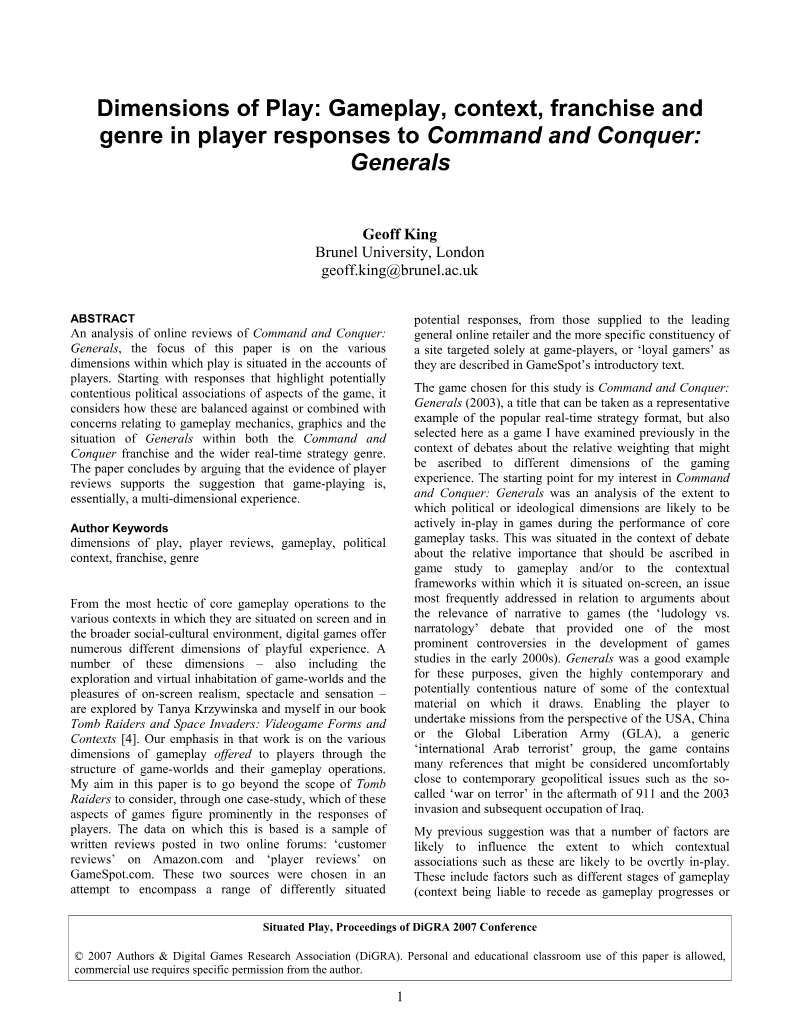
The evolution of the real-time strategy genre is defined by a fundamental transition from a paradigm of decryption to one of prediction. Rather than viewing the genre through the lens of static software releases or marketing milestones, the history of real-time strategy is best understood as a process of institutionalization driven by shifting player habits. Early titles prioritized decryption, where the primary challenge involved mastering fixed, pre-designed game systems and exploiting predictable artificial intelligence patterns. Over time, the rise of competitive multiplayer environments necessitated a shift toward prediction, where success relies on active scouting and the anticipation of human opponents' strategic maneuvers.
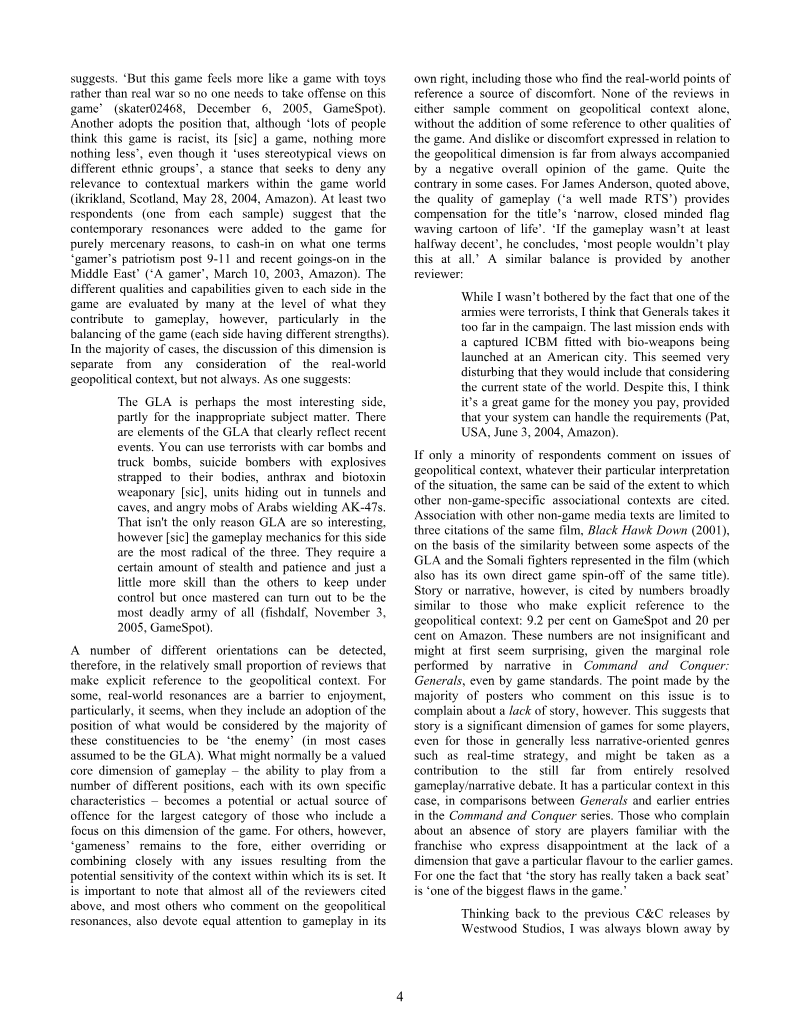
This analytical framework utilizes the concept of actional statements to map how gameplay strategies are codified across diverse media, including strategy guides, professional reviews, and recorded match replays. By examining these artifacts, it becomes clear that the genre’s development was not anchored by a single foundational title, but rather by the gradual accumulation of shared knowledge and tactical conventions. This approach moves beyond traditional historiography, which often overemphasizes singular releases like the 1992 title Dune II, to instead focus on the iterative development of player expertise.
The scope of this analysis encompasses the critical reception and tactical evolution of the genre throughout the 1990s and beyond. By synthesizing primary source material from contemporary gaming publications with an examination of evolving competitive behaviors, the study establishes that genre identity is fluid and contingent upon the interaction between game design and player community practices. Ultimately, real-time strategy history is defined by the ongoing refinement of how players interpret, counter, and predict the actions of their adversaries within a high-speed, information-dense environment.