Game Studies reports and market data
Documents
A New Chess Variant for Gaming AI
Switch-Side Chain-Chess (SSCC) is a newly proposed chess variant designed to challenge artificial intelligence by increasing human-perceived complexity without expanding the game’s underlying search space.
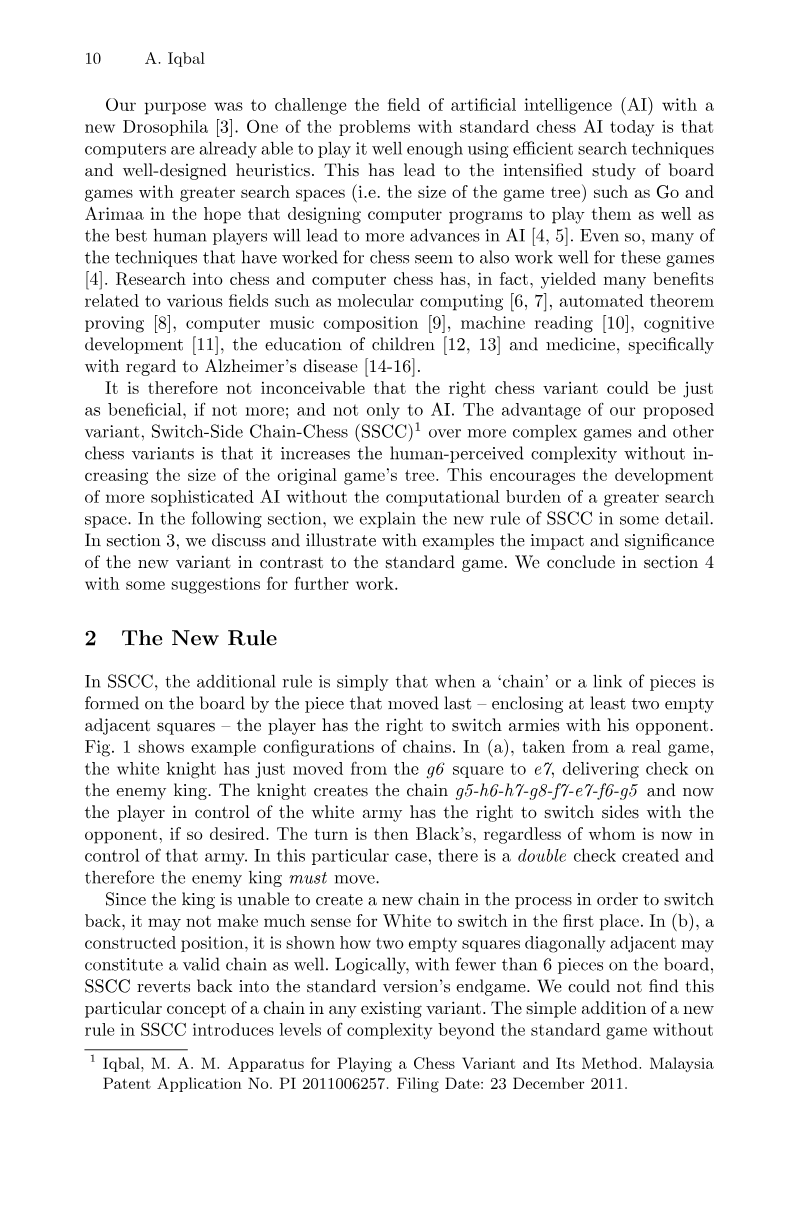
- Switch-Side Chain-Chess (SSCC) introduces a mechanic allowing players to trade armies when a continuous chain of pieces is formed, increasing strategic complexity without expanding the standard chess game tree.
- The variant serves as a specialized AI testbed that forces engines to develop new heuristics for pattern recognition and tactical decision-making rather than relying on raw computational power.
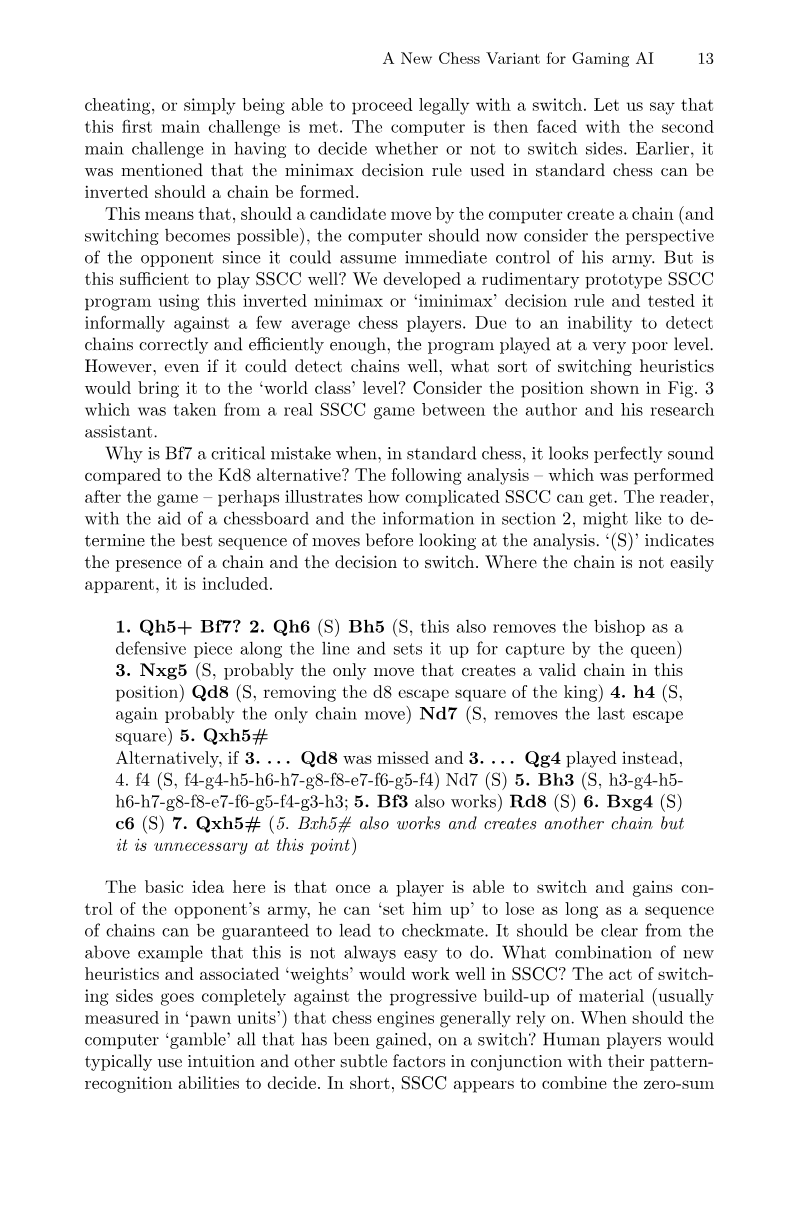
- Standard minimax algorithms perform poorly in SSCC because they struggle to evaluate the strategic implications of handing control of a specific board configuration to an opponent.


The Art of Tug of War: Investigating the Influence of Remote Touch on Social Presence in a Distributed Rope Pulling Game
Remote touch technology, which provides force feedback reflecting a partner’s physical actions, serves as a critical mechanism for enhancing social presence in distributed, collaborative gaming environments.
- Remote touch technology significantly strengthens the psychological sense of connection and social presence between players in distributed, collaborative gaming environments.
- Direct force feedback effectively mitigates the isolation inherent in networked play by fostering a stronger sense of shared agency and physical proximity.
- Haptic feedback functions as a supplementary layer that enriches the quality of social interaction rather than serving as a primary driver of overall entertainment value.
The Indie Academy: Promoting Gaming Communities through University Collaboration
Universities often struggle to align their intellectual property (IP) strategies with the realities of the gaming industry, frequently overestimating the commercial potential of academic research.
- Universities should shift their focus from short-term commercialization of intellectual property to prioritizing student talent development and community engagement.
- Rigid legal requirements and bureaucratic delays make traditional university-industry partnerships ineffective for the fast-paced gaming sector.
- Independent developers are more effective partners than large corporations because they are agile enough to experiment with niche IP that larger studios typically ignore.
The Toronto Indies: Some Assemblage Required
Independent game production in Toronto functions as a complex, contingent network rather than a byproduct of monolithic global capital.
- Toronto's independent game industry operates as a decentralized, multi-scalar network of interdependent studios rather than a top-down corporate structure.
- The Ontario Media Development Corporation acts as a critical anchor for the sector by providing financial stability through the Interactive Digital Media Fund.
- State-sponsored initiatives mitigate the high risks of game development by fostering a creative cluster that leverages local talent and shared resources.
Indie Sports Games: Performance and Performativity
Competitive, sports-themed indie games are fostering distinct cultures of performance, spectatorship, and group identity that challenge traditional definitions of both sport and gaming.
- Indie sports games like Hokra, Nidhogg, and BaraBariBall are successfully merging sports fandom with gaming by prioritizing performative social experiences over traditional mechanics.
- The genre's growth is driven by accessible, easy-to-read mechanics that lower the barrier to entry for non-traditional gamers.
- Developers are facing a strategic tension between maintaining the niche, event-based exclusivity of urban exhibition play and the commercial necessity of reaching mainstream audiences.
An Embodied Cognition Approach for Understanding Role-playing
This paper proposes an embodied and grounded cognition framework as a unifying theory for understanding role-playing, arguing that character immersion and "bleed" (the spillover of a character's emotions into the player) emerge naturally from how cognition operates rather than from special game-specific mechanisms.
- The paper proposes embodied and grounded cognition as a unifying theory for role-playing, arguing that immersion and bleed (a character's emotions spilling into the player) arise from ordinary cognitive processes rather than game-specific mechanisms.
- Its central premise is that action, perception, and thought draw on overlapping motor and sensory systems, supported by tool-recognition neuroimaging, mirror-neuron research, and studies of facial-expression mimicry.
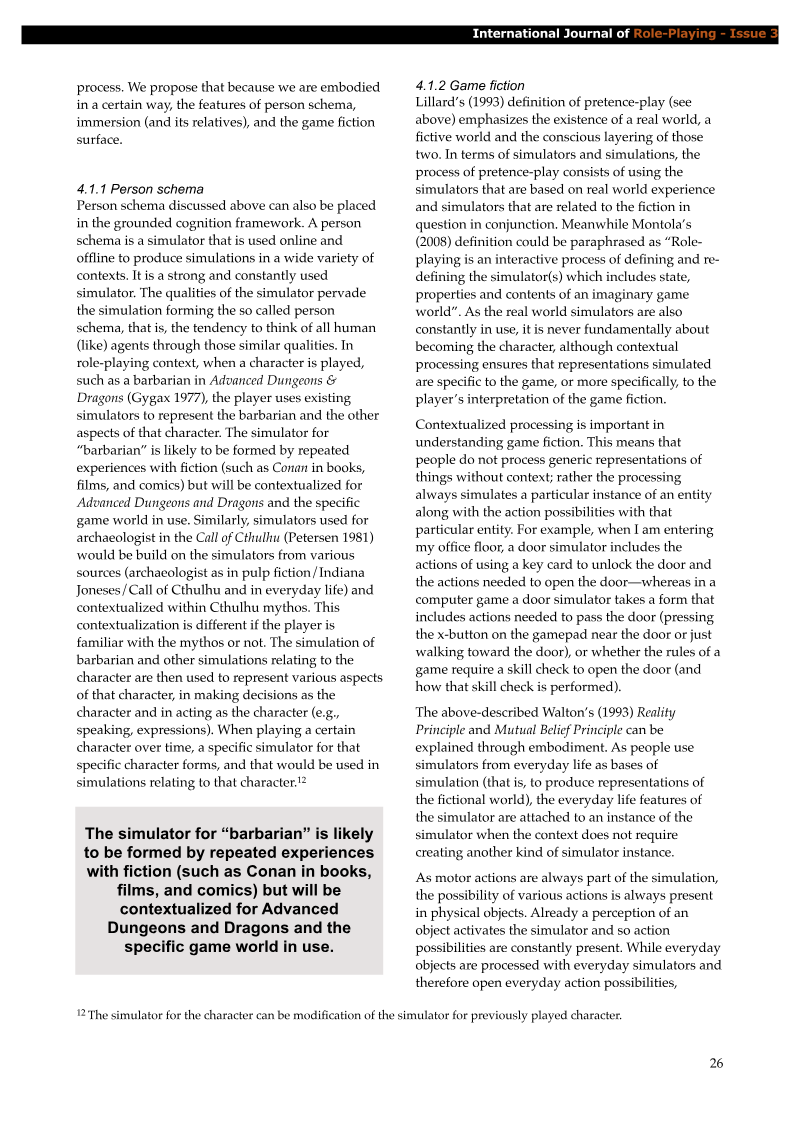
- Building on Barsalou's Perceptual Symbol System, the authors treat 'simulators' as multimodal knowledge structures, and argue that role-playing shares core features with pretence play, including a fictive world layered over reality and a character built on Smith's person schema.

Remember the Good Old Days?: Nostalgia, Retroscapes, and the Dungeon Crawl Classics
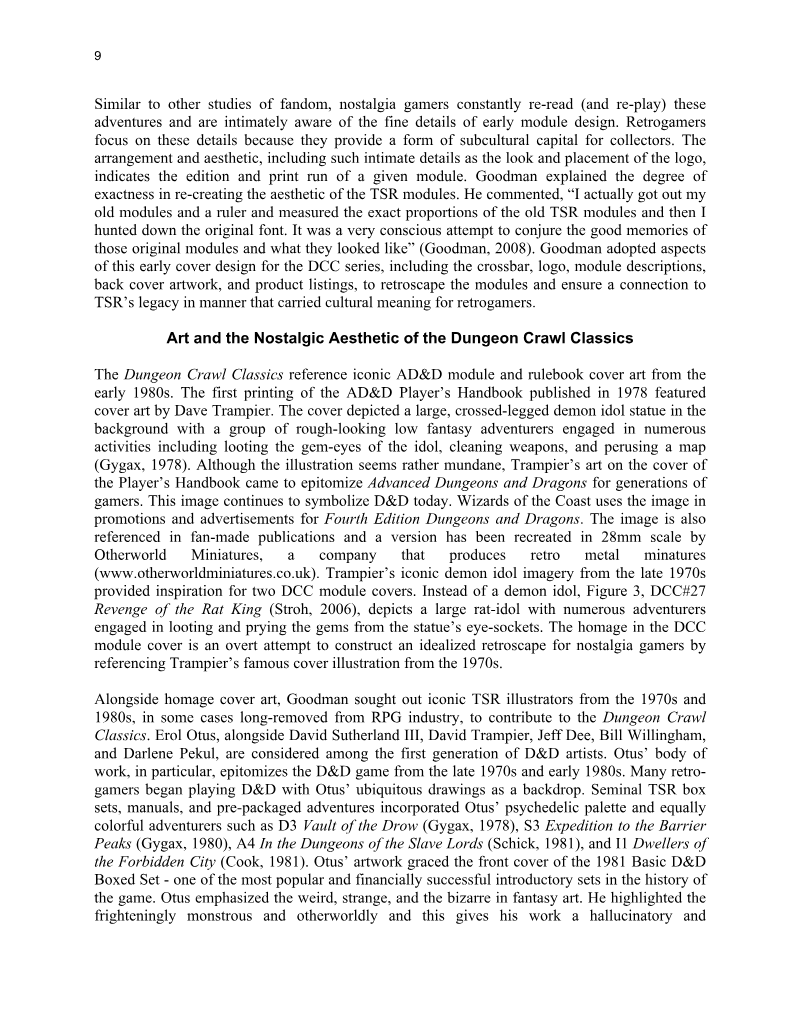
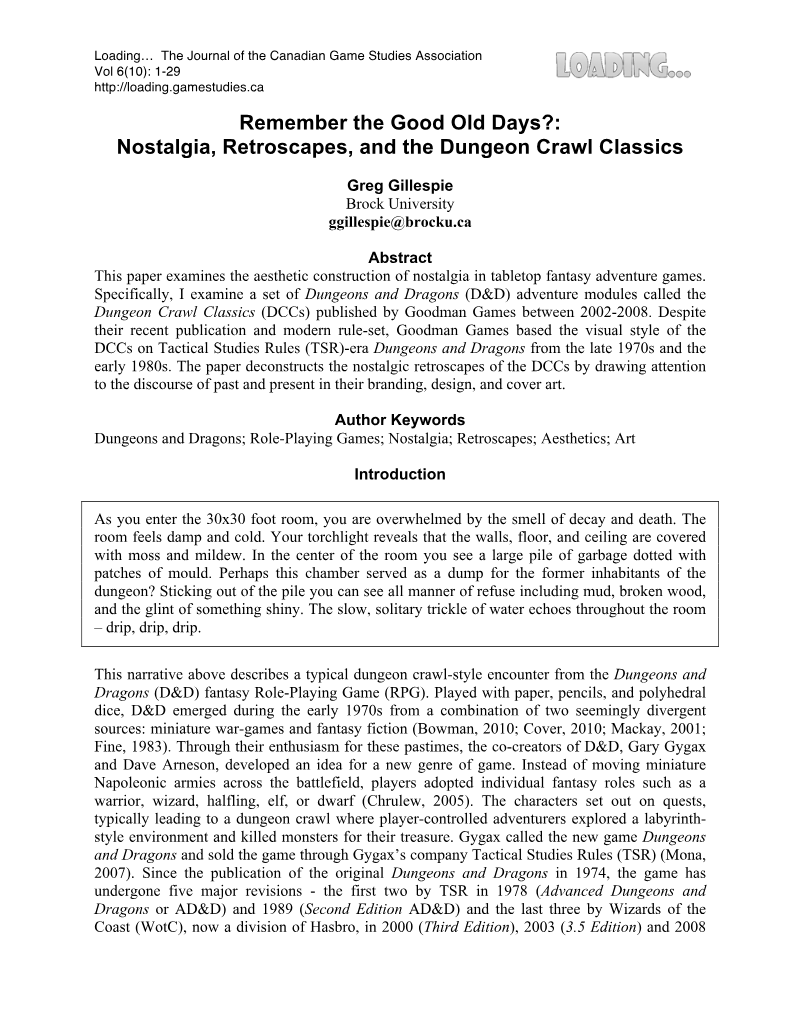
Goodman Games’ Dungeon Crawl Classics series serves as a primary case study in the strategic application of retroscapes, a design philosophy that leverages historical aesthetics to market contemporary tabletop role-playing content.
- Goodman Games utilizes 'retroscapes' to market contemporary tabletop content by replicating the visual and structural aesthetics of 1970s and 1980s TSR-era modules.
- The Dungeon Crawl Classics series targets an aging demographic of gamers who are alienated by the mechanical complexity of modern tabletop role-playing editions.
- The publisher builds brand legitimacy by commissioning original illustrators from the early tabletop era to incorporate authentic motifs, typography, and artistic styles.

When I'm Sixty-Four: Beatles Rock Band and the Commodification of Nostalgia
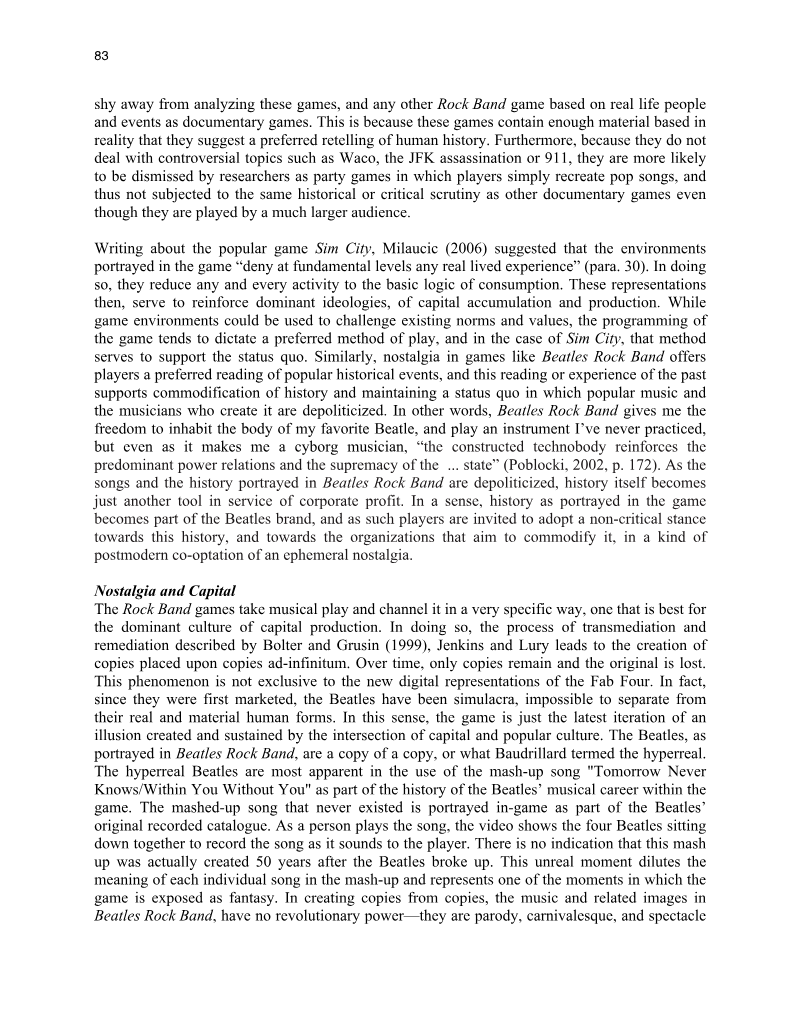
Beatles Rock Band serves as a primary case study for the commodification of nostalgia within the interactive entertainment industry.
- Beatles Rock Band functions as a documentary simulation that prioritizes brand preservation and corporate-friendly myth-making over historical accuracy.
- The game commodifies nostalgia by stripping away the Beatles' complex political activism and countercultural history to maximize appeal across broad demographics.
- The software acts as a tool for capital accumulation by presenting a curated, hyperreal version of the past that reinforces dominant cultural narratives.
L2P Noob: Examining Tutorials in Digital Games
The novice-expert divide remains a critical barrier in digital gaming, as traditional tutorial designs frequently rely on intrusive visual pop-ups that disrupt immersion and alienate new players.
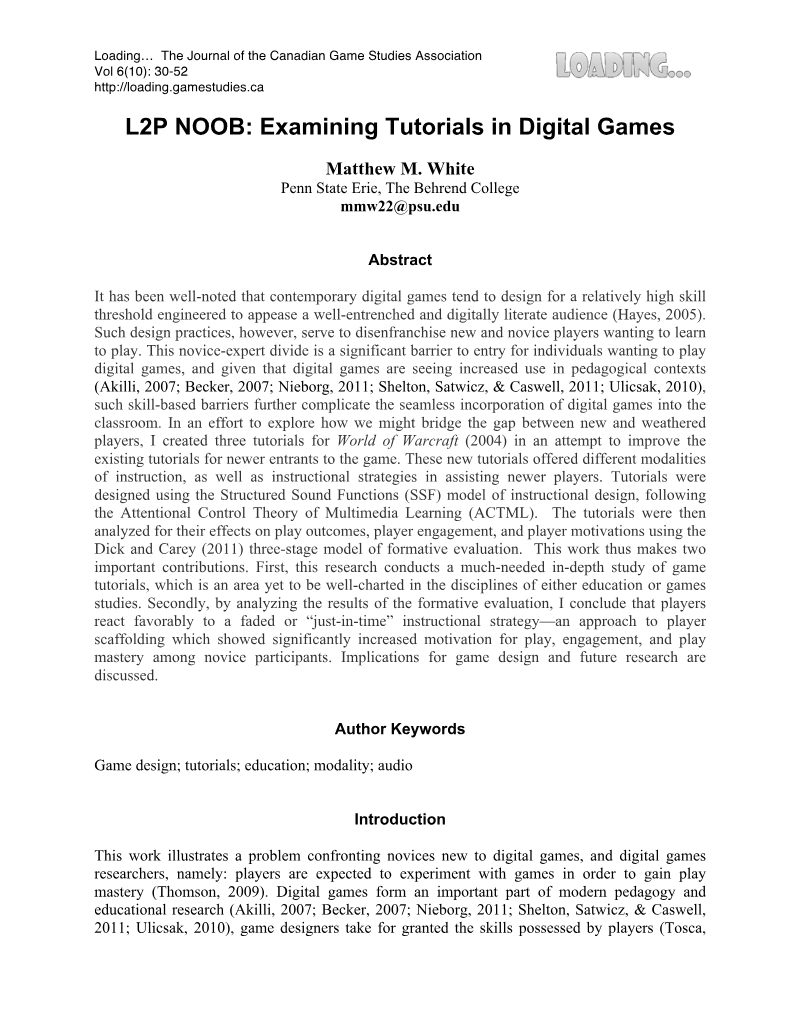
- Auditory-based, just-in-time instructional strategies significantly outperform traditional visual pop-up and flashcard methods in player skill acquisition.
- Non-intrusive, auditory-led tutorials reduce player idle time and increase experience point accumulation compared to didactic, one-size-fits-all designs.
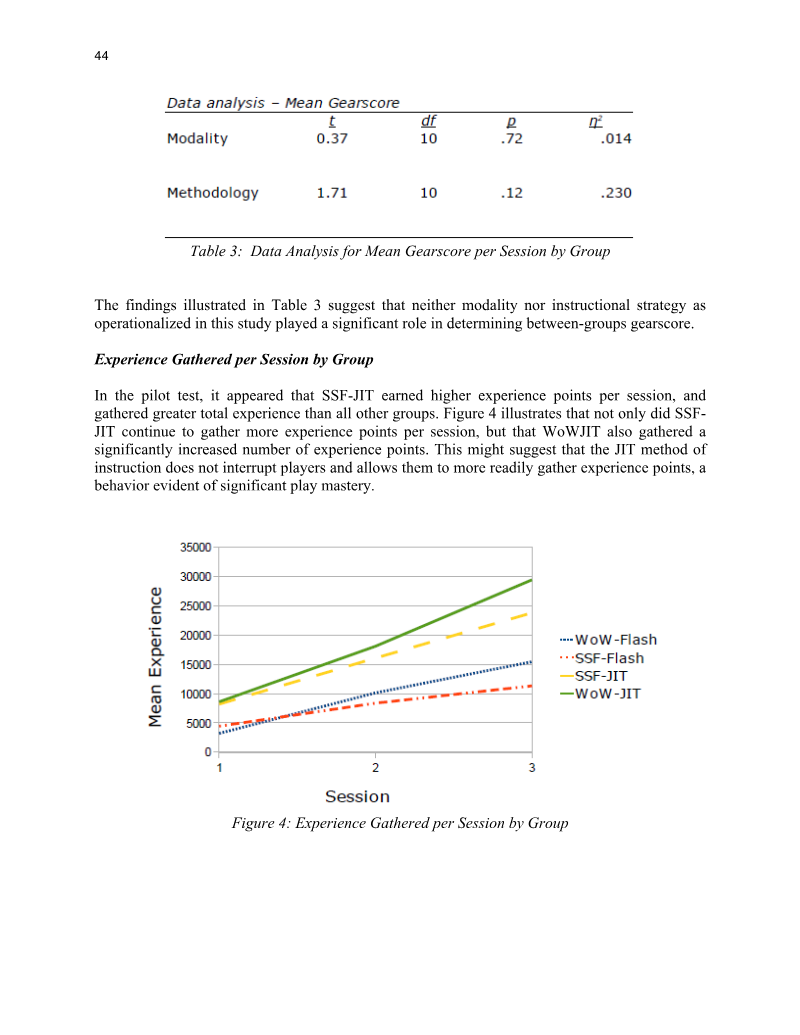
- The D.E.C.L. model (Domain, Experience, Content, and Learner) provides a framework for evaluating tutorial effectiveness by tracking metrics such as death frequency and gear scores.

Well Played: A Journal on Video Games, Value and Meaning, Vol. 2, No. 1
Video games function as complex cultural artifacts that demand rigorous critical analysis to understand how design choices shape player agency, learning, and emotional resonance.
- Meaningful player engagement is driven by unconventional design strategies such as asymmetrical roles, non-linear world-building, and the intentional use of failure as a pedagogical tool.
- Grand Theft Auto IV demonstrates that ludic dissimilarity—forcing players to navigate the same environment through opposing perspectives—effectively fosters emergent narratives.
- Skyrim proves that balancing open-world exploration with a reactive, player-centered quest structure creates more immersive experiences than traditional, linear gameplay loops.

Well Played: A Special Issue on the Theme of Romance in Games
Digital games function as sophisticated platforms for emotional exploration, identity experimentation, and the formation of meaningful romantic connections.
- Over 80 percent of players engage in avatar gender-swapping, while more than 70 percent of RPG participants pursue same-sex NPC romances to deepen narrative engagement.
- Virtual environments function as low-stakes 'laboratories' for identity experimentation, allowing players to rehearse social scenarios and explore diverse sexualities without real-world social costs.
- Contemporary game design has shifted away from restrictive, gendered tropes toward models that prioritize protagonist agency and complex, gender-neutral heroism.


The Quadrilingual Vocabulary of French Rap
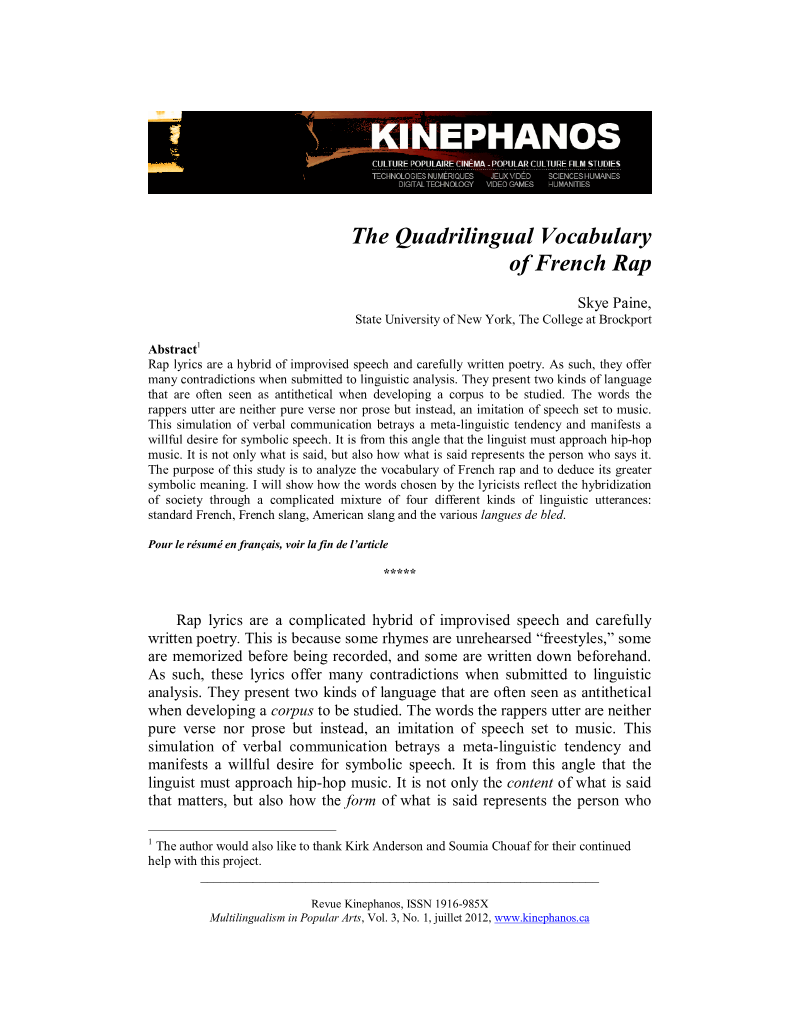
French rap between 1997 and 1999 represents a sophisticated linguistic synthesis, functioning as a quadrilingual medium that integrates standard French, French slang, American English, and immigrant dialects known as langues de bled.
- French rap between 1997 and 1999 functioned as a quadrilingual medium, synthesizing standard French, French slang, American English, and immigrant 'langues de bled' dialects.
- Analysis of 72 representative tracks from Parisian and Marseillais artists shows that lyrics maintain formal grammatical structures, such as the subjunctive mood and negative particles, alongside informal vernacular.
- Linguistic choices in the genre serve as markers of regional identity, with Parisian artists prioritizing verlan while Marseille-based performers integrate Provençal influences and Arabic-derived slang.