Games and companies in this document
Connections
Each row is a game or company this document names, each column a document, oldest first. A mark means that document names it. Select a row to see those documents.
More from Canadian Game Studies Association
View all
Whitepaper
Apophatic Gaming: The Perpetual Journey to ‘Catch ’em All’
Canadian Game Studies Association · 2018
Article
Touring the Animus: Assassin's Creed and Ludotopical Movement
Canadian Game Studies Association · 2018
Whitepaper
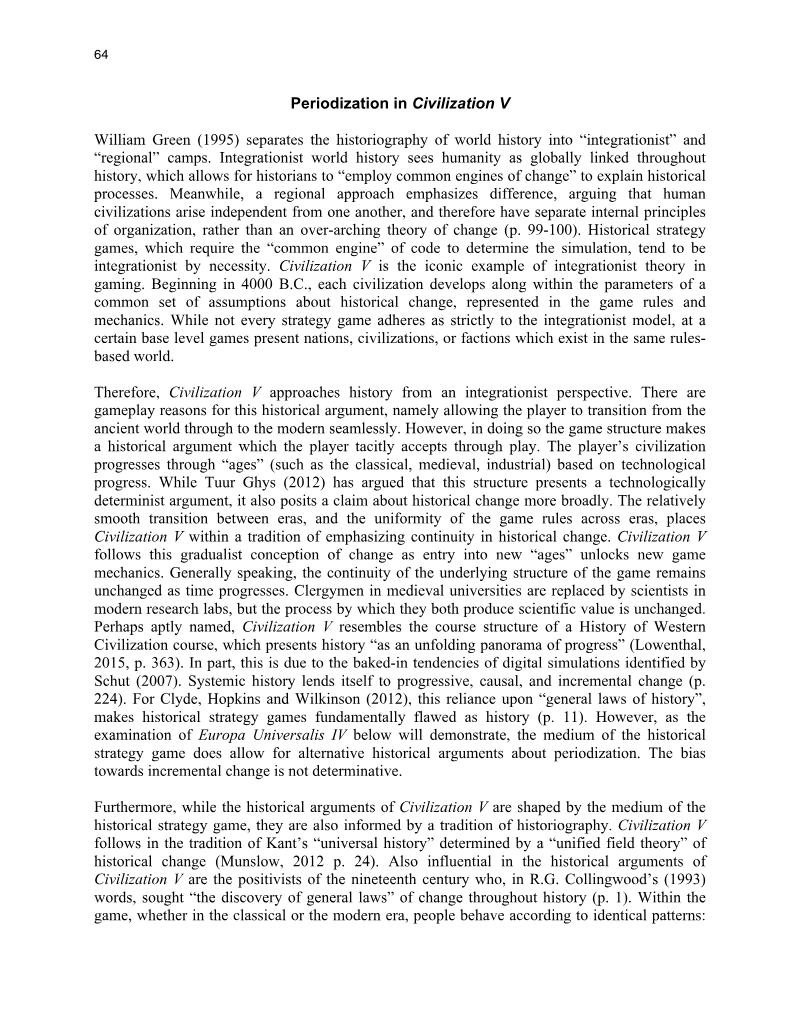
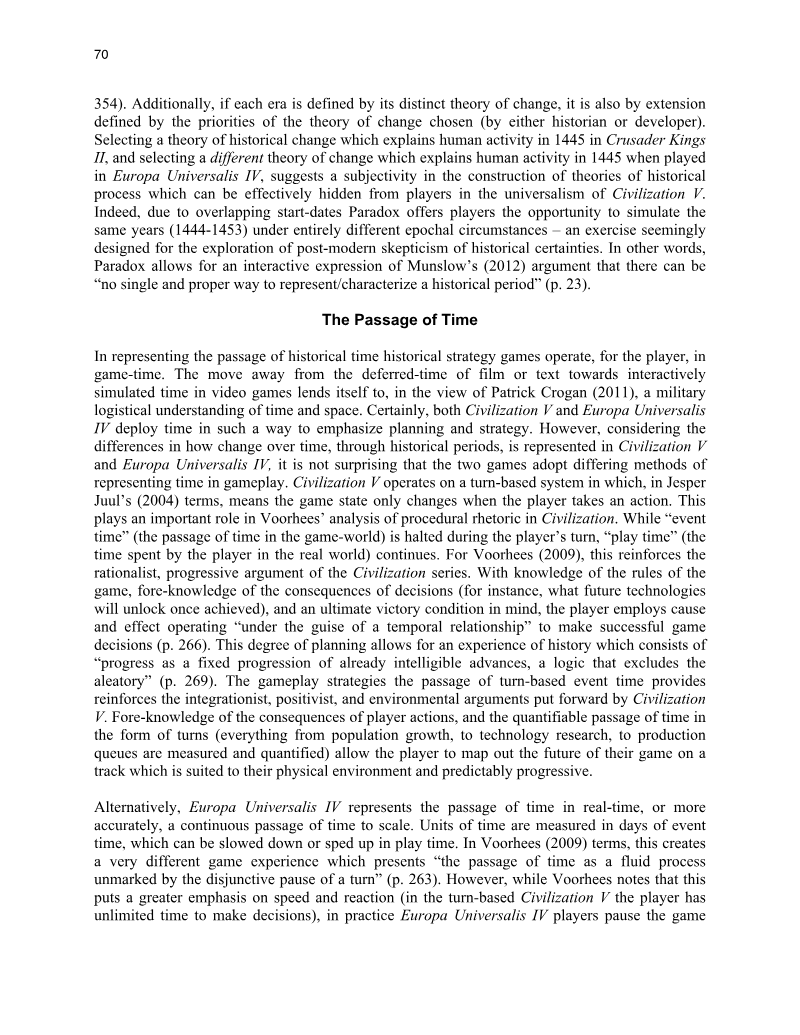
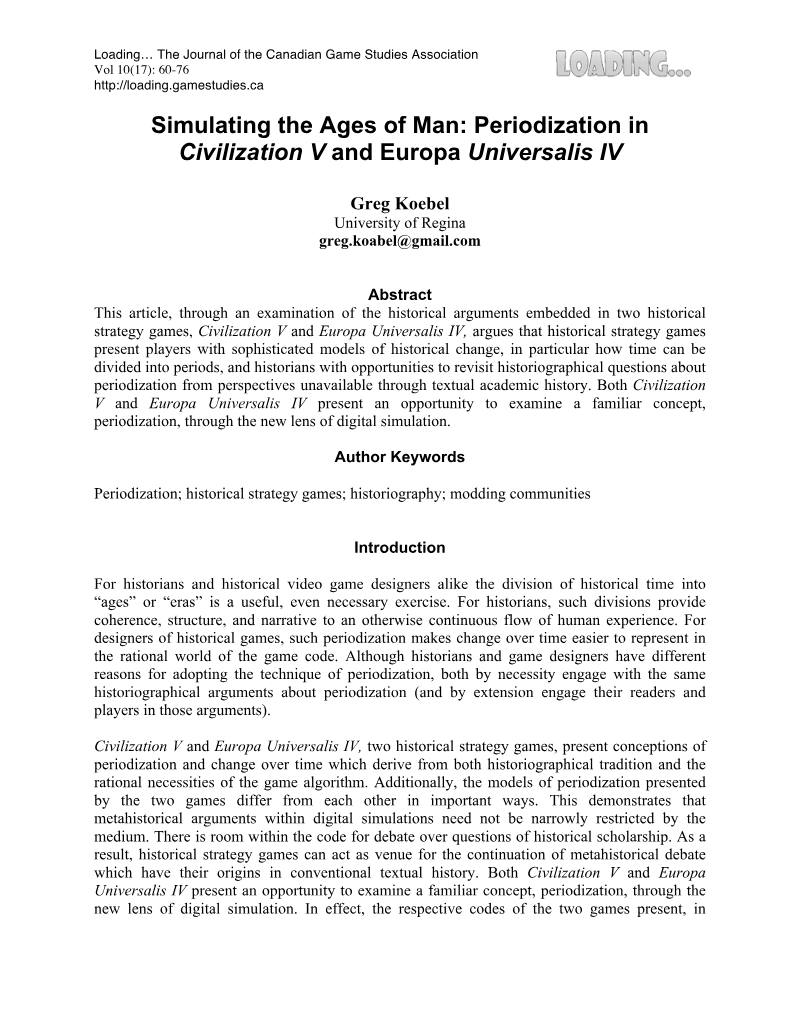
Simulating the Ages of Man: Periodization in Civilization V and Europa Universalis IV
Canadian Game Studies Association · 2018
Article
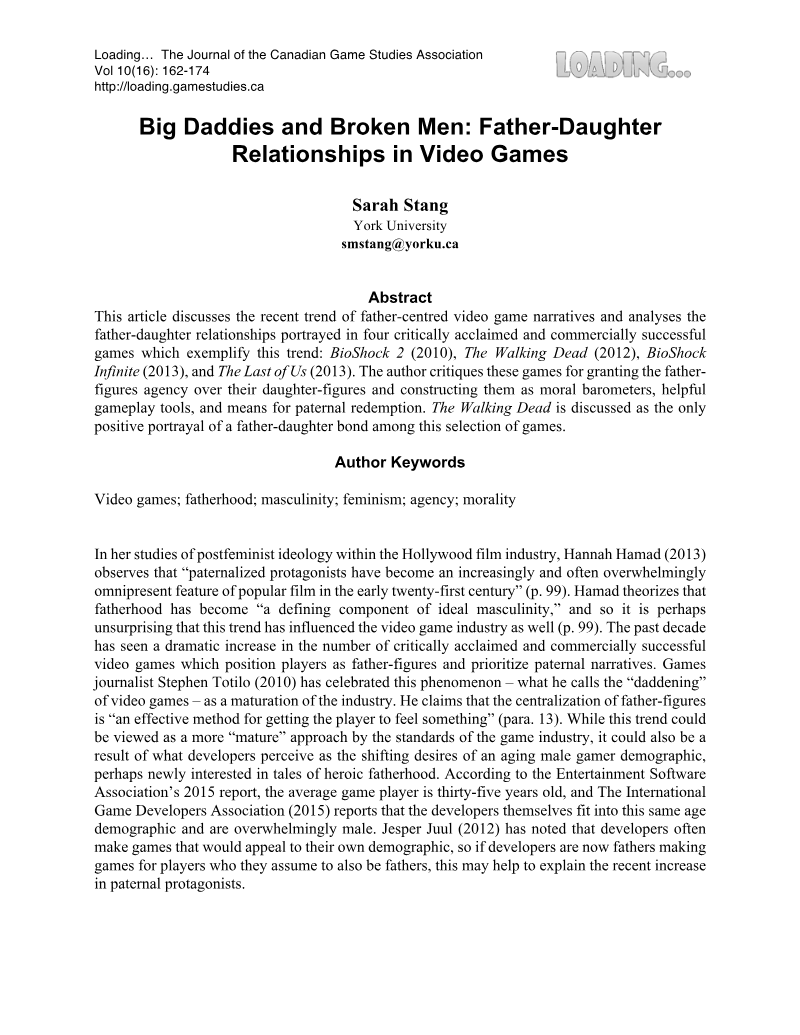
Big Daddies and Broken Men: Father-Daughter Relationships in Video Games
Canadian Game Studies Association · 2017
Whitepaper
Using Big Data Tools and Techniques to Study a Gamer Community: Technical, Epistemological, and Ethical Problems
Canadian Game Studies Association · 2017
Article
Who Wrote the Elder Scrolls?: Modders, Developers, and the Mythology of Bethesda Softworks
Canadian Game Studies Association · 2016
Article
Universe of Teleological Illth: A Critique of StarCraft 2
Canadian Game Studies Association · 2016
Article
Cyborg Games: Videogame Blasphemy and Disorientation
Canadian Game Studies Association · 2015
Whitepaper
Going Beyond the Game: Development of Gamer Identities Within Societal Discourse and Virtual Spaces
Canadian Game Studies Association · 2015
Article
Disability, Neurological Diversity, and Inclusive Play
Canadian Game Studies Association · 2015
Article
Survivance Among Social Impact Games
Canadian Game Studies Association · 2014
Whitepaper
Ethics for Cyborgs: On Real Harassment in an Unreal Place
Canadian Game Studies Association · 2014