Game Publishing reports and market data
Documents
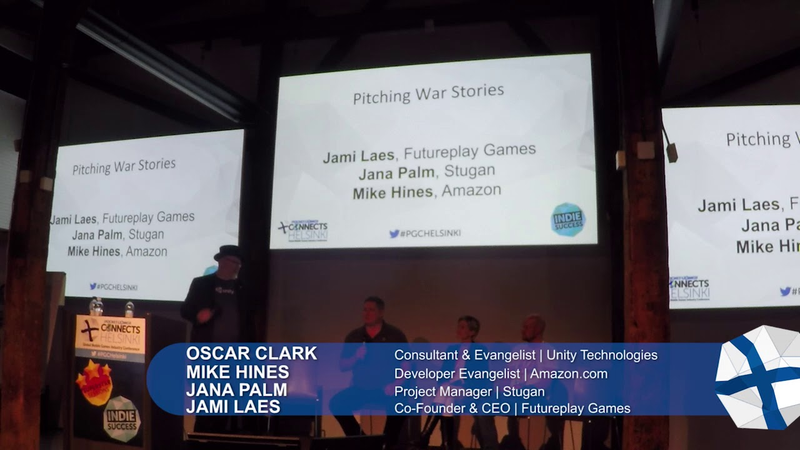
Games pitching war stories
Securing investment in the video game industry requires a departure from traditional tech startup models, shifting the focus from solving specific functional problems to demonstrating entertainment value, team capability, and distinct market positioning.
- Investors prioritize the development team's track record and vision over rigid product roadmaps due to the inherent volatility of game development.
- Successful pitches require tangible proof of concept, such as high-quality gameplay footage or a functional, polished prototype, rather than relying on verbal descriptions.
- Developers must articulate a unique value proposition that clearly differentiates their project within the saturated global market to establish credibility.
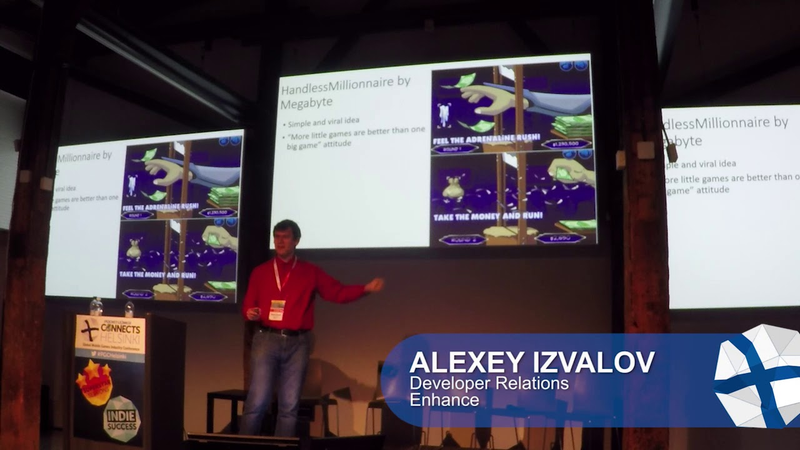
Stories of indie mobile game success – What do they have in common?
Independent mobile game development remains a viable path to success, provided developers adopt specific strategies to compensate for the lack of publisher resources.
- Independent mobile game success is driven by rigorous community building, iterative development, and efficient time management rather than luck.
- Successful developers prioritize early prototyping and frequent A/B testing to refine gameplay mechanics instead of committing to unproven concepts.
- Building a dedicated community before launch through social media and direct feedback loops fosters co-authorship, which is essential for driving organic interest.
Why games are all about the features
The primary thesis of this analysis is that game developers must prioritize a top-down, feature-driven development strategy over a bottom-up, mechanics-first approach to ensure commercial viability and financial efficiency.
- Adopting a top-down, feature-driven development strategy is three times more cost-effective than a bottom-up, mechanics-first approach.
- Modular feature reuse across multiple projects can reduce total development costs by 30% to 60%.
- Developers should prioritize business-centric features that drive retention and monetization during the initial planning phase to secure funding and ensure commercial viability.
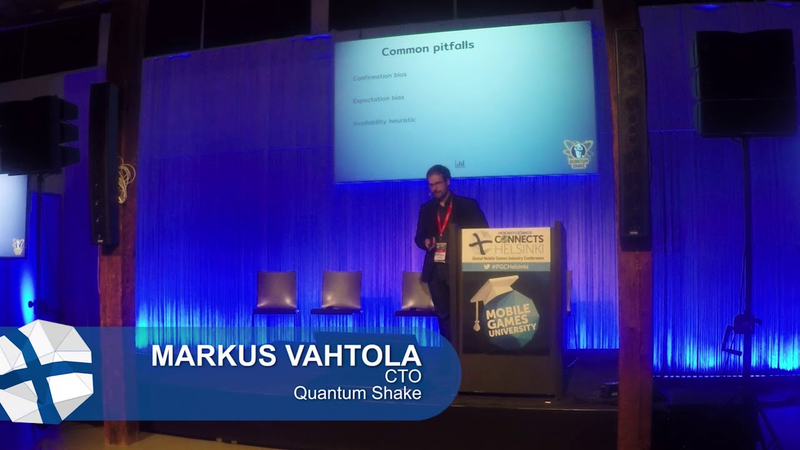
From sentiments to insights
The analysis of over 125,000 user reviews for top-grossing mobile games reveals critical insights into market performance and player sentiment.
- Social engagement is a fundamental driver of commercial success, as the vast majority of the top 200 grossing mobile games are inherently social.
- Top-grossing mobile titles are 76% more likely to receive five-star reviews compared to the broader market, though these reviews are often brief and prompted by in-game mechanics.
- Long-form reviews exceeding 1,000 words provide significantly higher qualitative value than short reviews, despite the latter dominating in total volume.
Losing Player Trust - The Data Dilemma - Extra Credits
The gaming industry’s heavy reliance on absolute metrics—such as revenue, play time, and review scores—often masks long-term declines in product quality and consumer sentiment.
- The gaming industry’s over-reliance on absolute metrics like revenue and play time obscures long-term declines in product quality and consumer sentiment.
- Short-term financial gains from aggressive monetization often mask the erosion of brand equity, creating a cycle where the loss of a loyal player base eventually outweighs the benefits of marketing spend.
- Developers should integrate 'soft data'—such as relative, positional, or ordinal scales—to track subjective qualities like player trust that absolute numerical values fail to capture.
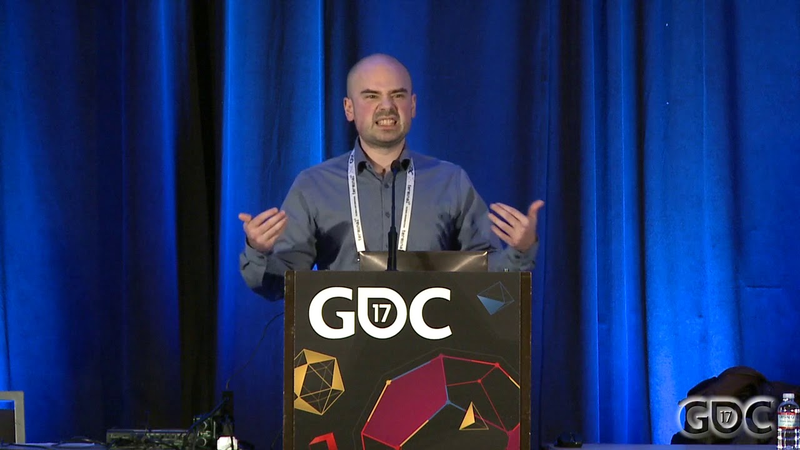
Innovation on Demand: Paradox Interactive's Strategic Initiatives Division
Paradox Interactive established the Strategic Initiatives division to preserve a grassroots, collaborative culture while navigating the complexities of rapid organizational scaling.
- Paradox Interactive created the Strategic Initiatives division to bypass hierarchical bottlenecks and maintain a grassroots, collaborative culture during periods of rapid organizational scaling.
- The division operates on a lean model that hands off successful projects to permanent departments, preventing internal bloat and ensuring creative momentum remains fluid.
- Performance metrics for the division show a 30 percent success rate, 30 percent mixed results, and 40 percent of initiatives remaining unexecuted.
The Warhammer License (Again) - Did Games Workshop's Gamble Work? - Extra Credits
Games Workshop’s strategy of aggressive, widespread licensing of its Warhammer intellectual property has proven to be a successful model for brand expansion and risk management.
- Games Workshop utilizes a tiered licensing strategy that distributes risk by assigning projects to developers based on their size and proven capability.
- The company grants minor licenses to unproven studios to test developer potential, while reserving major, core licenses for triple-A studios to ensure high-quality, large-scale releases.
- By breaking the expansive Warhammer universe into granular sub-licenses, Games Workshop maintains a steady stream of content without creating internal competition between projects.
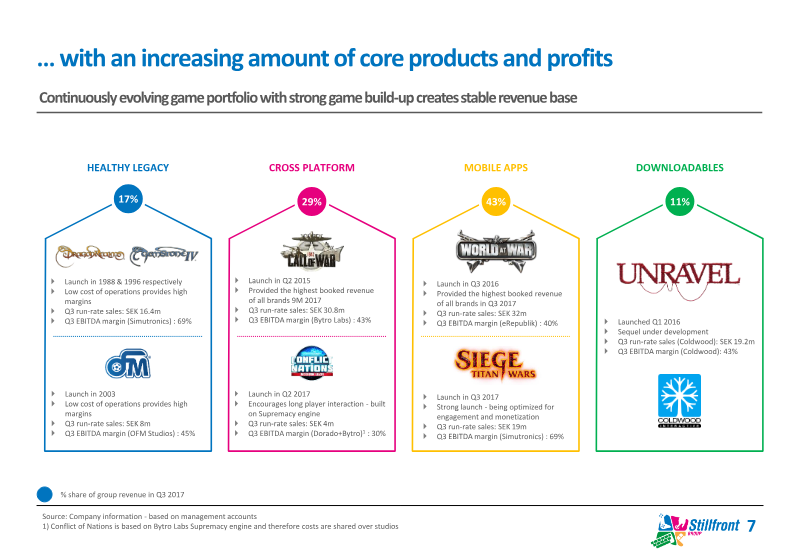


Stillfront Group Q3 Report: 2017
Stillfront Group’s Q3 2017 report outlines a strategic objective to become the leading global group of independent game studios by balancing high-growth potential with risk-mitigating diversification.
- Stillfront Group achieved 45.4 million SEK in net revenue for Q3 2017, maintaining a consistent 22–24% quarter-over-quarter growth rate for three consecutive quarters.
- The company reported a rolling 12-month revenue of 137.3 million SEK and an EBITDA of 43.7 million SEK.
- The portfolio of core products grew by 275% over the 16-month period preceding Q3 2017, driven by the acquisitions of eRepublik Labs and OFM.

30 Things I Hate About Your Game Pitch
Securing a publishing deal requires developers to prove both the commercial viability of their creative vision and the technical competence of their team.
- A functional, high-quality prototype is the most critical tool for teams without an established track record to mitigate perceived risk and demonstrate technical competence.
- Successful pitches must prioritize the core gameplay loop and a unique project hook rather than relying on extensive lore or generic mechanics.
- Developers must conduct thorough research to ensure their game concept aligns with a publisher’s specific portfolio, genre focus, and platform preferences.

Juggling Chainsaws: Original IP vs. Work for Hire
The primary challenge for independent mobile game developers is achieving financial sustainability in a volatile market where revenue from original intellectual property (IP) is often unpredictable.
- Independent mobile studios should adopt a hybrid business model that balances unpredictable original IP development with the stable, predictable income of work-for-hire (WFH) contracting.
- Relying exclusively on original IP carries high financial risk, as demonstrated by a case study where a 6,400-hour development project resulted in a return of only $1.56 per hour per developer.
- Accurate studio budgeting must account for total internal labor costs, including payroll taxes, benefits, and overhead, rather than focusing solely on external expenses.
3 Ways Your Crappy Game Can Make Millionz $$$$
The commercial success of an indie video game is often determined less by the inherent quality of the product and more by the effectiveness of its marketing and business strategy.
- Commercial success in the indie game market is driven primarily by marketing and business strategy rather than the inherent quality of the product.
- Developers must create a compelling hook by distilling the game's unique value into a single, concise sentence or feature that differentiates it from competitors.
- Treating game development as an entrepreneurial venture requires shifting focus from technical production to resource management and concrete, actionable business planning.
Taking Desktop Dungeons from Prototype to Pre-Order to Steam
The development of the roguelike game Desktop Dungeons serves as a case study for the efficacy of open development, a methodology defined by the continuous release of prototypes to a player community to gather feedback and iterate on design.
- QCF Design utilized open development to identify thousands of bugs and edge-case strategies by releasing continuous, iterative prototypes to a community-based testing network.
- Open development should be conducted through independent channels before transitioning to Steam Early Access to avoid the risks associated with the platform's high user volume during early, unrefined stages.
- The iterative feedback loop serves as a marketing strategy by cultivating a base of 'superfans' who act as organic advocates for press outreach and community management.