1 free read left. Create a free account for unlimited reading + AI research.
Create free account
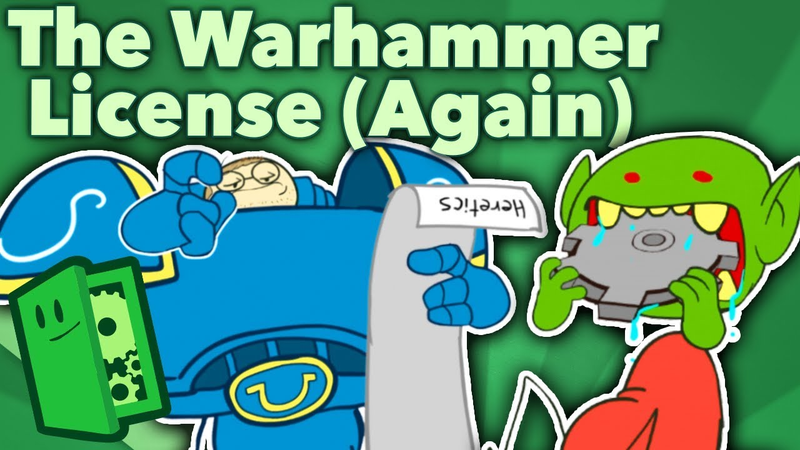
The Warhammer License (Again) - Did Games Workshop's Gamble Work? - Extra Credits
Key insights
6 takeaways- 01Games Workshop utilizes a tiered licensing strategy that distributes risk by assigning projects to developers based on their size and proven capability.
- 02By breaking the expansive Warhammer universe into granular sub-licenses, Games Workshop maintains a steady stream of content without creating internal competition between projects.
- 03The company grants minor licenses to unproven studios to test developer potential, while reserving major, core licenses for triple-A studios to ensure high-quality, large-scale releases.
- 04The strategy minimizes marketing expenditure by leveraging the existing popularity of the Warhammer brand and focusing promotional support only on successful titles.
- 05Strict oversight of aesthetic and lore integrity allows the company to protect the core brand identity even when it cannot micromanage the technical development of every title.
- 06This licensing model effectively drives increased interest and value toward the company's core tabletop products through widespread digital visibility.
Ask AI about this video
Transcript
previously on extra credits we talked about the unusual approach that Games Workshop was taking in licensing out their IP to different studios this new strategy of there seemed like it would either revive the struggling company or fail spectacularly well a year has now passed and just a few weeks ago James came to a realization every single game he was in the middle of playing was based on some Games Workshop IP so I guess we better look at Warhammer again [Music] we learned two things from James's accidental delve into the Warhammer universe first an intervention might be in order but second well basically that their plan worked that the way games workshop has been licensing their IP seems to have been successful so let's look at what they did and try to figure out why it worked just to recap though what was this bold plan that Games Workshop had to license out their worlds basically they licensed their IP to
anybody with a pulse and a machine capable of compiling code on its face you can see how that might turn out very very poorly this could have ended in a mountain of bad games that sunk the value of their IP for years but that didn't happen they not only got a host of decent games like blood ball and battlefleet gothic Leviathan and Warhammer Quest but they also actually got a handful of really quality games like more time and vermintide and total Warhammer which by the way that is what that game is called don't anyone dare try to tell me it isn't but ok why did this work well first of all not all of the licensed Games Workshop games were hits but I'm guessing you don't really remember those you're probably aware of at least a few of the pretty good games I mentioned before but what about snarling fling doom wheel storm of vengeance if any of those do ring a bell I bet you haven't given any of those games thought in a very very long time and that is by design the first key to
the Games Workshop shotgun approach to licensing seems to be sub licensing sub licensing is the fine art of taking a big property and breaking off all the little things that you might IVA bleeds from it as separate IPS often this is done in broad strokes like how The Silmarillion is technically a different license than the Lord of the Rings or how all the Marvel characters were licensed separately and often to different studios at least until Disney consolidated them but the folks at Games Workshop are going buck wild with this if you look at those subpar games that I listed before notice how two of those are licenses for just a single warhammer unit one solitary unit from a game with literally hundreds of them that is like taking the Lord of the Rings license and breaking off the farmer maggot character into his own solo license for some studio to try to build a game around it's kind of brilliant in a way because if you look at all the warhammer brand games that have come out it appears that Games Workshop gives the
really small inconsequential licenses to studios that they aren't a hundred percent confident in that way if the studio blows it well then Games Workshop just lets that game quietly vanish into obscurity and their brands doesn't take that much of a hit but if I were to wager a guess I would bet that they'd tell all of those Studios that if they nail it they'll be given a meteor piece of the warhammer license next time and this allows Games Workshop to try Studios out embracing the successes and leaving the failures to wither without much cost so that's what's happening with the small licenses the medium-sized ones go to teams that Games Workshop knows can deliver but they aren't mega studios these midsize licenses might be something chunky like a Space Marine chapter but just as often there'll be some expansion or a spin-off that has its own unique feel these are your blood bowls and your vermin tides this allows Games Workshop to get a variety of products without those games competing too much with each other mechanically or
thematically and then the core licenses 40k and Warhammer Fantasy battle those go to the triple-a Studios who are able to go big and make stuff like total Warhammer and dawn of war we should also talk about games workshop's marketing approach though because they know that the popularity of their IP will automatically create some initial visibility for all of these games without heavy marketing investment and that allows them to wait and see how a title is initially received before investing more money marketing it you'll notice that almost all of their low and mid tier licenses they don't seem to get much of a push unless they look like they're gonna do really well and even then that push comes way later in the cycle than usual sometimes not until after launch moreover that push comes through games workshop's existing marketing channels like their stores or their magazine and not through Games Workshop spending any additional money this allows them to save their marketing muscle for the titles they know are good or at least the ones they
know are gonna appeal to their audience and they let the rest just quietly slide into oblivion because the warhammer licenses are just that darn huge and widely known this approach seems to be working and actually let's talk about that IP one of the advantages things like fantasy battle and 40k have is that they are incredibly fleshed out properties between the games the books the game books and the miniatures Games Workshop IP has hundreds of characters and locations at their disposal all of them packed with detail and flavor and with a lot of established mechanics this pre-existing depth not only gives Games Workshop the ability to sublicense down to the micro level like they do but also provides a detailed blueprint for any company working with their IP which reduces the risk of companies producing conflicting or disjointed games under those licenses more than that though this pre-existing depth also provides an interesting reinforcing effect to their shotgun style licensing having such a
broad and robustly built out set of universes means that each game can serve as a rabbit hole leading towards the others it's a lot like the Marvel Universe effect each product introduces you to and gets you excited about some of the others but the final piece of this puzzle is IP quality control not game quality control mind you quality control of the IP itself the quality of the games may vary pretty wildly but IP quality control helps to ensure that everything published under that IP stays true to that IP and Games Workshop is very good at this I think GW probably real very early on that they had neither the capacity nor the resources to micromanage every one of these projects into being good but what they did have was a large number of people who are very intimately familiar with the worlds and the lore of their own tabletop games and when you look at the slew of Warhammer titles that have come out it looks like Games Workshop is putting
that strength to use because even the bad Warhammer games still have that proper Warhammer flavor Games Workshop may not be able to control the quality of all those games but they almost certainly asked for final approval on how everything looked and felt and this means that even when people hated one of those licensed games that hate is much less likely to transfer over to actual Games Workshop products heck if they're lucky anybody who plays a bad Games Workshop license product will say to themselves well that was disappointing I want to play a good game set in this universe all of which leads to more sales for their core games more people knowing about their universe and the value of their IP increasing so it would seem that this shotgun approach to licensing where even the smallest dev has a chance at working with a tiny splinter of this major IP it can be effective it requires some very specific variables from the company and from the IP itself so it's not an option for most companies but it does mean that for a
company like Games Workshop licensing exclusively to Triple A companies for enormous fees isn't the only option anymore we'll see you next week [Music] [Music] [Applause] [Music]
Summary
Games Workshop’s strategy of aggressive, widespread licensing of its Warhammer intellectual property has proven to be a successful model for brand expansion and risk management. Rather than relying solely on exclusive, high-cost deals with major studios, the company adopted a tiered licensing approach that distributes risk across a diverse portfolio of developers. By breaking its expansive universe into smaller, granular sub-licenses, Games Workshop allows studios of varying sizes to experiment with specific units or themes, effectively using smaller projects as a test bed for developer capability.
This strategy functions through a tiered investment structure. Small, unproven studios are granted minor, inconsequential licenses, allowing the company to avoid reputational damage if a title fails, as these games simply fade into obscurity. Mid-tier licenses are reserved for established teams capable of delivering consistent quality, while major, core licenses are granted to triple-A studios for large-scale projects. This diversification ensures a steady stream of content without internal competition, while the inherent depth and established lore of the Warhammer universe provide a robust blueprint that keeps disparate projects thematically consistent.
Crucially, Games Workshop maintains strict control over the integrity of its intellectual property, even when it cannot micromanage the technical quality of every game. By ensuring that all licensed products adhere to the established aesthetic and lore, the company prevents negative player experiences from damaging the core brand. Furthermore, this approach leverages the existing popularity of the Warhammer universe to generate visibility without significant marketing expenditure. By reserving promotional support for successful titles, the company maximizes its marketing efficiency, ultimately increasing the overall value of its intellectual property and driving interest toward its core tabletop products.
















Comments