Game Publishing reports and market data
Documents

CEDEC 2025 Schedule Announcement
The announcement establishes the official timetable for CEDEC 2025, Japan’s premier three-day conference for computer-entertainment developers organized by the Computer Entertainment Developers Association (CESA).
- CEDEC 2025 will take place from July 22–24, 2025, shifting the conference approximately one month earlier than its traditional late-August schedule.
- The call for session proposals opens on January 6, 2025, with a strict submission deadline of February 17, 2025, at 10 a.m. JST.
- Selection results for proposed sessions will be communicated to applicants in late March 2025.

Concord and AAA games Failure to Launch | 353
The contemporary gaming landscape is defined by a crisis of identity and sustainability among high-budget AAA titles.
- The commercial failure of Concord highlights the inability of high-budget, premium-priced hero shooters to compete in a market saturated by established free-to-play titles like Overwatch and Marvel Rivals.
- Lengthy AAA development cycles are increasingly unsustainable, as they often result in derivative products that are disconnected from current market trends upon release.
- Industry success now relies on operational agility, the strategic use of recognizable intellectual property, and the integration of community feedback via early access rather than relying solely on massive development budgets.
He Knew Nothing.... But Got His Indie Game Published — Full Time Game Dev Podcast Ep. 017
Transitioning from a background in video production to indie game development requires a fundamental shift in perspective, moving from the linear control of film to the complex, non-linear demands of player agency.
- Securing publishing partnerships provides essential funding and access to professional resources like voice talent, but developers must vet these partners as long-term collaborators rather than just financiers.
- Developers should stabilize the long-term development cycle by diversifying capital through a combination of government tax credits, grants, and crowdfunding.
- Successful game design requires mastering subtle signposting to guide player agency through non-linear environments without breaking the sense of discovery.

Monopoly Go! and Baldur’s Gate III: The Hasbro Perspective
Hasbro has solidified its position as a dominant force in the video game licensing sector, generating $3.25 billion in revenue over the past year.
- Hasbro generated $3.25 billion in revenue over the past year through its video game licensing strategy, significantly outperforming industry competitors.
- The company’s growth is driven by a strategic pivot toward high-quality digital partnerships that translate legacy physical intellectual property into virtual experiences.
- Hasbro utilizes a dual-pillar strategy of brand familiarity to lower user acquisition costs and creative autonomy to ensure genre-expert developers handle their franchises.
Building the Next Game-as-a-Platform
The evolution of gaming platforms is shifting toward a model where user-generated content serves as the primary engine for long-term engagement.
- The industry is shifting toward a 'mod-first' philosophy that replaces high-barrier professional engines with accessible, iterative tools that allow users to remix existing assets.
- Platforms are integrating development tools directly into the gameplay loop to minimize the 'quantum of creation,' enabling users to produce and share bite-sized content instantly.
- Long-term platform viability depends on a hybrid monetization model that utilizes automated, three-way revenue splits to fairly compensate original creators and contributors.

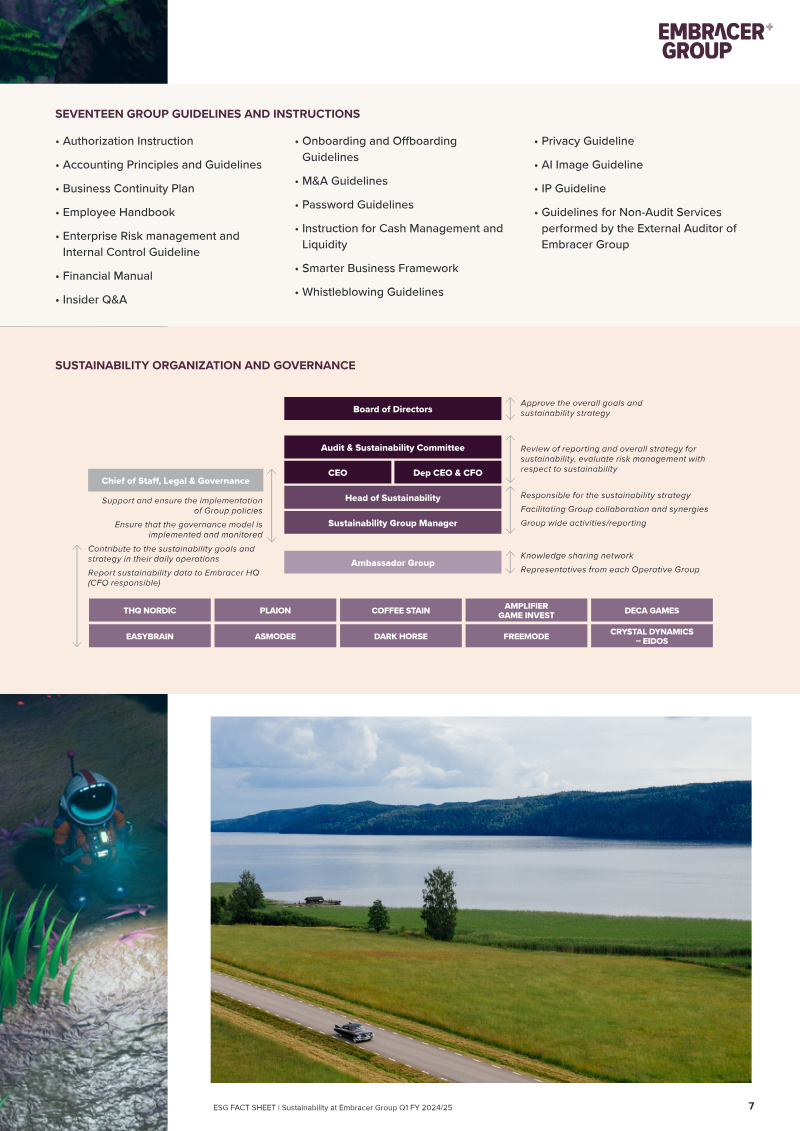
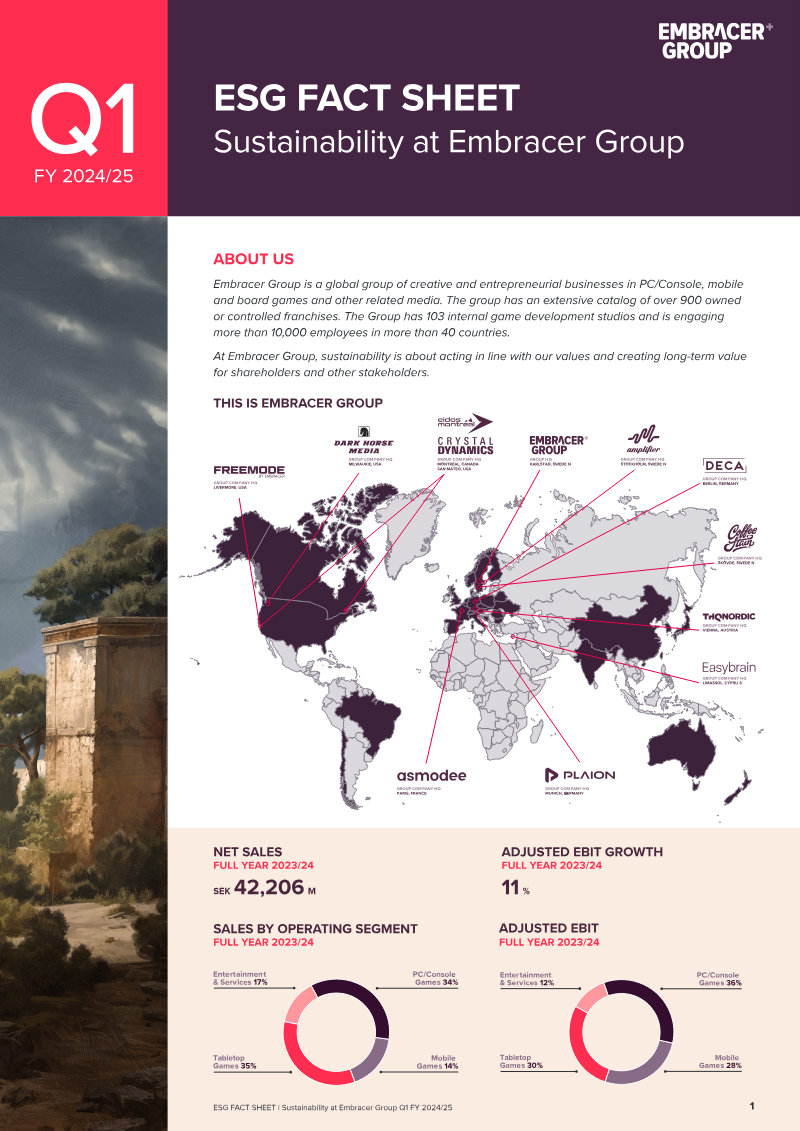
Sustainability at Embracer Group: FY 2024/25 ESG Fact Sheet
Embracer Group’s sustainability framework, titled Smarter Business, outlines the organization’s commitment to integrating environmental, social, and governance (ESG) principles across its global operations.
- Embracer Group is undergoing a corporate split into three standalone entities, requiring each new board to redefine and approve sustainability targets tailored to their specific operational contexts.
- The company aims to reduce Scope 1 and 2 carbon emissions by 45% by 2030, though 98% of its current total emissions are categorized as Scope 3.
- Female representation within the group stands at 30% for total employees and 26% for management roles.
Taking Snake.io to the next level and building multimedia brands with Kooapps CEO CK Wang
Kooapps is shifting its strategic focus from traditional hypercasual gaming to a unified casual model, prioritizing long-term brand equity, deep progression systems, and community-driven development.
- Kooapps is pivoting from hypercasual gaming to a unified casual model, focusing on long-term brand equity and deep progression systems to sustain its 30 million monthly active user base.
- The studio prioritizes global accessibility by localizing titles into 23 languages and optimizing engineering for low-end hardware, driving significant market penetration in Brazil and the Middle East.
- Development follows a data-centric validation process where titles are launched with minimal user acquisition budgets to confirm retention metrics before scaling globally.
gamescom qa 2024
Gamescom serves as a vital nexus for the global video game industry, functioning as a primary hub for developers to secure funding and partnerships through strategic networking.
- Securing partnerships at trade shows requires a polished, functional vertical slice and a 30-second gameplay video to provide immediate proof of concept for publishers.
- Developers must present singular, confident budget proposals rather than ambiguous ranges to demonstrate commercial viability and professional discipline.
- Projects in saturated genres, such as roguelike city builders, must articulate a unique hook to differentiate themselves from the high volume of daily submissions.

Crafting Winning Games: The Critical Role of Consumer Insights with the Best in the Business
Consumer insights serve as the essential bridge between raw behavioral data and the underlying motivations driving player engagement.
- Long-term player retention is driven by understanding intrinsic motivations, such as social connection and escapism, rather than relying solely on surface-level quantitative metrics.
- Modern player demographics, particularly younger audiences, prioritize identity-driven experiences and social engagement over traditional competitive metrics like leaderboard dominance.
- Developers must shift focus from purely transactional mechanics to core product experiences that foster community, as players exhibit high loyalty and significant switching costs.
Is The Indie Game Dream Dead?
The indie game development landscape remains viable for those who treat marketing with the same rigor as technical development.
- Crowdfunding remains a viable path to full-time indie development, evidenced by a successful $48,000 Kickstarter campaign that allowed the developer to transition to full-time work.
- A successful pre-launch strategy requires building a base of 500 to 1,000 followers on the Kickstarter page before the campaign goes live to ensure initial momentum.
- Marketing should be treated with the same intensity as game development, utilizing outreach to influencers and professional contacts to secure promotional support prior to launch.

DMA for Dummies with Archie Stonehill, Head of Product at Stash
The Digital Markets Act and parallel global regulatory frameworks represent a fundamental shift in competition policy, moving away from traditional consumer-price doctrines toward a model that classifies major app distribution platforms as essential infrastructure.
- The Digital Markets Act (DMA) reclassifies major app distribution platforms as essential infrastructure, mandating fair, non-discriminatory practices under threat of fines tied to global turnover.
- Mobile gaming developers are increasingly bypassing traditional app stores for direct-to-consumer web shops to reduce cost of sales from the standard 30% commission to as low as 3–4%.
- Mobile gaming accounts for over 70% of total app store revenue, making the industry particularly vulnerable to platform-imposed fee structures like the Core Technology Fee.

TWIG #292 Matthew Ball’s Metaverse 2.0 / Top Game License IPs Unveiled
The gaming industry is currently navigating a period of significant structural transition, characterized by a pivot toward profitability over aggressive user acquisition.
- The gaming industry is shifting from aggressive user acquisition to a focus on profitability, evidenced by Microsoft restructuring Xbox Game Pass to increase prices and remove day-one releases from entry-level tiers.
- The metaverse concept has pivoted from decentralized blockchain visions to pragmatic, walled-garden social experiences that prioritize immersive engagement within existing digital platforms.
- Traditional toy companies are adopting 'shelf-to-screen' strategies, integrating physical products into digital ecosystems like Roblox and Brawl Stars to capture younger demographics.