VideoDeconstructor of Fun
Crafting Winning Games: The Critical Role of Consumer Insights with the Best in the Business
5 Aug 202462 min video
Transcript
Step into the future of game monetization with Xsolla, the premier partner for game developers seeking to expand their reach and revenue. Xsolla provides a robust suite of tools designed to enhance user acquisition, manage subscriptions, and streamline payment solutions worldwide. Unlock new markets and maximize profitability through their customized, secure payment architecture, and dedicated support team. Xsolla, powering game developers to achieve global success. You've heard of Heroic Labs by now, and we keep talking about them because in today's mature market, you need every edge to be successful. Rather than spending those precious company dollars on building game tech, focus on building your game and shipping it. Get into your
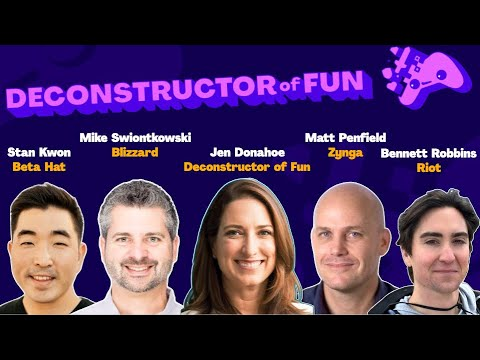
players' hands faster and grow your community. Heroic Labs is battle-tested partner and friend of the podcast. Their tech enables you to be flexible, creative, and scale for success. Heroic Labs has your tech stack covered. Whether you're looking for world-class back-end game server, an amazing game development framework, fantastic live ops tooling, or reliable mass scalability, Heroic Labs has solutions for all of these challenges. And it's not just us at Deconstructor of Fun praising Heroic Labs. The company works with some of the world's biggest publishers on many of the beloved games. Focus on your game, save a big chunk of cheese, and avoid tech risks with Heroic Labs. Hello everyone and welcome to our Deconstructor of Fun interview series. I'm your host Jen Donahoe, co-host of This Week in Games podcast and a strategic marketing consultant at BetaHat Research and Jade Inferno Consulting. So today I am super excited for this topic. It's near and dear to my heart as a
research-friendly marketer, um why consumer insights is crucial. And here are the topics we're going to go through today. I I've amassed experts. So what is the role of consumer insights or CI? So we'll probably say CI a lot today, so that's what that means. What's the role of CI at the respective companies that these folks work at? How is it different from UX research? We get this question a lot, ironically. Some market trends and insights that each of them experience. What do you wish dev and marketers would know about working with CI, tips for early stage devs for conducting their own CI work, or what are the questions that you get about trying to finance or greenlight your projects and how CI can really help you with that. So my four guests come from some great companies, many of which that I've worked with and worked at. Someone from Zynga, Riot, Blizzard, and Stan, who I work with at
BetaHat. So I'm going to let them introduce themselves. Um Matt Penfield, I would love for you to go first. Thank you, Jen. Uh hi, I'm Matt Penfield. I'm the VP of consumer insights at Zynga, part of the Take-Two family, XEA, and started my illustrious gaming career at Sony as the marketing manager on EverQuest. Wait a sec. So yes, I am super old, super old. That's distinguished and experienced, sir. Oh yeah, pardon me. I am a distinguished veteran of online services. Mr. Swinkowski, you're next. I'm Mike Swinkowski. I'm senior director of global research and consumer insights at Blizzard Entertainment, overseeing all of our franchises here, and been here for about eight years. Previously was at Activision also for about eight years, overseeing variety of franchises. I led all the
research for four years. Destiny research, Skylanders, variety of those. So been in consumer insights in gaming for a while. I love it. Just a couple of franchises that folks might have heard of. Uh Actually, I want to talk to you about Skylanders. Like that's it goes back to my toy roots. That's a good one. Toys to life. there. Next we have Bennett. Great to be here. Jen, you switched into that podcast voice real quick, and it's kind of freaking me out. I'm going to If I need to practice my podcast voice, let me know. But I am Bennett. I lead publishing and ecosystem insights teams at Riot Games. Previously also came from a a Take-Two family at 2K, where I led the player and marketing insights. Amazing. And Stan, best for last. Yeah, thanks for having me on the pod, Jen, and and it's great to be joined by some industry friends. So I'm Stan Kwan, CEO of BetaHat, and we're a research and strategy consultancy based in the Bay Area, specializing in gaming, and work
with a deep roster of clients from, you know, everyone on this call to smaller devs as well. But just a little background about myself, so I've been in the industry for most of my career. Maybe not as far back as Penfield's, but I'll I'll give Penfield a run for his money. But I would say my background is probably more similar to Kress's. For those who listen to the podcast, probably know of I actually came from a sales planning and demand planning background, and fell into research more by accident than by design. I worked at Ubisoft and EA as a demand planner, doing long-term portfolio planning, and also did a stint in online media, where I led the analytics team and developed the GameSpot Tracks tool at GameSpot and CBS Interactive. Amazing. Well, thank you all for being here and representing all different types of companies. Your backgrounds are amazing from, you know, Matt having a little bit of marketing to
demand planning. I think what's great is that consumer insights can really bring together all of these different disciplines and help many, many different disciplines. In fact, I I actually want to, you know, get a little bit more from each of you of how consumer insights is manifest itself at the different companies, because I think what's really interesting is everyone's organized differently, everyone approaches it differently, you partner with different groups. You know, Bennett, you part you partner mostly with publishing. So let's go through a little bit of how each of you is structured and how it's different. So Mike, want you to go first. Sure. So consumer insights is part of the research division within a larger group, they call global insights, that includes analytics, data science, data engineering, other things. So within the research division, which is what I lead, we have consumer insights, games user research, and game and market intelligence. And they each have, you know, within those then people are kind
of set up largely tied to franchises. There's some central roles, largely tied to franchises. Nice. Okay. Penfield? Yeah, at Zynga, I run a team that's part of publishing. So I roll up into publishing, and then I work really closely with studio leadership and executive leadership. It's similar to what Mike described. I I think we have kind of UXR and competitive intelligence, competitive insights, and then just general market intelligence under my remit. So a lot of product strategy for the game teams, whether that's live games or games in early dev or concept, and then a lot of support on marketing strategy. So what calls to action, reasons to believe, campaigns do we believe are going to generate consumer interest and avidity. And then I partner really closely with
experts in discipline. So I am not an analytics expert. I go to really smart people and ask them lots of dumb questions, and they help me understand business performance. My manager manages a whole kind of BI team that does forecasting. So I I work really closely with my peers about I have an insight, how do we turn it into a business assumption, and then does that business assumption get baked in and turn into an outcome? Um so we do a lot of sanity checking within the discipline about how is this playing out in real time in the world with players and then ultimately with the business. Oh, interesting. And so Yeah. you're leveling up to someone who has a broader responsibility that brings a lot of those data insights together with, you know, consumer insights. And what I think people forget, too, is that consumer insights isn't just sitting behind a mirror listening to somebody
talk about the game, there's a lot of data involved in quantitative research as well as qualitative research. How How do those two come together for you, Penfield? I I mean, it's interesting, right? I We have a really deep and sophisticated toolkit. I partner with a lot of vendors. I have a lot of very capable people on the internal team, and so really the way that we ladder the method up to the desired outcome or the desired analysis is by starting with a really simple question, which is what do we want to know? What do we want to know about this concept? What do we want to know about these players? What do we want to know about, you know, the market at large, and starting from that initial question, turning it into a research brief, and then executing it according to whatever method is is appropriate. And I've spent almost 11 years now
really campaigning aggressively with my peers in the business to have a lot of tolerance for and appetite for qualitative feedback. Right? We do a lot of one-on-one interviews with players who are hyper qualified. They've been playing our games, you know, as long as they've been in market, sometimes 10 or more years. And they have this wealth of knowledge that does not transfer cleanly using a survey. And also, there are not enough of them in the universe to create any sort of analytics scaled insight about. So, I spend a lot of time talking to those players. And the rest of the panel may be able to relate to this. Most of the questions that I get from partners are about why. Why is this happening? I see it in data. I see it in the business. I hear it on forums. And I don't understand why. And the
easiest way to answer why is to actually go have a conversation. Make sense. To your point, like I look at consumer insights as focused basically on three things. You know, one of which is understanding the target audience, you know, who deeply many different ways and profiling them. Second is is kind of understanding the preferences and opinions of people in that target audience, whether it's actual players or others. And third is what you were saying, answering those why questions. Whether we're seeing something in behavior data, we're seeing something from competitors, and we want to understand what's going on. Why is that? And as we have more and more data, those why questions have increased over my time in the consumer insights discipline. You you see more behavior, you have more questions. I was asked to do a a go-to-market plan for this game and this feature. And the team was kind of unsure who the target audience was, ironically. And and
so, we arranged to do qualitative research where we got to sit down and talk to different segments. And coming out of that, we have an absolute certainty now who that target audience is, what they prefer about the the game in the feature, and actually how to message and position that to them to get the best out of them. So, you know, for me as a marketer, if I didn't have the ability to tap into this with you all, I wouldn't be able to do my job. And I think that's what leadership and and folks need to know is that game teams, actually the devs, get the best out of that, too. So, many of the devs were on the call where they were listening to players, and they were like, "Oh my god, I had no idea that this is how they're reacting to my feature." So, with that, sorry. Bennett, I would love to hear a little bit about Riot and how Riot has a lot of different ways that it looks at research, but what's your specific way? Yeah, I mean, I I think Mike and Matt have covered a lot of the core concepts, right? So, the team is comprised of classic researchers, both qual and
quant. It's comprised of data analysts, you know, with with varying degrees of specialties. But that's about where the similarities, I think I think stop. And there's no single insights or research department, so to speak, at Riot at large. There are maybe three, four different focal points across the organization to really up-level the different investments that products teams or non-game teams or publishing teams are making. So, when you think about it, there's a set of insiders, a set of researchers that are focused on the game products themselves, feature design, meta, balance, all that type of stuff. There are insights teams that are focused on the esports product, if that's how you want to think about it. There are insights teams that are more internal-facing. So, thinking more about, you know, kind of finance and and and and people operations, enterprise operations. And then there's everything else that Riot invests in, all of our entertainment bets, all of our
go-to-market plans, all of our regional strategies, commercial partnerships, our communities. That's what I oversee. So, we've split it out a little bit along the almost the player experience journey. And insights kind of owns different parts of that player experience journey, where you've got focus on kind of the core game experience, and then you've got a set of folks who are focusing on everything that surrounds that core game experience. What brings them in? What forces them out? What keeps them in? And to Mike's point, it wasn't that long ago that folks were asking about the what, right? Like, you know, what's my ROI? And you know, what's the feature that's going to get people stuck in there? And now I think it it really has, over the past decade or so, evolved into the why. I think, you know, our our stakeholders have gotten more sophisticated across the organization. They're better consumers of CI, which is fantastic, but it it forces us to kind of up-level our skill set and really start to drive deeper. So, you know, Mike and I were just chatting before this call. I am trying to invest more in qual. It's gotten really expensive.
It's, you know, qual costs have continued to rise. But I think it's so critical for us to apply that kind of human experience layer on top of the insight because it's just not enough anymore for me to go into a room with a bunch of marketers or a bunch of devs and say, you know, this feature this feature list is going to be the thing that resonates with your audience. We got to understand why. We got to understand those motivations, and we have to connect them back to the investments that we're making. And so, the team really is starting to bleed into those other parts of the business. Oh, I love that. So, full disclosure. So, we worked together at EA and and then at Zynga. And I'm going to tell a FarmVille 3 story. And it's so long ago, who cares? But we did qualitative research where we went to, I don't know, Chicago or some place, and we were talking to, you know, a bunch of women who play the game. We were showing them this feature. And the feature was, do you want real-world weather in your game at the same time? So, what the weather is outside, do you want that in your game? And all of the women, because, you know, mainly FarmVille is women, were
like, "Fuck no. I want to escape. My number one motivation for playing this game is that I want to escape. Calgon, take me away." For anyone who's old enough to know that phrase is, "I want everything in my world because I want to be almost like a god and control everything because I can't control my real life. I want to control what I see in the game." We were blown away. We would never have known that had we not really sat down and started to pull out the real motivations behind why these players wanted to engage in this game. It was about escape. It was about Penfield, I remember we made this triangle where like escape and and you know, accomplishment were kind of at the pinnacle of of what that was. So, Yeah. Fun story. wild insight from that study was that contribution was a massive motivator for players to engage with FarmVille. And contribution is an unusual motivation. The intrinsic
motivation to take my time and my resources and give them selflessly to someone else without expecting a transfer in exchange, like, it blew me away. And that was a major, major insight from that study that these players just really like to visit other people's game boards and give them things because it made the players feel good about themselves. And I was like, "Wow, this is not a transactional feature in any way. It's like purely intrinsic." I've got a little bit of an anecdote related to weather conditions. So, often times in quantitative surveys, like we'll put together list of features, and it'll say, "Dynamic weather conditions." And then, often times, like it'll rate really highly, and it's like, "Yes, I want dynamic weather conditions." And then, when you actually have a discussion around like dynamic weather conditions, and they're like, "Yes, like I want different types of weather. I want the clouds to turn gray. I want it to get rainy." And then, when you talk about the implications of how it's going to play the game, then it
actually changes the way that they would respond to that stimulus. And so, yes, the quant data will say one thing, and then this is why, to the point of qualitative data, why it's really important to just have direct conversations with folks, is that sometimes you miss out on that nuance of "Okay, well, when I think about this a bit more deeply, or when the players think about it a bit more deeply, and they're given a bit more context and room to think about some of these features and the implications on how they play the game, then you might get completely different answers." And so, often times, you do want to combine the two. But then, what we learn from that is, "Hey, based on the qualitative conversations that we have, maybe we want to describe this a little bit differently than not dynamic weather conditions, but dynamic conditions that impact your gameplay in these ways." And that way, you get a clearer signal and a clearer response than someone who just says, "Yes, I want to see different weather patterns." We
run into that all the time on the vendor side. And if I can contrast what everyone is saying, it's really helpful to hear how research is is positioned and organized within each of these companies. I will say, from a vendor's perspective, we're not really organized in any type of way other than we just want to work on cool projects across a number of different clients. And so, really the motivation for why I started Beta Hot was, when I was internal at EA, Ubisoft, even working in the online media space, there were a lot of really cool projects that I found myself like spending a lot more mental energy on. And that I gravitated towards and started working with outside agencies and started to see that they were spending a lot of their time working with specific types of projects and I naturally gravitated towards the CI related projects and for
us I would say we're just positioned in a way to support folks like Matt and Mike and Bennett in terms of a lot of their internal sort of questions that need to be answered and hopefully there's an outside vendor like ourselves we can come around and just say like hey like we've got like a unique take on this or we've got some insight here that can help kind of plus up the analysis or the efforts that you have going on there. So yeah, I mean we've been really blessed to work on a lot of really interesting projects in in like the five years that we've been around. Uh yes. where we give you the the BetaHat plug stand by BetaHat services? Sponsored by Please do. It has been, you know, very fun for me as a marketer to kind of you know, partner up with Stan at BetaHat because it allows me to help so many different companies with so many different problems. And many of them by having a marketer in the room who understands what the client is looking for, I I don't know I I call myself a universal translator in that I
speak dev, I speak marketer and being able to be on so many different fun challenges has been a rewarding part of of working with Stan on that. So let's transition to our next question which is a little bit more about like market trends or insights that are popping up recently. I think the benefit of of you all always getting in front of players and doing these surveys is that you have this ability to get your finger on the pulse of what's going on. Matt, I think you've had a a couple of really cool things pop up recently. Do you want to share? Yeah, the thing that I love about my job is that I get to work across the whole portfolio, right? So 40, 50 games a year I get to touch most if not all of them and I get the ability to take a lot of information and synthesize it across businesses and genres and you know, take general insights and make them specific.
And one of the most compelling kind of general insights that has been trending for me in the past couple of years is just the increased level of sophistication across the board that I see with players. And the example when we were doing the brief for this call, I was in field and I was talking to some of our players in the UK and these were you know, women and they were kind of older and retirement and we were talking about a battle pass feature, right? It's kind of a hardcore feature, you know, I'd say Fortnite introduced and and maybe perfected the offering and then the rest of the industry started to adopt it in various ways, implement it discreetly. And so battle passes I wouldn't expect, you know, a grandmother to be able to really speak kind of cogently and and very capably about a battle pass and I was wrong,
totally wrong. And the the dialogue was hey if we made this offer on the battle pass, would it be more compelling or less compelling to you? And we were trying to figure out if we needed a alternate battle pass or a different frequency or a different reward set should we add a third battle pass, you know, just really some exploratory dialogue about what's the value for you as a player. What do you want? How's it going to make your life better? And this woman was so great. She just said I don't want that thing that you're trying to offer me. What I want is I want to be able to do the existing battle pass twice. Because I like the rewards, I like the content, I really enjoy the benefit I get out of it and it's predictable, I can plan my sessions around it. And when it ends, I'm sad and I don't want to wait another two, four, six weeks for you to open it up again. I want to be
able to do it again right away. And I was like wow. Wow. Okay, sounds sounds easy. So that type of feedback from players who I don't know, five years ago I I don't think would have been able to give me that specific feedback has been very consistent, right? And like when I started at Zynga, I left EA, I started at Zynga. I was like okay, mobile is a new frontier, what's going on in mobile? It was right around the time that Candy Crush had really accelerated into the market, right? 11 years ago. And I was doing Words With Friends research and I was in field in LA and I was with like 25 players and all of them it was a completely mind-blowing all of them were saying to me hey, how come I can't pay you in this game? Like I play this game Candy Crush and I can buy more lives and I it's really useful for me and so sometimes I just I wish there was a way I could like
buy moves in Words With Friends because my friends aren't playing me back and I just want to be able to keep playing the game. I was completely floored that this seismic change was happening in the marketplace and that there was this big opportunity that we as one of the like biggest publishers in casual games hadn't really figured out how to respond to as a business. And that type of thing like just keeps happening, you know, after a decade I'm still getting surprised. Well, from old to young, Bennett, I I think you have the opportunity to really engage with a lot of younger players especially I mean I can't run into any friend of mine whose teen isn't playing Valorant right now. What do you see with younger players? Yeah, you know, it's it's interesting cuz hearing hearing kind of Matt walk through some of the increasing sophistication of the casual always feels a little bit pejorative. I you know, maybe folks who wouldn't identify as as a as a core gamer. You know, we tend to focus on the hardcore,
right? And it doesn't necessarily mean that you know, you need to be playing games 20 hours a day, but we typically create products and experiences for players that have strong opinions about a particular genre who are well educated about that space. And so young gamers is kind of an interesting topic to think about in that context because often times you're getting folks who are starting off on their gaming journeys and might not have strong opinions about games or their opinions are informed by their friends or by what they're hearing at school or in social circles or online communities. And so we spend a lot of time trying to think about how do we align our bets as a company against the needs and the motivations and the interests of those young gamers in a way that is still true to our thesis of creating these experiences that probably aren't always going to be the first game that you play, but that might be your third or fourth game once you get to really love a genre and once you're looking for that kind of genre
defining experience. But a couple of sort of interesting trends we're actually wrapping up in field some work around young gamers today and I think one of the most interesting things that has jumped out to me is the way that young gamers think about competition has shifted over the past five to six or seven years. I think historically a lot of devs, a lot of folks like myself, we used to think about competition as being leaderboards. You grind it out, you know, you're battling against the other person. It's the thrill of the win that really matters and our games certainly deliver on that. What's an interesting shift is that young gamers, and this is a generality, but young gamers still tend to be competitive. But the underlying motivation, we talked about motivations earlier, the underlying motivation of that competition is less about winning being number one on that leaderboard and it's more about competing with and against friends to inform social experiences. Mhm. So you look at Valorant as a great example. You bring up Valorant, right? Doing really well among a young generation of gamers.
Valorant does a fantastic job at allowing people to connect socially in and around the game and to enjoy playing that game even if you're over five in your first five matches. And that was a really important design choice that we made. Yeah, exactly. Yeah, that's that's his hand. As a A loser. but but that is me, over five. Yeah, I mean honestly same, especially when I play with my team. It's it's humbling. It's the I'm the great equalizer, right? But the trend that we're observing is like players still find value in that experience. They go over five and they say you know what, that sixth game that's going to be mine and it's still enjoyable. That that core loop is still enjoyable. You compare that to some of the games, you know, of of 10 years ago, especially kind of the core MOBA audience and I can I can speak to this, you know, since we obviously have a strong presence in PC MOBA, that definition of competition is very different. I mean you get tilted when you lose a game of League and that is something that we're actively exploring, right? Is
you know, to engage that younger audience, does the core product experience need to change? Maybe it does, maybe it doesn't. Maybe there's a large enough group of young gamers that still have that kind of underlying way of viewing competition. Maybe it's becoming increasingly regionalized. And and so we need to go explore a little bit more there, but the grand theme that I think is really interesting and the takeaway from some of this research we've got in field is is that shifting definition of competition and it becoming increasingly more social based. So building out social features in game, building opportunities for players to connect around the game, investing in game design or experiences that allow for socialization. So you you know, Valorant is a good example. It was a very intentional design decision to not put our agents in Kevlar vests and to have them have deep and rich tie-ins or identities in the game, create those backstories, right? Gekko is an agent in Valorant who is an Angelino from LA. And not just LA, but of Hispanic origin, you know, second
or third generation Angelino from the southeast side of LA. And that might not mean anything to you if you're playing Valorant in Tokyo. But it means something it lends a degree of authenticity and it allows for you to socialize around that character, to have that identity, to share that identity with that character, and then take that identity into your social circles. So that when you're competing, you're not just competing as Gekko, some, you know, some some agent that you can kind of pick up and play and that you like because of his of his alt. You're playing because you have that shared identity and it allows you to socialize with your friends or with your community and to express that identity through this sort of competitive gameplay. And I know that's like a really subtle shift, but it is really critical for young gamers to be able to have that expression, that ability to socialize and to identify with the actual core product features and the experiences around that game. No, it's amazing. I think you've hit on just really what the next generation is looking for, right? These these social experiences. I saw it in my own household with my step-kids. They were going into Roblox, Minecraft,
Fortnite. And and looking to almost go to a virtual mall and hang out with their friends. And then the ability to want to identify with and engage with characters that feel they feel like they can almost just identify with and and really engage with. So super super cool. So Stan, I think you have a few trends and insights. You look over so many different games and companies. What have you got? Well, so just to dovetail off of what Bennett was just talking about. This is not a knock on Riot by by any means. And Blizzard's a part of this too where the fandom around like some of these games creates challenging or some false signals for marketers and also for developers. And some of the things that we see and what we encounter with some of our partners is like, "Hey, we're developing a new MOBA. Look at how many MOBA players are out there right now. There's
so many MOBA players." Or another one is like, "We're going to create a new shooter. There's so many shooter players out there. Like there's so much opportunity in this space." And one thing that I've learned is player counts do not equal market opportunity. And anecdotally, I see this even with my own team. I love them to death. They are all Valorant freaks. They love Valorant. That's all they talk about. Frankly, you know, I had made the assumption during the job interviews that because they played Valorant that they played a whole bunch of other games. But that's not true. Valorant's the only game that they play. That's their entire lives. There's a whole culture surrounding it. And what that signaled to me and it aligned with some of the data that I was seeing that just because someone is a Valorant player doesn't necessarily mean that they're open to playing other shooter games. And the same goes for League players. So
if you're a League player, just because you're a League player doesn't mean that you're automatically open to playing another MOBA game. And so some things that we look out in terms of understanding market environments and when we do concept tests where my sort of demand planning background is step one is like, "What is the market environment? Are we releasing into a competitive environment, a saturated environment, an underserved environment?" And when we just look at player counts, then it gives us kind of a somewhat of a false positive in some cases where we may say, "Hey, look at all these MOBA players." But frankly, if you were to just ask them a simple question like, "Are you open to a different MOBA game other than League?" The majority of League players most likely will say, "Not really. Like I'm League is my game and that's like the only game that I play. And if I'm playing another game outside of League, I'm playing something totally different. I'm playing Spider-Man. I'm playing a single-player, you know, a narrative-driven experience to take a
break from League." And that really helps us understand like what the real market opportunity is is how many of those players are actually open to a new opportunity. Like how many players are pissed off at League and are willing to try something new, but maybe they'll lapse from the genre overall. I know that when we when we interview you League players, it's it's it's pretty predictable what the what the frustrations are going to be there. This podcast is brought to you by AppsFlyer. In today's digital world, understanding your app's journey from discovery to download is more than just insightful, it's essential. Enter AppsFlyer. The leader in mobile attribution and marketing analytics that allows you to measure the full potential of your marketing efforts, making every ad dollar work smarter. With AppsFlyer, that's your new reality. Dive deep into data-driven insights that reveal exactly
where your users come from and how they'll interact with your app. AppsFlyer, where your app's potential meets performance. This podcast is brought to you by data.ai. Now, you're asking, "Didn't they get acquired by Sensor Tower?" They did. And that's awesome. Here's why. What do you love using data.ai or Sensor Tower? The combined company will offer customers even stronger and more detailed insights on the full digital customer journey. Exciting times lie ahead as Sensor Tower data.ai join forces. Go to data.ai or sensortower.com and get on board with undeniably the best data partner in the business. Now, back to the episode. My quick TFT story. So I led marketing and growth on TFT and launched it on mobile. And as we were trying to figure out how to bring it to mobile, we did consumer insights. And we were like,
"Well, do we go after Hearthstone? Sorry, Mike." Or, you know, "How does an auto battler fit with the idea of a CCG?" And what we really found from players is that because these games have such a cognitive load. You have to think you have to know all of your characters, all of the moves, all of the meta, the comp set. That I called it the Highlander syndrome, which is there can only be one. So for a player, you pick one of these games, you pick one CCG or one battler, one auto battler and you can only play one of them because to be able to keep all of that in your mind and keep up with it, you can only spend your time on one game. And so that was a holy moment for us on TFT where we were like, "Oh my god, I don't know if we can really effectively go and target a Hearthstone player to switch and come to us because that switching cost is so high." And so that's when we actually opened up and went after other strategic players and tried to get other people in because it was going to be really difficult to get somebody to switch from
a CCG. That's very old data, just saying, Bennett. Just saying. But Mike, I know that you have a couple of trends you wanted to shout out. Well, probably two. So the speed at which, you know, we need to take action on behavior now and consumer insights is far faster. Like we see behavioral data and we get those questions why and it's, you know, happening on a Saturday. We need to move on it. Like it wasn't that long ago we do, you know, the box games out there. There's a limited like maybe you have a DLC that comes and there's limited things you can do. You can't move on this. By the way, that adds no pressure to us vendors. Zero whatsoever. Like Yeah. No pressure on us at all. Yeah, particularly for live service games. When things are happening and you're getting you're also seeing instant reactions just being similar to Bennett, we have a more core community. So you see the reactions on social media, Reddit and all of these places. And people are freaking out or they're seeing that the dashboard. So it's just created the more
information and the speed of it has created a desire for a lot more consumer insights at smaller levels. So whether that's collecting it in-game surveys, email messages, like doing everything as this 8-week, 12-week project, we do plenty of those. We do a lot of them, but we have to do a lot of smaller. The other one I want to talk about was the blurring lines on multi-platform. Mhm. you know, those worlds are getting a lot closer. Used to be a lot more distinct and like I'm a core PC gamer, I'm a console gamer, I'm mobile. Like they Now with games that are cross all of those different things and PC handhelds and new systems, whatever's coming out, like it's getting a little blurry. And, you know, things have to plan for that. You have to think about it for the future, which platforms you're going to be on, how you even qualify people for certain things, whether you're looking at other things like genres they're playing, other areas. But that's been exciting
and honestly, that's one of the things that also, you know, has kept me into the consumer insights world. Like I like to say Matt's been around us for a while. Like it's hard to build an ongoing tracker that lasts more than a few years because the business model changes. But it keeps it exciting and it means we have to come up with new ways of approaching it and designing new methodologies. And that's one thing I really love about the business. Oh, it makes a ton of sense and especially I mean, Penfield, you're living this at Zynga. I know Scopely is doing the same. You have mobile companies that are now going to PC console. You have PC-only companies like Riot going to console. Valorant is, you know, just finishing its closed beta on console. And so the idea of platform is almost non-existent or is becoming non-existent. And I would imagine for players, they want to play your game wherever they want to play it, and they want to have their progression in their experience just be there, right? Am I Am I capturing that correctly? Anyone seeing
that from the data? There's a couple things that I think are super relevant to what Mike and Bennett said. One is that, you know, when you're talking about platform, you're also talking about form factor and use case, right? Like ethnography of experience. So, for us at Zynga, going from a device that you keep in your pocket to a fixed device that has a larger screen, whether that's a laptop or maybe a console, has been a real adventure, kind of a wild ride. And what's made it exciting has been the demand from players for the experience, right? So, when a player is just so enthusiastic about a product that they want to play it on more devices and more screens, it makes it easy to invest the time and the effort in R&D and execution to deliver it to them. So, so the market response has been really, I think, the driver for us to expand platforms. Yeah. I'll I'll seed. I think it's a great point
though, right? And you And you talk about the player experience component of it. The The real core question is, what's the platform that you can deliver the best player experience on for the game you're trying to make? And if that's PC, make a PC game, right? Don't worry about if the demand is there on mobile for now. You can always port it over, right? But it's really about what you're trying to make, the type of player you're trying to appeal to, and then you think about backing into in in into that platform. We have the same conversation about distribution strategy around the ecosystem investments we make, right? But it's really about that core experience that you want that player to have. And again, getting back to the topic of motivations, it's like if you really want somebody to be, you know, highly social, highly competitive, you want to blur lines between a social kind of media environment, and you want to in in a MOBA, right? What's the best platform to enable that kind of thing, and where are your players engaging on that? So, I think there's a little bit of that blend of of kind of like, what's the opportunity, and then where's the demand set? And it's kind of up to you to figure out what the right equilibrium is.
I'd love to get everyone's take on this, too. Like, and this is something I would take into account when I was doing, as a demand planner, was like, what is the capability of the dev team itself, right? And kind of the core dev team, like, what's their area of expertise? Even though you want to make a cross-platform game, like, if their secondary strength is on mobile, or if they've never worked on a mobile game before, but you see the market opportunity for it, or vice versa, like, they've only created mobile games, but hey, like, the the signals that we're getting from the research is saying, this would actually make for an amazing PC game. I was always curious how those conversations are navigated internally, cuz from a demand planning perspective, I would always just say like, why don't we just start there? But, you know, in those days, that's when I was doing kind of less research work, but I would see some signals that would say, hey, the opportunity here does not match maybe with the core competency of the the core
dev team is. Interested if, you know, for the rest of the team, if that's something that you run into, and how those are managed. Not just dev, Stan, too, right? Like, go-to-market planners, publishers, right? Marketers. I mean, there's there's there's a materially different way of appealing and reaching and engaging with audiences that that have preferences across platform. So, I I don't have a lot to add to what you said. I think it's The answer is yes. You're you're you know, you're right. I think dev talent and capability is is obviously a huge determining factor about the types of games and experiences you want to develop. I also think you got to not forget about also, you know, bringing that game to market. I talk about this all the time with folks who are in the solo devs, new to the industry, and universally, one of the things that I hear back is like, I ignored marketing too long. I ignored that go-to-market planning for too long. And that is a set of capabilities you have to manage, too. So, just another add-on of like a yes, and I think that capability really matters across the entire value chain of your organization.
What do you wish devs and marketers would know about working with CI and working with you all? I think, from my perspective, the value of knowing your audience, the value of knowing how I can talk about the products and your features in the best possible way. I always tell people, I am here to help the world know how great your game is. And to do that, I need to understand what they love about your game, how to prioritize those messages, and what messages are really resonating. So, what do you guys see as the, you know, if if you were to evangelize yourselves and say, these are things you should know about how I can help you, what would that be? Mike, do you want to go first? Yeah. And I Jen, I think you're hitting on it. First is, you know, who are you building this for? And, you know, Blizzard famously, like, you know, years back, it was, hey, we're building the games for people like us. Well, you know, now we're a lot older, right? And maybe not all of the games are for
that same group. So, all partners are at different stages on this continuum of research, too. There are people at one end that's like, one end, like, I don't know if I should, you know, get out of bed with my left foot or my right foot first until I do research on it. And then on the other end, there's research is evil, it's going to send me the wrong way, it's going to weaponize, going to tell me where it's going. And people are all on that continuum. And I, you know, need to figure out where they are. But I think the most important thing when I come into that situation with, and listeners here probably fall somewhere on that continuum, is know that a good consumer insights leader is here to help We have the same goals, like, helping the company being successful. We want your game to succeed. And we're not somebody that's just going to like produce information that somebody's going to weaponize. And maybe, you know, in some past places, maybe that had occurred in
different ways. But we want to help you understand your audience, understand their preferences of why they feel that way. And we can also help you throughout the life cycle of the game. You could be 5 years out from when you're going to launch, and there's a lot we can do. You can be 5 years post your launch, and there's a lot we can do to act in things. There's also things we can do that maybe, you know, your game, I understand for a lot of people, it's it's very precious, and they don't want to touch it. But we can do things on your competitor. That is a way I found consumer insights can open the door for some people. Like, they may be really sensitive about their game, but yeah, yeah, tell me all about this key competitor, and who their audience is, and what they like about it, and what their pain points are. It's is a way in the door. Great note. Like, I use your games for that all the time. You're welcome. I'll have to ask you about those, Stan. Oh, I I do a little Jedi mind trick, too, with my dev partners, which is I involve them in the process from the beginning. If I get you the answer to
what question, what would you do differently about the game, and what would you be able to change? I don't want I don't want to get you an answer that you can't change something, but if I got you an answer, what would you be able to change in the game today? And so, that way, number one is they're invested, and number two is they can't on the results when they come in and say, ah, well, I can't do any of this. I I this is useless. I've already passed this point. That's a couple things that I do. But Stan, you you also have a lot of really great techniques. I've I've heard one that you every time that we talk to clients, you say, if I were to hand you this report, what is the page that you would turn to first and look for that answer? It's one of the things that I I thought was really interesting about getting to the heart of what is it that you want to know? Right? What else do you see? Yeah, that kind of gets to the point of what Mike was talking about, where there are folks who are like open to research and those who are not, and it really
comes down to everyone still has questions. So, if there anyone's part of an organization, or they're interested in doing any type of research, or somebody in organization is interested in doing research, that means that within your organization, whether it's small or large, you want commercial success, or some level of commercial success. If we want to have some level of success, all ideas, whether it's coming from a creative perspective, whether it's coming from a commercial perspective, ultimately, it's devs and marketers working together with a set of assumptions that research can help either validate or to challenge, but ultimately, it's really to bring both of those teams together. And so, in some of those calls that you were referring to, Jen, I designed it in a way that we can have both, like, you know, dev stakeholders and marketing stakeholders in the same call. Because when I ask that question, it is not necessarily
just for me to hear like, what is important to everyone. It is for devs to also communicate to marketers what is important to them, and for marketers to also communicate what is important to them. So that it gets everyone kind of to empathize with each other in terms of like, we're all on the same ship together. And so, yes, you have needs, I have needs. So, if everyone can understand each other's needs, then hopefully, there's a better understanding and an alignment in terms of moving forward with a project. And the spirit there is to have CI be a galvanizing force in terms of bringing an organization forward in a project forward. What I do believe is that like I don't think of like right or wrong answers in terms of CI. But what I do think CI really does bring to the table is that everyone is going to come to the table with like these are the assumptions or these are the hypotheses that I have in terms of what I think this game is going to need or what I
think the market is going to be and what CI can do is just provide some more confidence and concreteness in terms of those underlying assumptions rather than relying on hey the loudest person in the room having a really definitive point of view adding some data into the mix can really help bring the entire organization on board in a way that can move a project forward meaningfully. Nice. Okay. So our final question is going to be tips for early stage devs who are trying to do CI on their own and or if you're at a bigger company or a medium company you know you guys are often asked like how do I get financing for my project if I'm maybe a new company or how do I get greenlit if you're at a bigger company? What are some of the tips you might have on these topics? Bennett, why don't you go first? I'm going to give my favorite researcher answer which is it depends. I think one of the most critical things is what are you trying to accomplish with this project? And if you're at a larger publisher or a larger developer maybe
it's you know innovation maybe it's rounding out your portfolio maybe it's protecting against competitive pressures. Right? If you're at a small if you're if you're solo dev if you're at an indie maybe it's about innovating on that unique feature rounding out some part of the marketplace where you feel like there's a gap maybe it's about just a vanity project right? You've always wanted this kind of game and you don't care about making a million dollars off of it but you just want to be able to have that thing that sits in the market that you can say I did this. So I think it's really really critical to go into these projects with a clear understanding of what it is you're trying to accomplish. But let's assume you're trying to make money. When you think about the process around how you kind of finance I think one of the things that I that that always trips us up internally when we're talking about greenlighting talking about concepting is I think what excites product devs often and and I've been in this situation as well is what's that unique feature that is going to be different or that unique proposition that's going to be different than what's on market. You know I'm I'm making a 4X game and you know rather
than have a 50-hour campaign I'm going to have a 30-minute campaign. I'm going to break that 50 hours out into you know you you think about what's that cool thing that I'm going to innovate on in the genre. That's awesome. It's often not enough just to get financing. I mean there's thousands of games published every year. And each one of them in theory has a cool idea about how they're innovating on top of it. So at the origin I would encourage folks who are maybe doing CI themselves or doing a you know kind of solo or indie or smaller you know less resourcing to really think about the long game. How are you bringing this game to market? How is it positioned? Who are you appealing to? That tight definition of the audience is so critical and it can't necessarily be defined by gameplay behaviors. I think that's one of the traps that we get into right? Of like I'm going to make this game and it's going to be for the people who love tight core loops and you know who hate gotcha systems and who you know love X Y and Z part about combat in RTS games. Great. I don't know how to find those.
I can't go buy you know ad space against people who love you know tight core core loops in RTS games. Doesn't exist. So designing that game for purpose having that tight definition of the player in mind and then expanding the definition of who they are outside of the game to inform that ultimate go-to-market strategy super super critical to happen as early as you feel comfortable making some of those shot calls. I'll end it there cuz I could talk about this for days. Yeah and I just wanted to give some you know tips for people just doing CI or early on and like there's many ways you can start small. Like you know anybody can quickly with a DIY survey software you know do some interviews of your avid fan you know or or your target audience you know whether it's if you have an active game or you have a Discord server or emails with others or even interviewing people in line at gaming conventions like there's tons of ways to get started on the simple thing. Uh it doesn't have to be great if you
have a research leader or not. There's also a lot of great syndicated services out there that are relatively low cost that you can just purchase you get some assessments of the wider industry size market where things are going some of which advertise in Gamasutra and other places. And then you can eventually graduate you know to commissioning your own project whether it's an in-house researcher working with a company like Sinergen or others out there a trusted consumer insights supplier. There's some really like common light touch things that usually yield actionable insights so things like assessing your messaging and positioning with your target audience. How are they reacting to it? Is anything confusing? What's really resonating? Profiling your target audience like what are their hobbies what are they interested basic age and demo. You know people need to know that just like Bennett was talking about if you're going to buy advertising against this those are the critical things that any marketer or a media planner is going to need. And then like when you get out whether it's alpha beta like do
satisfaction surveys. You can go detail into features open-ended things. CI works best when people have stuff to react to. You don't go totally open-ended. Like you give them okay here's my list of features how did you feel about each of those things? Like here's some potential things we're thinking about doing. How interesting might those be? Like that works best otherwise they kind of play back a lot of stuff from just their favorite games or something very similar. Where you give the consumer something to react to you're going to get a lot more richer and actionable pieces. Oh I love that. Penfield what did Mike what did we miss from Mike? He got a lot there. Sorry. I know I I feel a little bit outmatched here by Bennett and Mike's thorough responses. I think the one thing that I heard a little bit of in both of those responses though that I want to amplify number one stimuli that players can respond to so kind of very specific uh use case or or some sort of context is always going to get you better insight than a wish list and I really force teams
even at like early stage concept when they haven't even started thinking about funding to tell me okay who's your competitor? Like what is the game or maybe it's like two games that you really are targeting in your concept frame. And that makes my life easier because ultimately I need to go find these people and if I don't have a definition of who they are it's really impossible for me to get good feedback. So I I think Bennett articulated that pretty clearly that that one's a big one for me. And then the last one and this is a one that comes from my CEO all the time is where are these players coming from? And then where are they going to in the the games that they're consuming right now? Like is there any peripheral insight that you can get from their journey that might help you make better decisions about your design experience? And I find that that one actually is
really helpful trying to figure out you know are you coming in from a TV experience or a media experience and then you're going into your game and then you're going out of your game into a life experience? Like how are you currently consuming entertainment products and interactive entertainment specifically is really really useful to solve problems. Like what benefit are we going to give or what offer are we going to present that players aren't getting right now? Yeah I'm sure the Netflix team really wants to know the answer to that question too. Stan one last thing from you? Yeah. I mean if I can add something uh unique to the mix here is some of the best early stage concept pitches I've seen and that were most effective especially during my days at EA when I was constantly pitched a lot of new concepts and hey please give us a high you know forecast for this and but the most
effective ones that I've seen answered two questions. Number one was like a real understanding of like the needs of the consumer whether it was backed by data or not is is actually different cuz I don't expect that from like developers themselves. But there's something to just kind of understanding and having an innate understanding of and I'll give an example of a Star Wars game that you know that has lightsabers. Like if they understand why that's important and that's going to be featured in the game okay cool like that's something that they've checked off. But more importantly is have they actually gone and like talked to players themselves and to the original point at the beginning of this conversation players today are so much more sophisticated in terms of what they want and their articulation. I'm blown away all the qual that we do I'm blown away at like how articulate and thoughtful players are today. And that's because
they grew up with it their parents have played games like they're getting so many signals and context around their gaming experiences. Like we don't need to hide we don't need to dumbify like all the language that we use around like game concepts and mechanics anymore as much as we used to but even just saying like hey what do you think about this and having something on video I had one pitch that had literally just interviews of like hey I'm thinking about creating this game that has this and this and this like what do you think about it? And some of these video clips, it was the dev going to talk to different types of gamers who had played competitive games saying, "That sounds it would do this better than this other game because of X, Y, and Z. This is what I was missing in this game." And when you see that, it's like, "Okay, they're already validating the worth that they're doing, and it's not hard to do. It just really shows that, like, the developers are really in tune with not
just what they want to create, but also in tune with who their hypothesized target market is and is going to do the due diligence to validate some of that is an and is unafraid to make changes if they see or hear certain signals going in a in in a direction that is going to benefit their overall value proposition or strengthen it. So, that's just what I've seen in the past is some of the more in some of the more compelling pitches that I've seen. I love that. I love that. So, the idea of making sure you not only are making the game for the right audience, but that you are okay to take feedback and change what you have based off of some of the results that you're getting. Not just verbatim, but it's a gut and science, is what I like to tell people. Thank you, everyone, for this time. I have loved getting to talk to all of you. Some old friends, some new friends. Hopefully, everyone has a little bit of a better understanding of how crucial CI is to them and their organization. I think people can reach out to you either in
the Deconstructor of Fun community or I'll put your LinkedIns in the show notes to make sure people can reach out to you. Thank you again. Of course. Yeah. Thanks, Jen. Thanks, Jen. Thank you. You did it. You made it to the end of the episode. As a fan of the show, it would help us out if you subscribe and leave us a review on the podcast service of your choice. More importantly, are you a member of the Deconstructor of Fun Slack group? If you have 5 years or more of games industry experience, go to deconstructoroffun.com/slack and apply to join. Join the games industry's best professional community filled with peers always willing to lend a hand. Or subscribe to our newsletter to get all the latest insights from the Deconstructor of Fun content creators. Thanks for listening.
Auto-generated captions from YouTube — names and numbers may be misheard.


















Comments