Game Publishing reports and market data
Documents

Curated Panel: Global Strategies For Indie Success – Publishing, Monetisation, & Market Expansion...
The global independent gaming landscape is undergoing a fundamental shift toward long-term sustainability, moving away from the traditional focus on singular, high-impact launches.
- Indie studios are shifting from high-impact, singular launches to long-term sustainability models focused on evergreen catalog management and live operations.
- Revenue-share financial models are increasingly replacing traditional venture capital to help developers retain greater equity and creative control over their intellectual property.
- The Middle East and North Africa, specifically the UAE, have become critical growth frontiers due to a young, tech-savvy population and high average revenue per user.

2025’s Gaming Landscape: Africa
The African gaming market is currently undergoing a rapid transformation, evolving into a mobile-first ecosystem that serves approximately 350 to 400 million gamers.
- The African gaming market is projected to grow from its current $2 billion valuation to between $7 billion and $10 billion over the next decade, supported by a 12.4% year-over-year growth rate.
- The region currently serves 350 to 400 million gamers, characterized by a mobile-first ecosystem that mirrors the fragmented regulatory and linguistic complexities of Southeast Asia.
- Market entry requires optimizing content for lower-end hardware, as smartphone penetration across the continent remains at approximately 40%.

Apple must allow Fortnite back on iOS — but what does that really mean?
The return of Fortnite to the iOS ecosystem marks a significant, albeit complex, shift in the long-standing legal and commercial conflict between Epic Games and Apple.
- The five-year legal battle between Epic Games and Apple, which cost over $100 million in legal fees, has resulted in a shift toward more open mobile ecosystems, though the immediate impact of Fortnite's return remains largely confined to the United States.
- Regulatory pressure from the European Digital Markets Act, alongside similar initiatives in the UK, Japan, and Korea, is driving a global trend toward decentralizing mobile platform control.
- Analysts project that Apple may eventually lower its mandatory commission fees from 30% to a range of 15% to 20% to mitigate developer attrition and stabilize its platform model.

Why Games Were Stuck at $60 | Design Club
The video game industry has maintained a $60 price point for AAA console titles for nearly two decades, a period marked by significant economic inflation and technological evolution.
- The $60 price point for AAA console games remained stagnant for nearly two decades due to psychological anchoring and the industry's fear of consumer backlash.
- Publishers are shifting toward higher price points, typically timing these increases with new console hardware launches to minimize negative market sentiment.
- The industry is moving away from a volume-based sales model toward a strategy that prioritizes higher profit margins per individual unit sold.

What's behind the success of Japan's big video game companies?
The global video game industry is currently undergoing a significant period of rationalization, shifting away from aggressive, broad-market expansion toward operational efficiency and disciplined resource allocation.
- Japanese industry leaders like Capcom and Konami are achieving record-high share prices and robust financial performance by prioritizing existing intellectual property over chasing fleeting industry trends.
- The global gaming industry is shifting from aggressive, broad-market expansion toward operational efficiency and disciplined resource allocation to combat market volatility.
- Success is increasingly driven by a strategy of scarcity and high-quality, fan-centric content rather than inflating production budgets or over-extending project scales.
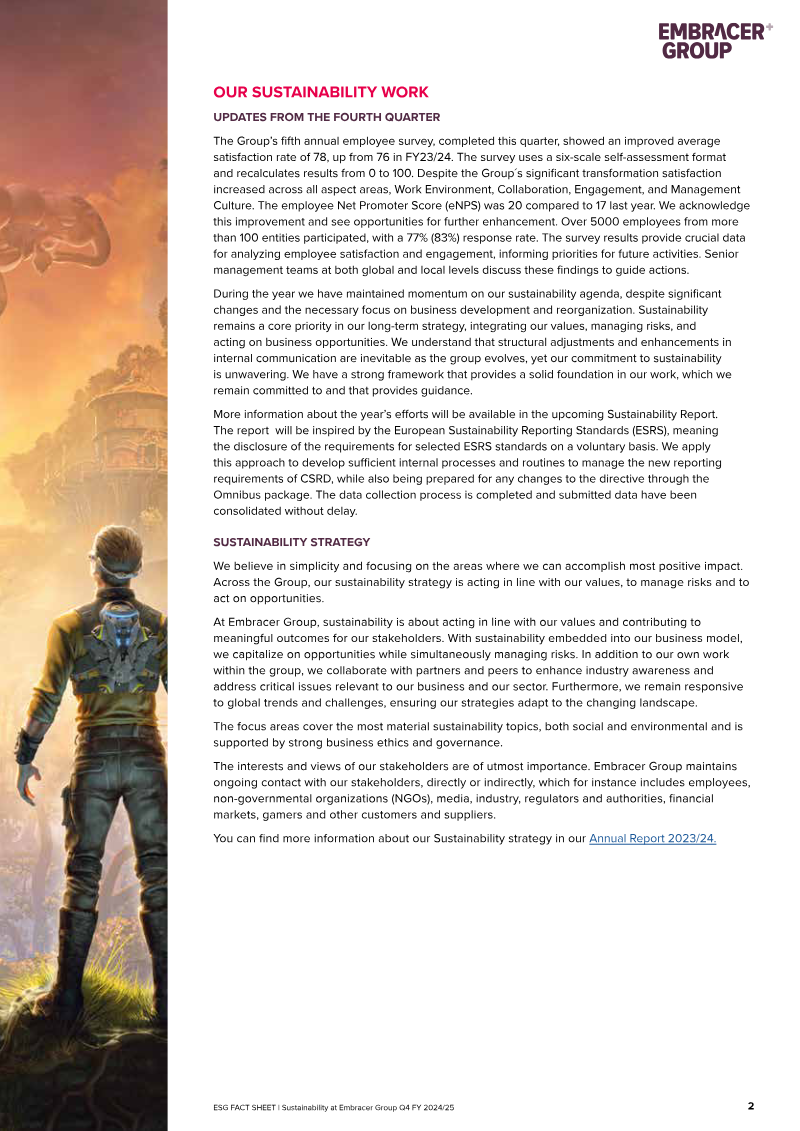
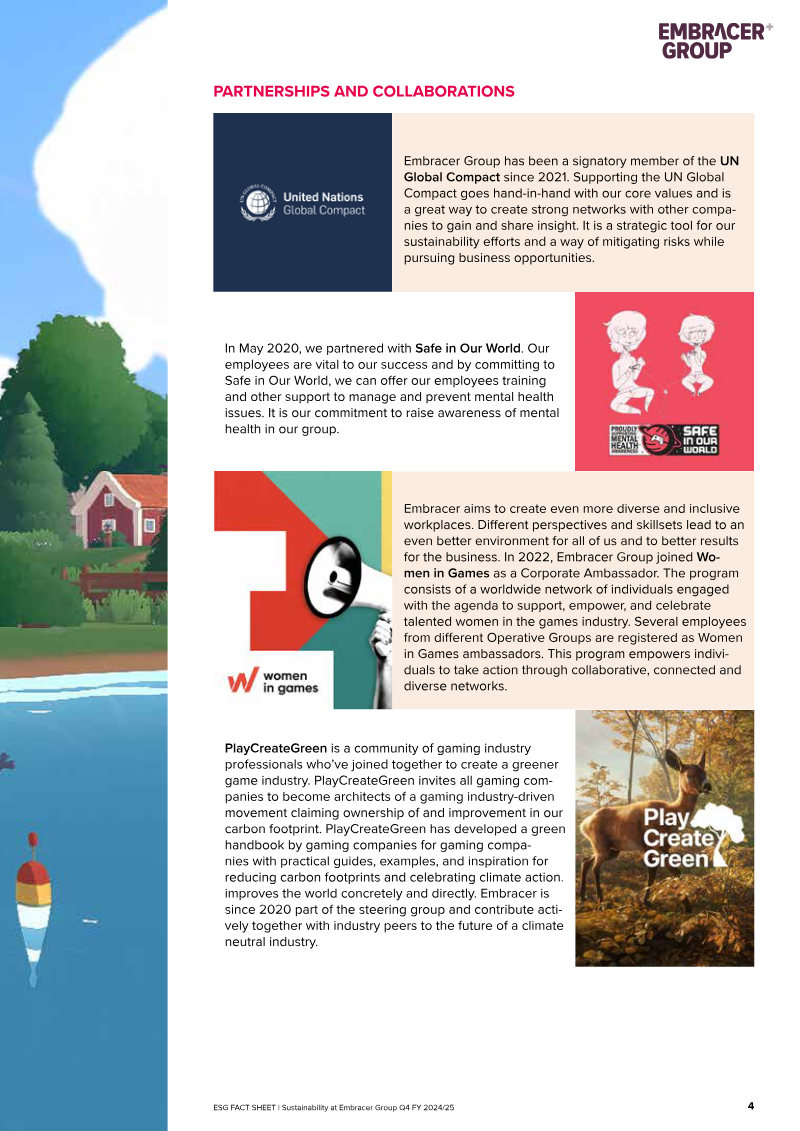
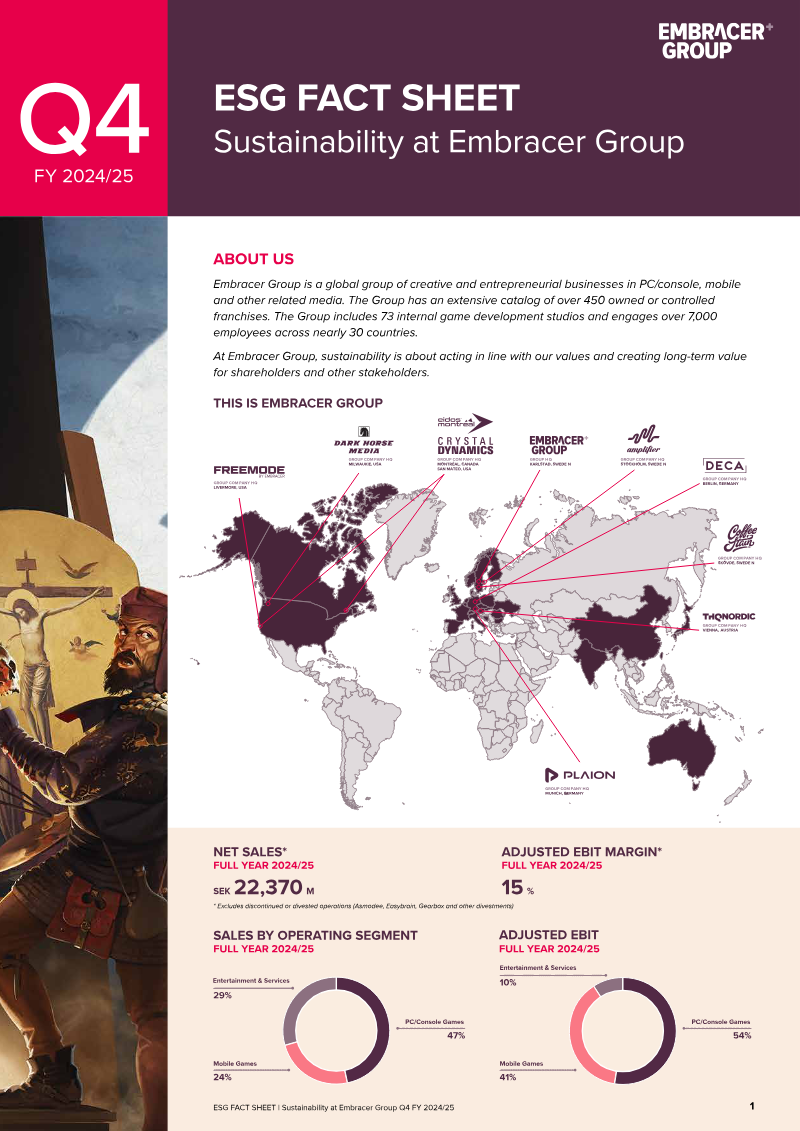
Sustainability at Embracer Group: FY 2024/25 ESG Fact Sheet
The Embracer Group’s FY 2024/25 ESG Fact Sheet outlines the organization’s commitment to integrating sustainability into its core business model, emphasizing value creation for stakeholders through risk management and ethical governance.
- Embracer Group reported net sales of SEK 22,370 million and an adjusted EBIT margin of 15% for the FY 2024/25, a period marked by significant structural transformation and divestment.
- Employee satisfaction improved to 78 out of 100, up from 76 in the previous year, with a 77% response rate from over 5,000 participants and an employee Net Promoter Score of 20.
- The organization manages its sustainability and governance through a framework of 17 group-wide policies and 17 instructional guidelines covering anti-corruption, privacy, and AI ethics.

Rebellion: “We don’t gamble wildly. We’ve a responsibility to our people”
The independent studio Rebellion prioritizes long-term stability and fiscal responsibility over the volatile, high-stakes development cycles that currently characterize much of the gaming industry.
- Rebellion maintains long-term workforce stability and avoids mass layoffs by prioritizing fiscal responsibility and eschewing speculative, high-stakes development cycles.
- The studio utilizes self-funding and proprietary technology to retain creative autonomy and mitigate the financial risks associated with external investment.
- Rebellion focuses on mid-tier titles that balance high production quality with controlled budgets to compete effectively in a saturated market.
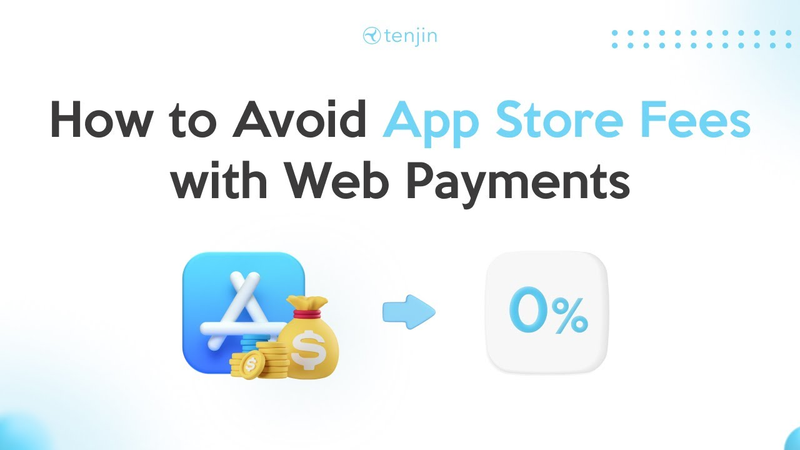
How to Avoid App Store Fees with Web Payments
Recent legal developments in the United States and Europe, catalyzed by the Epic versus Apple litigation and the Digital Markets Act, have fundamentally altered the mobile gaming landscape by dismantling anti-steering policies.
- Shifting to web-based payment channels allows developers to bypass standard 30 percent app store commissions, potentially increasing net revenue by 25 percent or more.
- Web payment models typically incur total costs of approximately 8 percent, consisting of a 5 percent provider commission plus additional pass-through processing fees.
- Legal shifts, including the Epic versus Apple litigation and the Digital Markets Act, have dismantled anti-steering policies, legally enabling developers to direct users to external shops.

Week in Mobile Games E53 - Will Squad Busters 2.0 revive its fortunes?
Supercell is currently navigating a critical juncture for its mobile portfolio, specifically regarding the performance of Squad Busters.
- Supercell is attempting to pivot Squad Busters from a squad-based mechanic to a hero-centric model in its 2.0 update to resolve an identity crisis between casual and midcore audiences.
- The 2.0 update for Squad Busters has triggered significant player backlash due to the aggressive removal of established progression systems and features.
- The mobile industry is experiencing increased volatility, highlighted by the recent indefinite delay of a major title just one week before its scheduled launch.

Six Figure Game Idea Workshop - Day #2
Securing funding for independent game development requires a strategic, multi-faceted approach that balances community-driven crowdfunding with professional publisher partnerships.
- Steam wishlists are a primary driver of success, with a conservative conversion rate of approximately 10% from wishlist to sale.
- Publisher funding tiers are generally based on projected ROI: small indie titles typically receive $50,000–$250,000, while medium-sized titles secure $250,000–$400,000.
- A successful 60-day launch plan for crowdfunding requires preparing a high-quality trailer and campaign page in private, followed by building an email list as the foundation for all marketing.

Squad Busters 2.0 and Supercell's YOLO Game Launch Strategy
Supercell’s Squad Busters 2.0 represents a strategic pivot from a casual, broad-market mobile game to a midcore-focused experience.
- Supercell has abandoned its traditional 18-month iterative testing cycle in favor of an aggressive 'YOLO' launch strategy, prioritizing rapid market entry over the rigorous internal feedback gauntlets that previously defined its success.
- Squad Busters 2.0 is underperforming financially, with monetization metrics currently falling below one dollar per download.
- The game suffers from a lack of cohesive identity, remaining caught between the strategic depth of auto-battlers and the real-time action of brawlers, which contributes to persistent issues with gameplay chaos and limited depth.

CD Projekt Red: "Nintendo’s audience is different to what it used to be"
CD Projekt Red’s recent expansion into the Nintendo ecosystem, specifically with the launch of Cyberpunk 2077 on the Nintendo Switch 2, highlights a strategic shift in how major AAA developers view the platform.
- CD Projekt Red is targeting the Nintendo Switch 2 to reach a maturing demographic that values high-quality, open-world RPGs but lacks interest in high-end PC rigs or stationary consoles.
- The studio is prioritizing physical media on the Switch 2 by including the full game on the cartridge to eliminate the friction of large mandatory downloads.
- CD Projekt Red treats the Switch 2 as a primary, distinct platform rather than a secondary porting destination, leveraging its portability to fulfill specific player demand for flexible gaming.