VideoPocketGamer.biz
Curated Panel: Global Strategies For Indie Success – Publishing, Monetisation, & Market Expansion...
28 May 202544 min video
Transcript
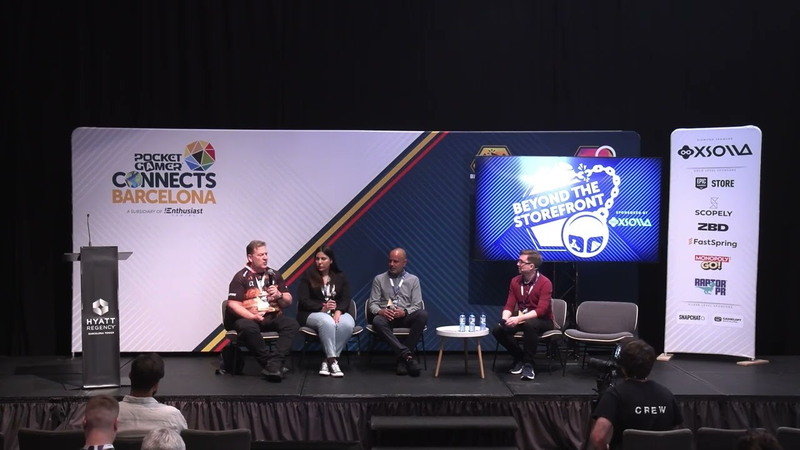
[Music] Heat up here. Uh, up next I would like to give a warm welcome to our wonderful partners uh, Exola. So, is Chris Meredith around? Yeah, he is. He's coming. He's coming. He's coming. So, he is going to be hosting a panel with uh, Stuart Dindy from Curve Games, Nick Paul from Yuki, and his his fellow colleague, writer Joseph Yan. So, please welcome to the stage and I'll let Chris take it away. Hi, good morning everybody. Um, sorry
for that uh quick delay, but we're all good to go now. Um, welcome to the uh to the last day of a fabulous show that we've had here. Um, and to wonderful Dubai. I'm really pleased today to be able to share the stage with some very weighty gaming guys who are going to talk about the region going to talk about the value talk about the opportunities that working in Dubai and around this region represent. So let me introduce take a moment to let them introduce themselves and then we'll kick off and get into the discussion. So firstly the far end Stuart Denzy. Hi everybody. Uh my name is Stuart Denzy. I'm the exec chair of the games publisher Curve. Um, formerly also involved with Yuki as a chair many years ago and uh the media company Intent which launched MCV develop mobile entertainment. Very much an indie publisher these days. Thanks J. Good morning everybody. I'm
Nick P. I'm chief exec at UK Interactive Entertainment. So we're the UK trade body uh for video games. We represent uh everything around 4,000 businesses from very large publishers EA, Microsoft, Ubisoft and so on uh right down to the uh fast growing indie community. So great to meet you all. Good morning everybody. Right is Joseph Jan uh senior vice president for uh strategic initiatives and government relations at Exola. I work with partners like Yuki and uh Chris on emerging markets and uh helping our uh customers and indies uh from AAA titles to enter new markets. Terrific. Thank you everybody. Um, so Chris Meredith, my background is completely video games from PlayStation, Warner Brothers, um, MTV, Gloom Mobile, a lot in video games. Probably not as lost lot as the collective guys have got here. Um, but let's let's kick straight into the first question that everybody's answer is why why Mina? What is the
value of Mina and what's the opportunity? So let's kick off with that general discussion and see what the guys viewpoints are from their independent um aspects. So it will be interesting to see. So Stu, let's start with you sir. Uh for us we are a global publisher. We're based in London but actually um UK revenue for us is only about 7% of our business. So when we look at a region like this, firstly we'd like to sell more games in the region and we're going to do that if we understand um how it works and who we should be working with to amplify our sales. Currently Mina is only 1.5% of our revenue which is about our total revenue is about 30 million $35 million a year. Um, we also know the uh the benefits of of digging into a region properly, getting to know the developers and having local marketing. We've done that incredibly successfully in Asia where we've built up a team of four people including um two who are based in
China. Um so we sell really well across China, South Korea, and Japan. We've incredibly successful. So, we're thinking if we understand the development community, we're more likely to find a game that will um enable us to maximize sales in the region as well. Terrific. Thank you, Stu. Yeah, I think games are a global community, right? We're all confronted uh with the same questions and we're all going through a moment of transformation for the industry, rediscovering new ways of doing things, new business models. And so if we can get that knowledge flow going of exchanging knowledge between Mina, the rest of Europe, the rest of the world, then we can navigate this new landscape together and we're more likely to find success. So it's partly about, you know, what can we share from the UK and Europe, but also what can we learn about this extraordinarily fastmoving industry in Mina. Yeah, very much so. I think also, and I know this will pivot into what Rice has got to say, the value of partnerships is essential in that mix, right? and understanding how where
we might be from Europe be burdened with history, the opportunities here are a clear perspective on just opportunity and how to realize that. So building on to partnerships, writers, I'm sure, will have something to say about that. Sure. I think u going back to your original question, what's exciting about Mina, right, for from an indie developer point of view to AAA developer point of view or a double A developer point of view, um Mina's a market with 380 million uh Arabic speakers, right? rich culture that uh hasn't been monetized and hasn't been uh exporting IP as well as maybe the likes of South Korea and Japan have been doing. And so the opportunity there is so massive in terms of how do we tell the story uh of a region that is so culturally rich. Um and partners like the MCC and the IFC are enabling that. Um, and I think also the other exciting element about this is when we're looking at the population of Mina, 65% of Mina is between the ages of 18 to 35, right?
Very much with the average spend in Mina uh being about $85, which is the highest APRU across all uh sorry in UAE across all across across all of Mina. Uh and so from a developer point of view, whether you're an indie developer or AAA developer, that is extremely exciting. And then if you can bring uh alternative monetization methods, localization, combine that with localization and be able to tell those stories uh from a region that is rich in history and rich in culture, you're bound to succeed. And I'm sure uh Sue here from as a publisher understands the importance of uh storytelling and uh being able to translate that message. Absolutely. We we're we're already speaking to developers here and uh and and from previous years. Our head of Asia, Glenn Wang, is here. If you want us to sign your game, Glenn's the guy to to meet. Um and we want a game that that can hit the consumers successfully. We would like to outperform um Western games in
this region. Yeah. Which is not a bad goal to have. Stu, while we're talking about that aspect, can you just on a more general side of things from an indie point of view, try and talk to the value that indies have in a reciprocal way both ways in terms of what we offer across Europe as well as what's available here. Talk to some of the value points for indies for me to say. Well, I think if you look at the indie sector, which is which is now going into a new phase, uh there was the boom during the pandemic. There was the growth of the indie sector, which curve was part of because we've been around for 12 years. There was the the super boom and and then there's we've been going through the the reality check. Um right now, I think um increasingly it's uh it's appealing for indies to self-publish. Yeah. Um I think it's easier to do. There's a lot of um external services that can be used. You can you can teach yourself how to do it and you can retain more of your revenue.
You can go on to lots of PLA platforms. You can work with partners such as Exola and keep more of your um revenue. And if I was a developer, I'd be trying probably trying to do all of those things. Absolutely. Um but I would also be thinking about what can a publisher bring to me and us publishers like ourselves and um Devolver our job is actually to uh ex is is to be able to detail why a publisher would bring something else and that could be it's not just about funding but it can be funding and it's not just about marketing but it is about reach. about um bisdev. It's about additional monetization from the game. Um understanding the development process, helping it be on time, right? Uh and in line with the original ideas, you know, boring stuff like submissions and um age creditation, all of that. Our position would be if you just want to focus on developing the game, yeah, our job is to make you as much money as possible.
again which is always a great goal to have and I think more so than ever being a developer now is all about the sum of the parts development is one aspect but understanding monetization understanding go to market understanding the fact that community is center point to all of those opportunities bringing them all together but you have to be doing that on a term-based situation every day almost to get the real value out of that so that that sort of dubtales nicely into the UK perspective of that and the presentation of that. So what are your thoughts on that environment nit between those the two points of the UK and here? I think the first thing is it's a time of immense opportunity, right? We are working in the early days of a medium that we've just begun to explore. And so I think working with people who have that energy, who are excited about the art of the possible, exploring new boundaries, exploring new business models, new ways of doing things that can only help all of us look forward and as you've said in the UK and Europe, we've got a lot to unlearn about where
we've come from. We can we can kind of walk more freely into the future. But also, you know, this is an incredibly fastmoving industry in a very slowmoving regulatory environment, right? So, you know, you just look at the recent epic ruling with with Apple and what that kind of creates as a time of opportunity for mobile developers in particular and you think, okay, how are we going to get this understanding of the dynamics of this industry washing through regulators, washing through policy makers? And when I come here with the free zones, the way that DMCC is set up, you have an incubator that's built around acceleration that's built around starting as you said with yes and then going on to what the question was of course. So, so I think there's a huge amount we can learn about a really pro business open regulatory environment that supports the kind of exploration and innovation that we're going to need over the next few years and also accelerates it as well, right? which is the key thing that the the the gaming development cycle now is just quickening with the AI and everything else. So we need to be attentive to that and be able to run concurrently between those two
points and and because the learnings here are so fresh, they're already running, right? And it's almost like we're playing catch-up a little bit in terms of that innovation. So leading into then how that works from a partnership point of view and also from a Zola point of view, writers, what are your thoughts on how that sort of can come together? Um so I think um UAE has what three 250 uh current uh game development studios right right 50 of which have been funded. So when we're talking about how do we accelerate indie uh development of indie games uh whether it's publishing or monetization or market expansion uh funding to me comes to mind as the uh most critical point of view. Um, and that's where Exola Funding Club uh kicks in where we ma we've got over 200 different uh institutional and uh ultra high net worth individuals and investors where we can connect uh uh developers whether you're an indie developer or uh maybe a or aa developer uh seeking access to funding and market expansion opportunities. But it comes
down to more than that right from a partnership point of view. Uh it's not just about having access to funding. It's having access to partners that uh like uh Stew that can actually help you go uh go to market provide that mentorship advice. It's great to be able to build a game, but how do you ship a game to a different region? And how do you uh localize those games, right? How do you adapt those games? How do you monetize those games? Um and then using uh alternative payment methods. So when uh Nick commented on the Apple ruling, right, versus Epic, I think that opens up a whole new uh door of opportunities for indie developers because you're no longer restricted by using platforms that are charging you 20 30%. Uh so you've got completely new distribution uh methods that you didn't have before. Uh and that doesn't just translate to uh what Apple and Google and others are doing, translates equally well to other platforms as well that are doing the same thing, right? they're charging you 20 and 30% without providing uh the traditional values that they've used to which was uh based on your gameplay
based on the metadata and all that you're able to provide easier user acquisition which has become a real issue for mobile game developers uh and we know Mina is a mobile first uh region right uh and that uh that to me opens up a whole world of opportunities especially if you can partner up with uh telco operators influencers or publishers who have a unique strategy ies around like how do you acquire users, how do you retain users and then uh work with Excel on monetization. Yeah, there you go. Absolutely. Just common sense really. Um as we move quickly into this new exciting phase of direct and consumer which is scary for some is a destination for most. I think that transition and I I mentioned before some of the challenges with that transition point. Um Stu, how are you presenting what what Curve do within that environment and giving best practice, giving best service to that direct to consumer while also while also s sustaining some of the value that
Curve represent and have grown their success on? Well, going direct to consumer is a challenge for us because we're a small company. Um so we don't have um all kinds of um investment uh funds to to try new things and we don't have lots of resource but we do know that we have to try it. Yeah. We have to build it for the future. Uh so we have um put our toe in the water working with you guys and and and we're rolling out I think 10 games u with their with their own um offering and we're going to learn uh and we're going to learn how to do it. Uh we're going to learn how to um build up consumer databases and and do direct marketing which we've not been able to do in the in the ward garden platforms. We're really happy with the way we currently go to market. Yeah. Um we've been very very successful. We've we've you know gross revenues of $180 million
across Steam. But we want what curve has been built on and my passion is to always stretch your distribution and stretch the revenue channels. That's why our existing successful IPs have got so many different ways you can purchase them. So for us direct to consumer is just a natural progression, right? If that's backed up by um uh changes in in legal opportunity, then great. But I mean we're not mobile first. We're not really on mobile as such, but we will be. So, we need to learn. Kind of been pushed in that direction, right? Yeah. We need to learn. Yeah. No, very much so. And that that that sort of that speed of change that is now inherent in the marketplace, but also that destination that everybody's clear to. How how are Yuki working or intending to work with the changes in the marketplace, the speed of action, the resources that indies need, not only in the UK, but all the other areas you cover, which are much wider than the UK, hence why you're here now.
Um, what what are Yuki's sort of plans to support that infrastructure? Yeah, I think we're really looking at this in terms of how do you engineer both ends of the supply chain? How do you make sure that as many companies as possible have as many opportunities to roll the dice as possible to kind of build that game that could turn into the the unicorn? At the other end, as writers said, we've got what 18,871 games came out on Steam last year. So, we've got a massive discovery problem. And so, the environment needs disruptors. We need innovation. We need new ways of cutting through, finding audiences, and new business models that underpin those innovations. So what we're trying to do is create the best possible growth medium, the most supportive environment we can where there are as few unnecessary regulatory breaks on that innovation as possible and as much targeted intervention and support as possible. So it's about giving people as much of a shot as we can but also about taking as many barriers away as we can. And you know as we heard earlier this is a fantastically
young industry. You know there isn't one business model that's going to sustain the way games are funded. So we need that space to experiment, to be bold, to fail, to learn, to try again. And so that's what we're really trying to build is that that really supportive environment which is great. And so that that really dubtales into what Exora's role within that environment should look like and can be with the solutions. How so can you talk to that and try and link those two parts together? Right. Sure. I think uh first of all, we got to change the uh perception of how we fund games, right? uh traditionally um VC funding uh VCs have been able to take uh and deploy capital into uh indie studios doubleA studios by taking the venture capital risk without the venture capital reward right uh and they've turned them uh NVCs traditionally have been more of a vulture fund rather than an enabling factor and so at Axilla what we're trying to do is we're trying to introduce a completely different uh method of funding video games by deploying regional uh VC funds uh that
actually don't take any equity, right? Uh when we deploy capital into video games, we don't take any equity at all. What we do instead is we set up uh special uh purpose vehicles, SPVS, uh that enable the studio to fund the IP that they're building and retaining a clean cap table in case they do want to raise capital in the future um or introduce new investors. at the same time prove that they're able to deploy great titles, do great storytelling um and create great engaging content, right? Uh and we do that through revenue share. So if they succeed, we succeed and that should be uh uh the approach we should be taking, especially on an indie studio because great games can come from anywhere. Look at Minecraft. I mean uh a little uh tiny studio uh that got sold for billions of dollars um and it's a super engaging game, right? Uh it's got millions of players. Roblox before uh was going to be dead before Tensson came in and actually uh did a capital injection and changed it around. So uh great games can come from anywhere. Yeah, I think that's uh that's what I'm
trying to say. And I think uh one thing we're missing and uh that's getting introduced at the moment is trans media, right? uh when we are doing storytelling and when we are telling the story especially uh for a region that is rich in culture like uh Mina is uh and when when we're creating uh whether it's TV or movies etc uh we should look at uh how do we users always want to consume more content right so when they're done consuming a movie when they're done consuming a TV show they want to continue consuming more content around that because they're so engaged and so how do we leverage an existing uh fan base and user base and drive that user base to video games and we all know video games as an industry is larger than music, movies and sports put together right there. So there's massive opportunity in terms of crossover and so if we can drive those users uh especially for indie developers if they can leverage that IP that existing IP and drive it to their video games uh that's going to drive massive amounts of uh opportunity especially when it comes
to monetization allow them to develop further IP better titles more engaging content. Absolutely. So yeah, I think we need to introduce better funding models around that. I I I think that sort of leads into a great point about community and and and I'd love our guests to share with them their insights and their best practices for community again from three different clear perspectives. But with the transition stu to DGC that we touched on before, key to that is the community. And as a publisher, you're going to be dealing with multiple communities along the titles you go to market with. So any learnings you can share and also the challenges of that going forward as well that transition into in a community-based management organization. Yeah. And and community is obviously the word we've all been focused on over the last couple of years. Um nobody says PR anymore. Uh unfortunately the um the uh specialist press third party specialist
press is not as important as it used to be and struggling to survive at all. current environment um because they're not the gatekeepers anymore. So, we have to figure out how we speak directly to our customers or potential customers. And at the moment, we do that by working with our developers because the consumers don't really want to hear Curve talking. They want to hear what the developers doing. They want to hear about the journey that the game is on. Um, we we support our developers so that they can answer questions quickly within those forums and uh lay out a road map of where the game is, what the vision is, make people make sure people understand the context of a game is really important as well. You know, a $10 indie game is not the same as a $70 AAA game, of course, but if you don't explain that to a consumer, you will get flamed as if as if you were some kind of evil mega corp. Yeah. So context means the consumer is more likely to come with you, more likely uh to give you a little
bit of grace. They will appreciate responses. They'll understand perhaps that there might have to be day one patches or whatever if you talk to them in advance. Yeah. Um and then alongside that um we we just need to figure out how we do database management in a in a you know um in a legal way uh and not spam people and not that that's the bit that we because we're not a a fully formed marketing organization. Sure. that's we're we're more likely to work with the devs to speak to communities that are interested in the game rather than to go on some sort of mega outreach to to multiple millions of people. No, no, absolutely. And that and and compliance is a is a very big part of that. And having that infrastructure to enable developers, indies to get to market quickly with an infrastructure that is centralized, I think is going to be key as a publisher going forward. Um
but it has its challenges. It has its challenges of making sure that you are current, making sure that you can work across multiple communities with a messaging that is bespoke. And I think that Yuki have a key role in that management with the membership base that you have the uh the orchestration of communication across that membership and also as we spoke about Nick being more relevant to what they're going to market with and how Yuki can assist in the monetization because I think that's key. We want them to be making the second and the third and the fourth game. This is not about what you're doing today. It's about tomorrow. Right. Absolutely. And I think there's two things I'd say. One is is really about the industry as a poster child for trust and safety. You know that if you look at the vast amount of investment the industry's put into creating safe online communities, policing toxic behaviors. We are not social media. We we actually model some infinitely better practice. And I'm not sure we're telling that story in terms
of community building. You know, we have big teams mobilizing to keep players safe because at the end of the day, we're built around fun. We want players to have a great time. We want them to keep coming back and we want them to be safe and to enjoy themselves and so we have architected our industry around that. I think the other thing in terms of reach is um you know there's a great presentation from Muhammad from games magic. Yeah very much yesterday who was saying uh two things I really took away from his seven points. One was uh build brands not games you know so have a relationship that's authentic as you say Stuart meaningful with your communities of practice. The other one is live ops, live ops, live ops is fundamentally keep that spirit fresh, keep breathing life into that game. And you know, we've got uh as I'm fond of saying as you now know, uh the first ever generation in human history of pensioner gamers, gamers over 65, you know, all far older than everybody here, of course. Um but they've got time, they've got spend. We've got new communities coming in all the time. And I think the only way we're
going to be able to reach those communities and build safe and trusted relationships is to innovate. is to use new tools, new approaches to share knowledge. Yeah. I also because of the position that you Kir in the ripple effect that then goes into general entertainment through the work you do with the government as well. I think that can have a positive force within that area. And like we spoke of before as well with that the things that happened or happened only last week with um with Epic, there's going to be more accelerations because that's those are going to be tipping points whether it happens next week or next year. They're going to be tipping points and building that up and making sure that we're just not about games anymore. We're about entertainment, right? That's the the the core part of this and making sure that what we do can have as far a reach as possible. because a lot of the guys I talk to here on about how do we how do we extenuate the brand value? How do we expand out the IP? I know Stu's got a very purposeful point about IP is the
most important thing within your portfolio as you're building that up. And I I totally agree with that because going forward the opportunity is how you put a longer lead onto the games you're doing, not this 90day, maybe 180day sales cycle. And that's seen now particularly with you Stu on curve that half of your back catalog represents your revenue line. So that shows how key that is. Yeah. And that's not just us. I think if you look at any of us at the moment um what we call back catalog. It's it's almost um a misnomer really because it's just catalog and it sells and um you you gain visibility by providing um a reason to gain visibility. So that might be that might be discounting, but it it can also be obviously um good planning with your with your retail partner and it can be content updates, right? And working with your dev in advance to figure out what those content updates might be. They
don't necessarily have to be super expensive. No. Um but with human fall flat, for example, we we've committed to four free um four free levels a year. We've committed to uh to skins. We've committed to special activity around regional events such as the Luna sale um for the Asian market and that's something that we would look at uh more closely for the Mina region as well. Yes. And that is how do you consistently bring your game back to the top even if it's just for a weekend because visibility equals revenue. Yeah. I'm going to stop calling it back. I'm just going to call it opportunistically catalog. Right. Um, but it but the the other reality is if you've if you've got a community already for a game, and we're lucky enough to have that on and five titles where we've got significant sales for those titles, it's easier to keep selling to them than to create a new community. Yes. And it's hard to bring people out of
Minecraft, Fortnite, Roblox. So that's the battle, the battle for attention as it always has been, even all the way back to physical. But people, it's the recurring I've going back in rather than I finished the game, I'm going to buy a new one. That's the challenge. Yeah. That that sustainment of interest within a community or within a brand or within a game. And I mean, what you spoke about there with just the one title, that was just one title. All those efforts around, when you scale that out to a much bigger part, it's a lot of work. I mean with all of that in mind writers with what's going on with what Exola do there's there's an opportunity of alignment between all of those things with the solutions right yeah I think uh one thing that's important when we're engaging with community right is uh we have to acknowledge the fact that uh we're engaging with different generations of uh gamers right uh we're going from gamers who were uh playing games 40 years ago to Gen Z's who are now engaging on platforms like Tik Tok
Instagram uh uh Twitch etc. And so how do you revitalize those communities? Going back to your point, right? Uh for existing IPs uh and how do you drive monetization around that? And that's all I think influencers uh and platforms like Tik Tok and uh platforms like Twitter etc. where the majority of the community sits, where your demographic that you're trying to target sits is super super important, right? U and Excel's direct consumer and our B2C efforts under XLA have been driven by that, especially our partner network where we've got uh celebrities, influencers, telco distributions, etc. And how you target those communities and those demographics is super super important. Uh and then uh going taking a step back, what message are you actually trying to deliver to those communities? is equally as just as important and the story you tell them. So you mentioned uh Lunar New Year in terms of doing those sales. They're great because you're engaging with a specific demographic and a specific region, right? Uh but how do you engage uh with and how do you move users or cross-pollinate users from
games like Minecraft to other games? U and that's where I think influencers like streamers and Twitch and esports comes into play. Even though esports makes up less than 2% of the gaming industry, it's it's a fast and uh fastly growing uh market segment that I think we shouldn't be ignoring. No, absolutely. And it dubtails well into the community aspect because one of the one of the challenges and the benefits of the whole esport environment, it's got huge community, but how do they bring them into play in terms of a a longtail monetization kind of thing really? Um so, so let's refocus back on Emier. Let's talk about the learnings we've had here. Let's talk about how what we've learned in the last couple of weeks and we spent a lot of time together here. What learnings you'll be taking back and then what you can export back into this territory in regards to the operations that you all lead from a from an indie point of view and from a curve point of view. Stu, where would you pivot on those kind of things?
I think um the emergence of an event like this is really important where everybody comes together. I think there's a real desire to not necessarily just Dubai but to create an identity for the region. So we saw that um with the um uh the Mina Magillis event the other day where there was 37 different um games companies in the room all wanting to feel part of uh of a community themselves. And within that you'll get um you'll start to see people move from studio to studio and people will swap good ideas, right? Um I think it's for me is clearly more of a mobile driven space. Sure. Um but I think with the uh with the growth of of um mobile gaming in in the sense of Steam Deck or Switch 2 or Play Anywhere from Xbox, I think actually um the the the more traditional games market is going to lean into the natural games playing habits of people
in this region. So I think that's something that I'll take out of here. And from Glenn's work with the studios that are in this room, there's there's clearly a new breed of indie developer coming from this region. Um and um I hope nobody no other publishers are talking to them. Always always helpful to be first to market, right? Um so yeah, please make sure that if you want to have a conversation with Glenn on distribution of your product or Stu as well that they're both going to be around after this. So please take full advantage of that. So from your point of view, Nick, in regards to Yuki, I know you and I have just been blown away with the amount of opportunities here, partnership based, but also tactically as well. H how do you think you'll be able to rationalize those and and and have a meaningful relationship that'll be two-way going forward? Yeah, I I think there's so much opportunity here. So, I'm going to spend the next three weeks sort of filtering. I think the the first thing I'd take from our
conversations with DMCC and DIC is the games here are seen as both an economic product and a cultural product. So you can have tremendous financial returns on investment, but you can also express Emirati culture and the kind of depth and cadence of of their kind of heritage and identity that I think we really need to relearn back in the west. So I'm going to be taking a lot of that back. Um games as tip of the spear for tech adoption and mainstreaming. you know that there's a lot of dialogue here around um AI and its application into gaming, the use of gaming to kind of introduce users to new financial models to web 3 to blockchain. Uh so really not seeing gaming as a vertical entire unto itself but all of the spillover impacts of games into wider industry. I think there's a lot we can take there. The UK is brilliant at making games. You know, we've got a fantastic pedigree. We've got a great track record in in telling stories that are heard around the world. New IP generation. We need to learn how to scale and what I'm seeing here is a brilliant platform for scaling. And so
what we want to do is create a tunnel from the UK to Dubai so that you can have a great idea in London and you can scale it here. Yes. And that's what we're going to be focusing on building over the next couple of months. Good. And and I I think we've all realized that sort of being here has a much much much bigger value in terms of being able to touch, meet the guys, meet and have conversations because then the reality hits you very quickly. And I know um both the guys on the stage, all the guys now are realizing that we really need to be here to be able to work and build the the future opportunities and alignment that we can we can achieve together, particularly now that you're just around the corner. you know, it used to be Dubai all it's a long way away. It's so not now. And I think that particular in the world of gaming is realizing that and we're we're working hard now with our partners DMCC and Dubai to be able to bring that proximity closer and make it more relevant. So, so writers, from a
from a a corporate point of view, from a um a value proposition that this territory and emerging markets represent, what are what are your thoughts and what are your learnings from this last couple of weeks? I think there's a lot of innovation happening here that uh we are missing in Europe, right? And there's uh over legislation in Europe, over regulation that is restricting uh innovation. And what we've seen with the DMCC, the IFC, and all these free economic zones that Europe is severely lacking in, right? Uh uh uh to Nick's point, uh Europe is great at storytelling and we're great at making games. We're terrible at uh innovating, which is why Europe's been left behind, right? I mean, uh uh you look at the American markets and you look at uh the Emirati market. the fact that they're able to create these ecosystems and enable innovation is something that is severely lacking and missing. And I think uh my biggest takeaway from a corporate point of view is how do you build ecosystems? Uh how do you uh effectively enable uh not only
innovation but also uh storytelling? How do you enable uh funding uh and alternative funding models? And how do you uh enable developers uh to feel empowered, right? uh and to export that talent out. Uh and also I think uh one thing I've noticed uh from the ecosystem building point of view is a clear strategy uh and alignment between government and business. B2G is super important. Uh and that's something that's lacking. uh Yuki is working very hard uh in the United Kingdom but there is uh across all of Europe I think there's a fragmentation of uh uh different associations working after their own markets or looking after their own uh access to funding or whatever it is whereas here we have got stability and alignment that is missing across the board so I think if we can take one learning away uh from uh what the UAE has achieved uh and what DMCC has achieved in particular on the IFC is take their model of building ecosystems uh whether it's whether you're building
utilizing UI AI sorry uh or enabling uh gaming ecosystems is take what they've done take their model and try and introduce this uh back home so we're stronger together right and I I agree with you the autonomy that bridges yeah very much the autonomy that exists in Europe is is a strength in the territory but a weakness across the whole of the region so we've got to get better at that I know Nick's at the front end of doing that with his work in government, but again stretching all across Europe in regards to that. So, we're we're right on the cusp of losing our time slot. So, I'm I want to open it up. Does anybody got any questions for these guys? They're going to be around the rest of the day to take any detailed questions you may have, but let let's take a second to uh answer any questions. Now, there gentlemen here. I we don't I don't Let me Let me give you my mic, my friend. Let's Let's give you that. Oh, have you That's all right. No problem. There we go. Thank you.
Hello. Hello. Thank you guys so much for your talk. Um it's exciting to have you guys here. Um I want to ask uh how does an indie start this entire process of like bridging this gap between publishers and funding? Is there like a formal channel? Is there something that's like an initiative that we have to look out for? Uh yeah. So how do how do we bridge that gap? Basically I I'll kick off from the Excel side. So if you are looking for access to funding and uh or access the incubation accelerator programs, uh Excel has all three. So you can go to excel.com/funding. Um and so we do have a funding platform where you can register as an indie if you've uh got a title that you want to uh develop or an idea. uh and will help connect you with the investors and uh uh provide you with access to capital. We are looking at launching a uh new uh funding platform here in uh uh UAE uh in particular to enable local developers to get access to funding uh that is much more friendly
than traditional VC access to funding like I said previously and then I think on the uh incubator accelerator programs if you're at the very very early stage we're going to be working with our partners at DMCC uh to provide you access to the incubator programs uh to help you do market validation uh put your team together uh build an MVP product and and get you on the accelerator stage, get you to the investor ready stage, and then I'll hand it over to you. Thanks. Yeah. So, we're doing a lot of work on the scaling journey. So, how do you go from like pre-RO really early stage group of friends scaling into your first game and then building into a successful game and reinvesting. We really want to see sustainable businesses emerging that reinvest in their tech, their IP, their people. And so, that's what we're building this kind of on-ramp towards. I think some of it is about being a part of the community is kind of reaching out being opportunistic looking at opportunities like what ex are building here but also always thinking about you know what's the best option for me rather than following paths that have been built
before we talking to a lot of people who are bypassing a lot of the structures and going straight to market to test their game. So just thinking about what's the best fastest way for me to prove the concept that I'm working on before I make a massive investment up front. So I think just being open to new ideas rather than just following well-worn paths uh is going to really help in this kind of just very dynamic environment. Yeah. I mean all I would say is if you if you can avoid taking funding from the publisher you will retain more of your royalty. So I would I would look at all the um all the different options that are available in in uh funding from from DMCC or DIC or Exola. um if you can and and keep your independence, retain always retain your IP and be wary of financial institutions. Perfect. Stu, keep the mic. Final thoughts, final one one clip sentence of learnings helping here.
Uh I think there's a desire to create uh a gaming ecosystem here. I think there's a desire to make people come back regularly and build it up. can see that with um as I said with the the community work that the companies are doing. Um and I think you you're not held back by history and I I would I would expect uh to see um originality in game design, but I'd also expect to see cutting edge when it comes to using tools like AI or building new engines. I think that may be the area that this this region can really get ahead of the traditional markets. Super. Thank you, Mick. Yeah, Nick, what's your final thoughts? I'd echo exactly the same point really. I think what we've been through in the last three years is a big old global reset in the industry, which means we're all learning together. We're all starting a fresh and focusing on the fundamentals. You know, focus on the fun gameplay, gameplay, gameplay. Create games that you believe in and you believe that other people are going to want to play. And then be ambitious and
opportunistic. work with partners like Exola, you know, but really kind of be excited about the thing you're doing because this is an amazing moment for the industry. Very much so. And final thoughts, Francis? Um, great storytelling. I'm I'm going to circle back to great storytelling. Uh, you I mean this region has such a rich culture and such a rich history. Uh, and the stories haven't been told yet, right? the same way we've been uh able uh the same way western markets have been uh doing exceptional storytelling exceptional storytelling on behalf of regions they don't even know about right so uh what I would love to see uh coming out of this region is more uh cultural and IP expertation to global markets so you guys define your own storytelling uh and uh tell your own stories uh and create that engaging level of content and then when it comes to the utilization of AI I think this region is going to definitely lead uh AI development and it's going to make smaller studios be able to develop more content at a faster pace, cheaper. Uh,
so you're no longer going to need to spend 70 million, $100 million to develop AAA titles. You're probably going to go down to 20 30 and you're going to need a team of 30 or 40 people instead of a team of 100 or 200 people. So that's the opportunity. Perfect. Thank you so much. Thank you everybody. We're right out of time now. As I said, all the guys are going to be around for the next couple of hours. So, please take a moment, exchange ideas, exchange contact points. Certainly, um, we're going to be back here. We're committed to this territory. We're committed to Dubai in the future development. So, if if we can help at all in regards to your endeavors, whatever they might well be, we're here to help. So, thank you for your time. Thank you for attention today. And have a great rest of day. Thanks, everybody. And thank you, Chris, for moderating such a fantastic panel. Thank you, mate. [Music] Heat. Heat.
[Music]
Auto-generated captions from YouTube — names and numbers may be misheard.
Key insights
Distilling the key insights…
Ask AI about this video
Cite this video
Citation
Generating citation…























Comments