VideoDeconstructor of Fun
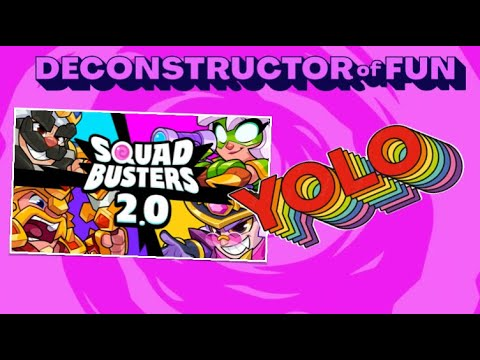
Squad Busters 2.0 and Supercell's YOLO Game Launch Strategy
16 May 202515 min video
Transcript
[Music] So, because it was a slow news week, I was allowed to to talk about Squadbusters. So, Squadbusters and Supercell made some news. In short, Supercell has implemented a significant reboot of its mobile game Squadbusters, aiming to enhance gameplay clarity, appeal to midcore players, and re-engage lapse users. This overhaul, referred as Squabbusters 2.0, introduces several key changes. So, the key updates are pre-round squad selection. So, now you can choose your hero and then squatties before each match. There actually only four heroes. I'm going to talk about that a bit later. And that allows strategic planning and team composition. Yeah. And basically, they're adding like agency back to the game. You know, a lot of my friends anecdotally were like, "Oh, my 5-year-old loves squadbusters because you just run around with this big group of and it's like just [ __ ] happening on a screen." Yes. And I think one of their insights was like, "Oh god, we need to give a little bit of agency
and purpose to what you're actually doing." And I think that this hero idea of, you know, once your hero dies, I think your team dies or something like this. And that that was the impetus. There's heroes, there's squatties, which are like the two assistants for the hero from the beginning. The cooldown based powers. So now new abilities with cool down timers have been added, enhancing player agency and tactical decision-making during matches. So meaning more buttons to press and play. and then refined target audiences. So now the game design and marketing has shifted focus from everybody to midcore gamings aiming to better align with their preferences and expectations as you well know you know if make that everybody likes then that's the game that nobody loves. So what challenges according to myself because this was on the constructor fund blog what they had before this in my opinion they had four big challenges. Number one was limited gameplay variety. They only had a single gameplay mode and they kind of still have it. And the new character
additions, every time they dropped these small davies into the game, they didn't really change the gameplay. They didn't really affect the meta. It's okay. Now I have a new in this big squad of guys. And doesn't really change how I play, whether it's a minor or a barbarian, at least to me, like when you have so many of them. The game also suffered from, in my opinion, shallow progression and economy. So you upgraded the characters and the squad busters that required collecting of super large quantities like hundred of these turns into one of that and so forth. It's like this bug gota style of a thing where you're getting constantly these prizes but they don't really matter because you need so many duplicates and that made the progression in the beginning feel pretty good but just after playing in a little bit just felt that you're not making progress and everything felt unattainable. And then they had features like the home screen building which made absolutely no sense because there was no function and because there's no visiting in game. Who am I building this town for me and there's that like why am I putting these decorations anyway? But that was as one of the sort of a progression vector that they put that
just has no meaning. And then the third issue was like lack of depth and mastery. So they really, as you said, 5-year-old played it and liked it because they prioritized accessibility over everything. And that resulted in a gameplay that lacked depth and any opportunities for skill development. It's a 5-year-old just moving around this little bunch of funny characters with great VFXs, funny sounds, great music, but but there's no mastery. And it also felt incredibly chaotic. So difficult to understand what the hell is happening, how am I improving? And if you are a competitive player, that just leads to frustration and disengagement because you don't know what the hell is going on. And then finally, the issue that is always going to be remained because they were in soft launch for such a short time, essentially a month of a proper soft launch compared to Brawl Stars that was 18 months in soft launch, multiple pivots and still struggled after the initial launch phase. So they kind of suffered from that. So let's talk about after the changes. What's the game actually feels?
What is Squadbusters 2.0? Yes, it's awesome. It looks great. It sounds great. All these elements are there. But when we talk about the core, the main changes are it's faster time to kill. There are more controls, more agency. There's more depth, but they still have many of the same issues. So, you know, as I said, there's no archery controls anymore where you can't where you have to stop to shoot, but they actually shoot as you walk. They shoot a little bit faster when you stop. The building was out because they changed the camera angle, but actually it's not out. It's still in. It's just even more stupid. So, I don't know what to say about that. You start the game with a relatively strong comb because before you started with one baby, but now you're starting actually with one hero unit, which is pretty strong, and two of these squatties, which is, you know, the first levels. So, that's already three in the beginning. And that removes that early buildup that persists in this game and in battle royale games where you're kind
of like getting stuff and you're not really engaging, but that's the resource gathering phase and you can't really kill anybody because you're so weak. And that again reduces time to kill. So now you get into action pretty fast. And also they remove the match three. You have three of the same turns into one more powerful and they turn it into match two. So again, you get more powerful characters faster and that reduces time to kill. So time to kill reduction has been clearly the target of everything. They added the heroes. They are upgradeable. You get the hero points from doing the quest and that sort of creates that collection variety mechanic as in Brawl Stars, but it kind of doesn't cuz you have only four heroes in the whole game and you start with one and they allow you to choose between two. And so even if you unlock everything in this game that has been out for quite a while, you get four different heroes. That's not crazy amount. Each hero has three three sort of attributes. You got the big powers. So like with the archer queens, the sniper shot, then you have this sort of a two different traits that you can do.
It's they're almost like spells and then you have one sort of a passive ability for each hero. So when you choose the archer, then surprisingly there's different classes and now you take classes of these squatties. then they shoot faster. Pretty basic stuff. Um, and all this above creates more progression vectors which they suffered from and that was the one issue that they needed solving. But the other issues still remain. The game play is still repetitive. They only have a single game mode and now even less choice of characters due to this hero. Uh, and that's a very stark contrast to Brawl Stars where the gameplay changes with every game mode and evolves with every new brawler coming in and kind of updating the meta of that game. And the game play, as they said, they tried to make it less chaotic. It's still incredibly chaotic, and that makes, at least to me, feels unmasterable. So, when I think about this game, I think that it's almost a combination of two games, team fight tactics and Brawl
Stars. And it's not like they left anything out. They just put those two together. And Jen, you know, you know better than anybody cuz Yeah, cuz you worked on it. And it's the game that of my nightmares because it's so difficult. I played I think 3 weeks before I got my first win. Well, yeah. I don't know about your analogy cuz TFT is it's an auto balor like you said it and then you know you watch the action play out. You don't have that autonomy during the actual battle, but the chaotic nature is the result of the strategy that you're it's a strategy game. Yes, it has a really fun visualization. Yes. I mean, I don't know. It looks like you're doing that the entire time here. So, so you put it perfectly. I mean, because team fight tactic is all meta, no core gameplay. Like, you can move around where they stand, but that has a minimum effect. It's all about what kind of a team composure, how well you understand the meta, what cards you pick, when you push on resources, when you push on. It's a complicated game, but it's all meta and it's all thinking. It's like poker meets chess, like the timed chess
meets poker, but there's no skill elements in how you move your fingers. In this case, they are implementing all these elements from team fight tactics like the classes and the origins and it feels like these elements are coming in. So, you really have to think about how you put the team and the randomness is there. what kind of character do you buy from the next chest? Now, they went from three to actually buying two, so they kind of simplified it. Anyways, that element persists, but then think about you have team fight tactics and you add on top of that brawl star. So, now you actually have to move the whole crew all the time and shoot with your fingers different kind of like shots uh on different like it would be too much. I have to think and do all these things. Like, I'm not a woman. Like, I'm just I can't do two things at the same time. Poor kid. I kind of think you're too old for this. I mean, listen, the hard thing for us to do is what works for us and what works for the player. And I think you said it best, which is when they originally went out, they were trying to be a casual version and they were trying
to attract everybody. And you know, in my humble opinion, you should really focus in on the core and you should build the game for the core and market to the core and then expand once you see where you can go. And they had a lot of early signals. I think in their PR article they talked about well the early signals show that we perhaps had the ability to go broader than we thought. And sadly that happens sometimes. And so in this case they're trying to go a little bit more core. They're trying to dial which is great right. I think they talked about prototyping this in the UK actually at the old uh Space Ape typed it in the UK brought it in and matched it up with the Helsinki team and here we go. Squadbusters 2.0. They had success with Brawl Stars when they reimagined it. So, you know, let's see where this goes. It is not my kind of game, and that's okay. They're not making it for me. They're making it for a 18-year-old boy is what it looks like. I had a fun conversation with a person who shall be unnamed cuz, you know, he don't wants to be quoted, but he says um that Supercell
uses YOLO approach to launching games. And I'm quoting this person who said, "It's like they just got sick of measuring every detail and being super careful and are now just saying, "Fuck it. Let's launch some games and figure it out later." And I feel like this is what's been happening. And I understand the reason because think about it. Supercell hadn't launched anything since Brawl Stars. And that's what, 2016. And they had this insane internal gauntlet of feedback that just killed all the games. Like I I was there. I remember it was the type of feedback that the game teams were getting was incredibly blunt and hurtful if if you were working on that on that game team. Like I remember when Boom Beach launched, one person just said, "I'm embarrassed to work at this company for launching such a shitty game. That guy made a billion dollars. Was insane." So that that has kind of been changed to this where they had the success with Brawl Stars where and it is phenomenal success that that they launch this game so many pivots and
they kind of figure out so many problems and then after what four or five years the game is not doing too well and they just come out out of woodwork and again pivoted again add such a big elements and get it to massive growth cross the billion dollar line and so I think that instills the type of a belief inside the company that we can [ __ ] get out of any tail. spin because look what we did with Brawl Stars. So my advice is stop thinking about mobile as a launch and start thinking about it as slow and steady wins the race and sure if you want to you know start trying it put it in some markets see if you can scale it and then slowly start kind of building that on there is in mobile the benefit is it's not aa PC launch where you got to you know make a moment because you're selling all those units at that one moment in time there's no rush anymore everybody like stop thinking about a launch and start thinking about it as slow and steady wins the race. I I want to talk about the future, but I just can't stop focusing on the past. I just
don't understand how a mistake of this magnitude could be made at a company like Supercell that is so experienced to put out a game that clearly was not ready with no beta and now we're reeling back and changing things and like completely revamping the whole game. It's like why now? Why wouldn't you just leave it in beta and do that then? You know, they didn't need it. This is the whole thing. It was such an unforced error. Brawl Stars was killing it at the time. Yeah, it they didn't need any of this [ __ ] you know? And now the game is still not aligned with what the market wants or is willing to spend money on. And I don't think you in your whole [ __ ] thing, you didn't talk about monetization at all. Like, have they improved the way the game monetizes? The thing's doing like less than $1 per download, right? That's a pathetic at this point, right? For a modern game. They have such leverage with their network introducing these games that they should be making games that monetize less. but not that don't monetize at all, you know. So anyway, that this is just an unforced completely unforced error, right? In my view, it's
interesting because like when you read the interview, so I was reading it on mobile gamer biz, it had Rob and forgot the gentleman's name. He was from Space Ape. He's the new head of of Squustbusters. And you know, they were talking about questions were like, "Do you regret of having such a short soft launch?" And they're like, you know, like hindsight. I don't know. Like we could have done a couple of things better. Public article. Like number one, kudos for even doing an interview. Yes. Yeah. Because everyone, you know, people like us are talking [ __ ] And so what, you know, of course they're going to be like, well, you know, we could have been better. We could have done it different. Kudos to them for kind of even saying that level of like, yeah, like, you know, in hindsight, what's the dude going to say, man? He can't come out and [ __ ] on like past work. The takeaway maybe from the interview is how Supercell has evolved. Like they were saying that this game has been made now out of three locations. So it's made out of Shanghai and London and Helsinki. So there's three studios working on this game at the moment. And also there was an interesting question when they asked
them like hey like do you and Brawl Stars like talk about it cuz Brawl Stars is this you know this undertaker of a character just [ __ ] comes out of the dead all the time. Can't die. Yeah. Can't die. And the quote is like, "No, the squad team did not swap notes with Brawl Stars team for this reboot despite the latter game's big comeback." So they suffer from exactly the same challenges that any corporation suffers, which is, you know, multiple locations, how to move internal knowledge from one another. So it is a normal highly successful mobile publisher rather than the sort of a, you know, the story of the first decade of Supercell. So it's interesting to see the evolution of this company to um publishing powerhouse. [Music]
Auto-generated captions from YouTube — names and numbers may be misheard.













Comments