VideoDeconstructor of Fun
Apple must allow Fortnite back on iOS — but what does that really mean?
26 May 20257 min video
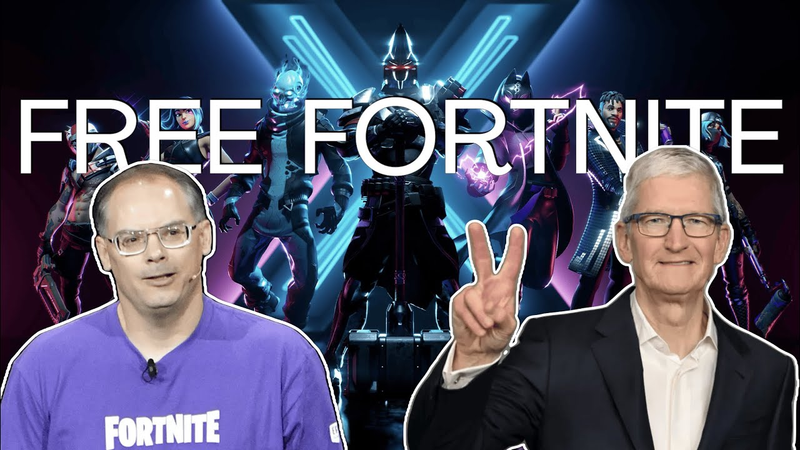
[Music] Fortnite is back. Fortnite is back after five years. A huge win for publishers against the evil that is Apple. The evil dictator has now been squashed. You know, they have been acting at odds with mobile game publishers since the [ __ ] very beginning, right? And I believe that the publishers are the ones that helped built this [ __ ] platform. Now, to be clear, and I want to clarify my view on this because I've said this a million times, the publishers owe Apple and Google a huge, huge debt by creating this ecosystem because before that, it was jammed at on like a gajillion phones. Every [ __ ] manufacturer had their own OS. Like, it was not going to be the industry that it is today under that rubric. Just clearly, like, let's just be clear on this point. And so they created a workable platforms and
they deserve some credit and also some financial windfalls from that. But Apple abused this goodwill from the very [ __ ] beginning. You know, making discovery at the store was a [ __ ] disaster on the redesign. They put together like these requirements for metal which made no [ __ ] sense in order to like create obsolescence of the hardware. They were absolutely bullies. bullies to the development community for years and years, right? Exercising their authority in every aspect of this business. And then most recently is at creating this privacy thing that was complete [ __ ] [ __ ] and kicking the publishers in the balls. Okay? Like that is their legacy, right? In terms of how they've dealt with us, right? And the key part of this whole thing is that they never really provided an ongoing service that was justified to 30%. like they didn't make any investments in game center in terms of you know discovery like fixing the [ __ ] store like
nothing really nothing besides providing a platform right and so thanks to Epic for their efforts here and the insane financial commitment to making this thing happen for this lawsuit which I think has been going on for 5 years now right you know since since it was pulled from the store over hund00 million in legal legal fees is what I saw. I mean, Tim fought the good fight, dude. Like, I got mad props to him. He set up a whole [ __ ] organization and legal team to [ __ ] fight this thing at Epic. So, good for him. Now, it is possible that Apple wins on appeal and not have to pull down Fortnite. But I think that the cat is kind of out of the bag, right? Apple will have to acknowledge they have lost because in essence, they had been a bad actor for over a decade in the space, you know, like just [ __ ] give it up, you know? So for me, I've been doing a lot of analysis around this, talking to a lot of people of what this means for the ecosystem, but I'm not going to go into that right now. But I think what their response is, the power
response is just to reduce the fee, right? If they if they do, they may not do this until they see real traction from third parties and and people moving off the store. But I think they could put put a [ __ ] cork in it pretty quickly if they brought it down to like 15 to 20% because then the switching costs will be relatively high, right? And I think they kind of do justify, you know, a premium over, you know, the transaction fee. And that would be in the 12 to 15 to 20% range, you know. So anyway, I think that would probably be the move here, but we'll we'll see what happens. We'll see what happens. But I'm so happy for Epic. I'm I 100% appreciate what he had tried to accomplish. It seemed like an absolutely impossible task, you know, when it first started, but I think he has become victorious. And oh, sorry. And the last point I'll make is that with this ruling, it just gives the power and momentum for the DMA and the UK agencies and Europe agencies to basically initiate these same type of rulings where everyone's going to be able to do this around the world, but
we're far away from that. We also have Japan and Korea obviously are in a different situation as well. So these changes are in the US only, right? So this Fortnite is only available in the US. So this has to move nationwide, worldwide to get the real impact. As a veteran UEFN developer and I guess the the king of rabbit holes as as Crest put it, I'm really excited by the news, right? And really excited that it's going to bring more CCU back to Fortnite. And just appreciative of Epic for putting up this fight. I mean, they've forgone tens if not hundreds of millions in revenue on iOS and Android over the past couple years on a fight over principle. Basically, not a lot of businesses take that sort of stand. Obviously, they benefit from it, but it's in their long-term interest, but really this was a principled fight. They didn't have to do it. They didn't have to fight this hard. And uh thank you for bringing more users back to Fortnite. The only two things I'll add in terms of my frustrations when I was still working on mobile games. one whenever we would
have talked to the editors of the Apple store people behind the scenes I feel like they didn't have a good grasp of the differentiation between games and there was a ton of push back a kind of this almost authority acted as if they unders they would say you're copying this game even though the games are fundamentally different designs so it was this lack of understanding then you wouldn't get featuring granted I don't know about anyone else I mean chime in when we when we launch this episode but the featuring used to be something that we all wanted we would get these we'd get great users Well, at least better users than we were getting now, but featuring now means nothing. We would be like, "Oh, featuring eh, it might as well have like just give me some randoms. Give me some randoms." Like, we actually saw no major uplift from it. Now, Grant, if you saw uplift, more power to you. Glad for you. But in the games I worked on, we did not. Yeah. You just saw noise in the data and like what the [ __ ] happened? Why am I all the KPIs down? Like, what the hell is going on? Is the game broken? Yeah, pretty much. That's that's featuring Apple's app store is broken, right? [ __ ] the
[ __ ] The IGN guys came in there with all that nonsense. But they hired they hired that new head of app store. You remember it was like years ago or something. What happened since then? I don't know. They just they don't know how to run retail. They don't know how to do online retail, I guess. I mean, I don't know how hard it is to hire people that I mean, this is not rocket science, but whatever. Anyway, moving on. Hopefully, they'll figure [ __ ] out. We'll see what Apple's response is. I'm really excited to see what the next stage is going to be. [Music]
Auto-generated captions from YouTube — names and numbers may be misheard.
The return of Fortnite to the iOS ecosystem marks a significant, albeit complex, shift in the long-standing legal and commercial conflict between Epic Games and Apple. While the platform providers originally facilitated the mobile gaming industry by consolidating fragmented operating systems, Apple is characterized as having abused its market position through restrictive policies, poor store discovery, and a lack of meaningful investment in developer services. The five-year legal battle, which reportedly cost over $100 million in legal fees, represents a principled stand by Epic to challenge the mandatory 30% commission structure and restrictive platform control.
The current resolution highlights a broader trend of regulatory pressure, with the Digital Markets Act in Europe and similar initiatives in the UK, Japan, and Korea signaling a global shift toward more open mobile ecosystems. Despite these developments, the immediate impact remains largely confined to the United States. Analysts suggest that Apple may eventually mitigate further attrition by reducing its commission fees to a range of 15% to 20%, a move that would likely increase switching costs for developers and stabilize the current platform model.
Beyond the financial implications, the discourse emphasizes deep-seated frustrations within the developer community regarding Apple’s retail management. Critics argue that the App Store’s editorial and featuring processes have become ineffective, often failing to drive meaningful user acquisition or distinguish between distinct game designs. As the industry moves forward, the focus shifts to whether Apple will modernize its retail operations and fee structures to better align with the needs of the development community, or if the momentum generated by this legal victory will continue to force further decentralization of the mobile gaming market.

Deconstructor of Fun · 2026

Deconstructor of Fun · 2026

Deconstructor of Fun · 2026

Deconstructor of Fun · 2026

Deconstructor of Fun · 2026

Deconstructor of Fun · 2026

Deconstructor of Fun · 2026

Deconstructor of Fun · 2026

Deconstructor of Fun · 2026

Deconstructor of Fun · 2026

Deconstructor of Fun · 2026

Deconstructor of Fun · 2026

Deconstructor of Fun · 2026

Deconstructor of Fun · 2026

Deconstructor of Fun · 2026
Coda · 2026
Deconstructor of Fun · 2025
Deconstructor of Fun · 2025

Deconstructor of Fun · 2025
Deconstructor of Fun · 2025

Deconstructor of Fun · 2025
Deconstructor of Fun · 2025

Bandai Namco · 2021
data.ai · 2018
Comments